


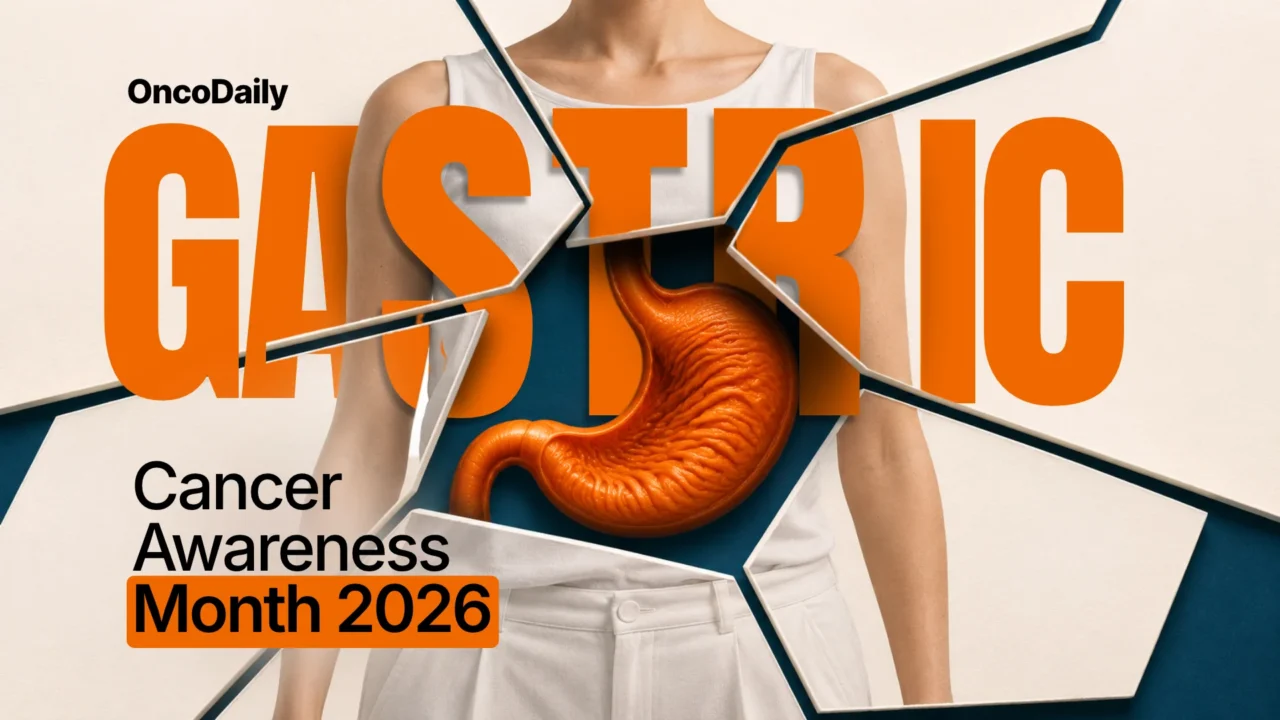
What if one of the world’s deadliest cancers could be prevented before it even begins?
Gastric cancer remains a major global health challenge, yet one of its leading causes is a bacterial infection that can be detected and treated.
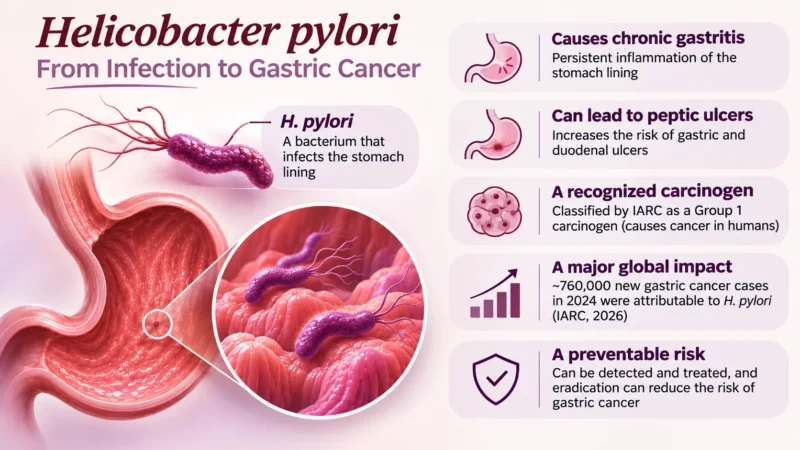
According to the latest estimates highlighted by the International Agency for Research on Cancer (IARC) in November 2026, approximately 760,000 new gastric cancer cases in 2024 were attributable to Helicobacter pylori infection.
This November, Gastric Cancer Awareness Month is more than a campaign to recognize the disease. It is an opportunity to explore why gastric cancer continues to claim hundreds of thousands of lives, what science has revealed about its prevention, and how earlier detection and advances in treatment could change outcomes for patients worldwide.
The Story Behind Gastric Cancer Awareness Month
Gastric Cancer Awareness Month has its roots in the efforts of No Stomach For Cancer (NSFC), a nonprofit organization established in 2009 to support research, education, and families affected by gastric cancer.
In 2010, NSFC worked with the United States Senate to secure recognition of November as Gastric Cancer Awareness Month.
The initiative resulted in Senate Resolution 655, introduced by Senator Russ Feingold and co-sponsored by Senator Dick Durbin, designating November 2010 as Gastric Cancer Awareness Month in the United States.
The choice of November was particularly meaningful.
Thanksgiving brings attention to family gatherings, food, and shared traditions. It is also associated with National Family History Day, an initiative encouraging Americans to learn about health conditions that may run in their families. Family history is especially relevant to gastric cancer because inherited predisposition contributes to risk in some families.
For people who have undergone gastrectomy, the surgical removal of part or all of the stomach, eating may require substantial adjustments. Smaller meals, nutritional monitoring, and long-term dietary management can become part of everyday life.
Gastric Cancer Awareness Month therefore recognizes not only the disease itself but also the experiences of people navigating life during and after treatment.
Gastric Cancer in 2026: What the Latest IARC Data Reveal
On November 3, 2026, the International Agency for Research on Cancer (IARC) released an update for Gastric Cancer Awareness Month, presenting the latest available global estimates of gastric cancer incidence and mortality.
Based on estimates for 2024, the report highlights the following findings:
- Almost 1 million people developed gastric cancer worldwide.
- Nearly 650,000 people died from the disease.
- Gastric cancer ranked as the fifth most common cancer globally.
- It was also the fifth leading cause of cancer-related death.
- Almost two thirds of new cases and deaths occurred among men.
The geographical distribution of gastric cancer is also highly unequal. Asia carries the greatest burden, with China alone accounting for more than one third of global cases and deaths.
These figures reflect substantial differences in gastric cancer burden between populations and reinforce the importance of prevention strategies adapted to local epidemiology.
Helicobacter Pylori: A Major Opportunity for Cancer Prevention
Helicobacter pylori (H. pylori) is a spiral-shaped bacterium that infects the stomach lining. It is one of the most common chronic bacterial infections worldwide, often acquired during childhood and capable of persisting for decades if left untreated.
Many people infected with H. pylori experience no symptoms. However, the bacterium can cause chronic inflammation of the stomach lining, known as chronic gastritis, and may contribute to the development of peptic ulcers and, in some individuals, gastric cancer.
H. pylori is recognized by the International Agency for Research on Cancer (IARC) as a Group 1 carcinogen, meaning there is sufficient evidence that it can cause cancer in humans.
When a Common Infection Becomes a Cancer Risk
Persistent H. pylori infection can cause chronic inflammation that gradually damages the stomach lining. Over time, some individuals develop a series of precancerous changes, beginning with gastric atrophy and potentially progressing to intestinal metaplasia, dysplasia, and eventually gastric adenocarcinoma.
This process, often described as the Correa cascade, can take many years or even decades. It is particularly relevant to the development of non-cardia gastric cancer, which arises outside the uppermost region of the stomach.
However, infection does not mean that cancer is inevitable. Most people with H. pylori never develop gastric cancer. The likelihood of progression depends on several interacting factors, including bacterial virulence, genetic susceptibility, environmental exposures, and the extent of existing damage to the gastric mucosa.
Importantly, H. pylori is not only a risk factor for gastric adenocarcinoma. It is also associated with gastric mucosa-associated lymphoid tissue (MALT) lymphoma, a distinct malignancy arising from lymphoid tissue in the stomach. In selected cases of localized H. pylori-positive gastric MALT lymphoma, eradication of the infection can lead to lymphoma regression.
The Correa Cascade: How Gastric Cancer Can Develop Over Time
Gastric cancer does not always develop suddenly. In some patients, it emerges after years or even decades of gradual changes in the stomach lining.
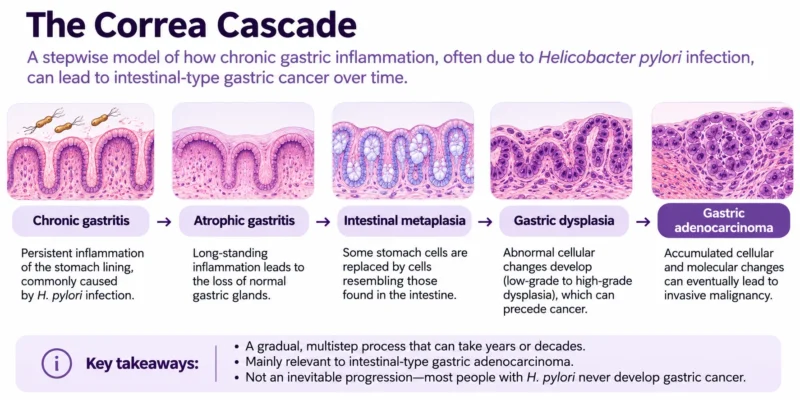
This process is known as the Correa cascade, a model of gastric carcinogenesis described by pathologist Pelayo Correa. It explains how chronic inflammation, frequently associated with Helicobacter pylori infection, can contribute to the development of intestinal-type gastric adenocarcinoma.
The cascade involves several histological stages:
- Chronic gastritis: Persistent inflammation of the stomach lining, commonly caused by H. pylori infection.
- Atrophic gastritis: Long-standing inflammation leads to the loss of normal gastric glands.
- Intestinal metaplasia: Some cells in the stomach lining are replaced by cells resembling those normally found in the intestine.
- Gastric dysplasia: Abnormal cellular changes develop, ranging from low-grade to high-grade dysplasia, and may precede invasive cancer.
- Gastric adenocarcinoma: In some patients, accumulated cellular and molecular alterations eventually lead to invasive malignancy.
Importantly, the Correa cascade is not an inevitable progression. Most people with H. pylori infection never develop gastric cancer, and only a minority progress through successive precancerous stages.
The model is particularly relevant to intestinal-type gastric adenocarcinoma and does not fully explain the development of every type of gastric cancer.
Why Early Recognition Still Matters
One of the challenges in gastric cancer care is that early-stage disease may produce few symptoms or no symptoms at all.
When symptoms develop, they may resemble common gastrointestinal conditions.
Possible manifestations include:
- Persistent upper abdominal discomfort
- Unexplained weight loss
- Loss of appetite
- Early satiety, or feeling full after eating a small amount
- Persistent nausea or vomiting
- Difficulty swallowing
- Gastrointestinal bleeding
These symptoms are not specific to gastric cancer, and their presence does not automatically indicate malignancy. However, persistent, progressive, or unexplained symptoms warrant medical assessment.
Upper gastrointestinal endoscopy with biopsy is central to establishing a diagnosis when gastric cancer is suspected.
Early detection is particularly important because some localized gastric cancers can be treated with curative intent, including through endoscopic resection or surgery in appropriately selected patients.
At the same time, awareness of symptoms should not be confused with population-based screening. Screening strategies must consider individual risk, regional disease burden, and the available evidence.
How Is Gastric Cancer Diagnosed?
Early-stage stomach cancer often causes few or no symptoms, making early detection challenging. When gastric cancer is suspected, doctors use several examinations to confirm the diagnosis and determine the extent of the disease.
- Upper gastrointestinal endoscopy (gastroscopy): The main examination used to identify suspicious changes in the stomach lining.
- Biopsy: Tissue samples collected during endoscopy are examined under a microscope to confirm whether cancer is present.
- Imaging tests: CT scans help determine the extent of the disease, while endoscopic ultrasound (EUS), PET/CT, or diagnostic laparoscopy may be used in selected patients.
- Biomarker testing: Tests for HER2, PD-L1, MSI/dMMR, and CLDN18.2 may help guide treatment decisions when clinically appropriate.
What about H. pylori testing?
- Urea breath tests, stool antigen tests, and biopsy-based methods can detect H. pylori infection. However, testing positive for H. pylori does not mean a patient has stomach cancer.
Early diagnosis is important because detecting gastric cancer at a localized stage may provide more opportunities for potentially curative treatment.
Beyond Awareness: Advancing Cancer Prevention and Care
Gastric Cancer Awareness Month highlights the importance of early diagnosis, prevention, and continued research. November also marks Lung Cancer Awareness Month and Pancreatic Cancer Awareness Month, bringing attention to three major global cancer challenges. Although these cancers differ in their biology, risk factors, and treatment approaches, they share an urgent need for earlier diagnosis, continued scientific progress, and improved patient outcomes.
Awareness begins in November, but the commitment to cancer prevention, research, and better care must continue throughout the year.
- World Pancreatic Cancer Day 2026: From Silent Symptoms to the Urgent Need for Earlier Diagnosis
- Lung Cancer Awareness Month 2026: More Than Just Awareness
Written by Mane Hovhannisyan, Editor at OncoDaily