A research question can begin with a clinical problem, an unanswered question, or an observation made during everyday cancer care. Turning that idea into a rigorous, feasible, patient-centred research protocol, however, requires a very different set of skills.
That is the space occupied by the International Collaboration for Research Methods Development in Oncology (CReDO) Workshop, organised by the National Cancer Grid at Tata Memorial Centre.
Applications are currently open for the CReDO Workshop 2027, which will take place from 1–6 March 2027, offering another group of oncology professionals the opportunity to take a research concept and develop it into a complete clinical research protocol.
But the significance of CReDO extends beyond those six days. Reflections from previous participants, faculty members and patient advocates show how the workshop can influence the way researchers approach clinical questions, methodology, collaboration and patient involvement long after the programme ends.
From a Research Question to a Complete Protocol
CReDO is designed for researchers who arrive with a clinical research concept and are prepared to develop it into a structured project.
During the workshop, selected participants work directly on the research idea submitted with their application, progressively refining it into a complete clinical trial protocol.
The programme combines formal teaching with intensive protocol development. Participants receive training in areas including clinical trial design, research methodology, statistics, ethics and global health, while also spending substantial time working in small groups with experienced faculty.
Patient advocates are also integrated into the process, bringing attention to whether proposed studies reflect the realities and priorities of the patients expected to participate.
The result is an environment in which research questions are repeatedly examined from methodological, statistical, ethical, practical and patient-centred perspectives.
Why Research Capacity Matters
One of the central ideas behind CReDO is the need to strengthen oncology research capacity, particularly in India and other low- and middle-income countries.
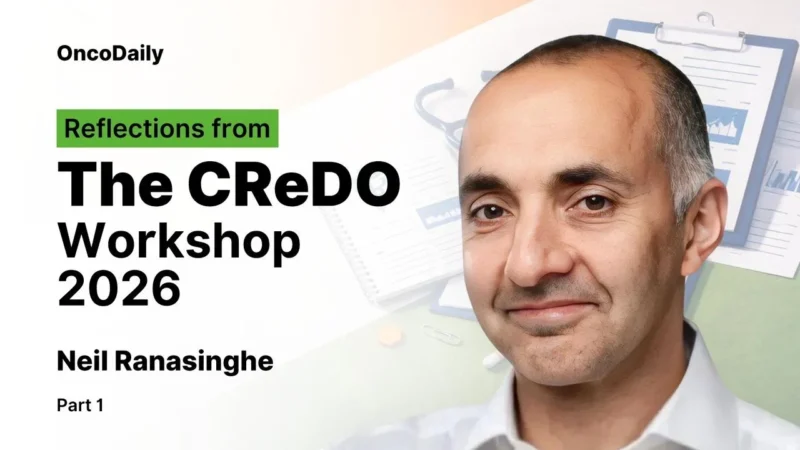
Patient advocate Neil Ranasinghe, who attended CReDO in India, highlighted the imbalance between the large amount of cancer research conducted in high-income countries and the considerably smaller research output originating from lower-resource settings.
This matters because evidence generated in high-income countries is frequently adapted for settings with very different infrastructure, resources and patient populations.
Developing the ability to design and conduct locally relevant research therefore becomes an important part of improving cancer care.
CReDO addresses this challenge by bringing together oncologists, surgeons, epidemiologists, statisticians, nurses, clinical trial experts and patient advocates to work directly with researchers on questions emerging from their own clinical environments.
What Happens Inside CReDO?
The structure is intensive.
Mornings include lectures addressing different aspects of oncology research, while afternoons are largely dedicated to protocol development.
Participants work in groups alongside multidisciplinary faculty, examining their projects in detail. Research questions can undergo major changes early in the week before being progressively refined.
Statistics, feasibility, ethics and potential clinical impact are repeatedly examined.
Another central question remains present throughout the process: What does this research mean for patients?
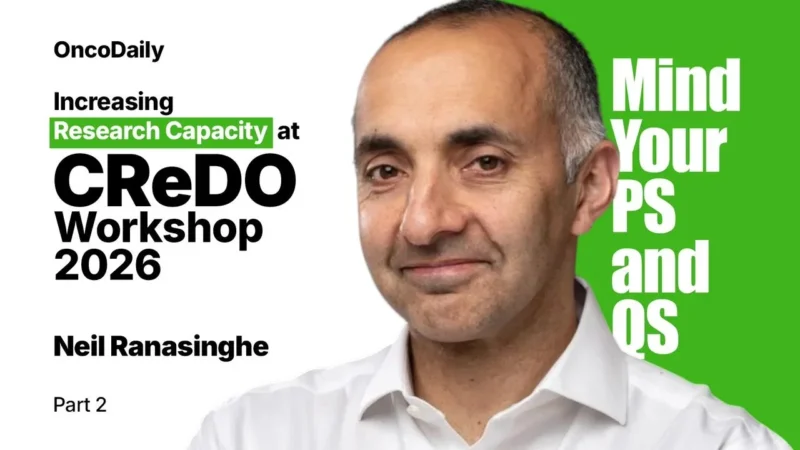
That may involve examining the number of hospital visits required by a protocol, additional procedures, treatment-related burden, questionnaires, informed consent documents or whether the outcomes being measured are genuinely meaningful to patients.
For Ranasinghe, who participated as a patient advocate, this was one of his principal responsibilities during CReDO: helping ensure that protocols remained patient-centred.
“CReDO Changed How I Think About Clinical Research”
For Shushan Hovsepyan, Editor-in-Chief of OncoDaily Medical Journal and Co-Chair of the International Society of Pediatric Oncology Global Health Network Research and Innovation Working Group, the impact of CReDO continued well beyond the workshop itself.
Reflecting on her experience years later, she described arriving in Mumbai for a workshop she had almost decided not to apply for because of concerns about the fee, location and timing.
She applied nevertheless.
It became, in her words, “one of the best decisions I’ve made.”
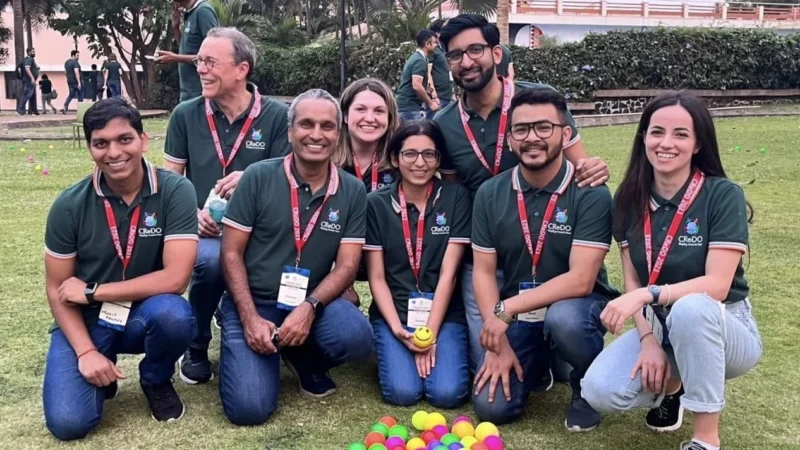
Her memories extend beyond lectures. She recalled researchers from different countries working together late into the evening, repeatedly rewriting protocols after detailed faculty critique.
The intensity was part of the experience.
For Hovsepyan, CReDO changed the way she evaluates research protocols in a practical and lasting way.
“Careers change. Institutions change. That week didn’t leave me,” she wrote.
Research, Collaboration and a Project for Armenia
The experience was similarly significant for Elen Baloyan, an oncology fellow from Yerevan, Armenia, who participated in CReDO 2026.
Her research protocol focuses on implementing low-dose immunotherapy for lung cancer in Armenia, with the aim of increasing treatment access and reducingfinancial toxicity for patients facing substantial out-of-pocket costs.
Baloyan described CReDO as a programme that brings together research, education, mentorship, networking, career development and team building.
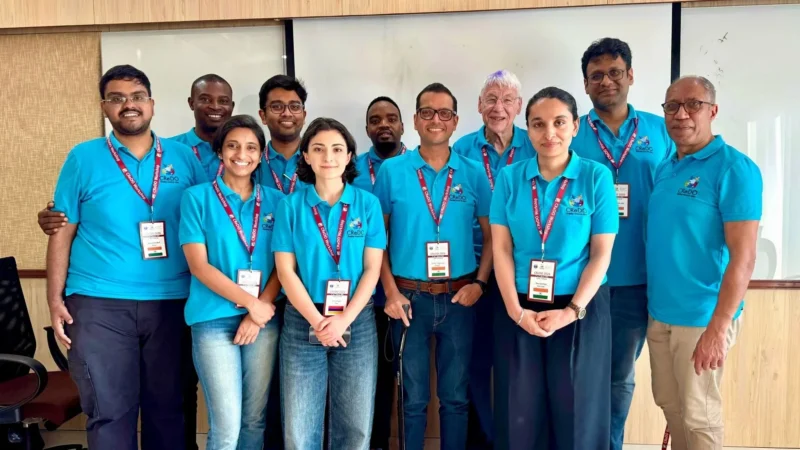
She also highlighted the accessibility of the faculty and the role of patient advocates in helping researchers reconsider their language and research aims from a more patient-centred perspective.
Supported by the American Society of Clinical Oncology (ASCO) to attend the workshop, Baloyan was ultimately selected to present during the ASCO Joint Session.
The work did not stop when CReDO ended.
She began working on her project immediately after the workshop and planned to share the research and protocol-development principles she had learned with colleagues in Armenia.
She has also discussed plans with previous CReDO participants to expand the programme’s reach toward Eastern Europe, the Middle East and Central Asia.
For head and neck oncosurgeon Shambhavi Shukla, CReDO was a “research wonderland.”
Her research concept focused on whether adequate reconstruction of the tongue following surgery could improve speech, swallowing and quality of life among patients with advanced tongue cancer.
She described an environment built around intensive discussion, mentorship and critical evaluation.
Participants not only worked on their own projects but became involved in the research questions of others within their groups.
The experience, she explained, changed the way she approaches scientific literature. Rather than beginning with the conclusions of a paper, she increasingly starts by examining the methodology.
CReDO also reinforced for her the importance of multidisciplinary and collaborative research, particularly when working with large clinical datasets in head and neck oncology.
Learning to Ask Better Questions
The projects brought to CReDO span different diseases, specialties and clinical problems.
Emine Rahiman, a paediatric oncologist from Manipal, India, developed a research protocol investigating clinically significant chemotherapy-related thrombocytopenia among children with solid tumours through data collection across centres in India.
She described CReDO as a researcher’s paradise and an intensive academic environment in which participants are encouraged to question existing assumptions without fearing failure.
Following the workshop, she applied what she had learned to a grant proposal in haematology and reported becoming more attentive to incorporating patient and caregiver perspectives into clinical practice and research.
Her experience also changed the way she approaches research questions: not simply questioning existing practice, but learning how to formulate those questions more effectively and develop possible solutions.
When a Good Question Does Not Necessarily Need an Answer
Medical oncologist Rajath Govind, from New Delhi, developed a protocol exploring whether patients with breast cancer who achieve a complete response after chemotherapy and surgery require a full year of further chemotherapy.
His experience highlighted another important lesson from CReDO: research begins with a question, but the strength of that question must still be tested against patient priorities and feasibility.
After attending the workshop, he described placing the patient first when framing research concepts, followed by an assessment of whether the study can realistically be conducted.
He also reflected on a deceptively important principle: not every question, however interesting, necessarily needs to be answered.
Faculty See the Transformation First-Hand
The CReDO experience is not limited to participants.
Professor Asha Solomon, from the College of Nursing at Christian Medical College, Vellore, attended as faculty, contributing expertise in qualitative research, mixed-methods research and the assessment of patient-reported outcomes and experiences.
She described watching participants arrive with research concepts and leave with substantially developed proposals.
The programme combined didactic lectures, protocol development, meet-the-expert sessions and other interactive activities, creating what she described as an engaging and intellectually stimulating week.
For Solomon, interactions with internationally recognised researchers also provided lessons extending beyond research methodology into professional leadership and collaboration.
Applications for CReDO 2027 Are Open
The next CReDO Workshop will take place from 1–6 March 2027.
Applications opened on 15 May 2026, and the deadline has been extended to 15 August 2026.
Applications are open to professionals trained or currently training in:
- Medical oncology
- Surgical oncology
- Radiation oncology
- Specialties allied to oncology
Applicants must demonstrate an interest in clinical research and a commitment to continuing research in oncology.
They are also expected to have written and spoken English proficiency, computer skills, access to a laptop and reliable internet connection, and institutional support for conducting their proposed project.
Preference will be given to early- and mid-career researchers from academic institutions who demonstrate a strong commitment to oncology research.
A Competitive Selection Process
Applications are reviewed competitively, with each application independently assessed by two experts.
Evaluation includes the applicant’s background, the proposed research idea, the statement of purpose and a supervisor’s letter of support.
Applications must be submitted through the official online portal; other submission formats are not accepted.
There is no fee at the application stage.
The list of selected participants is scheduled to be announced on 15 September 2026, with confirmation of participation and payment due by 30 September 2026.
Pre-workshop webinars will then take place between December 2026 and February 2027 before the main workshop begins in March.
Financial Support Can Make Participation Possible
The workshop fee is USD 2,500 or INR 200,000 per participant.
It includes accommodation, local transportation, meals at the workshop venue and access to workshop resources. Return travel between the participant’s home city and Mumbai is not included.
Participants without institutional financial support will be considered for a 90% fee subsidy through grants from supporting organisations.
Only applicants who are selected and confirm their participation are required to pay the workshop fee.
Six Days That Continue Long After Mumbai
Full participation is required throughout CReDO.
Selected researchers must attend all sessions and complete daily assignments, with certificates issued only to those fulfilling the programme requirements.
Participants must also provide confirmation, supported by their supervisor, that they will be on official leave from their department during the workshop.
They are encouraged to prepare a background literature review before attending and, where possible, bring institutional protocol and informed consent templates.
Yet previous participants suggest that the value of CReDO extends considerably further than completing the programme.
Researchers leave with a developed protocol, but they also leave with new collaborators, mentors, professional networks and a different framework for approaching research questions.
For some, the effects are visible in how they read scientific papers. For others, they influence how they design studies, involve patients, approach feasibility or develop future collaborations.
And for some, the work that begins during those six days becomes a project they continue building immediately after leaving Mumbai.
For oncology researchers with a clinical question they believe deserves a rigorous answer, CReDO 2027 offers the opportunity to turn that question into a research protocol ready for its next stage.