My name is Neil Ranasinghe, I am a Patient Advocate from London. I recently attended the CReDO workshop in India.
This is my second article on increasing research capacity. In March I attended a week-long workshop in India that was to train researchers, doctors and oncologists in protocol design.
Increasing Research Capacity – Mind your P (values) and Q (Qual)s
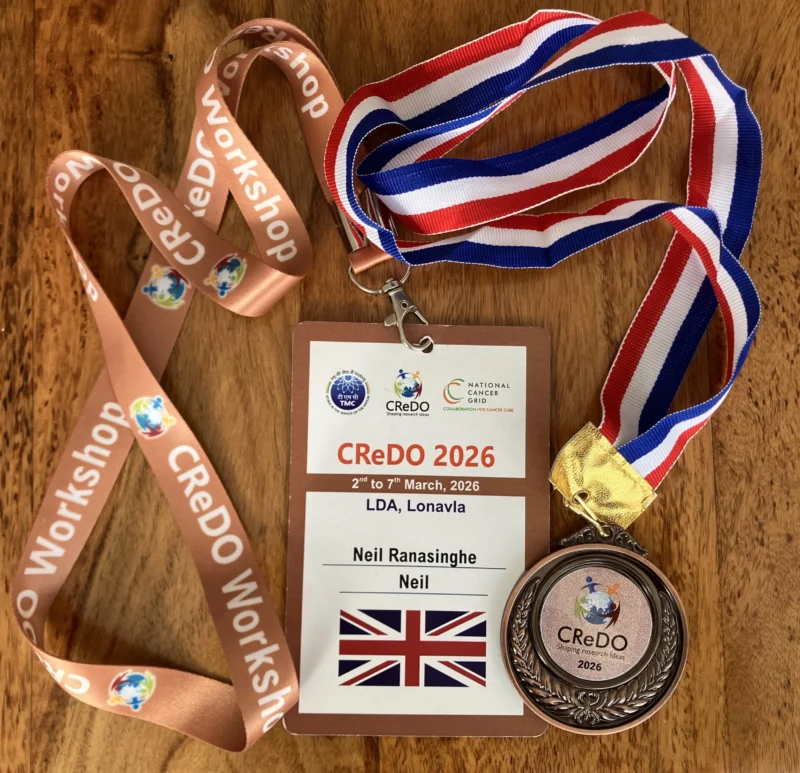
Only a silver medal this year…
The workshop was Collaboration for Research Methods Development in Oncology (CReDO) and is run by the National Cancer Grid. The aim is to increase research capacity in India and low- and middle-income countries. You can read my more about the structure of the workshop and my involvement here – CreDO workshop returns remarkable results again.
This article takes a different approach, I asked four participants and one member of
faculty to share their experiences of CReDO 2026:
- Elen Baloyan, Medical Oncology Fellow
- Shambhavi Shukla, Head and Neck Oncosurgeon
- Emine Rahiman, Paediatric Oncologist
- Rajath Govind, Medical Oncologist
- Asha Solomon, Professor of Nursing
Carry on reading for some fascinating, inspiring, moving and genuine accounts of CReDO.
Elen Baloyan, Medical Oncology Fellow
Who are you, and what is your research protocol?
My name is Elen Baloyan, I am a medical oncology fellow in Yerevan, Armenia, my research protocol aims to implement low-dose immunotherapy for lung cancer in Armenia to increase access to treatment and decrease financial toxicity for patients, as immunotherapeutic drugs are out-of pocket costs in Armenia and many patients unfortunately discontinue treatment early with severe financial burden. Hopefully this project will help patients receive effective treatment for longer.
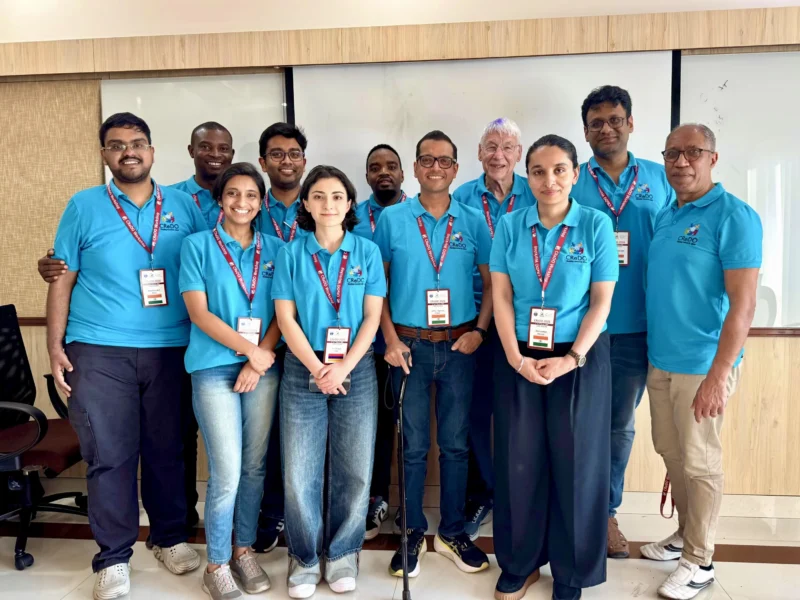
What was your overall impression of CReDO?
CReDO was incredible! It is difficult to describe something that is so great in every aspect of what you can imagine.
The organizing team had taken care of every little detail and was there to help you with anything. Even at a difficult time regarding closed airspaces and travel, they, along with partners and sponsors, took care of everything, so that you could fully focus on the program. The faculty was just wonderful. Open to any inquiries, always there to help you get quick yet comprehensive and clear answers to your questions and challenges, kind and welcoming, and infectiously engaged so that not a single participant could be left in the shadows or be “absent” in any way.
Patient advocates were super helpful and understanding – kindly guiding participants’ language and aims towards a more patient-centered and patient-aware state.
Partner organizations and sponsors made sure that the motivation was up to the roof. A simple example would be my case. I was sponsored by ASCO to attend and when I realized my flight was cancelled, ASCO took care of it in hours and encouraged me to stay focused on the workshop.
I ended up being selected to present at the ASCO Joint Session and received the best possible comments and suggestions from the faculty and participants. This has a great value and impact, I think.
Overall, the workshop is one of a kind, in my opinion. It blends team building, networking, education, training, research, perspective, career growth, and FUN – all at the same time! It is why we are now going to expand its reach… Stay tuned!
Is there anything you have changed already in your daily work since attending CReDO?
I started working on my project right after the workshop ended… literally, in the airplane. I am going to hold a presentation for my fellow colleagues in Armenia discussing research, protocols and essentials I learned at CReDO.
And me and my friends who attended CReDO before me, are planning to bring CReDO to our region. That’s exactly how much I loved it!
So, let’s make a call to our colleagues in Eastern Europe, Middle East and Central Asia – if you have a research idea, please be prepared to apply for CReDO… soon.
Is there anything you will change in the future or change about CReDO?
I would leave CReDO as it is and not change anything about it. By nature, it will evolve and improve itself, I think.
There is one thing that would be very interesting to me though… to bring back the past participants who have succeeded to implement their projects and to have them share their experiences and challenges with the new participants. Would be fun!
Shambhavi Shukla, Head and Neck Oncosurgeon
Who are you, and what is your research protocol?
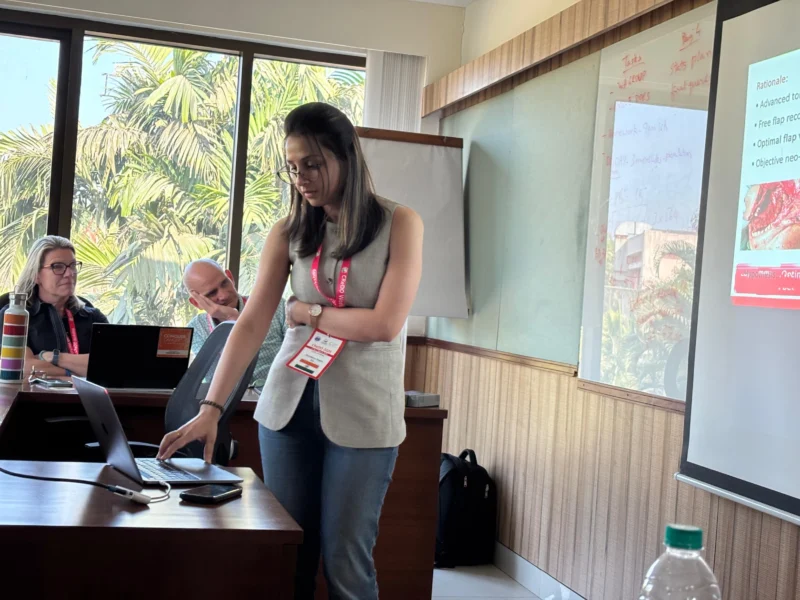
I am Dr. Shambhavi Shukla, a head and neck oncosurgeon trained at Tata Medical Centre, Kolkata, India. My research concept focuses on how adequate reconstruction of the tongue after surgery can improve speech, swallowing ability, and overall quality of life in patients with advanced tongue cancers.
What was your overall impression of CReDO?
If I had to describe CReDO in two words, it would be “research wonderland.” It is an inspiring space where brilliant minds from across the world come together with a shared purpose of advancing oncology research. For anyone even remotely interested in clinical research in cancer, CReDO is a truly unique and eye-opening experience!
The program is thoughtfully and meticulously designed. Participants are divided into small working groups, each guided by a set of experienced mentors from different specialties. Every day is filled with intense brainstorming sessions, not only about your own research idea, but also about the projects of colleagues in your group.
The mornings were jam-packed with informative lectures, and there was always time to ask questions to the presenters afterwards, which will clarify many of your doubts, even if you were a passive listener.
The environment quickly teaches you to think critically, constructively, and methodically. More importantly, it helps you appreciate how important research is not only within your own specialty but also across different oncologic disciplines.
The first day can feel slightly overwhelming! You feel like a drop when you suddenly realise how vast the ocean of knowledge and expertise around you is. But as the days progress, that initial intimidation gradually transforms into inspiration.
Through team-building activities, shared discussions, and long working sessions, you begin to know your colleagues and mentors on a more personal level (which, for me, gave the opportunity to get to know about the lives of so many mentors, admire their brilliant journeys, and guide my own). It won’t take much time to realise that you are now part of a global community of clinicians, statisticians, patient advocates, etc., striving toward meaningful cancer research.
One of the most remarkable aspects of CReDO is the mentorship. The mentors are exceptionally humble, approachable, and genuinely invested in helping you refine your research idea. Throughout the week, they patiently guide discussions, challenge your thoughts, and help shape each protocol step by step. You can raise the most naive or silly question; they answer everything with enthusiasm and generosity. Their dedication is truly incredible; they start early in the morning and often continue discussions long after dinner (if needed).
I had the privilege of interacting with incredible mentors from organisations such as ASCO, who personally helped me navigate some of the statistical challenges in my research protocol. For someone like me, starting their academic journey with passion being the only tool in my armamentarium, these moments felt almost surreal and dream-like. Imagine world leaders in oncology research sitting beside you, helping you refine your study—that is exactly what CReDO is.
Beyond academic learning, CReDO also creates lasting professional relationships. I had the opportunity to meet some very inspiring colleagues from different countries and specialties, and I am certain many of these connections will last for years to come. The workshop has fundamentally changed the way I think about writing a research protocol, which started with a simple question.
One of the immediate changes has been the way that I now find myself thinking more systematically and critically while reading articles, starting my read by understanding the methodology first, then the rest.
Going forward, I plan to first focus on organising the vast data we have in Head and Neck Cancers and integrating more collaborative and multidisciplinary research projects. CReDO has clearly highlighted how impactful research often emerges from strong teamwork across specialties and institutions. I also hope to execute well-designed studies that meaningfully improve patient outcomes.
To anyone from India or abroad considering attending CReDO, I would wholeheartedly encourage you to do so! And even in the highly unlikely scenario that it does not exceed your expectations (which I doubt), you will still be treated to some excellent, lip-smacking Indian cuisine—especially authentic Maharashtrian food—served several times a day generously.
You will leave CReDO not only with a well-refined research protocol but also with new friendships, unforgettable memories, and a renewed passion for advancing cancer research.
Emine Rahiman, Paediatric Oncologist
Who are you, and what is your research protocol?
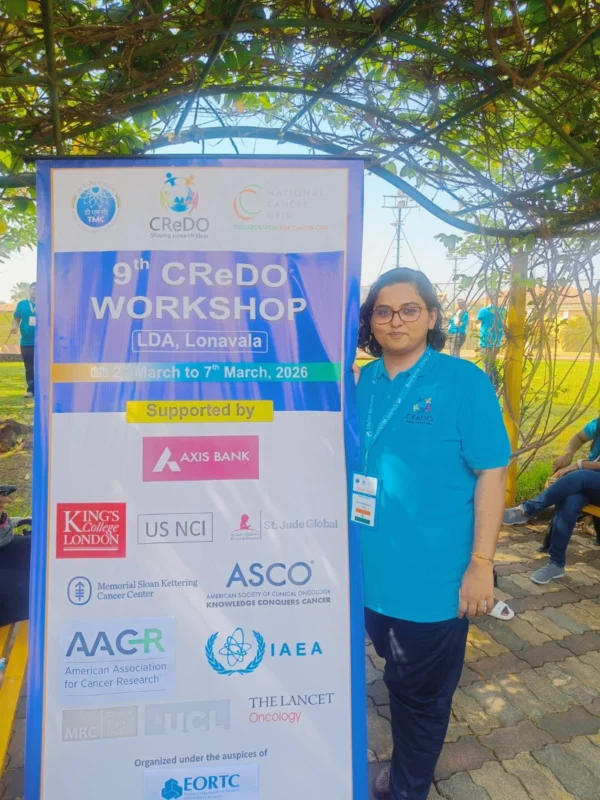
My name is Emine Rahiman, I am a paediatric oncologist from Manipal, India – my research protocol is to understand the magnitude of clinically significant thrombocytopenia due to chemotherapy in children with solid tumors. The study will consist of data collection from centres across India. Study findings are expected to guide devise strategies to
mitigate burden which potentially may include repurposing of existing drugs.
What was your overall impression of CReDO?
CReDO is a researcher’s paradise—intensely stimulating and enriching. The workshop covers all aspects of oncology research. More than a workshop, it is a boot camp where selected individuals are put in the same space with expert mentors and an environment filled with NO FEAR TO FAILURE attitude.
It is an excellent platform to establish connections worldwide and potentially practice changing in Oncology. The USP of CReDO are the faculty who are humble, anytime approachable, global experts in their fields and positive.
The workshop pushes one to fire on all cylinders and it is a reality that all participants push themselves to bring home excellent protocols, memories to cherish, and bonds for life.
Is there anything you have changed already in your daily work since attending CReDO?
Having been inspired and learned from CReDO, I have used the knowledge and insights to submit a grant proposal in Hematology. CReDO experience has made my idea holistic and 3 dimensional.
My daily work has changed in being more sensitive to patient needs and attempts to incorporate more of patient/caregiver opinions in clinical practice and research. I always questioned the norm and now, with CReDO, I am confident to ask the questions the right way and draft the potential solutions as well.
Is there anything you will change in the future?
Change is the constant that strives you to perfection. CReDO participants can potentially gain more from having more hands-on statistics and that can be integrated into the main agenda.
From the experience gained, I intend to push boundaries and change practices, one at a time. Little drops in the ocean that can ripple far and wide.
Rajath Govind, Medical Oncologist
Who are you, and what is your research protocol?
My name is Dr. Rajath Govind, a Medical Oncologist from New Delhi, India. My research protocol was to study whether patients with breast cancer who have a complete response after chemotherapy and surgery may not need a full year of further chemotherapy.
What was your overall impression of CReDO?
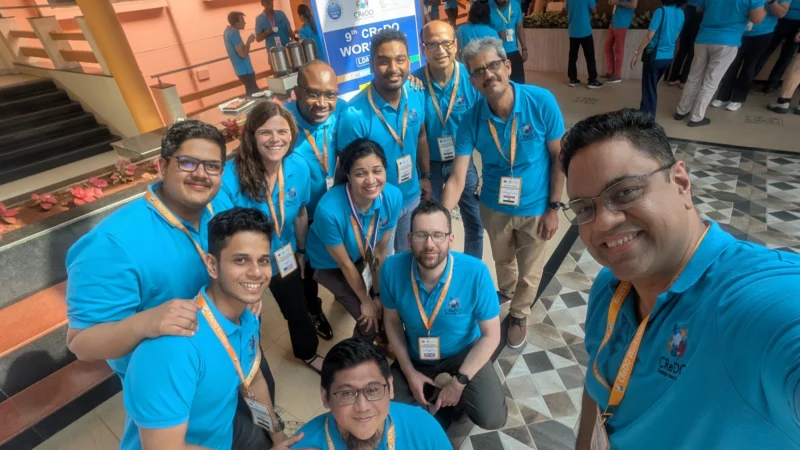
My overall impression of CReDO—honestly, CReDO felt intense, and at the same time, humbling. I realised that the key prep needed before attending this academic boot camp is to ‘learn to unlearn.’
What stood out for me were the common struggles, late-night sample-size calculations—Thank you Matt Sydes!—the joy of collaboration with Team E, and the spirit of friendship despite the rigor. Courtesy Shambhavi, I can say that Good Science and Good Company can coexist.
Have I changed anything in work after CReDO?
I would say that I have, in the sense that I have begun to keep the patient foremost while framing a research concept, followed by feasibility. The fact that not all questions, however good, need answers.
Is there anything I will change in the future?
Plenty! I would like to revise the undergraduate medical curriculum to incorporate basic research methodology to make it more engaging. Secondly, note to self—always keep Holi Apparel handy in the wardrobe!
Professor Asha Solomon
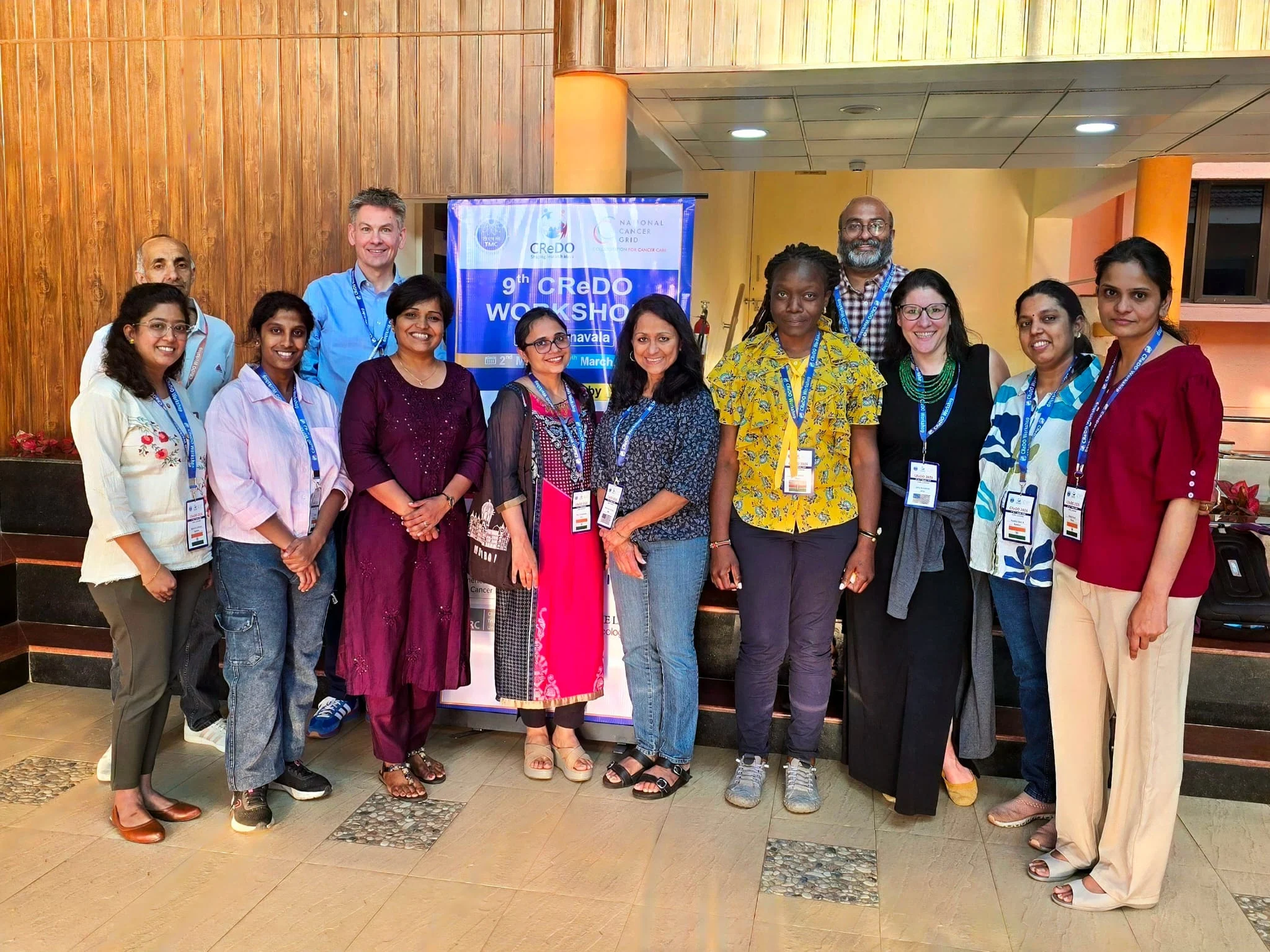
My name is Asha Solomon, I am a Professor at the College of Nursing at Christian Medical College, Vellore, India. I attended CReDO as a faculty to contribute to qualitative research, mixed-methods research, and assessment of patient-reported outcomes and experiences.
What was your overall impression of CReDO?
My experience as a first-time faculty at CReDO was truly amazing. I witnessed the fruition of the idea of coming in with a research concept and going back with a well-developed proposal.
It was an engaging and mind-stimulating week, with a combination of didactic lectures, protocol development workshops, ‘meet the expert’ sessions, and other interactive opportunities. I believe that all of us learnt certain ‘lessons for life’ after interacting with world-class researchers who were exemplars of excellence and humility.
CReDO not only steepened the learning curve for participants but also provided leadership lessons on how to handle success in professional lives. A very dynamic and proactive team worked behind the scenes for ensuring seamless learning experiences. Their attention to detail, clear communication, thoughtful food choices, and the arrangements for accommodation/transport reflected the team’s commitment to excellence.
Thank you
Thank you, Elen, Shambhavi, Emine, Rajath, and Asha for answering my questions so quickly and for sharing their interesting and thought-provoking comments. Thank you to OncoDaily for publishing this. Thank you Julie Waxgiser for helping me with this article.
For more information about CReDO click here. To apply to attend CReDO click here (this page will be updated in due course for 2027).
Look out for my third article on CReDO 2026.
You can also read:
Neil Ranasinghe: Increasing Research Capacity – CreDO Workshop Returns Remarkable Results Again