The 2026 ASCO Breakthrough Meeting is taking place from 25–27 June 2026 at the Raffles City Convention Centre in Singapore, with online participation also available. The meeting brings together the oncology community across Asia-Pacific and beyond to discuss emerging research, multidisciplinary perspectives, and advances shaping cancer care.
Here are 15 posts to read about this year’s ASCO Breakthrough Meeting.
Julie Gralow:
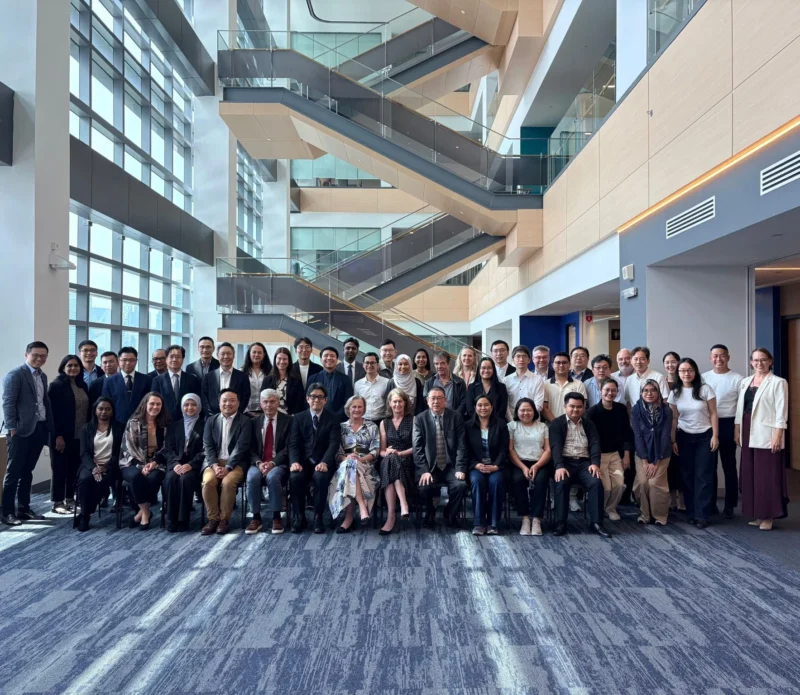
“Thank you to the National Cancer Centre Singapore for hosting the American Society of Clinical Oncology Asia Pacific Regional Council and International Clinical Research Scholars meetings this week at ASCO Breakthrough 2026.”
Herbert Loong, MBBS, FRCP, FASCO:
“Had the pleasure of joining a wonderful panel chaired by Kimmie Ng and Jeong Eun Kim at ASCO Breakthrough 2026.
The discussion brought together multiple stakeholders in early-onset cancers, including CanKids KidsCan, Poonam Bagai, Tomotaka Ugai, and Paul Brennan.
Thank you for the opportunity to discuss the clinical implications of early-onset cancers and potential strategies to address this increasingly important issue.”
“One of the greatest inequities in oncology is that many patients who could benefit from clinical trials are never identified.
A great presentation by Dr. Huren Sivaraj at the 2026 ASCO Breakthrough Meeting explored how artificial intelligence can help bridge this gap.
Key insights included:
AI embedded within the electronic medical record can automatically identify patients who may be eligible for clinical trials, reducing missed opportunities and easing the burden on busy clinicians.
AI can rapidly analyze large and complex clinical datasets to match patients with appropriate studies more efficiently than traditional manual screening.
Expanding these technologies could be especially impactful in low- and middle-income countries, where limited research infrastructure often restricts access to cutting-edge therapies.
AI has the potential to democratize access to clinical trials—not by replacing clinicians, but by ensuring that more patients are considered for potentially life-changing research opportunities, regardless of where they receive care.”
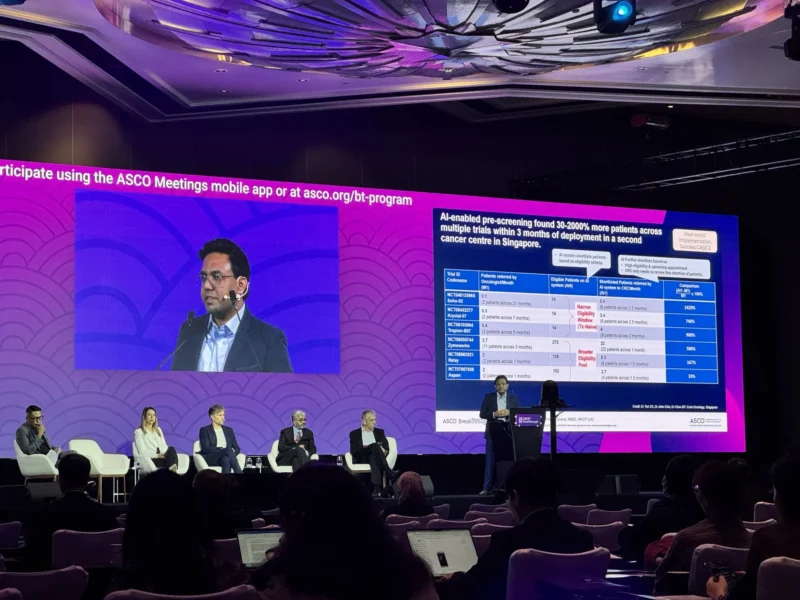
“Grateful for the opportunity to present on ‘AI Solving the Clinical Trial Gap’ and for the positive feedback and thoughtful discussion that followed.
Thank you to Melvin L.K. Chua, David Goldstein, Naveen Nagar, Daniel Truhn, and Arsela Prelaj for sharing the stage and their insights during the panel session.
Thank you also to Yan Leyfman, MD, for summarizing the key points of the presentation.”
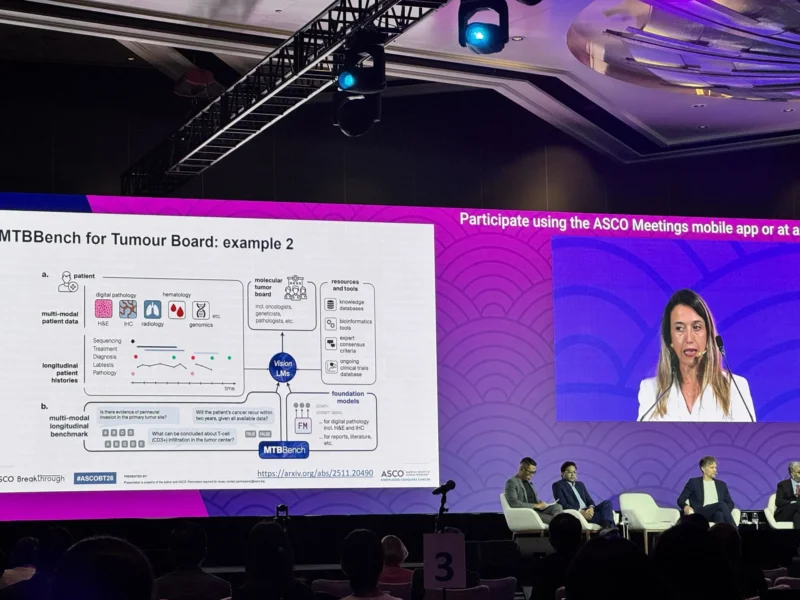
“How can artificial intelligence make multidisciplinary cancer care smarter—not just faster?
An outstanding presentation by Dr. Arsela Prelaj at the 2026 ASCO Breakthrough Meeting explored the rapidly evolving role of AI in oncology.
Key takeaways included:
AI-powered tumor boards can automate data aggregation and organization, reducing administrative burden and allowing clinicians to spend more time discussing complex cases and optimizing patient care.
AI can accelerate the journey from bench to bedside by helping generate hypotheses, design experiments, and identify promising therapeutic strategies for clinical translation.
Multimodal AI has the potential to integrate pathology, imaging, genomics, and clinical data to better match patients with the most appropriate immunotherapy and precision oncology treatments.
Agentic AI represents the next frontier: autonomous systems capable of evaluating complex datasets and coordinating specialized AI agents. The challenge now lies in building the right architecture, governance, and clinical validation to implement these systems safely.
AI is evolving from a decision-support tool into an intelligent collaborator across the oncology ecosystem—from discovery and tumor boards to personalized cancer care.”
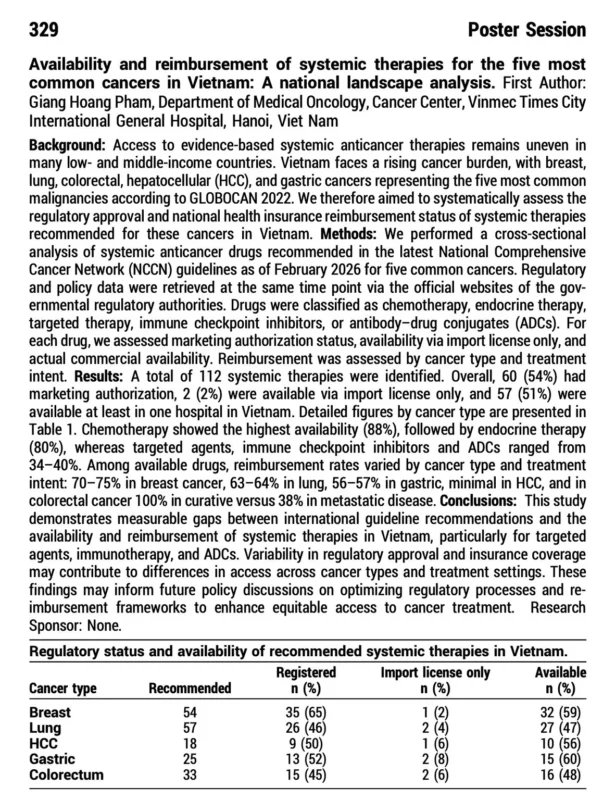
“Dr. Giang Pham’s poster at ASCO Breakthrough 2026 offers an important assessment of the availability and reimbursement of systemic therapies for the five most common cancers in Vietnam, benchmarked against NCCN recommendations.
The study shows encouraging progress, but also major gaps in access—particularly for targeted therapies, immunotherapy, and antibody–drug conjugates.
It is an important reminder that improving cancer outcomes also means improving access to evidence-based treatment.”
“Grateful to be included as one of the ASCO Breakthrough 2026 Featured Voices.
I will be joining virtually and sharing reflections on what emerging oncology advances mean for patients, clinicians, and health systems across the Asia-Pacific region.
The sessions I am especially looking forward to reflect where I believe the field is heading.
Antibody–drug conjugates are breaking boundaries in cancer care, but their next chapter will require better patient selection and more patient-centered drug development.
New immunotherapy combinations are also reshaping treatment. However, ‘stronger together’ should not simply mean adding more agents. The future lies in rational combinations, better patient selection, and tolerability-informed development.
Perhaps most importantly, the session on advancing equitable oncology in the Asia-Pacific region addresses a core issue: data alone do not change outcomes unless health systems can deliver them.
Precision oncology fails when discovery outpaces delivery.
Looking forward to learning from colleagues across the region and contributing to the conversation on how we build systems that connect patients to innovation in time.”
“In oncology AI, ‘mostly accurate’ is not enough when a single hallucinated recommendation can affect patient safety.
At ASCO Breakthrough 2026, Abstract #19 evaluated disease-specific safety risks of large language models across solid tumor subtypes using 186 tumor-board vignettes.
The study assessed key domains including guideline concordance, hallucinations, safety risk, readability, and reasoning.
This is an important reminder that oncology AI cannot be validated only through broad performance metrics. Cancer care is highly disease-specific, and model outputs may vary depending on tumor type, clinical context, and treatment scenario.
These findings highlight the need for disease-level validation, clinician oversight, and safety-focused evaluation before large language models are integrated into oncology decision support.
ASCO Breakthrough 2026, Singapore
Abstract #19
Read the abstract: https://lnkd.in/eJpDKjqH”
“At ASCO Breakthrough 2026, Abstract #355, led by Dr. Yan Leyfman and MedNews Week, highlights how artificial intelligence can make oncology clinical trial enrollment more accessible worldwide.
Standardized oncology data may be the missing link to scalable, AI-powered clinical trial matching.
Key findings included:
AI achieved 98% accuracy in tumor type extraction.
Accuracy was 90% for disease extent and 86% for cancer stage.
Accuracy for genomic biomarkers, including BRCA1/2 and TP53, was 78%.
AI substantially reduced manual processing time while maintaining clinical validity.
AI-powered, mCODE-aligned data extraction could help overcome language, literacy, and resource barriers—bringing equitable access to clinical trials closer to reality.
Abstract: https://lnkd.in/eAwYRP_P”
“Loved ASCO Breakthrough 2026 and Prof. Jeanne Tie’s thoughtful talk on moving molecular residual disease from prognostic to actionable.
A masterclass in MRD trial design:
A sensitive assay is needed for de-escalation.
A specific assay is needed for escalation.
I also enjoyed the comparison of DYNAMIC and CIRCULATE, illustrating how trial design determines the questions a study can answer.”
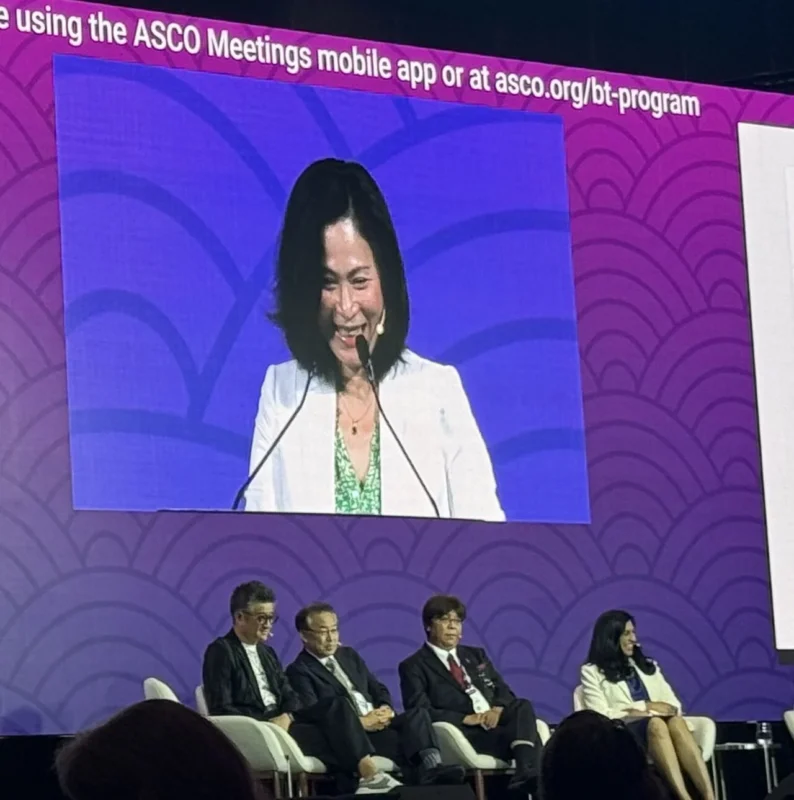
“Four days to go until ASCO Breakthrough 2026.
The American Society of Clinical Oncology’s Asia meeting is returning after a hiatus in 2025.
I am very excited about the rich program lined up for next week, which promises to deliver a broad range of content for attendees from Singapore, India, China, Hong Kong, Malaysia, the United States, and Europe.
Grateful for everyone’s support.
Learn more: https://lnkd.in/g9xkBmTU”
“Looking forward to catching up with colleagues at ASCO Breakthrough 2026 in Singapore.
The meeting offers a valuable opportunity to explore cutting-edge cancer science and build global networks. With an outstanding speaker faculty confirmed, the 2026 program promises to be an exciting one.
The abstract submission deadline was February 24 at 11:59 PM ET. ASCO Breakthrough 2026 invited researchers to share their work with global oncology leaders in Singapore.”
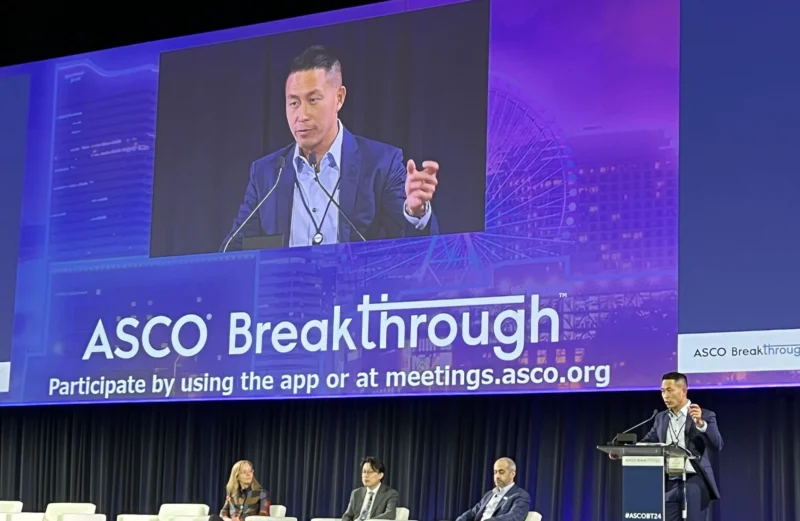
“Congratulations to Dr. Melvin L.K. Chua on receiving the MedNews Week Excellence in Mentorship Award at ASCO Breakthrough 2026.
Some of the greatest contributions to oncology are not measured solely by publications or discoveries, but by the people we inspire, mentor, and empower. Dr. Chua embodies that spirit every day.
Through his unwavering commitment to trainee mentorship, global oncology education, and international collaboration, he has helped shape the careers of countless young physicians and scientists while advancing cancer care across borders.
His generosity with his time, knowledge, and encouragement has left a lasting impact on the next generation of oncology leaders.
It is a great privilege for MedNews Week to recognize Dr. Chua’s extraordinary dedication to mentorship and service. He is not only an outstanding physician-scientist, but also a role model whose humility, vision, and commitment to others continue to inspire us all.
Congratulations, Dr. Chua, and thank you for everything you do for the global oncology community. Your impact extends far beyond the patients you care for—it lives on through every trainee, collaborator, and future leader you have helped along the way.”
Written by Nare Hovhannisyan, MD
Find more exclusive oncology content on OncoDaily