
A new US study involving nearly 100,000 patients has revealed concerning differences in how stomach cancer is diagnosed and treated across age groups. Younger adults are more likely to be diagnosed after the cancer has spread to distant parts of the body, while older patients are more frequently diagnosed with localized disease but are substantially less likely to receive cancer-directed treatment.
The findings, published on November 27, 2026, in Cancer Causes & Control, highlight changing patterns in gastric cancer diagnosis and persistent inequalities in cancer care. Researchers suggest that improving early detection in high-risk populations and developing more individualized treatment strategies for older adults could help address these gaps.
Nearly 100,000 Stomach Cancer Patients Analyzed Over Two Decades
Researchers led by Yuntong Wang and Eunji Choi of Weill Cornell Medicine, together with collaborators from South Korea, analyzed data from 98,767 patients diagnosed with gastric cancer between 2000 and 2021.
The study used the US National Cancer Institute’s Surveillance, Epidemiology, and End Results (SEER) database to examine how age, race, ethnicity, and year of diagnosis were associated with cancer stage and initial treatment.
Across the study population, 39.3% of patients were diagnosed with distant-stage cancer, meaning the disease had already spread to distant organs or tissues. Another 30.5% had regional disease, while just 30.2% were diagnosed with localized cancer.
Younger Patients Face a Higher Burden of Advanced Stomach Cancer
One of the most striking findings was the relationship between patient age and cancer stage at diagnosis.
Patients younger than 30 had more than twice the adjusted odds of being diagnosed with distant-stage rather than regional-stage stomach cancer compared with patients aged 60–64 (odds ratio [OR] 2.18; 95% CI 1.83–2.59).
The pattern extended beyond the youngest patients. Adults aged 30–39 also had higher odds of distant-stage disease (OR 1.50), as did those aged 40–44 (OR 1.34), compared with the same reference age group.
Interestingly, the opposite pattern emerged among older patients, who were more likely to have localized cancer at diagnosis.
The researchers also identified changes over time. Compared with 2000–2005, patients diagnosed during 2016–2021 had higher adjusted odds of both localized-stage (OR 1.87) and distant-stage disease (OR 1.46), relative to regional-stage cancer.
These findings indicate a changing distribution of cancer stages among diagnosed patients, although the study could not establish whether the overall population-level risk of stomach cancer was increasing.
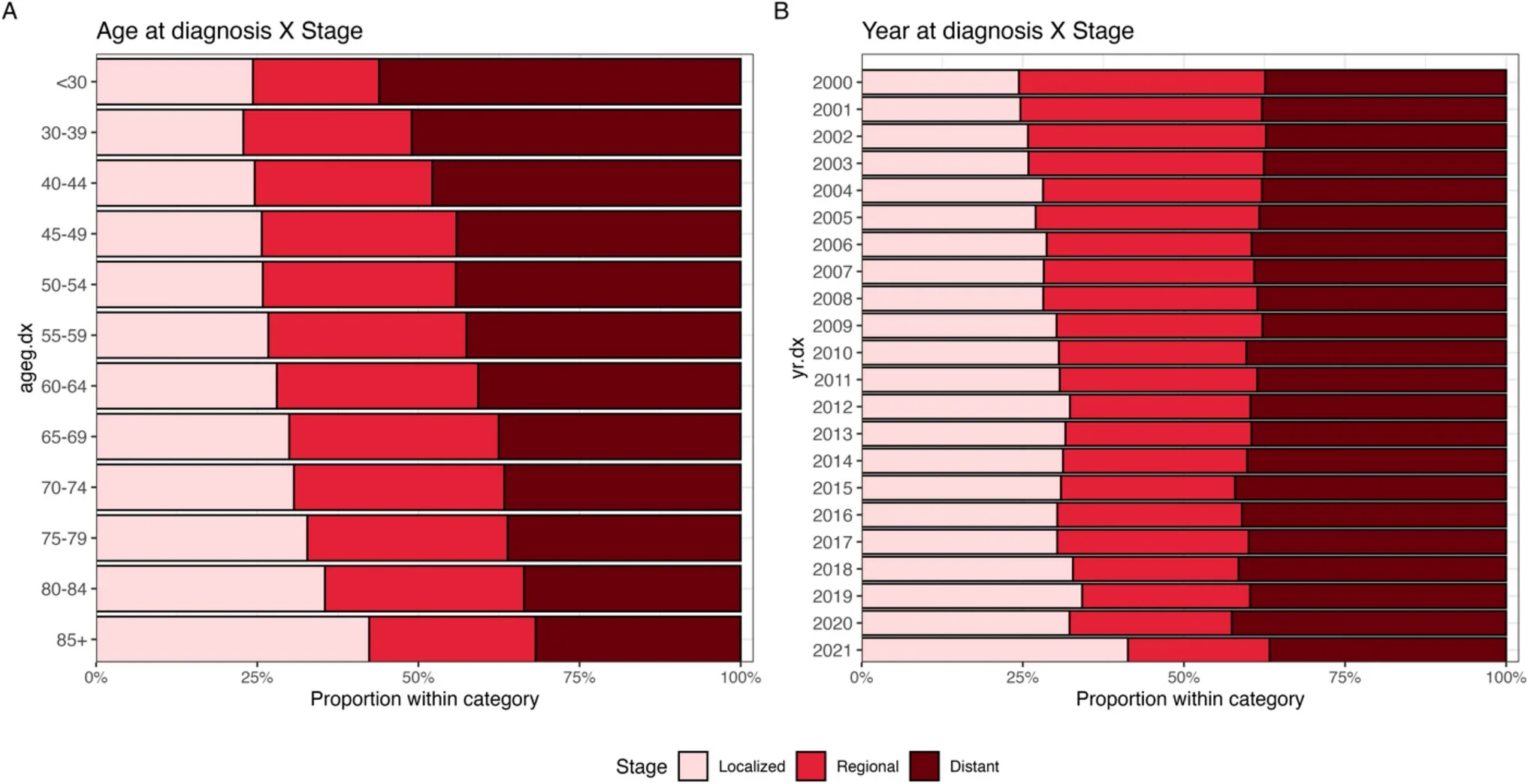
Distribution of gastric cancer stages at diagnosis by patient age and year of diagnosis in the United States, 2000–2021. Source: Wang et al., Cancer Causes & Control (2026). https://doi.org/10.1007/s10552-026-02291-5.
Nearly Half of Patients Aged 85 and Older Received No Treatment
The study uncovered another important concern at the opposite end of the age spectrum.
Despite being more likely to have localized disease, approximately 50% of patients aged 85 and older had no cancer-directed treatment recorded in the SEER first-course treatment data. After adjusting for cancer stage and demographic factors, patients in this age group had more than seven times the odds of receiving no recorded treatment rather than surgery, compared with patients aged 60–64 (OR 7.27; 95% CI 6.71–7.87).
Overall, 22% of patients in the study had no cancer-directed treatment recorded, while 50.5% received surgery, with or without chemotherapy or radiotherapy.
The researchers emphasized that treatment decisions in older adults are complex. Frailty, other medical conditions, functional status, and patient preferences may all influence whether treatment is appropriate.
However, the findings also raise questions about whether some older patients could benefit from more comprehensive geriatric assessments and individualized treatment planning rather than decisions based primarily on chronological age.
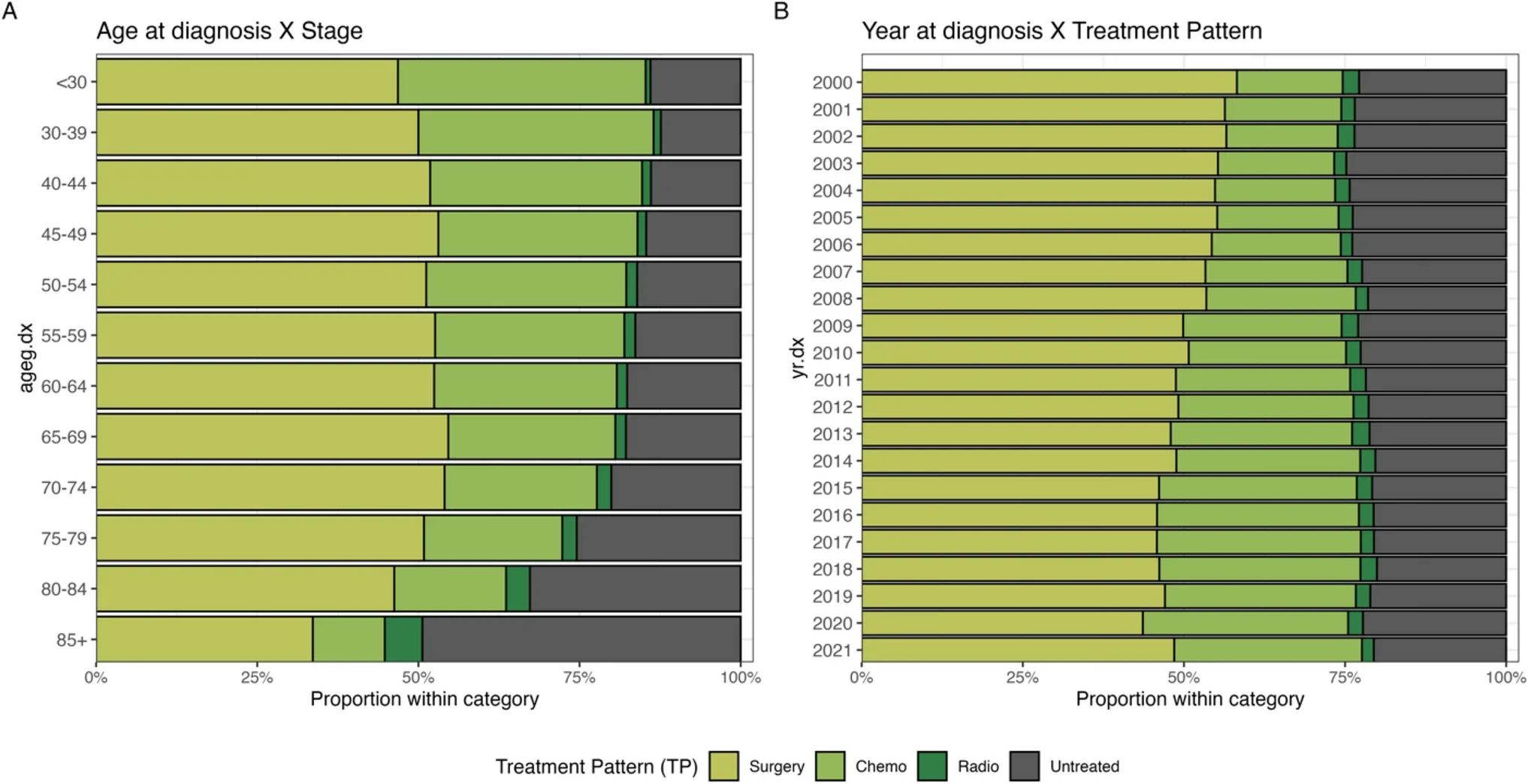
Age-related differences in first-course gastric cancer treatment, highlighting the increasing proportion of older patients with no recorded cancer-directed treatment. Source: Wang et al., Cancer Causes & Control (2026). https://doi.org/10.1007/s10552-026-02291-5
Racial and Ethnic Differences Reveal Additional Gaps
The study also identified significant differences in stage at diagnosis and treatment use across racial and ethnic groups.
Hispanic patients had the highest overall proportion of distant-stage gastric cancer diagnoses, at 44.2%. Among Asian American subgroups, Filipino patients had the highest proportion of distant-stage disease, at 40.4%. The association between younger age and more advanced disease was particularly pronounced among Hispanic and Asian American patients, including Chinese, Korean, and Japanese American populations.
Treatment differences were also evident. Black patients had the highest overall proportion of no recorded treatment, at 24.6%, while increasing age was associated with particularly pronounced treatment gaps among Black, Hispanic, and Pacific Islander patients.
These findings reinforce the importance of examining differences within racial and ethnic populations rather than treating large demographic groups as having identical cancer risks and healthcare experiences.
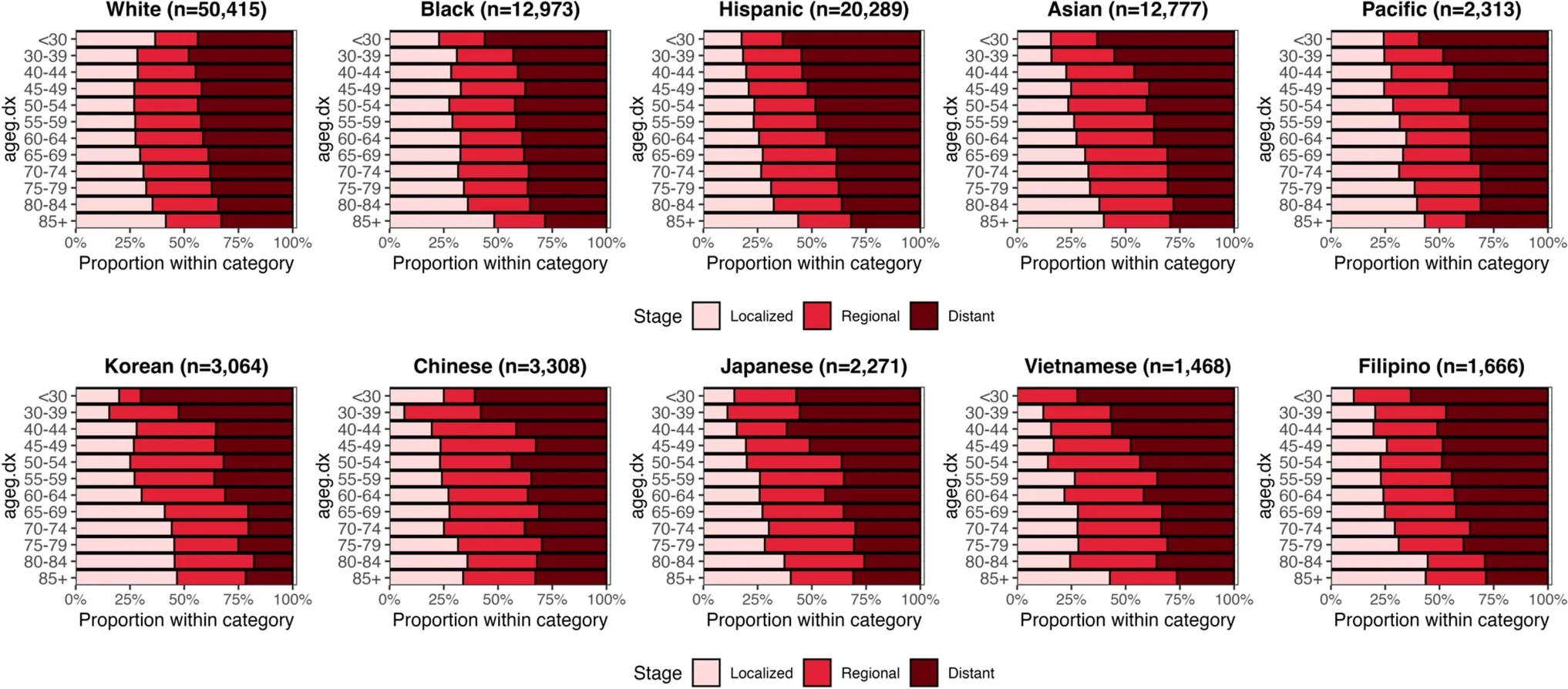
Distribution of gastric cancer stages at diagnosis across racial and ethnic populations in the United States, including individual Asian American subgroups. Source: Wang et al., Cancer Causes & Control (2026). https://doi.org/10.1007/s10552-026-02291-5
What Could These Findings Mean for Stomach Cancer Screening?
The researchers suggest that the disproportionate burden of advanced stomach cancer among younger patients deserves closer attention, particularly in populations already known to face elevated gastric cancer risks.
Several potential explanations warrant investigation, including Helicobacter pylori infection, dietary and environmental exposures, tumor biology, and delays in recognizing symptoms in younger people. However, the study did not directly test these explanations.
The findings are also relevant to ongoing discussions about risk-based gastric cancer screening in the United States.
The American Gastroenterological Association has previously recommended considering screening in populations at increased risk, including first-generation immigrants from regions with high gastric cancer incidence, individuals with a family history of gastric cancer, and certain racial and ethnic groups.
Nevertheless, the new study does not establish that screening all younger adults would improve outcomes. Further research is needed to identify which groups could benefit most from earlier investigation and targeted prevention strategies.
A Call for Earlier Diagnosis and More Equitable Care
Although the study provides valuable insights, its observational design cannot establish why patients were diagnosed at particular stages or why some did not receive treatment. The SEER data also lacked detailed information about frailty, treatment preferences, access barriers, and several gastric cancer risk factors. Some procedures may not have been fully captured in treatment records.
Nevertheless, the findings highlight two important challenges facing gastric cancer care: recognizing potentially advanced disease in younger patients and ensuring that older adults receive appropriate, individualized treatment assessments.
As the characteristics of patients diagnosed with gastric cancer continue to evolve, understanding these differences may help clinicians and policymakers improve early detection, address disparities in care, and develop more equitable treatment strategies.
Source: Wang Y, Lee S, Sun J, et al. Changing gastric cancer epidemiology in the U.S.: age-specific patterns in stage at diagnosis and treatment by race/ethnicity and Asian subgroup. Cancer Causes & Control. 2026;37:199. DOI: 10.1007/s10552-026-02291-5.
Read further on OncoDaily: New Article in ACS’s Flagship Journal Highlights Preventable Cancer Disparities Among Hispanic and Latino People in the US