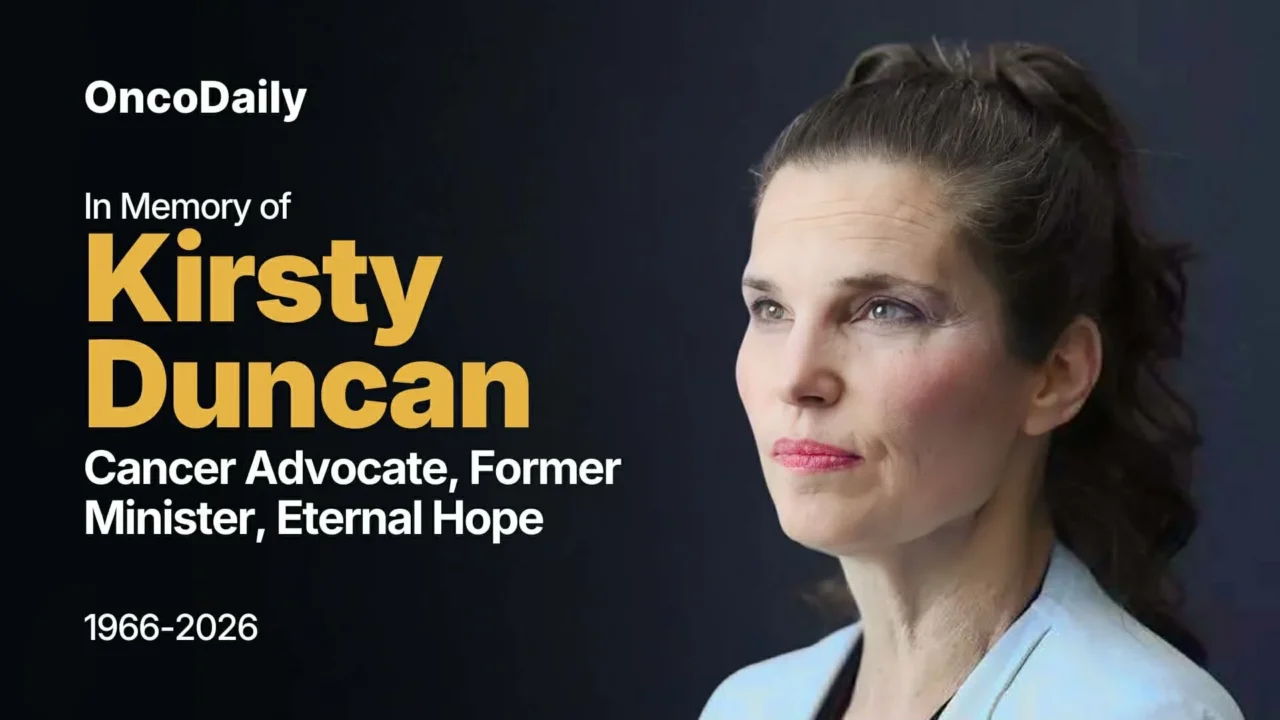
Kirsty Ellen Duncan, The Honourable Kirsty Duncan, PC, was born on October 31, 1966, and passed away on January 26, 2026, at the age of 59. She was a five‑time Liberal Member of Parliament, representing the riding of Etobicoke North in Toronto from 2008 until she chose not to run in the 2025 federal election.
Before entering politics, Duncan was a medical geographer and academic. She earned a PhD in Geography from the University of Edinburgh and had a long career in higher education, teaching geography, climatology, and human health at the University of Windsor and later at the University of Toronto. Her work focused on the links between climate, environment, and health, including historical health crises such as the 1918 Spanish flu pandemic.
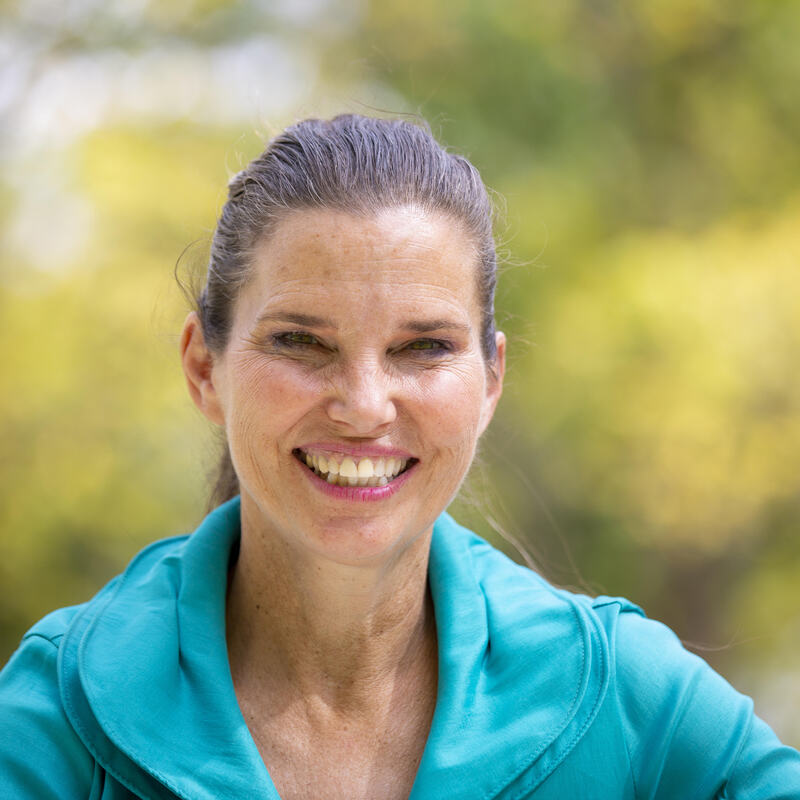
Kirsty Duncan meeting with constituents in her riding in Toronto, Ontario on Monday, September 23, 2019. (Photo by Peter Power)
Duncan was also a contributing author to the Intergovernmental Panel on Climate Change (IPCC), which shared the 2007 Nobel Peace Prize for its work on climate science and its implications for global health and security.
Cancer Diagnosis and Treatment
In 2023, Kirsty Duncan was diagnosed with cancer and took a medical leave from Parliament starting January 26, 2023, to focus on treatment. During this period, she remained an active Member of Parliament and continued to speak in the House and on committees while undergoing treatment.
In public statements, she described her treatment as involving “multiple operations, radiation and chemotherapy,” sustained over many months. In a speech in the House of Commons on October 21, 2024, she detailed her experience:
“I am especially grateful to doctors, scientists and health care professionals for their medicine, research and caring, which have allowed me to work every day for the community I love, through multiple surgeries, radiation and ongoing chemotherapy”.
Public Advocacy During Her Cancer Journey
Throughout her illness, Duncan spoke openly about the emotional and physical toll of cancer. In her October 21, 2024, speech in the House of Commons, she said: “Cancer touches all of us, and it is hard. Sometimes the fight is week by week; sometimes it is hour by hour. It can be lonely despite having the best support system”.
She used her experience to advocate for and encourage others facing cancer. In the same speech, she told fellow patients: “To those living with cancer, know that you’re not alone and I stand with you… Those who are hurting should know they have one more person in their corner”. She framed her own struggle as part of a collective fight, emphasizing solidarity with patients and their families.
At a Heritage committee hearing on June 15, 2023, while still serving as a minister, she directly linked her cancer journey to her policy advocacy, stating: “I am grateful for the life‑saving medicine, science and compassionate and excellent care of our health‑care professionals”. These remarks highlighted her deep appreciation for the healthcare system and her belief in the importance of access to advanced, science‑based treatments.
Science and Health Policy Advocacy
As Canada’s Minister of Science from 2015 to 2019, Duncan was a leading voice for evidence‑based decision‑making in public policy. She reinstated the mandatory long‑form census, which scientists and public health experts had long argued was essential for accurate data on health, poverty, and social conditions.
Under her leadership, the federal government appointed Canada’s first Chief Science Advisor, a role created to ensure that scientific evidence was transparently considered in government decisions, including those related to health and the environment. She regularly emphasized that “you need evidence to make good decisions,” a principle that guided her approach to health policy.
Duncan was a strong supporter of public health programs and cancer prevention efforts. She argued that science and data are fundamental to effective cancer screening, early detection, and equitable access to care, especially for underserved communities. Her background in medical geography informed her focus on how environmental, social, and geographic factors including climate change can influence health outcomes, including cancer risk and health disparities.
Advocacy Beyond Cancer
Duncan was also a prominent advocate for safe and inclusive sport. As Minister of Science and Sport, she prioritized “safe sport” and called for an end to abuse, harassment, and discrimination in athletics. In that role, she launched a national toll‑free helpline for abuse in sport and pushed for a national code of conduct and a gender equity secretariat to protect athletes’ mental and physical health.
Her own background as a competitive gymnast and endurance athlete including marathon running and triathlon informed her passion for physical activity and mental resilience as part of health and recovery. She often spoke about the importance of sport not only for physical health but also for building confidence and resilience, especially in young people.
Role in Cancer and Lung Health Advocacy
After leaving cabinet, Duncan remained actively involved in health advocacy. She served on the board of the Lung Health Foundation, where she supported lung health research, public awareness campaigns, and policy initiatives related to respiratory disease and environmental health.
Tributes from the Lung Health Foundation and other health organizations describe her as a “passionate advocate and tireless champion for health, science, and public service” who brought both scientific rigor and personal compassion to health issues. Her work helped bridge the gap between science, policy, and patient experience, particularly in areas where respiratory and environmental health intersect with cancer and chronic disease.
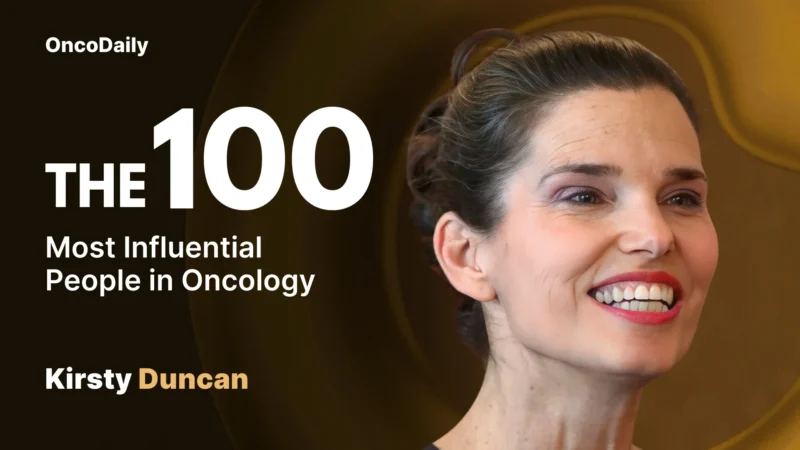
She was recognized as one of the 100 Influential Women in Oncology by OncoDaily, which highlighted her unique combination of scientific expertise, political leadership, and advocacy for women in science and health equity.
Advocacy Beyond Cancer
Even as she faced cancer, Kirsty Duncan remained a passionate advocate for health and safety in sports. As Minister of Sport and later Minister of Science and Sport (2017–2019), she made “safe sport” a central priority, calling for an end to abuse, harassment, and discrimination in amateur and professional athletics. She championed the right of athletes to train and compete in environments that protect both their physical and mental well-being.
To support this goal, Duncan launched a national toll‑free helpline for abuse in sport, ensuring that athletes and their families could report misconduct and access help. She also pushed for a national code of conduct and advocated for the creation of a gender equity secretariat, focused on eliminating abuse and fostering inclusion, especially for women and girls in sport. Her work helped lay the foundation for systemic reforms aimed at making sport safer, fairer, and more accessible.
Duncan was herself a lifelong athlete, having competed in gymnastics as a child and later becoming a marathon runner and triathlete. She often spoke about the vital role of physical activity in building resilience and aiding recovery, viewing sport not just as competition but as a powerful tool for physical health, mental strength, and personal empowerment.
You Can Also Read Kirsty Duncan Recognized Among The 100 Most Influential People in Oncology in 2025 by OncoDaily
Jim Woodgett, President and Scientific Director, Terry Fox Research Institute Professor and Senior Scientist at Mount Sinai Hospital, shared a post on LinkedIn:
“Canada lost an enormous champion and symbol of science and sports today. The Rt Hon Kirsty Duncan passed away from cancer after a trail-blazing life in which she accomplished so much but had so much more to give. I was privileged to meet and work with her when she was Minister of Science, and since. After her diagnosis she turned her attention to the many discrepancies in cancer care, access to new therapies and disparities in funding across the country.
She was the Minister who commissioned and received the Fundamental Science Review (Naylor Report) and worked to have its recommendations implemented. She established the Standing Committee of Science and Research. She actively championed EDI and called out injustices – from athletes to MPs. She never let her enormous challenges get in the way of her advocacy and compassion. A true loss. RIP.”
Written by Aharon Tsaturyan, MD, Editor at OncoDaily Intelligence Unit