At ASCO 2026, Mendel Goldfinger, MD, presented results from an ongoing Phase I study (NCT06533761) of oral eganelisib monotherapy in patients with relapsed/refractory acute myeloid leukemia or higher-risk myelodysplastic syndrome, focusing on its safety profile, pharmacodynamics, and preliminary anti-leukemic activity.
Targeting PI3Kγ in Myeloid Malignancies
In these settings, treatment resistance is increasingly linked to leukemic stem cell (LSC) persistence, altered marrow microenvironment signaling, and adaptive survival pathways.
Recent translational studies identified PI3K-gamma (PI3Kγ) as a distinct myeloid-restricted signaling dependency in AML and HR-MDS. The PI3Kγ-AKT1-NRF2 and PI3Kγ-PAK1 pathways regulate leukemic stem cell self-renewal, bone marrow homing, oxidative metabolism, nucleotide synthesis, maturation arrest, and apoptosis suppression.
Importantly, these pathways have also been implicated in resistance to venetoclax and nucleoside analogues. Unlike PI3K-delta inhibition, which has been associated with significant immune toxicities, PI3Kγ appears largely dispensable for normal hematopoiesis and lymphocyte function, supporting its potential as a safer therapeutic target.
Eganelisib is a first-in-class, oral, highly selective PI3Kγ inhibitor with strong affinity for the gamma isoform. In prior solid tumor studies, daily dosing between 30 and 60 mg was well tolerated and achieved consistent target modulation without evidence of significant myelosuppression.

Myelodysplastic Neoplasms (MDS): From Ineffective Hematopoiesis to Sideroblastic Phenotype
Patient Population
Eligible patients had ≥10% bone marrow blasts, had exhausted standard therapeutic options, an ECOG performance status ≤2, adequate hepatic and renal function, and a white blood cell count ≤25 × 10⁹/L.
Most patients (90%) met ELN 2022 adverse-risk criteria, and TP53 mutations were present in 29%. Prior treatment exposure was substantial, with 76% having received at least two prior lines of therapy, including venetoclax, 33% had received intensive chemotherapy and 19% had undergone allogeneic transplantation.
Study Design
Eganelisib was administered orally once daily in continuous 28-day cycles at dose levels of 45 mg and 60 mg. The primary objectives were to evaluate safety, dose-limiting toxicities, and preliminary clinical activity, while secondary endpoints included pharmacokinetic and pharmacodynamic assessments.
Target engagement was assessed through inhibition of phosphorylated AKT in monocytes as a biomarker of PI3Kγ pathway suppression. At the time of analysis, 21 patients had been enrolled, including 7 treated at 45 mg and 14 at 60 mg. The median age was 72 years, and most patients had AML (19/21), while two had HR-MDS.
Pharmacokinetics and Pharmacodynamics
Steady-state exposure was achieved with once-daily dosing at both 45 mg and 60 mg, with plasma concentrations exceeding the predefined PI3Kγ EC90 threshold. Pharmacodynamic analyses confirmed sustained target engagement, with inhibition of AKT phosphorylation reaching approximately 90% maximal suppression, consistent with effective PI3Kγ pathway inhibition.
Safety
No dose-limiting toxicities were observed among the 21 treated patients, and no treatment-related adverse events led to treatment discontinuation. Most adverse events were low grade, with only one case of transient grade 3 transaminitis reported in a patient with pre-existing liver disease. Importantly, no significant gastrointestinal toxicity or intrinsic hematologic toxicity was observed.
Clinical Activity
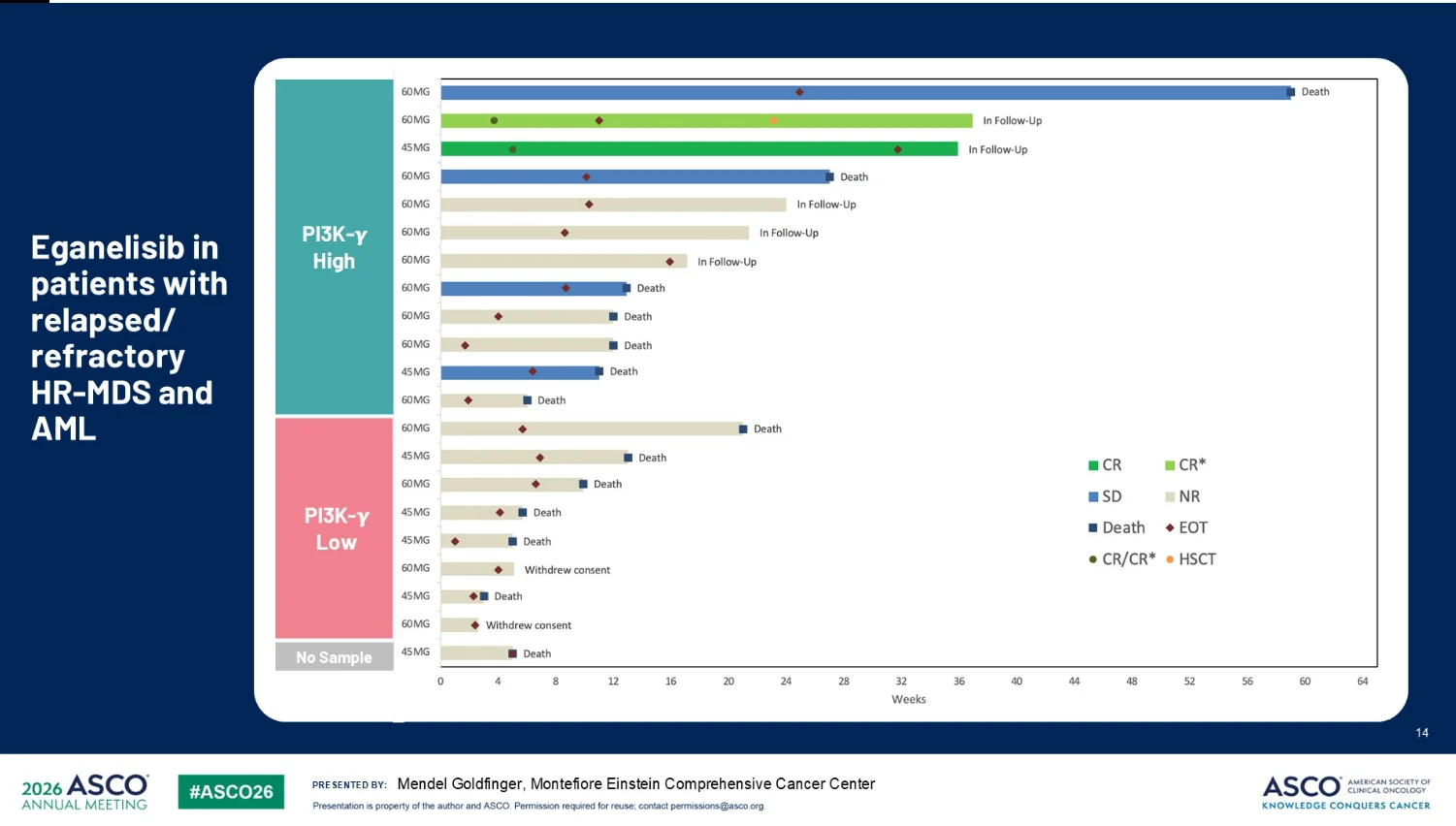
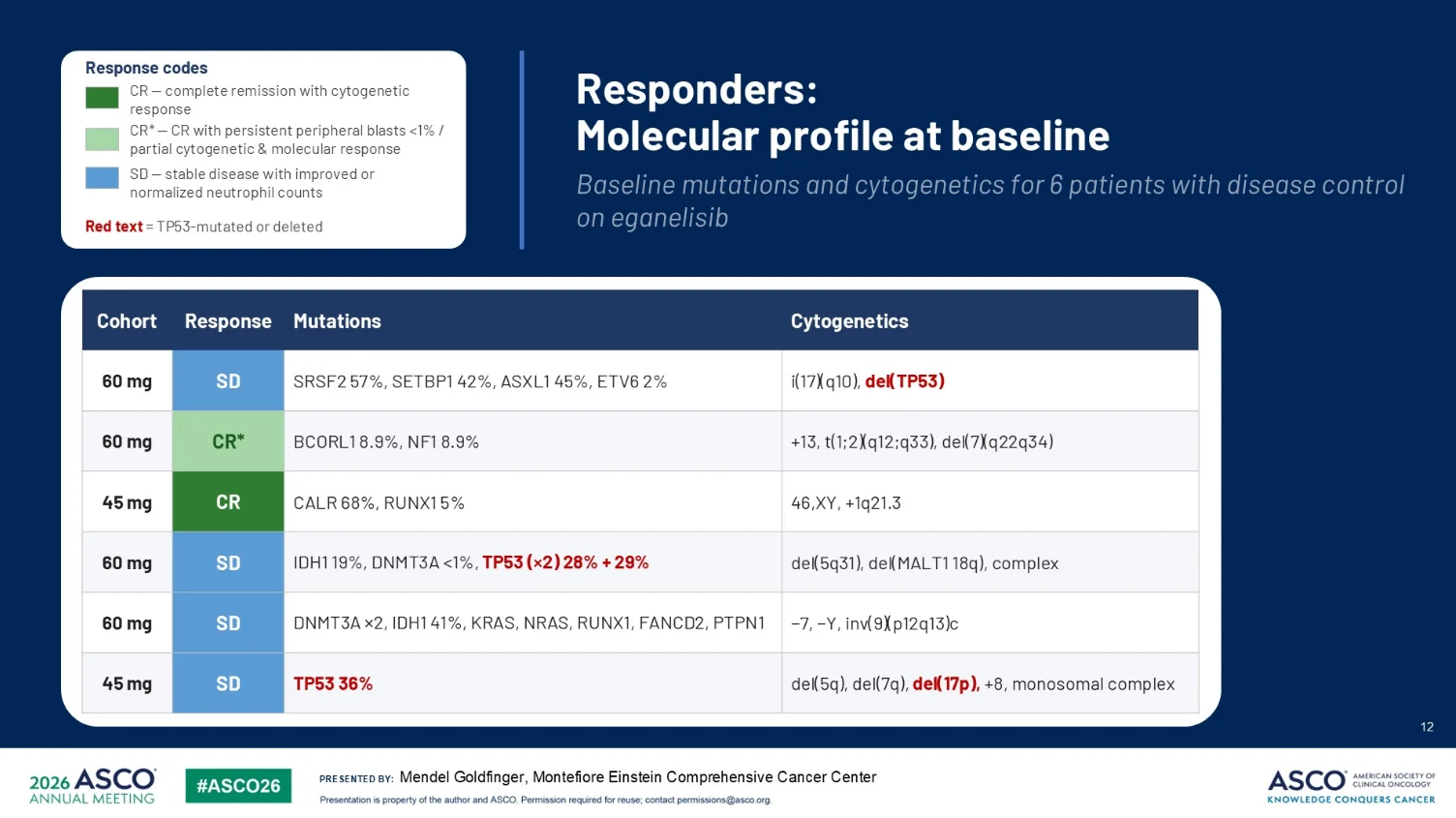
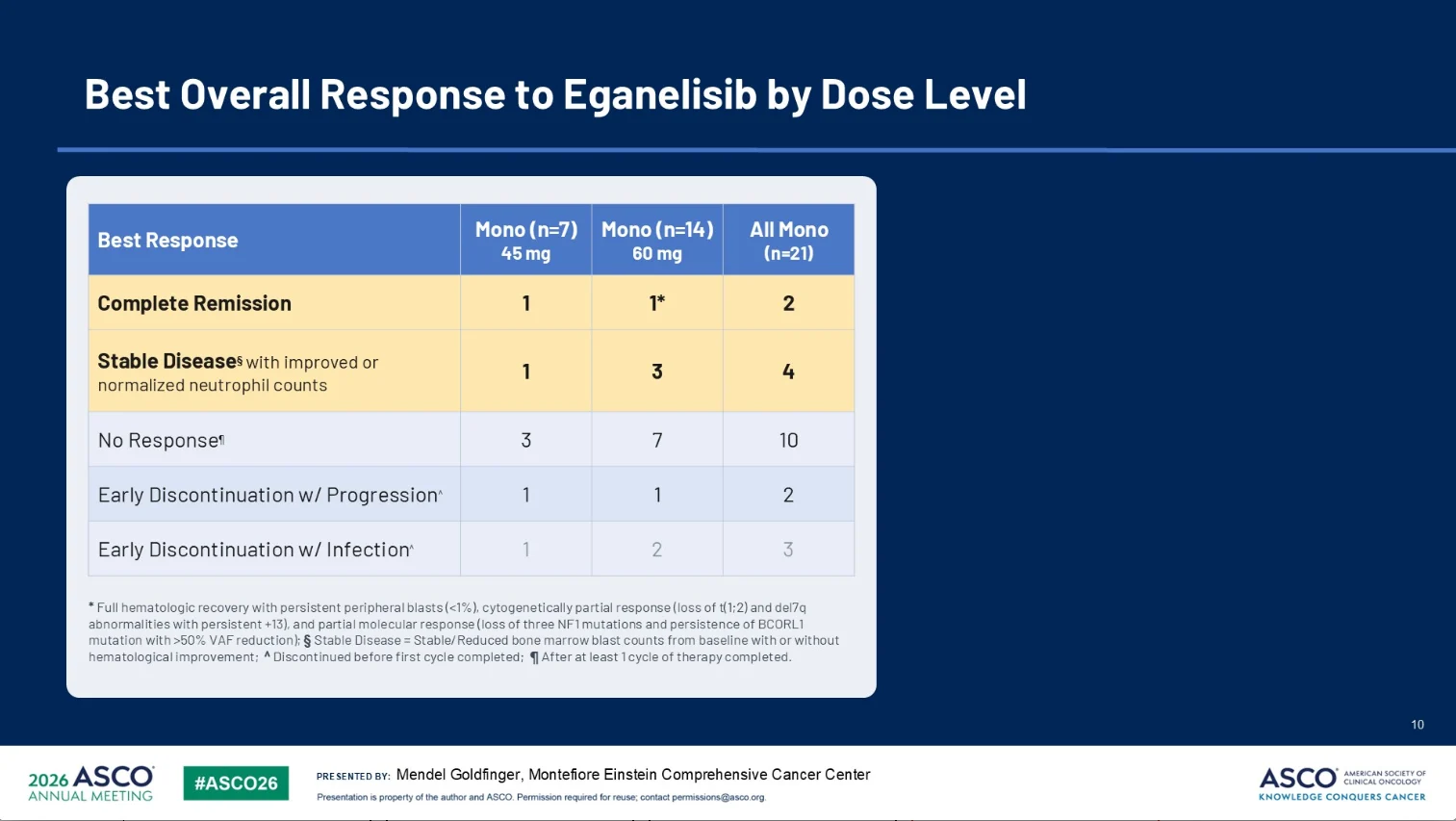
Despite the heavily pretreated and high-risk cohort, preliminary anti-leukemic activity was observed. Among 21 treated patients, 2 achieved CR, including 1 patient in each dose cohort. Four additional patients experienced disease stabilization, with stable or reduced marrow blast counts during treatment.
Notably, 1 patient in the 60 mg cohort achieved full hematologic recovery accompanied by marrow blast reduction, cytogenetic response, and molecular evidence of subclonal clearance. Clinical benefit was also observed in TP53-mutated settings.
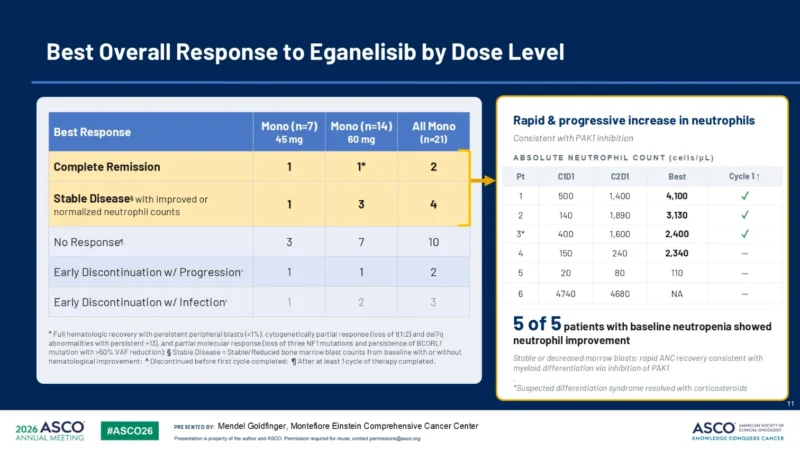
Beyond reductions in disease burden, treatment was associated with improvements in hematopoiesis. All 5 evaluable patients with baseline neutropenia experienced neutrophil recovery during therapy, consistent with the proposed role of PI3Kγ inhibition in restoring myeloid differentiation.
Impact of PI3Kγ Expression
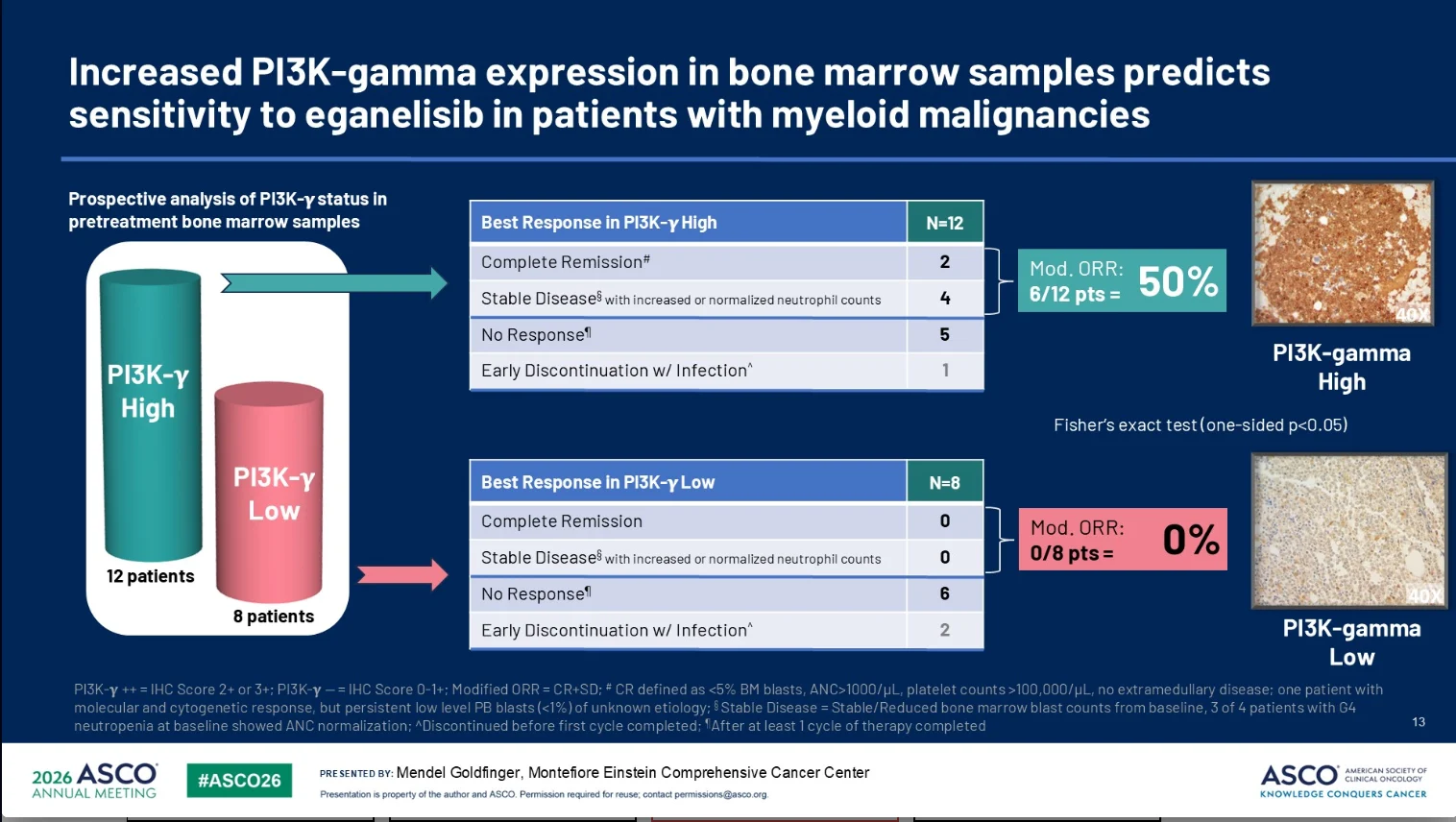
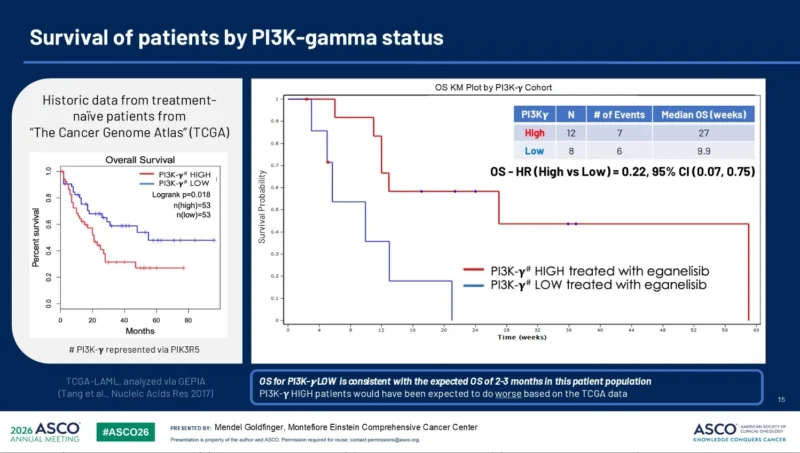
Higher PI3Kγ expression appeared to be associated with greater clinical benefit from eganelisib. Six of 12 patients with high PI3Kγ expression achieved complete remission or disease control, compared with no responses among those with low expression.
Median OS was 27 weeks in the PI3Kγ-high group compared with 9.9 weeks in the PI3Kγ-low group, supporting the hypothesis that PI3Kγ expression may identify patients more likely to benefit from eganelisib. These findings support further evaluation of PI3Kγ expression as a potential predictive biomarker and warrant validation in larger cohorts.
Take-Home Messages
Eganelisib was well tolerated and achieved sustained PI3Kγ pathway inhibition in heavily pretreated patients with R/R AML and HR-MDS. Preliminary anti-leukemic activity, together with neutrophil recovery consistent with myeloid differentiation, supports PI3Kγ as a biologically relevant therapeutic target in myeloid malignancies.
The association between high PI3Kγ expression and clinical benefit further supports PI3Kγ as both a therapeutic target and a potential biomarker for patient selection. These findings provide a rationale for ongoing and future studies of eganelisib in PI3Kγ-positive myeloid malignancies.