At the 2026 ASCO Annual Meeting, Atish Dipankar Choudhury, MD, PhD, from Dana-Farber Cancer Institute, presented results from A-DREAM / Alliance A032101, a phase 2 trial evaluating treatment interruption in selected patients with metastatic hormone-sensitive prostate cancer who had responded exceptionally to testosterone suppression plus an androgen receptor pathway inhibitor.
Patients with metastatic hormone-sensitive prostate cancer are commonly treated with continuous testosterone suppression together with an androgen receptor pathway inhibitor. While this approach can be effective, long-term treatment may also lead to cumulative toxicity.
A-DREAM explored whether patients with a favorable response to testosterone suppression and androgen receptor pathway inhibitor therapy could stop treatment and remain off therapy for a prolonged period while recovering testosterone levels.
Read more about Prostate Cancer Cure Rate on OncoDaily.
Study Design
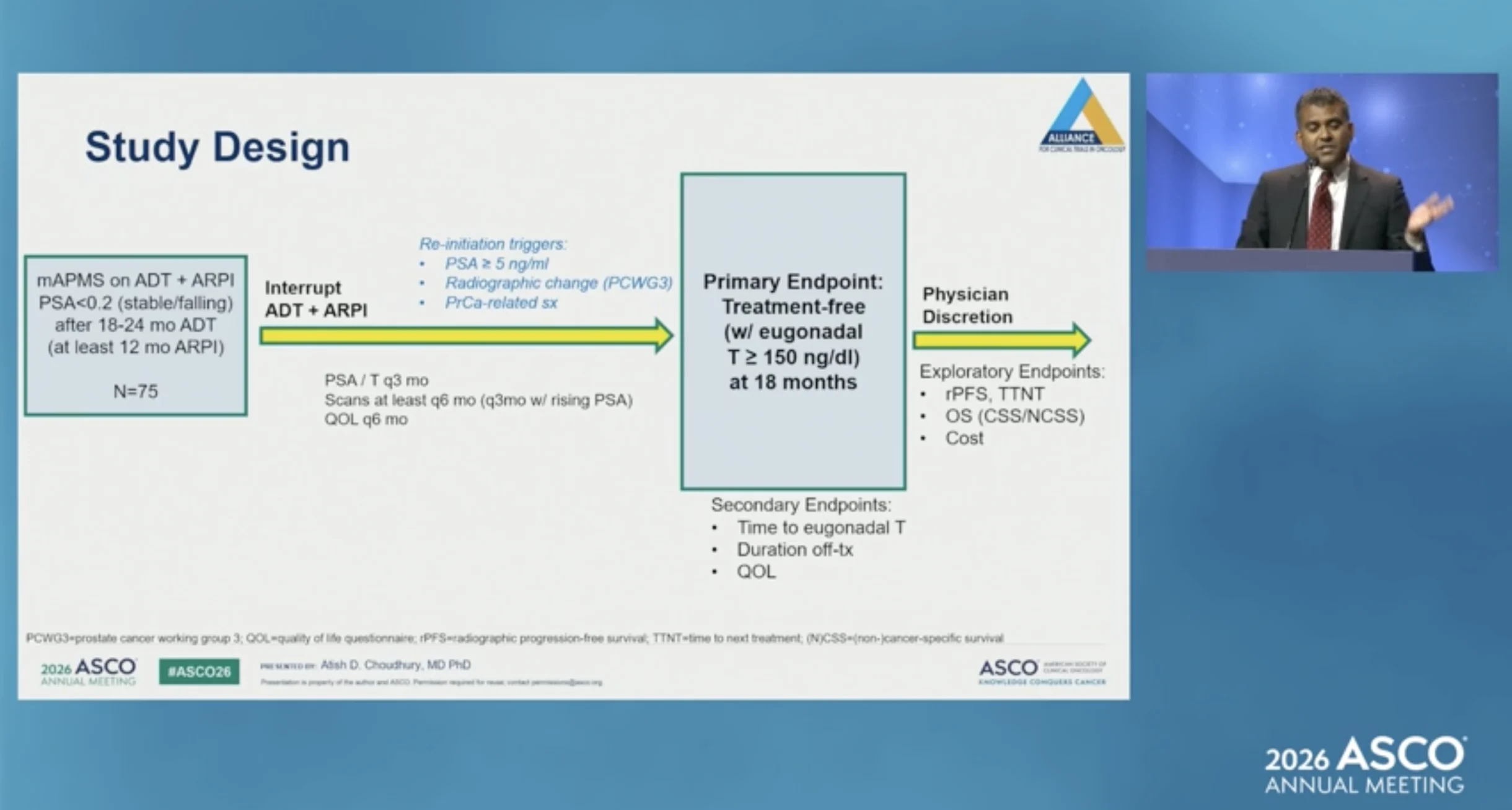
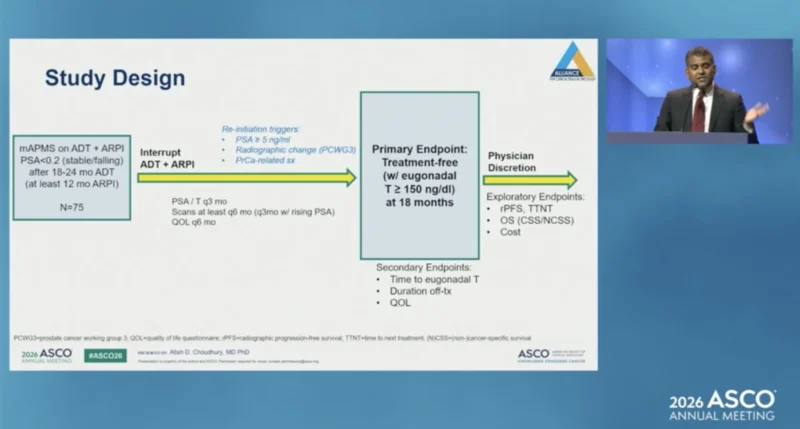
A-DREAM / Alliance A032101 was a single-arm phase 2 trial in patients with metastatic androgen pathway modulator-sensitive prostate cancer.
Eligible patients had received ADT plus an androgen receptor pathway inhibitor and had achieved a stable or falling prostate-specific antigen level below 0.2 ng/mL after 18 to 24 months of ADT, including at least 12 months of androgen receptor pathway inhibitor therapy.
After enrollment, patients discontinued both ADT and the androgen receptor pathway inhibitor. Prostate-specific antigen and testosterone levels were monitored every 3 months. CT or MRI and bone scans were performed at least every 6 months, and quality-of-life assessments were performed every 6 months.
Treatment re-initiation was triggered by prostate-specific antigen of at least 5 ng/mL, radiographic change, or prostate cancer-related symptoms.
The primary endpoint was the proportion of patients who remained treatment-free 18 months after treatment interruption with recovery of eugonadal testosterone, defined as testosterone of at least 150 ng/dL.
Key Findings
Between July 2022 and March 2024, 78 eligible patients underwent treatment interruption.
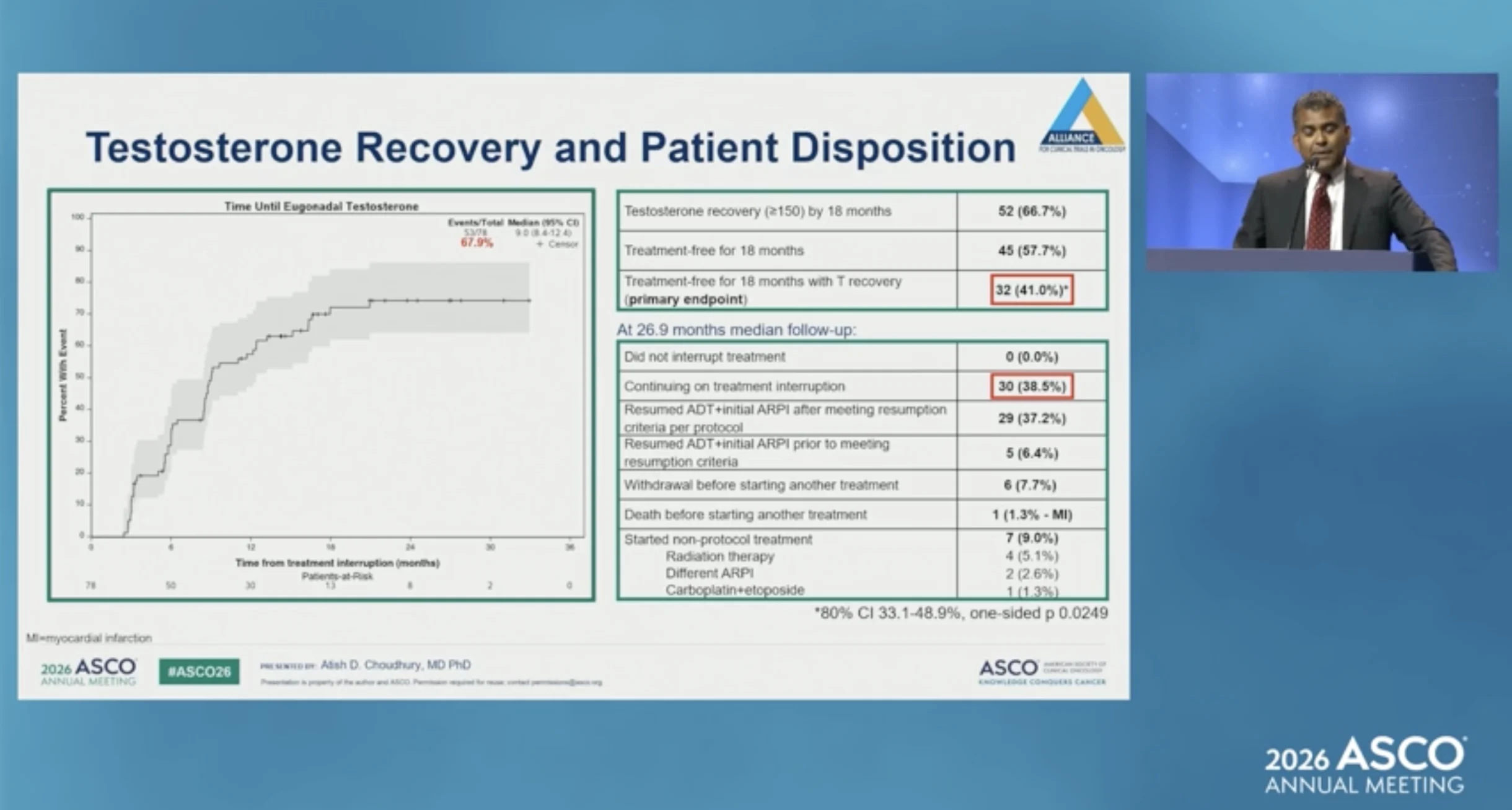
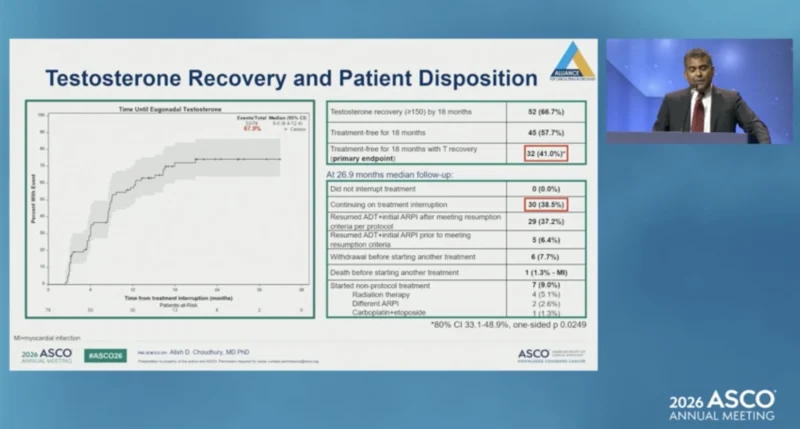
By 18 months, 52 patients, or 66.7%, had recovered testosterone to at least 150 ng/dL, and 45 patients, or 57.7%, remained treatment-free.
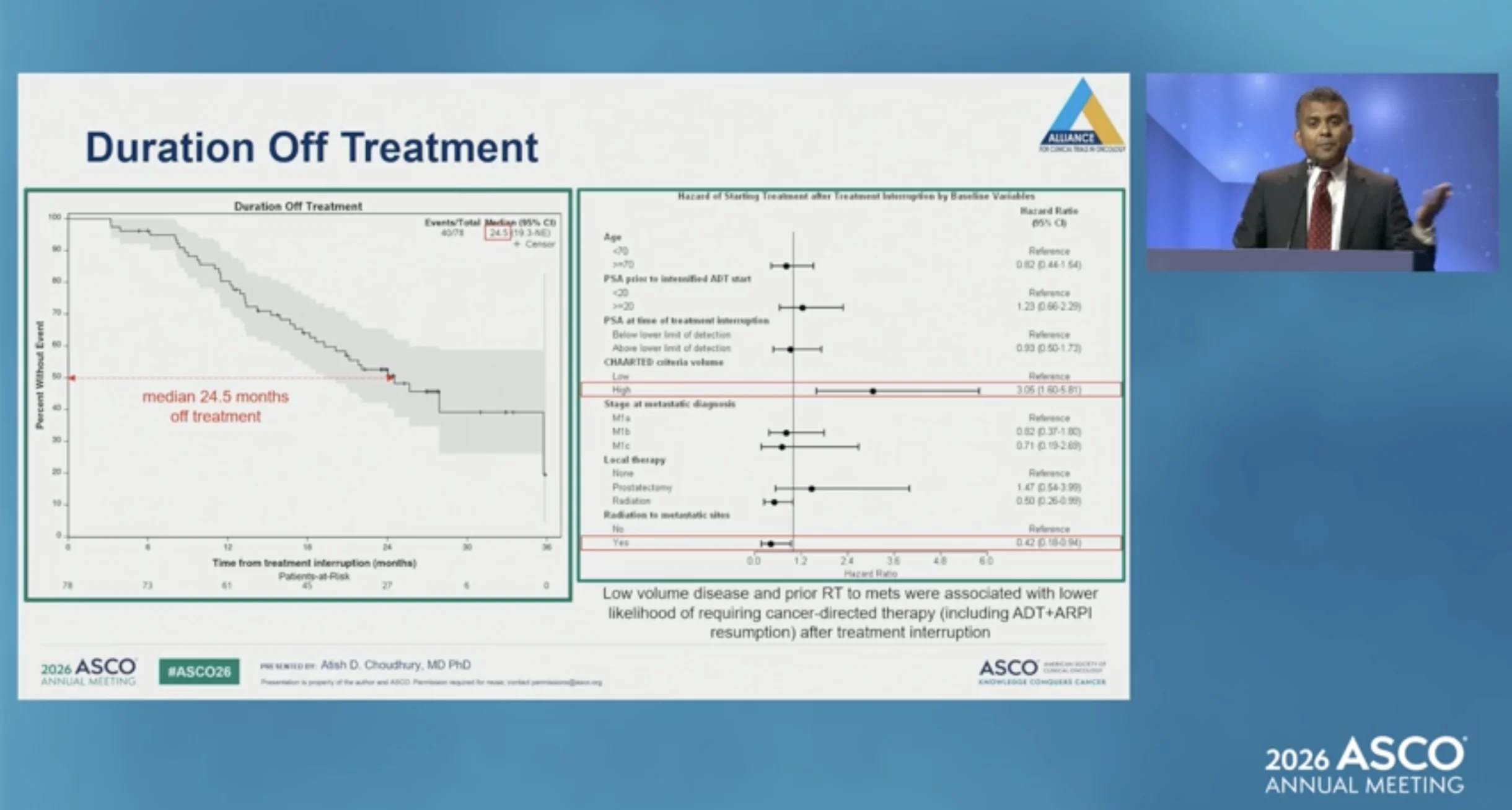
The primary endpoint was met: 32 patients, or 41.0%, remained treatment-free with testosterone recovery at 18 months after treatment interruption. The 80% CI was 33.1–48.9%, with a one-sided p value of 0.0249. The median duration off treatment was 24.5 months.
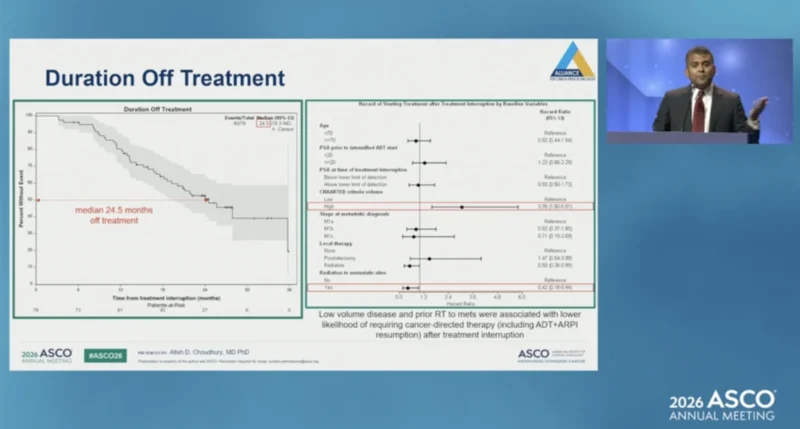
At 26.9 months median follow-up, 30 patients, or 38.5%, were continuing on treatment interruption. Twenty-nine patients, or 37.2%, resumed ADT plus their initial ARPI after meeting protocol-defined re-initiation criteria.
Among the 29 patients who resumed ADT plus ARPI per protocol, 4 later progressed and discontinued their original ARPI.
Radiographic progression-free survival and overall survival medians were not estimable. Estimated radiographic progression-free survival was 80.7% at 24 months, and estimated overall survival was 96.0% at 24 months.
Takeaways
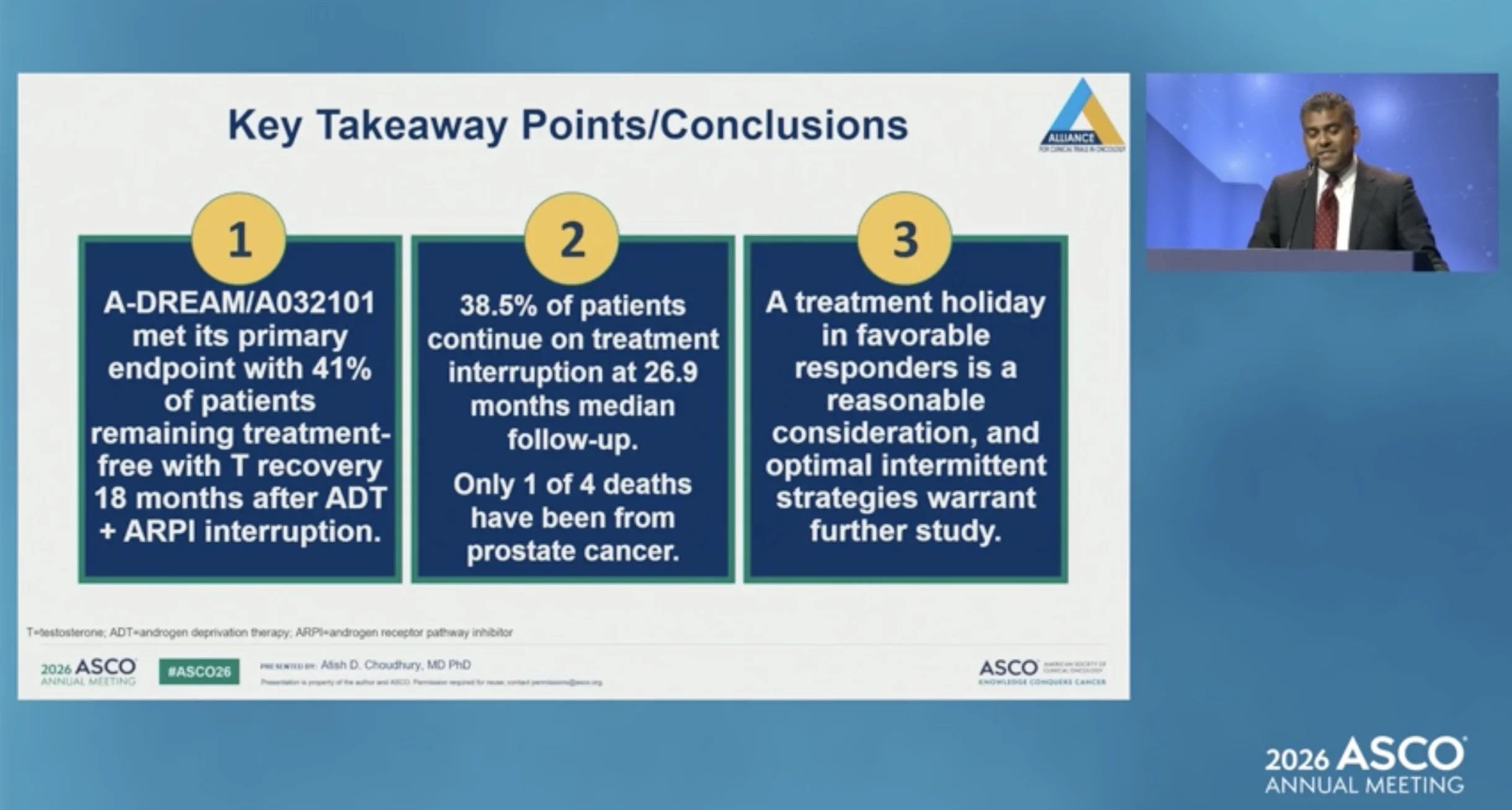
A-DREAM / Alliance A032101 met its primary objective. Among selected favorable responders to testosterone suppression plus androgen receptor pathway inhibitor therapy, 41.0% remained treatment-free with testosterone recovery 18 months after treatment interruption.
At 26.9 months median follow-up, 38.5% of patients were still continuing on treatment interruption, and the median duration off treatment was 24.5 months.
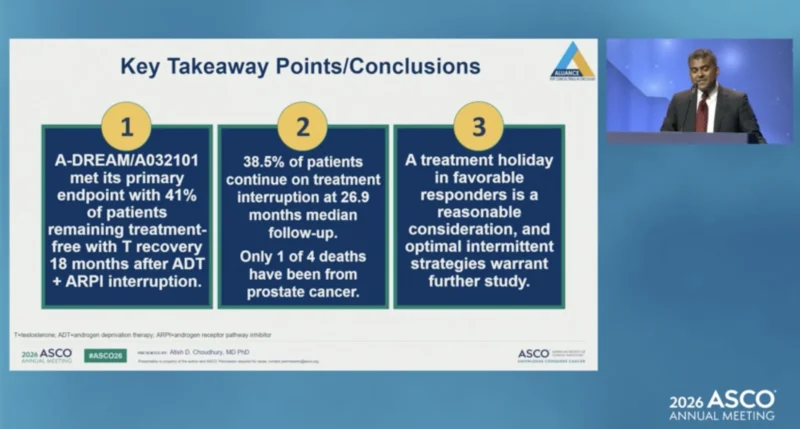
The findings suggest that a treatment holiday may be a reasonable consideration for carefully selected favorable responders. However, the study was limited by its single-arm design, selected patient population, limited sample size, and the need for longer follow-up. Long-term follow-up and quality-of-life analyses remain pending.
The full abstract is available on the official ASCO website.
You can also read about KEYNOTE-564 at ASCO 2026 on OncoDaily.