Presented at ASCO 2026 by Toni K. Choueiri, MD, FASCO, this biomarker analysis from the phase 3 KEYNOTE-564 trial explored circulating tumor DNA (ctDNA) in patients with clear cell renal cell carcinoma (ccRCC) treated with adjuvant pembrolizumab or placebo after nephrectomy.
Pembrolizumab previously demonstrated improved outcomes in KEYNOTE-564 for patients with ccRCC at increased risk of recurrence following surgery. This analysis evaluated the association between baseline ctDNA status, ctDNA status change from baseline to cycle 5 day 1, and disease-free survival.

You can read about Kidney Cancer Remission Rate on OncoDaily.
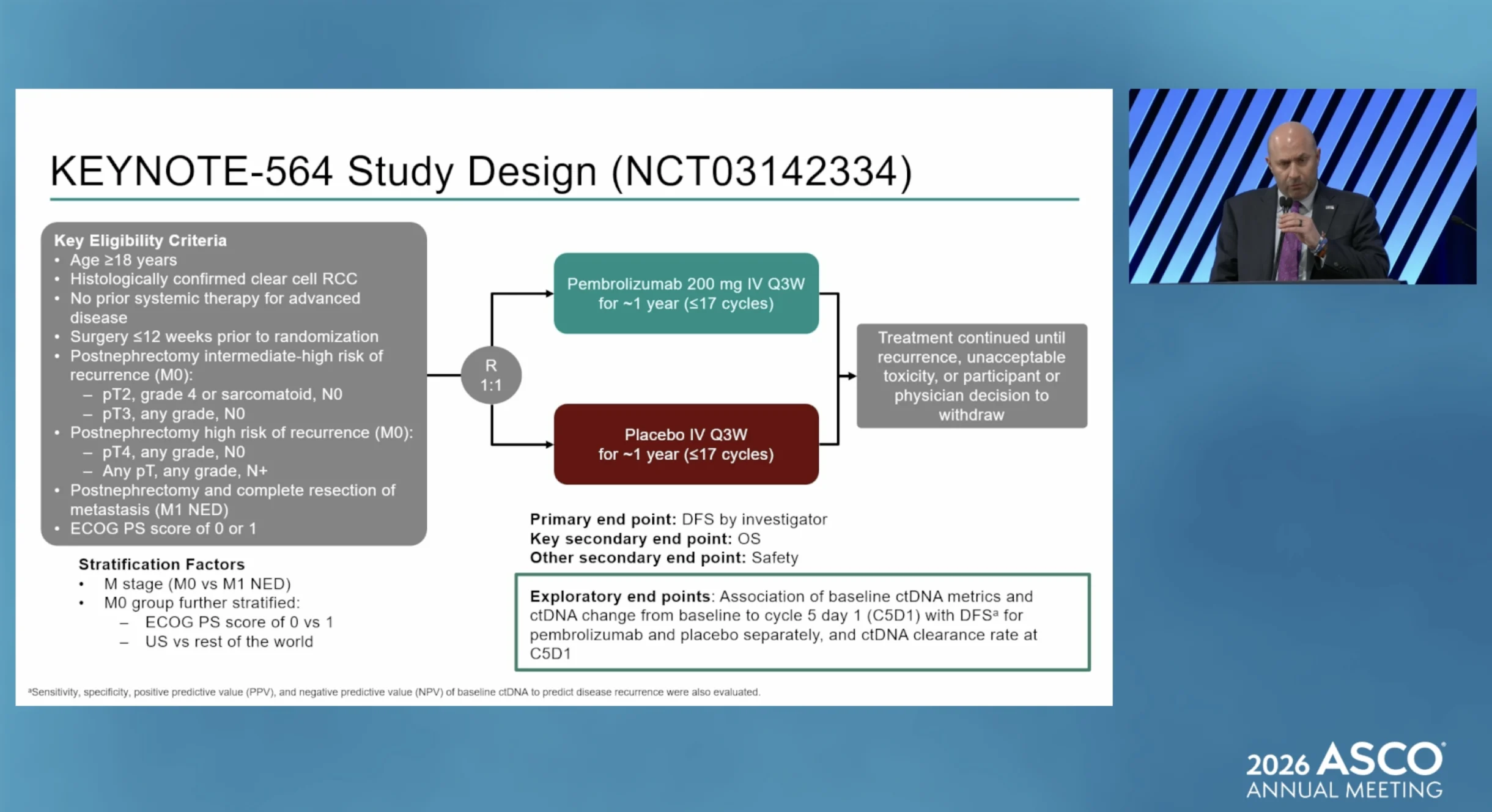
KEYNOTE-564 Trial Design and ctDNA Analysis
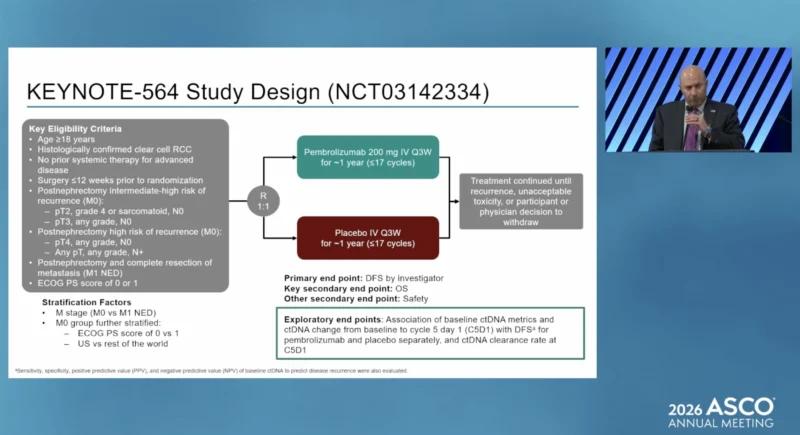
Patients with clear cell renal cell carcinoma at increased risk of recurrence after nephrectomy were randomized 1:1 to receive pembrolizumab or placebo. ctDNA was analyzed using Natera’s Signatera RUO tissue-exome-based 16-plex and 64-plex ctDNA assays, which have different sensitivities. The main objectives were to evaluate the association between baseline ctDNA status, ctDNA status change from baseline to cycle 5 day 1, and disease-free survival (DFS), with significance prespecified at a multiplicity-adjusted α = 0.05. Sensitivity and specificity for predicting disease-free survival were also assessed.
A total of 994 patients were randomized, including 496 patients in the pembrolizumab arm and 498 patients in the placebo arm. Baseline ctDNA samples were analyzed from 736 patients, including 374 in the pembrolizumab arm and 362 in the placebo arm. At cycle 5 day 1, ctDNA samples were analyzed from 641 patients, including 314 in the pembrolizumab arm and 327 in the placebo arm. Median study follow-up was 69.5 months, ranging from 60.2 to 86.9 months.
Results of KEYNOTE-564 ctDNA Analysis
At baseline, ctDNA was detectable in 40 patients, or 5.4%, with the 16-plex assay and in 60 patients, or 8.2%, with the 64-plex assay. Using the 16-plex assay, baseline ctDNA was detected in 26 of 642 intermediate-high risk patients, 10 of 53 high-risk patients, and 4 of 38 M1 NED patients. Using the 64-plex assay, baseline ctDNA was detected in 44 of 642 intermediate-high risk patients, 11 of 53 high-risk patients, and 5 of 38 M1 NED patients.
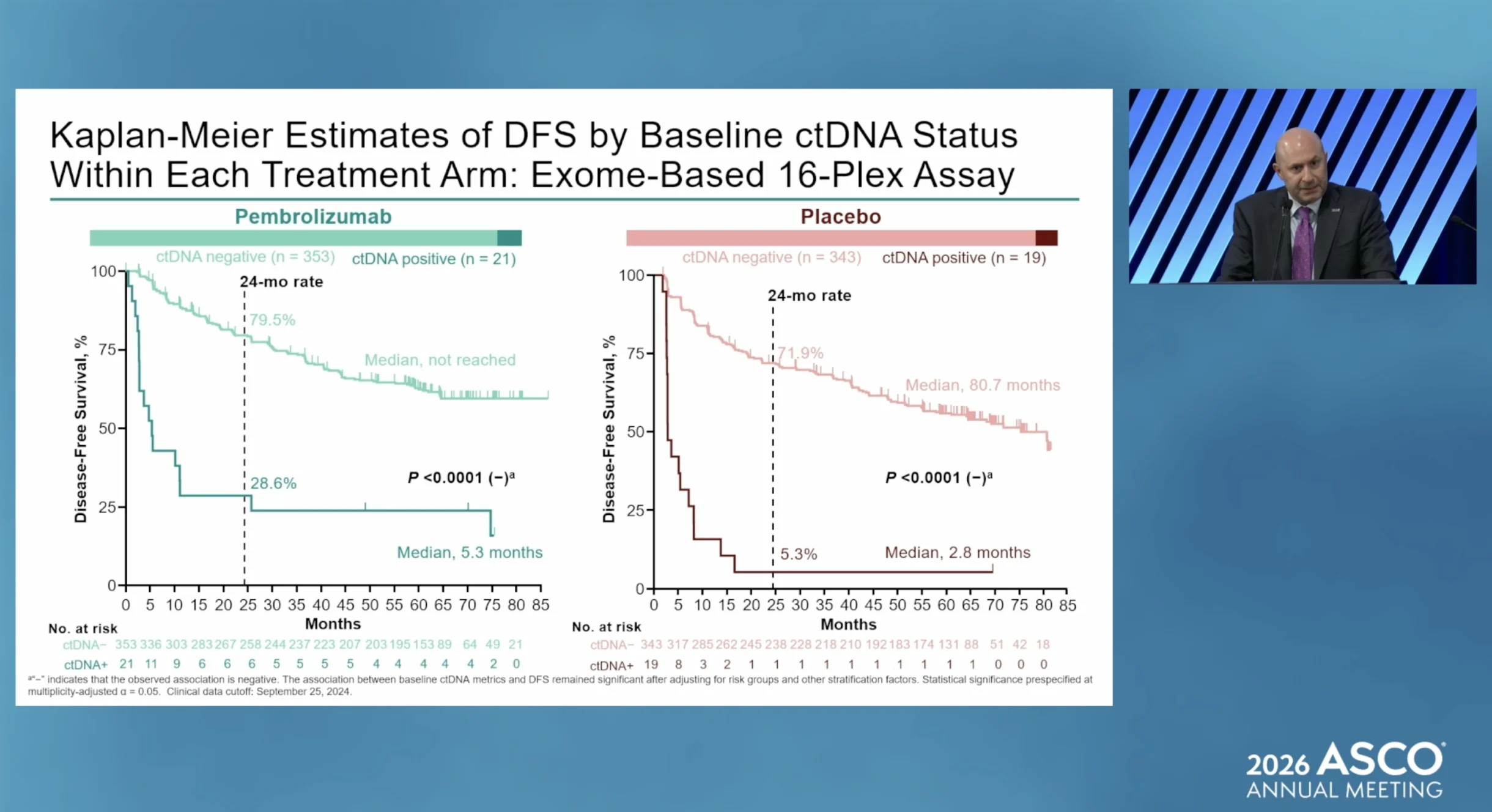
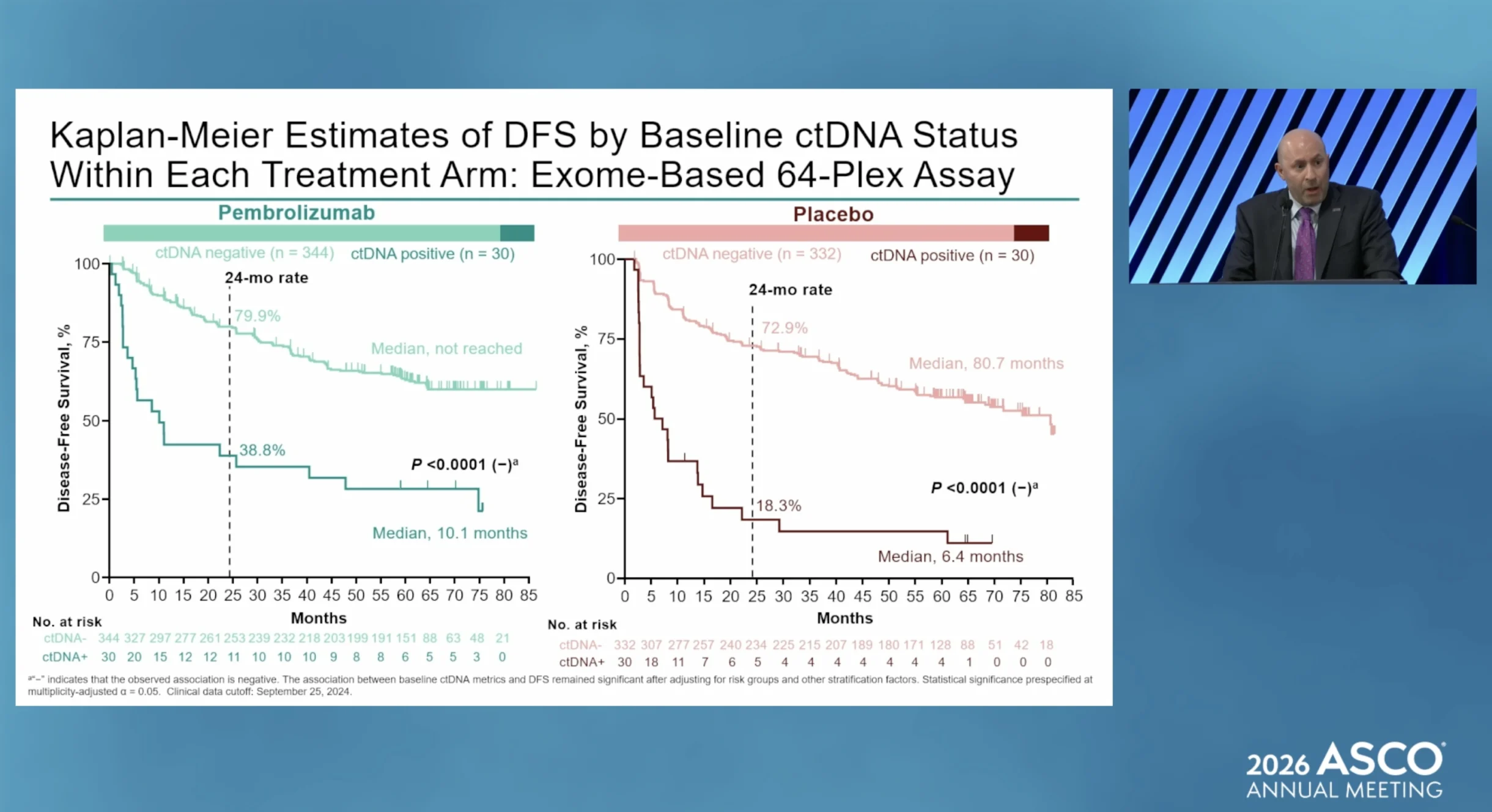
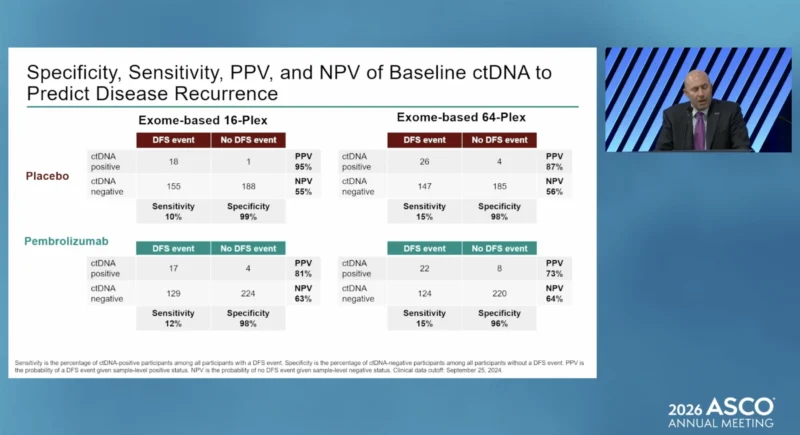
For both assays, ctDNA positivity was negatively associated with disease-free survival in both the pembrolizumab and placebo arms. Baseline ctDNA showed low sensitivity and high specificity for predicting disease-free survival. With the 16-plex assay, sensitivity and specificity were 12% and 98% in the pembrolizumab arm, and 10% and 99% in the placebo arm. With the 64-plex assay, sensitivity and specificity were 15% and 96% in the pembrolizumab arm, and 15% and 98% in the placebo arm.
ctDNA Clearance at Cycle 5 Day 1
Among patients with detectable ctDNA at baseline and evaluable ctDNA at cycle 5 day 1, ctDNA clearance was seen more often in the pembrolizumab arm than in the placebo arm. With the 16-plex assay, ctDNA clearance occurred in 6 of 10 patients in the pembrolizumab arm and 3 of 14 patients in the placebo arm. With the 64-plex assay, ctDNA clearance occurred in 10 of 18 patients in the pembrolizumab arm and 9 of 25 patients in the placebo arm. In both assays, ctDNA change from baseline to cycle 5 day 1 was associated with disease-free survival in both treatment arms.
Key Takeaways
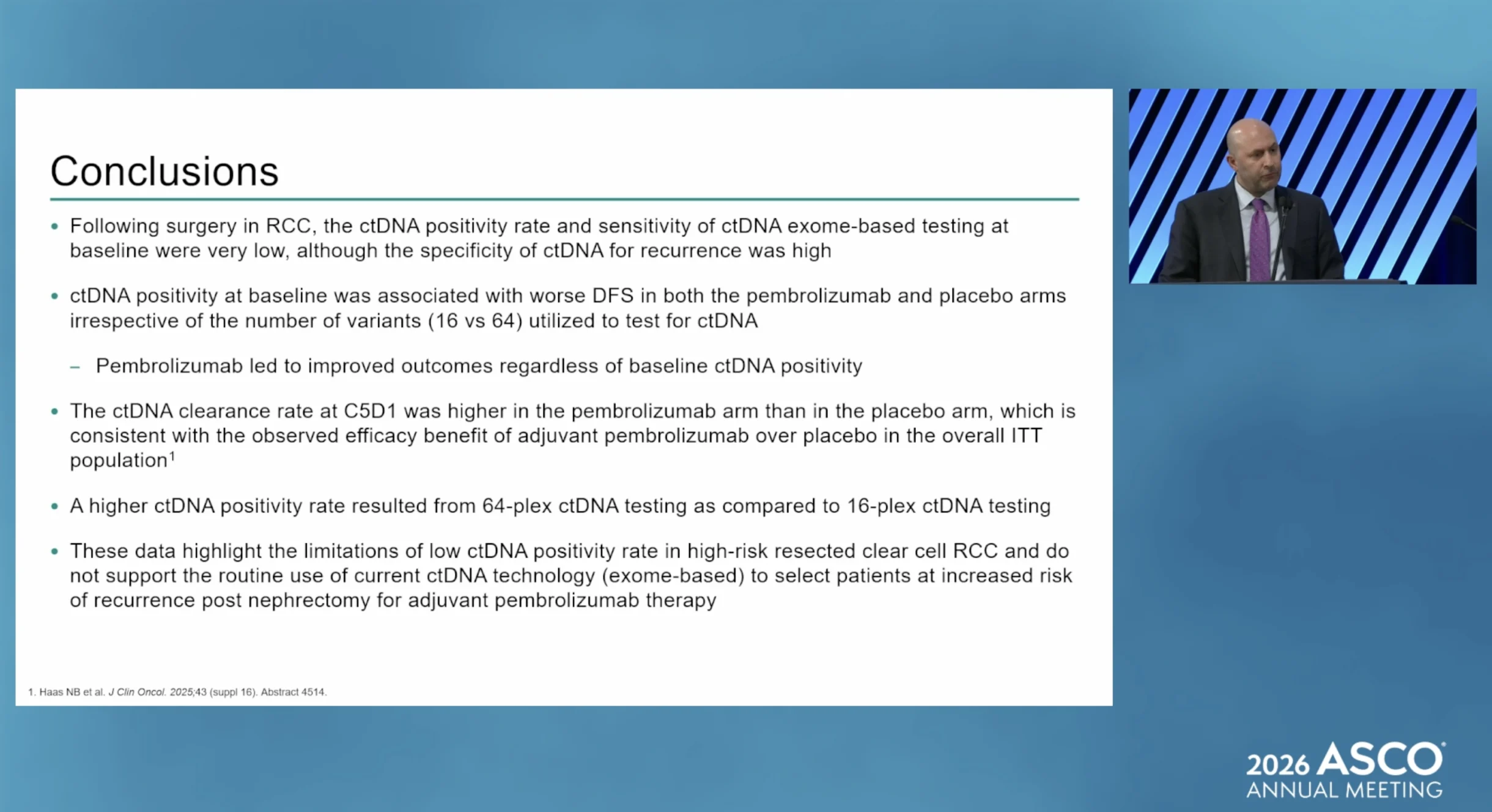
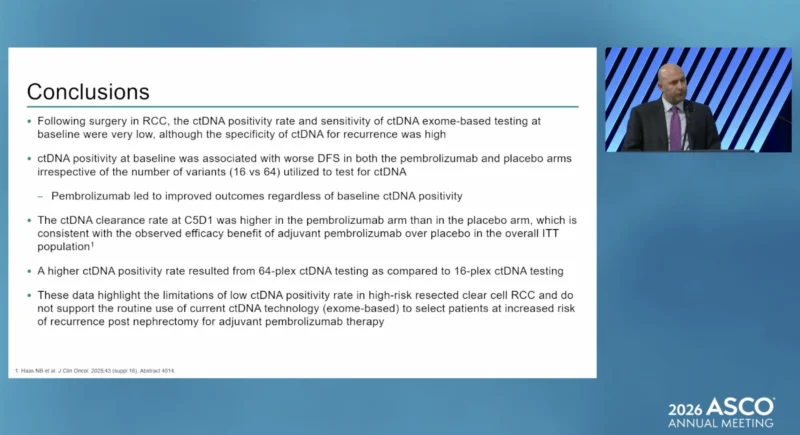
The KEYNOTE-564 ctDNA analysis presented at ASCO 2026 showed that after nephrectomy in renal cell carcinoma, exome-based ctDNA testing detected ctDNA in only a small proportion of patients. The assays showed limited sensitivity for identifying patients who later experienced disease-free survival events, while maintaining high specificity among patients without disease-free survival events.
Patients who were ctDNA-positive at baseline had worse disease-free survival in both the pembrolizumab and placebo arms, and this pattern was observed with both the 16-plex and 64-plex assays. Pembrolizumab showed benefit over placebo across baseline ctDNA subgroups, although the ctDNA-positive groups were small.
A greater proportion of patients in the pembrolizumab arm cleared ctDNA by cycle 5 day 1 compared with the placebo arm, which is consistent with the previously reported efficacy benefit of adjuvant pembrolizumab in the overall KEYNOTE-564 population. The 64-plex assay identified more ctDNA-positive cases than the 16-plex assay.
Taken together, these findings highlight the limitations of current exome-based ctDNA assays in high-risk resected clear cell renal cell carcinoma, where low ctDNA positivity rates limit their use for selecting patients for adjuvant pembrolizumab therapy.
The full abstract is available on the official ASCO website.