Key takeaways
- Omeprazole has not been established as a direct cause of cancer in humans.
- Recent studies published in 2026 have reported conflicting findings regarding PPI use and gastric cancer risk.
- Helicobacter pylori infection and underlying gastric disease are important factors when interpreting cancer risk.
- Long-term PPI therapy remains appropriate for patients with established medical indications.
- Treatment decisions should be individualized rather than based solely on cancer-related concerns.
Omeprazole, commonly sold under the brand name Prilosec, is one of the most widely used medications for treating acid reflux, gastroesophageal reflux disease (GERD), and stomach ulcers. It belongs to a class of medications known as proton pump inhibitors (PPIs), which reduce stomach acid production and promote the healing of damaged gastrointestinal tissues.
Despite decades of clinical use, concerns have emerged about a possible association between prolonged PPI therapy and cancer, particularly stomach cancer. Recent studies published in 2026 have renewed this discussion by reporting contrasting findings, highlighting the importance of distinguishing statistical associations from established causes of cancer.
Does Omeprazole Cause Cancer?
Current scientific evidence has not established that omeprazole directly causes cancer in humans. Although several observational studies have associated long-term PPI use with an increased risk of gastric cancer, other investigations have found no significant association after accounting for underlying medical conditions and other cancer risk factors.
One of the main challenges is that people taking omeprazole often have pre-existing gastrointestinal disorders, some of which may independently increase cancer risk. These include chronic gastritis, Helicobacter pylori infection, and Barrett’s esophagus.
A large randomized controlled trial involving 17,598 participants found no significant increase in overall cancer incidence among patients receiving pantoprazole, another PPI, compared with placebo over a median follow-up of three years. However, this does not exclude potential risks associated with longer exposure or individual medications (Moayyedi et al., 2019).
What Does the Latest Research Show?
Two studies published in 2026 have provided contrasting perspectives on the relationship between PPIs and stomach cancer.
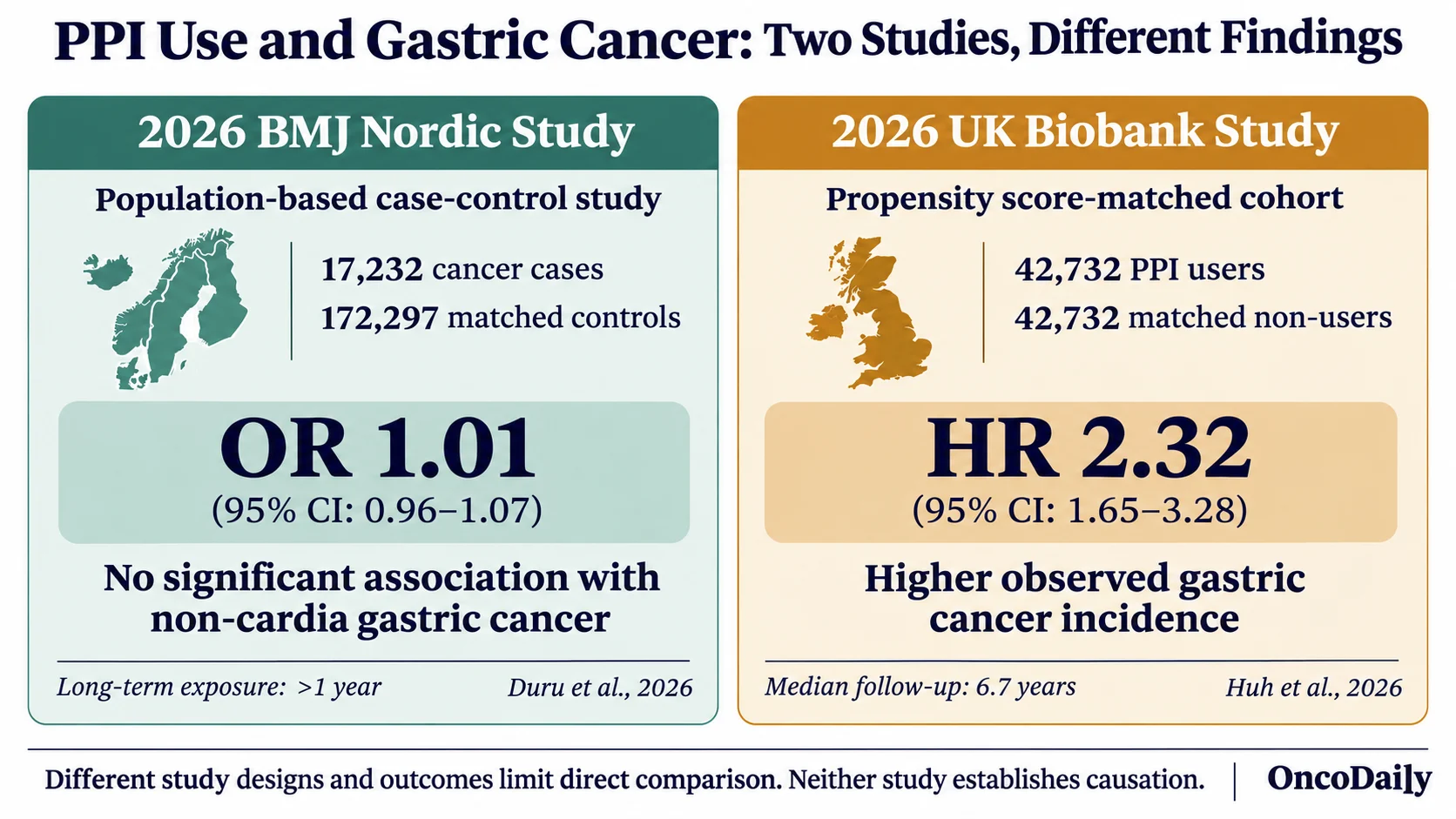
The 2026 BMJ Nordic study
Published in The BMJ in January 2026, a large population-based case-control study examined national health registry data from Denmark, Finland, Iceland, Norway, and Sweden.
The investigation included 17,232 patients with non-cardia gastric adenocarcinoma, a cancer arising outside the uppermost part of the stomach, and 172,297 matched controls.
Long-term PPI use, defined as treatment lasting more than one year, was not associated with a statistically significant increase in gastric cancer risk. The researchers reported an adjusted odds ratio (OR) of 1.01 (95% confidence interval [CI], 0.96–1.07).
The study excluded medication exposure during the year immediately preceding cancer diagnosis and accounted for several underlying risk factors. These methodological choices helped reduce biases that may have influenced earlier investigations (Duru et al., 2026).
The 2026 UK Biobank study
In contrast, another study published in Gut and Liver analyzed UK Biobank data using propensity score matching, a statistical method designed to improve comparability between patient groups.
Among 42,732 new PPI users and an equal number of matched non-users, researchers observed a higher incidence of gastric cancer over a median follow-up of 6.7 years. The reported hazard ratio (HR) was 2.32 (95% CI, 1.65–3.28).
The investigators also observed a relationship between increasing cumulative PPI exposure and gastric cancer risk. Nevertheless, the observational nature of the study and incomplete information about certain underlying risk factors prevent a definitive conclusion about causality (Huh et al., 2026).
Together, these studies demonstrate that the relationship between acid-suppressing medications and gastric cancer remains an active area of scientific investigation.
Does Omeprazole Increase Stomach Cancer Risk?
Concerns about stomach cancer gained considerable attention following a population-based study published in Gut in 2018. Researchers examined more than 63,000 patients who had received treatment for H. pylori infection and reported that PPI use was associated with a 2.44-fold higher relative risk of gastric cancer (Cheung et al., 2018).
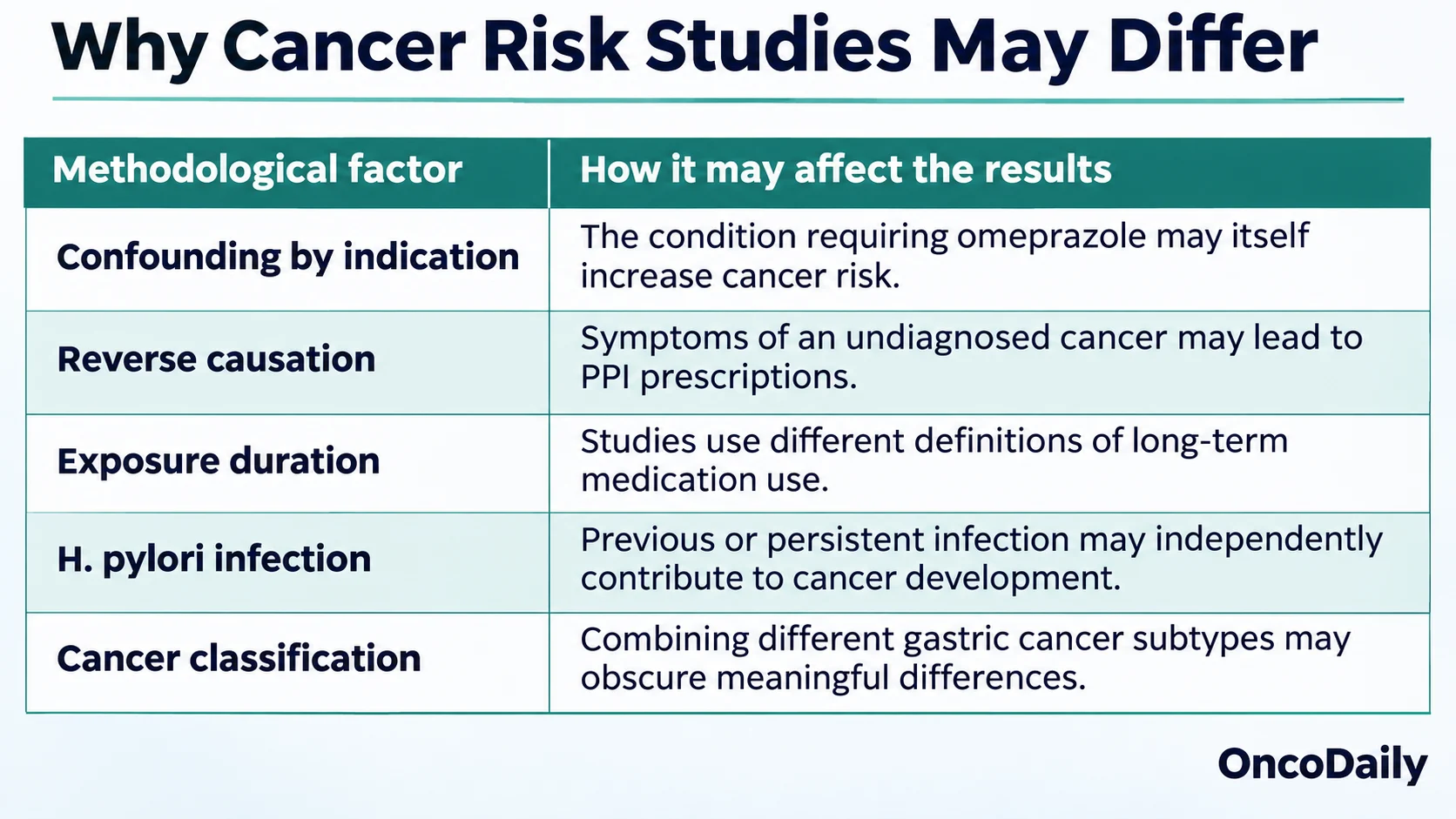
In 2025, a systematic review published in BMJ Open Gastroenterology identified 33 original studies and 21 meta-analyses. Most meta-analyses reported increased relative risks, ranging from approximately 1.3 to 2.9. However, the authors also identified substantial methodological challenges, particularly underlying gastrointestinal disease, reverse causation, and difficulties accounting for H. pylori infection (Brusselaers et al., 2025).
It is important to distinguish relative risk from absolute risk. A twofold increase in relative risk does not mean that an individual has a 50% probability of developing cancer. A person’s actual risk depends on factors such as age, family history, infection status, and pre-existing gastric abnormalities.
Another consideration is the anatomical location of the cancer. Gastric cardia cancer develops near the junction between the esophagus and stomach, while non-cardia gastric cancer develops elsewhere in the stomach. These cancers have different risk factors, and combining them in epidemiological studies may complicate interpretation (Duru et al., 2026)
Why Was Omeprazole Linked to Cancer?
Omeprazole inhibits the proton pumps responsible for acid secretion in the stomach. In response to reduced gastric acidity, the body may increase the production of gastrin, a hormone that stimulates gastric acid secretion.
Persistently elevated gastrin levels, known as hypergastrinemia, can stimulate enterochromaffin-like (ECL) cells in the stomach lining. Experimental studies have raised concerns about whether prolonged stimulation could contribute to abnormal cellular growth.
Researchers have also investigated changes in the gastric microbiome, chronic inflammation, and alterations in the stomach lining as potential mechanisms linking long-term acid suppression with cancer development.
However, changes observed in laboratory and animal studies do not necessarily translate into cancer development in humans. Although these mechanisms provide a biological rationale for further investigation, they are not sufficient to establish that omeprazole is carcinogenic (Brusselaers et al., 2025).
What Is the Relationship Between Omeprazole and Helicobacter Pylori?
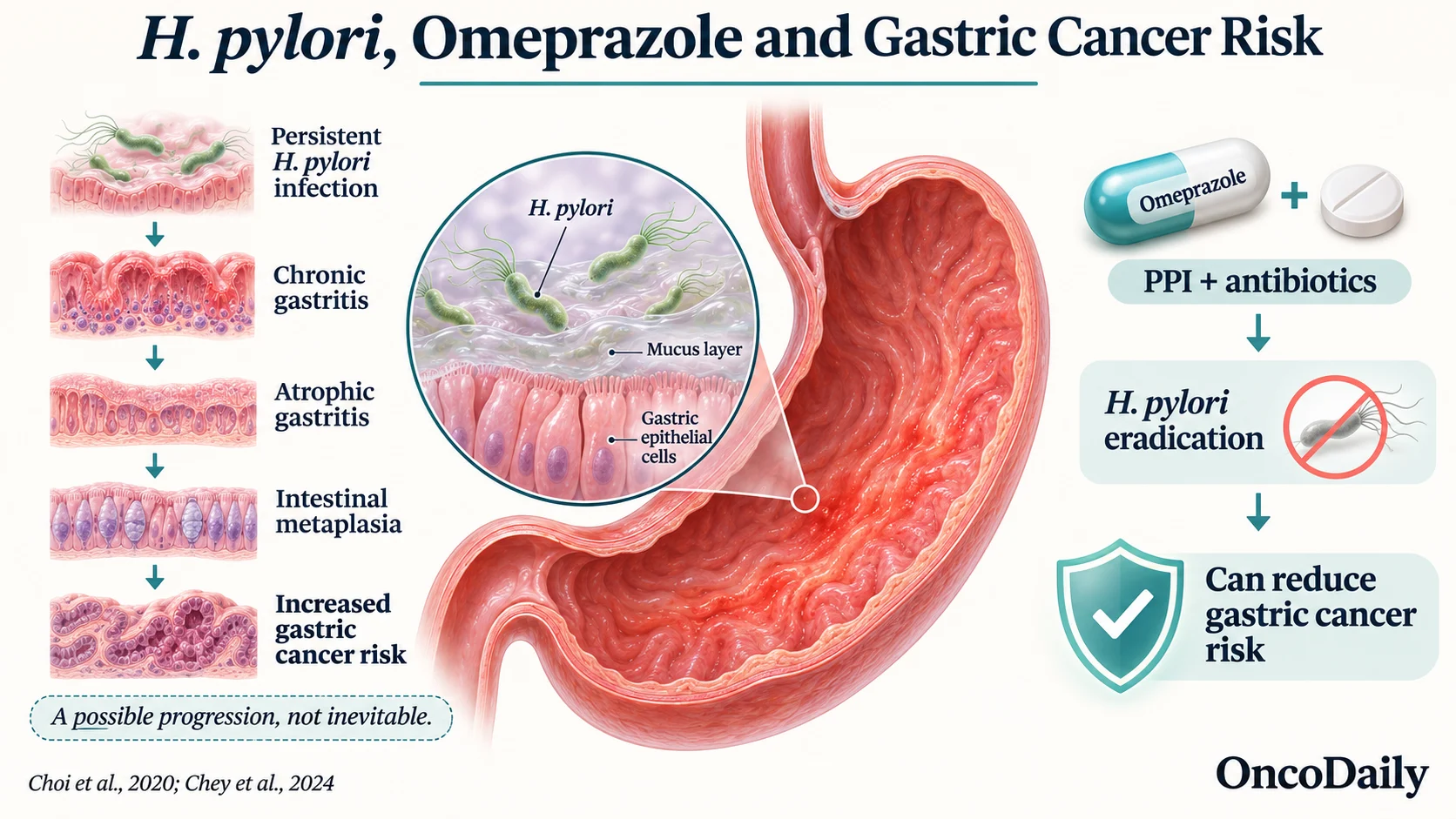
Helicobacter pylori (H. pylori) is a bacterium that can colonize the stomach lining and cause chronic inflammation. Persistent infection is an established risk factor for gastric adenocarcinoma and gastric mucosa-associated lymphoid tissue (MALT) lymphoma.
Over time, chronic inflammation may lead to atrophic gastritis and intestinal metaplasia, conditions associated with an increased likelihood of developing stomach cancer.
Omeprazole and other PPIs are frequently used alongside antibiotics in H. pylori eradication regimens. Therefore, some patients receiving prolonged PPI therapy may already have gastric abnormalities related to previous or persistent infection (NCI, 2023; Chey et al., 2024).
A randomized clinical trial published in The New England Journal of Medicine demonstrated that treating H. pylorireduced gastric cancer incidence among infected individuals with a family history of stomach cancer. This emphasizes the importance of identifying and treating established cancer risk factors rather than attributing the entire risk to acid-suppressing medications (Choi et al., 2020).
How Reliable Are the Studies Linking Omeprazole to Cancer?
Most evidence linking PPIs to cancer comes from observational studies. Although these investigations can include hundreds of thousands of patients and provide valuable long-term information, they cannot fully eliminate the influence of underlying medical conditions.
A 2023 meta-analysis found no statistically significant association between PPI use and gastric cancer when the analysis was restricted to observational studies that comprehensively accounted for confounding factors (RR 1.07; 95% CI, 0.97–1.19). Studies with less extensive adjustment generally reported stronger associations (Piovani et al., 2023).
These findings illustrate why a large study population or statistically significant result alone is not sufficient to establish causation.
Does Long-Term Omeprazole Use Cause Cancer?
There is currently no established duration of omeprazole use after which the medication has been proven to cause cancer.
Many acid-related conditions require treatment lasting several weeks, while others may require maintenance therapy for years. Although some observational studies suggest that cancer risk increases with cumulative PPI exposure, the available evidence remains inconsistent.
Important uncertainties include the effects of treatment extending over several decades, differences between individual PPIs, and prolonged exposure beginning at younger ages. Current research does not justify establishing an arbitrary maximum treatment duration for every patient (Brusselaers et al., 2025; Huh et al., 2026).
Instead, the need for continued treatment should be assessed according to the underlying condition, treatment response, and individual risk factors.
Does Omeprazole Cause Esophageal Cancer?
Chronic gastroesophageal reflux can damage the lining of the esophagus and, in some individuals, contribute to Barrett’s esophagus, a recognized precursor of esophageal adenocarcinoma.
Because PPIs are commonly prescribed to patients with these conditions, an observed association between omeprazole use and esophageal cancer may partly reflect the underlying disease rather than an effect of the medication.
The AspECT randomized clinical trial investigated long-term esomeprazole therapy in patients with Barrett’s esophagus. Higher-dose treatment improved a combined clinical outcome that included mortality, esophageal adenocarcinoma, and high-grade dysplasia, although this does not establish a cancer-specific preventive effect.
Current American College of Gastroenterology guidelines recommend PPI therapy for patients with Barrett’s esophagus unless a contraindication exists (Jankowski et al., 2018; Shaheen et al., 2022).
Is Omeprazole Linked to Other Types of Cancer?
Researchers have investigated potential associations between PPI use and several other malignancies, including pancreatic, colorectal, liver, breast, and prostate cancers.
Some population-based studies have reported associations with pancreatic and colorectal cancers, while others have produced conflicting results. Differences in underlying diseases, medication exposure, lifestyle factors, and study methodology make these findings difficult to interpret.
Importantly, findings involving one cancer type cannot automatically be applied to another. Current evidence does not establish omeprazole as an independent cause of pancreatic, colorectal, breast, or prostate cancer (Abrahami et al., 2022; Lassalle et al., 2022).
Omeprazole vs. Zantac: Are the Cancer Concerns the Same?
Omeprazole and ranitidine, historically marketed as Zantac, both reduce stomach acid but belong to different pharmaceutical classes.
In April 2020, the U.S. Food and Drug Administration (FDA) requested the withdrawal of ranitidine products because of concerns about N-nitrosodimethylamine (NDMA), a potentially carcinogenic impurity that could accumulate during storage.
FDA testing at the time did not identify NDMA in the omeprazole products tested.
In November 2025, the FDA approved reformulated ranitidine tablets following safety assessments and manufacturing changes addressing the previous NDMA concerns.
The ranitidine withdrawal involved a pharmaceutical impurity, whereas concerns surrounding omeprazole primarily arise from epidemiological findings and proposed biological effects of long-term acid suppression. These are two distinct safety questions (FDA, 2020; 2025).

What Are the Real Risks of Long-Term Omeprazole Use?
Although a causal relationship with cancer remains unconfirmed, prolonged omeprazole use has several recognized or potential adverse effects that deserve clinical attention.
These include reduced magnesium levels, vitamin B12 deficiency, fundic gland polyps, and an increased susceptibility to certain gastrointestinal infections. Rare cases of acute tubulointerstitial nephritis, a form of kidney inflammation, have also been documented.
Fundic gland polyps are generally benign growths in the stomach lining and should not automatically be interpreted as cancer.
Other reported associations, including chronic kidney disease, osteoporosis-related fractures, and dementia, involve varying levels of evidence and may be influenced by underlying patient characteristics. In a large randomized trial, gastrointestinal infections were the principal safety outcome found to be significantly more frequent with pantoprazole than placebo (Moayyedi et al., 2019; DailyMed, 2024).
When Is Omeprazole Worth Taking Long-Term?
Long-term PPI therapy remains clinically appropriate for several medical conditions, including severe erosive esophagitis, Barrett’s esophagus, recurrent peptic ulcers, pathological acid hypersecretion, and the prevention of upper gastrointestinal bleeding in selected high-risk patients.
For these individuals, discontinuing treatment may increase the risk of complications. Conversely, patients taking omeprazole for occasional heartburn or symptoms that have resolved may no longer require continuous therapy.
The American Gastroenterological Association recommends periodically reviewing the indication for PPI treatment and considering dose reduction or discontinuation when long-term therapy is no longer medically necessary (Katz et al., 2022; Targownik et al., 2022).
Should You Stop Taking Omeprazole Because of Cancer Concerns?
Patients should not discontinue medically necessary omeprazole solely because of concerns raised by observational cancer studies.
Stopping prolonged PPI therapy can temporarily increase stomach acid production, a phenomenon known as rebound acid hypersecretion, resulting in recurrent heartburn or upper abdominal discomfort.
Depending on the underlying condition, a healthcare professional may recommend reducing the dose, switching to intermittent treatment, or discontinuing medication. The decision should primarily reflect whether an ongoing clinical indication exists rather than concerns about unconfirmed adverse associations (Targownik et al., 2022).
Are There Alternatives to Omeprazole?
Alternative treatments include H2-receptor antagonists such as famotidine, antacids, and alginate-based preparations. Their effectiveness varies depending on symptom severity and the underlying gastrointestinal condition.
Lifestyle modifications, including avoiding meals shortly before bedtime, maintaining a healthy weight, and elevating the head of the bed for nighttime reflux, may also help reduce symptoms.
However, alternative medications are not necessarily safer or equally effective for every patient. PPIs remain particularly valuable in the management of erosive esophagitis and other conditions requiring sustained acid suppression (Katz et al., 2022; Yadlapati et al., 2022).
How Can You Reduce Risks While Taking Omeprazole?
Responsible use of omeprazole involves taking the medication for a clear medical indication, reviewing the need for continued treatment, and using an appropriate effective dose.
Patients with relevant risk factors may benefit from evaluation for H. pylori infection, while those receiving multiple medications should discuss potential drug interactions with their healthcare provider.
Taking omeprazole alone does not establish a need for routine cancer screening. Gastric cancer prevention and surveillance should instead be guided by recognized risk factors, including family history, smoking, H. pylori infection, and precancerous changes in the stomach lining (Chey et al., 2024; NCI, 2025).
When Should You See a Doctor
Persistent or worsening gastrointestinal symptoms should not be attributed solely to acid reflux or medication side effects.
Symptoms that warrant medical evaluation include:
- Unexplained weight loss
- Progressive difficulty swallowing
- Persistent upper abdominal pain
- Recurrent vomiting
- Unexplained iron-deficiency anemia
- Persistent symptoms despite treatment
Vomiting blood, passing black, tarry stools, or being unable to swallow requires urgent medical assessment.
These symptoms do not necessarily indicate cancer, but they may warrant further investigations, including upper gastrointestinal endoscopy, to identify the underlying cause (ASGE, 2025).
FAQ
Is omeprazole a carcinogen?
Available clinical evidence has not established omeprazole as a human carcinogen.
How many years can you safely take omeprazole?
There is no universal maximum duration. Some patients require treatment for years, provided that the medical indication remains valid and is periodically reassessed.
Can omeprazole cause stomach polyps?
Long-term use can increase the likelihood of developing fundic gland polyps, which are generally benign.
Is famotidine safer than omeprazole?
Not necessarily. The two medications have different effectiveness and safety profiles, and the appropriate choice depends on the patient's condition.
Does taking omeprazole increase the need for cancer screening?
Omeprazole use alone is not an established indication for additional cancer screening. Individual risk factors and clinical symptoms should guide further investigation.