Key takeaways
- Zantac (ranitidine) was commonly used to treat heartburn, acid reflux, and ulcers.
- The 2020 recall was linked to NDMA, a probable human carcinogen found in some ranitidine products.
- Cancer risk remains unproven, with large studies showing no significant increase in overall cancer risk.
- Zantac 360 contains famotidine, while reformulated ranitidine received FDA approval in 2025.
- Previous Zantac use does not automatically require additional cancer screening.
Zantac was a familiar treatment for heartburn, acid reflux, and stomach ulcers. That changed in 2020, when the U.S. Food and Drug Administration (FDA) requested its withdrawal from the market after discovering that some ranitidine products contained N-nitrosodimethylamine (NDMA), a chemical classified as a probable human carcinogen.
The recall raised an important question for millions of people who had taken the medication: Does Zantac actually increase the risk of cancer?
Although NDMA can damage DNA and cause cancer in experimental animals, large studies involving people who used ranitidine have not demonstrated a significant overall increase in cancer risk. The distinction between a potentially carcinogenic contaminant and evidence of cancer in humans is central to understanding the Zantac controversy.
In November 2025, the FDA approved a reformulated version of ranitidine following additional safety testing, introducing a new chapter in the drug’s history (FDA, 2025).
What Is Zantac (Ranitidine)?
Zantac was the brand name for ranitidine, a medication used to reduce stomach acid production. It belonged to a class of drugs known as histamine-2 (H2) receptor antagonists, commonly called H2 blockers.
Ranitidine worked by blocking histamine H2 receptors on parietal cells in the stomach lining. These cells produce hydrochloric acid, which helps digest food but can also contribute to irritation and tissue damage when stomach acid reaches the esophagus or comes into contact with an ulcer.
By suppressing acid secretion, ranitidine provided relief from acid-related symptoms and created conditions that allowed damaged tissue to heal. It was available both over the counter and by prescription and remained a commonly used treatment for several decades (FDA, 2009).
What Was Zantac (Ranitidine) Used For?
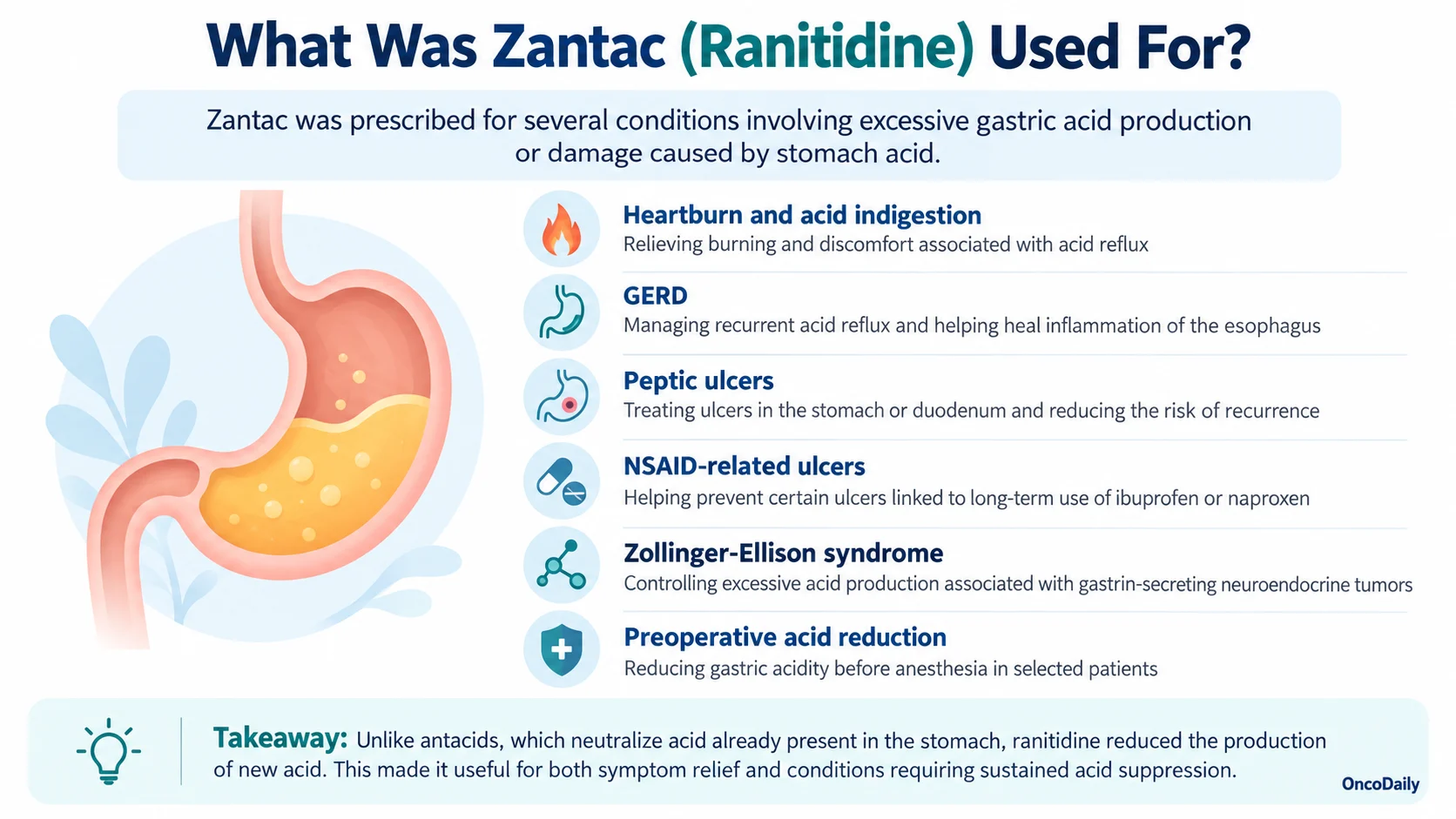
Zantac was prescribed for several conditions involving excessive gastric acid production or damage caused by stomach acid. Its main uses included:
- Heartburn and acid indigestion: Relieving burning and discomfort associated with acid reflux.
- Gastroesophageal reflux disease (GERD): Managing recurrent acid reflux and helping heal inflammation of the esophagus.
- Peptic ulcers: Treating ulcers in the stomach or duodenum and reducing the risk of recurrence.
- NSAID-related ulcers: Helping prevent certain ulcers associated with prolonged use of nonsteroidal anti-inflammatory drugs, such as ibuprofen or naproxen.
- Zollinger-Ellison syndrome: Controlling excessive acid production associated with gastrin-secreting neuroendocrine tumors.
- Preoperative acid reduction: Reducing gastric acidity before anesthesia in selected patients.
Unlike antacids, which neutralize acid already present in the stomach, ranitidine reduced the production of new acid. This made it useful for both symptom relief and conditions requiring sustained acid suppression (Australian Commission on Safety and Quality in Health Care; Health Products Regulatory Authority).
Why Was Zantac Recalled in 2020?
Concerns about ranitidine’s safety emerged in September 2019, when the FDA reported detecting NDMA in certain ranitidine-containing medications.
Subsequent laboratory investigations revealed that NDMA concentrations could increase as ranitidine products aged. The problem became more pronounced when medications were exposed to elevated temperatures during storage or transportation.
This raised concerns about the stability of the medication throughout its shelf life. Even a product containing relatively low concentrations of NDMA when manufactured could potentially accumulate higher amounts before being consumed.
On April 1, 2020, the FDA requested the withdrawal of all prescription and over-the-counter ranitidine products from the U.S. market, including the original Zantac and generic formulations (FDA, 2020).
The decision was based on the possibility that patients could be exposed to NDMA above acceptable safety limits, particularly with repeated use.
The recall did not establish that ranitidine caused cancer in humans. It reflected a regulatory concern about a potentially carcinogenic impurity whose concentration could not be reliably controlled in the affected products.
What Is NDMA, and Why Is It Dangerous?
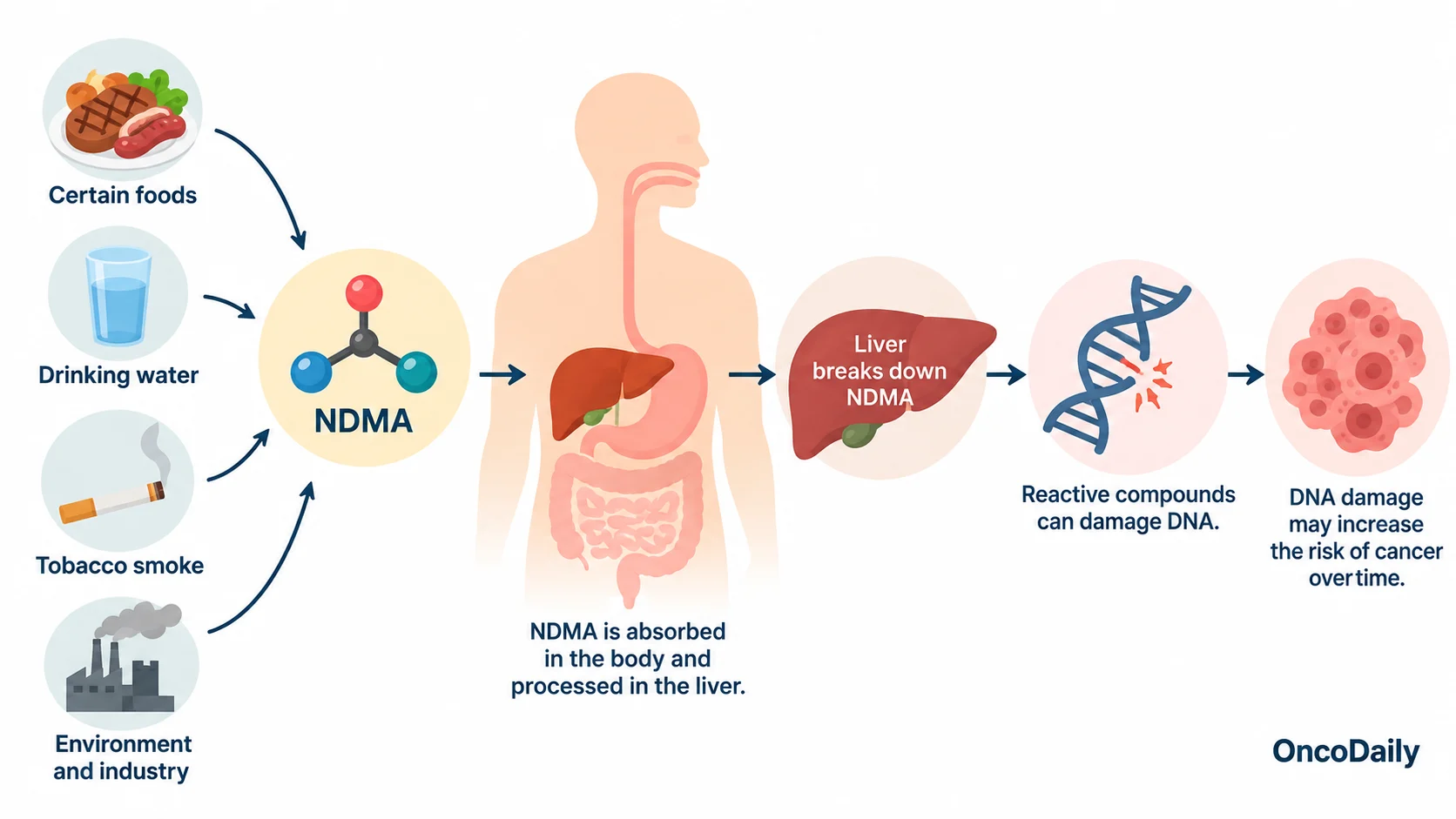
N-nitrosodimethylamine (NDMA) is a chemical compound belonging to the nitrosamine family. It can be found in small amounts in certain foods, drinking water, tobacco smoke, and the environment.
NDMA is classified by the International Agency for Research on Cancer (IARC) as a Group 2A carcinogen, meaning it is probably carcinogenic to humans (ATSDR, 2023).
Its potential to cause cancer is linked to the way it is processed in the body. Following absorption, NDMA undergoes metabolic activation, primarily in the liver, producing reactive compounds capable of damaging DNA.
These compounds can cause DNA modifications and mutations. If the resulting damage is not repaired, it may contribute to the development of cancer.
Experimental studies have shown that NDMA can induce tumors in several organs, particularly the liver. Evidence of carcinogenicity in animals is substantial, while direct evidence in humans remains more limited.
In pharmaceutical products, the concern is not simply whether NDMA is present, but how much a person is exposed to and for how long.
At the time of the ranitidine withdrawal, the FDA used an acceptable daily intake limit of 96 nanograms of NDMA. This limit was designed to keep the estimated additional lifetime cancer risk very low, assuming daily exposure over many years (FDA, 2020).
Exposure above this limit does not mean that cancer will develop. Rather, it indicates that the level of exposure exceeds a precautionary threshold established to minimize potential long-term harm.
Does Zantac Cause Cancer? What Scientific Studies Show
The discovery of NDMA in ranitidine raised legitimate concerns about cancer risk. However, evidence that a substance can cause cancer under experimental conditions is not the same as evidence that a medication increases cancer incidence among people who use it.
One of the largest studies addressing this question was published in JAMA Network Open in September 2023.
Researchers analyzed data from 1,183,999 individuals across 11 healthcare databases in North America, Europe, and Asia. The study compared cancer incidence among people taking ranitidine with those taking other H2 receptor antagonists.
The investigators found no statistically significant increase in overall cancer risk associated with ranitidine use. After adjustment and matching, the estimated cancer incidence was 15.92 cases per 1,000 person-years among ranitidine users and 15.65 cases per 1,000 person-years among users of other H2 blockers.
The study also found no significant association with individual cancer types after statistical correction for multiple comparisons, including cancers of the stomach, esophagus, and colorectum (You et al., 2023).
These findings provide reassurance, particularly for people who used ranitidine before the recall. However, observational studies cannot exclude every possible long-term effect, and uncertainties remain about individual NDMA exposure and cancer outcomes over longer periods.
Current clinical evidence does not establish that previous ranitidine use increases overall cancer risk. For this reason, a history of taking Zantac alone is not considered sufficient justification for additional cancer screening beyond standard recommendations.
Is Zantac Still Available?
The Zantac brand remains available in the United States, although the product sold under that name is different from the original medication.
Zantac 360 contains famotidine rather than ranitidine. Famotidine is another H2 receptor antagonist that reduces stomach acid production and is commonly used for occasional heartburn and acid indigestion.
A separate regulatory development occurred in November 2025, when the FDA approved reformulated ranitidine tablets in 150 mg and 300 mg prescription strengths.
The approval followed additional testing and manufacturing improvements intended to address the formation of NDMA during the medication’s shelf life (FDA, 2025).
The reformulated product has specific storage requirements. Tablets should be kept in their original container, protected from moisture, and discarded within 90 days of opening the bottle or by the expiration date, whichever comes first.
Patients should distinguish between the original ranitidine products withdrawn in 2020, the current famotidine-based Zantac 360, and newly approved prescription ranitidine formulations.
Older ranitidine products affected by the original recall should not be used.
What Are the Alternatives to Zantac?
Several treatments are available for heartburn, GERD, and other acid-related gastrointestinal conditions. The choice depends on symptom frequency, severity, medical history, and the condition being treated.
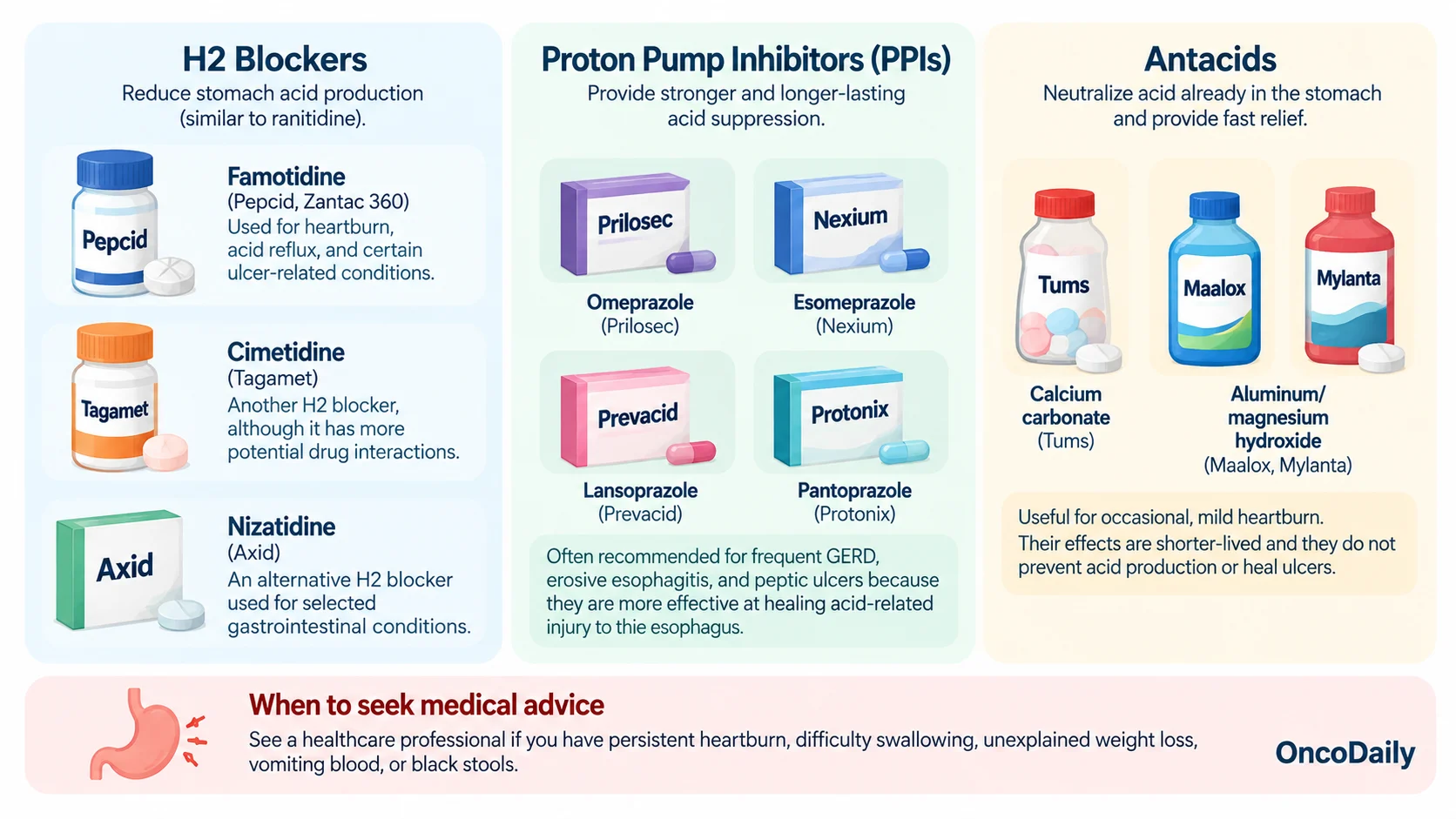
H2 receptor blockers reduce gastric acid secretion through the same general mechanism as ranitidine. Common alternatives include:
Famotidine (Pepcid, Zantac 360): Used for heartburn, acid reflux, and certain ulcer-related conditions.
Cimetidine (Tagamet): Another H2 blocker, although it has a greater potential for drug interactions.
Nizatidine (Axid): An alternative H2 blocker used for selected gastrointestinal conditions.
Proton pump inhibitors (PPIs), including omeprazole, esomeprazole, lansoprazole, and pantoprazole, provide more potent and sustained acid suppression. They are generally preferred for frequent GERD and erosive esophagitis because they are more effective at healing acid-related injury to the esophagus (Katz et al., 2022).
For occasional mild heartburn, antacids such as calcium carbonate or magnesium- and aluminum-containing preparations can offer rapid symptom relief by neutralizing stomach acid. Their effects are shorter-lived, however, and they do not provide the sustained acid suppression needed for many ulcer-related conditions.
People experiencing persistent reflux, difficulty swallowing, unexplained weight loss, vomiting blood, or black stools should seek medical evaluation rather than continuing self-treatment.
For patients who previously used Zantac, the most important consideration is their current gastrointestinal health and whether they require ongoing acid-suppressing treatment.
FAQ
Does Zantac cause cancer?
There is no conclusive evidence that ranitidine causes cancer in humans. However, some products contained NDMA, a probable human carcinogen, raising concerns about long-term exposure.
What cancers have been linked to Zantac?
Bladder, stomach, liver, and colorectal cancers have been investigated. However, a direct causal relationship with ranitidine use has not been established.
Why was Zantac recalled?
In April 2020, the FDA requested the withdrawal of ranitidine products because NDMA levels could increase during storage, potentially exceeding recommended safety limits.
Is Zantac safe to take in 2026?
Zantac 360 contains famotidine, not ranitidine. The FDA also approved a reformulated prescription version of ranitidine in November 2025, with additional safety and storage requirements.
Should I get cancer screening if I previously took Zantac?
Additional cancer screening is not routinely recommended solely because of previous ranitidine use. Patients should follow standard screening guidelines and discuss persistent or unusual symptoms with their healthcare provider.