Key takeaways
- Oral chemotherapy includes more than traditional chemotherapy pills; it also includes targeted therapies, hormonal therapies, and other molecularly directed treatments.
- Different oral anticancer drugs work through different mechanisms, including damaging cancer cell DNA, blocking cell division, and inhibiting tumor-driving pathways.
- Targeted oral therapies have expanded precision oncology by allowing treatment selection based on specific biomarkers and molecular alterations.
- Oral anticancer therapies are used across many cancers, including breast, colorectal, lung, prostate, brain tumors, and hematologic malignancies.
- Successful treatment requires careful monitoring, management of side effects, attention to drug interactions, and strong adherence to therapy.
The development of oral anticancer therapies has significantly changed the delivery of systemic cancer treatment. While chemotherapy has traditionally been administered intravenously, an increasing number of anticancer agents are now available in oral formulations, including cytotoxic chemotherapy, targeted therapies, hormonal therapies, and immunomodulatory drugs.
Oral anticancer therapies allow patients to receive treatment outside the infusion center while maintaining systemic activity against cancer cells. However, their use requires careful consideration of drug absorption, pharmacokinetics, treatment adherence, potential interactions, and toxicity monitoring.
This article reviews the mechanisms, major classes, clinical applications, benefits, limitations, and future directions of oral chemotherapy and oral anticancer therapies in modern oncology.
What Are Oral Chemotherapy Drugs?
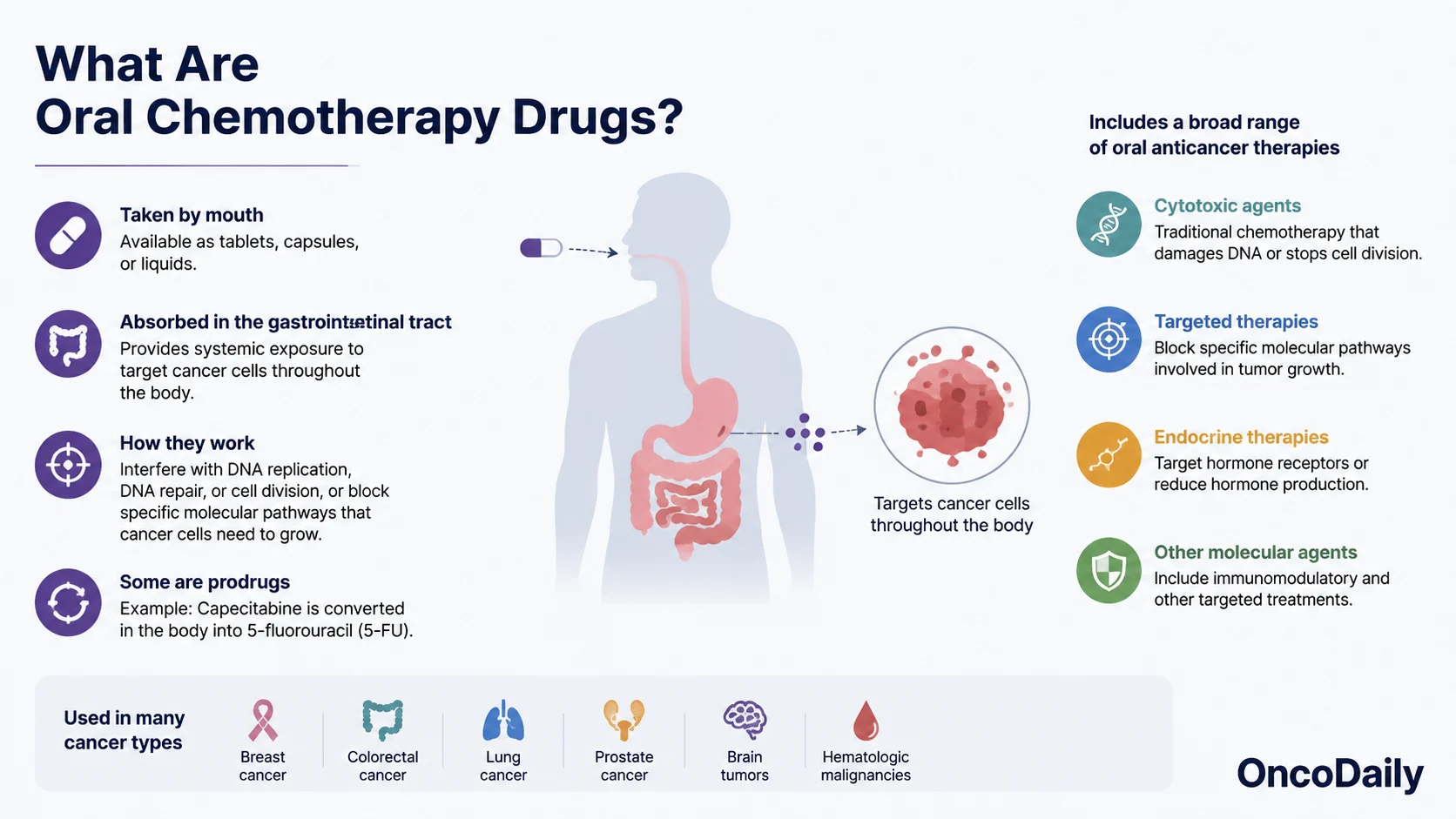
Oral chemotherapy drugs are anticancer medications taken by mouth as tablets, capsules, or liquids to treat cancer. Unlike intravenous (IV) chemotherapy, which is administered through an infusion, oral therapies are absorbed through the gastrointestinal tract and provide systemic exposure against cancer cells throughout the body.
Although commonly referred to as “oral chemotherapy,” these medications represent a broader group of oral anticancer therapies. They include traditional cytotoxic agents, such as capecitabine and temozolomide, as well as targeted therapies, endocrine agents, and other molecularly directed treatments (National Cancer Institute, 2025).
Oral cytotoxic drugs work by interfering with essential processes required for cancer cell survival, including DNA replication, DNA repair, and cell division. In contrast, many newer oral agents are designed to block specific molecular pathways that tumors rely on for growth and progression (Cohen et al., 2025).
Some oral chemotherapy drugs are administered as prodrugs, meaning they are converted inside the body into their active form. A key example is capecitabine, which is metabolized into 5-fluorouracil (5-FU), allowing systemic delivery of fluoropyrimidine therapy through an oral formulation (Walko and Lindley, 2005).
Today, oral anticancer therapies are used across multiple cancer types, including breast cancer, colorectal cancer, lung cancer, prostate cancer, brain tumors, and hematologic malignancies. Their increasing use provides greater treatment flexibility but also requires structured monitoring to ensure adherence, safety, and clinical benefit.
How Do Oral Chemotherapy Drugs Work?
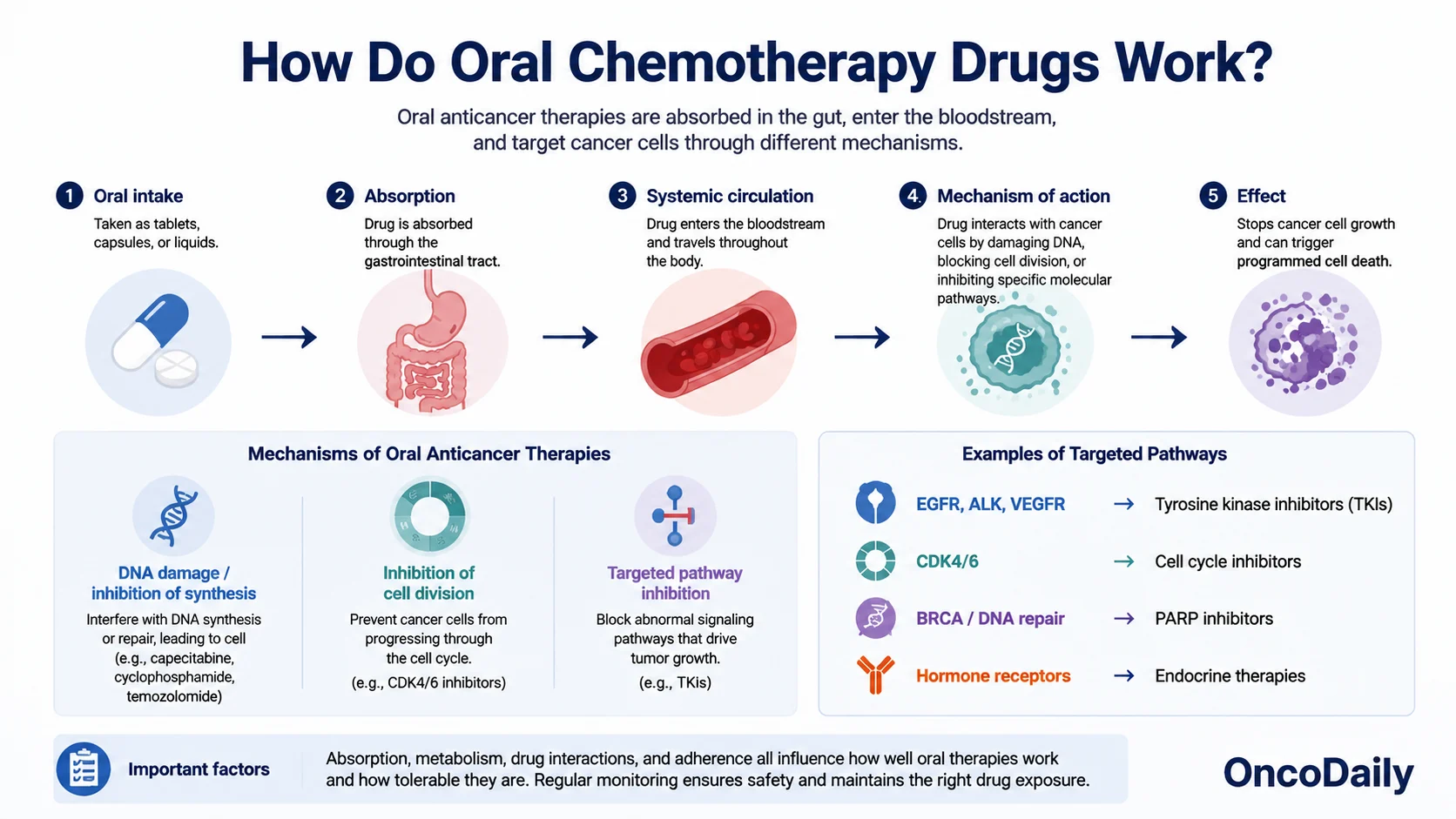
Oral chemotherapy drugs work by being absorbed through the gastrointestinal tract, entering systemic circulation, and interacting with biological processes that cancer cells depend on for survival and proliferation. Their mechanisms vary depending on the drug class, ranging from direct DNA damage to inhibition of specific molecular pathways involved in tumor growth.
Traditional oral cytotoxic chemotherapy agents, such as capecitabine, cyclophosphamide, and temozolomide, primarily affect DNA synthesis, DNA repair, or cell division. These mechanisms limit the ability of cancer cells to replicate and can trigger programmed cell death. For example, capecitabine is an oral prodrug that is converted into 5-fluorouracil (5-FU), which inhibits thymidylate synthase and disrupts DNA synthesis (Walko and Lindley, 2005).
Many modern oral anticancer drugs function as targeted therapies rather than conventional chemotherapy. These agents are designed to inhibit specific molecular abnormalities that drive tumor growth. Tyrosine kinase inhibitors (TKIs)block signaling pathways such as EGFR, BCR-ABL, ALK, and VEGFR; CDK4/6 inhibitors prevent cell-cycle progression; and PARP inhibitors interfere with DNA repair mechanisms in tumors with homologous recombination deficiencies (Cohen et al., 2025).
The effectiveness of oral anticancer therapies depends not only on their mechanism of action but also on pharmacokinetic factors, including absorption, metabolism, drug interactions, and adherence. Because patients self-administer these medications outside the clinic, appropriate monitoring is essential to maintain therapeutic exposure while minimizing toxicity.
Types of Oral Chemotherapy Drugs
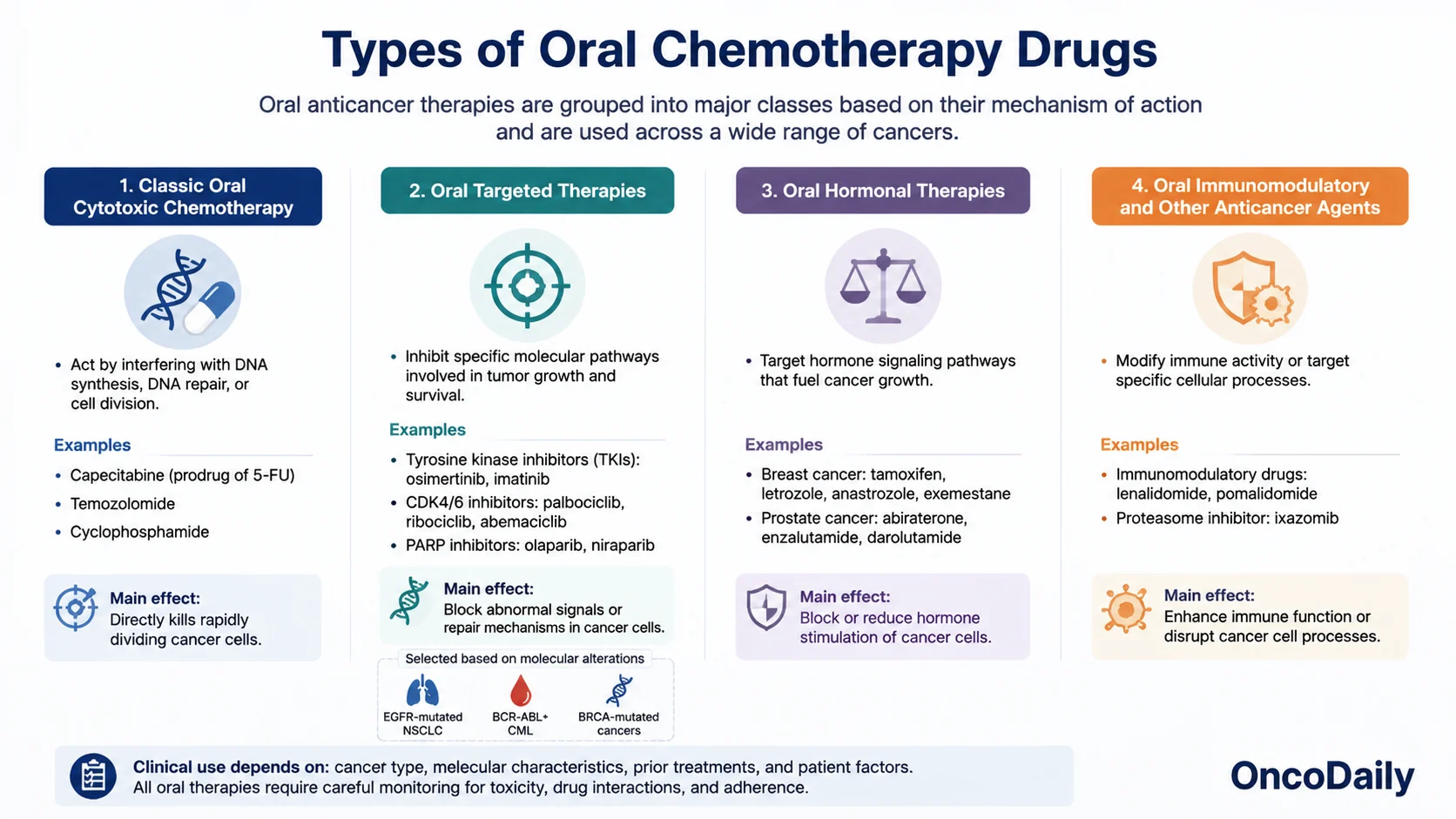
Oral chemotherapy drugs and oral anticancer therapies can be divided into several major pharmacologic classes based on their mechanism of action, including cytotoxic chemotherapy agents, targeted therapies, hormonal therapies, and immunomodulatory agents. Each class acts through different biological pathways and is used across a wide range of malignancies.
Classic Oral Cytotoxic Chemotherapy
Traditional oral chemotherapy agents directly interfere with DNA synthesis, DNA repair, or cell division. Common examples include capecitabine, an oral prodrug converted into 5-fluorouracil (5-FU), temozolomide used primarily in glioblastoma and other high-grade gliomas, and cyclophosphamide used in selected hematologic malignancies and solid tumors (Walko and Lindley, 2005; Newlands et al., 2006).
Oral Targeted Therapies
Many modern oral anticancer drugs are targeted therapies designed to inhibit specific molecular pathways involved in tumor growth and survival. These include tyrosine kinase inhibitors (TKIs) such as osimertinib and imatinib, CDK4/6 inhibitors such as palbociclib, ribociclib, and abemaciclib, and PARP inhibitors including olaparib and niraparib (Cohen et al., 2025; Harbeck et al., 2025).
These therapies are often selected based on specific molecular alterations. Examples include EGFR inhibitors for EGFR-mutated non-small cell lung cancer, BCR-ABL inhibitors for chronic myeloid leukemia, and PARP inhibitors for tumors with homologous recombination repair defects such as BRCA mutations (Cohen et al., 2025).
Oral Hormonal Therapies
Hormonal therapies target cancers that depend on hormone signaling for growth. In hormone receptor–positive breast cancer, tamoxifen and aromatase inhibitors such as letrozole, anastrozole, and exemestane reduce estrogen-driven tumor stimulation. In prostate cancer, abiraterone and androgen receptor inhibitors such as enzalutamide and darolutamide suppress androgen signaling involved in tumor progression (Harbeck et al., 2025).
Oral Immunomodulatory and Other Anticancer Agents
Some oral anticancer drugs work by modifying immune activity or targeting specific cellular processes. Examples include lenalidomide and pomalidomide in multiple myeloma and oral proteasome inhibitors such as ixazomib in plasma cell disorders (Moreau et al., 2021).
The selection of an oral anticancer therapy depends on cancer type, molecular characteristics, previous treatments, and patient factors. Despite their convenience, these therapies require careful monitoring for toxicity, interactions, and adherence.
Common Oral Chemotherapy Drugs and the Cancers They Treat
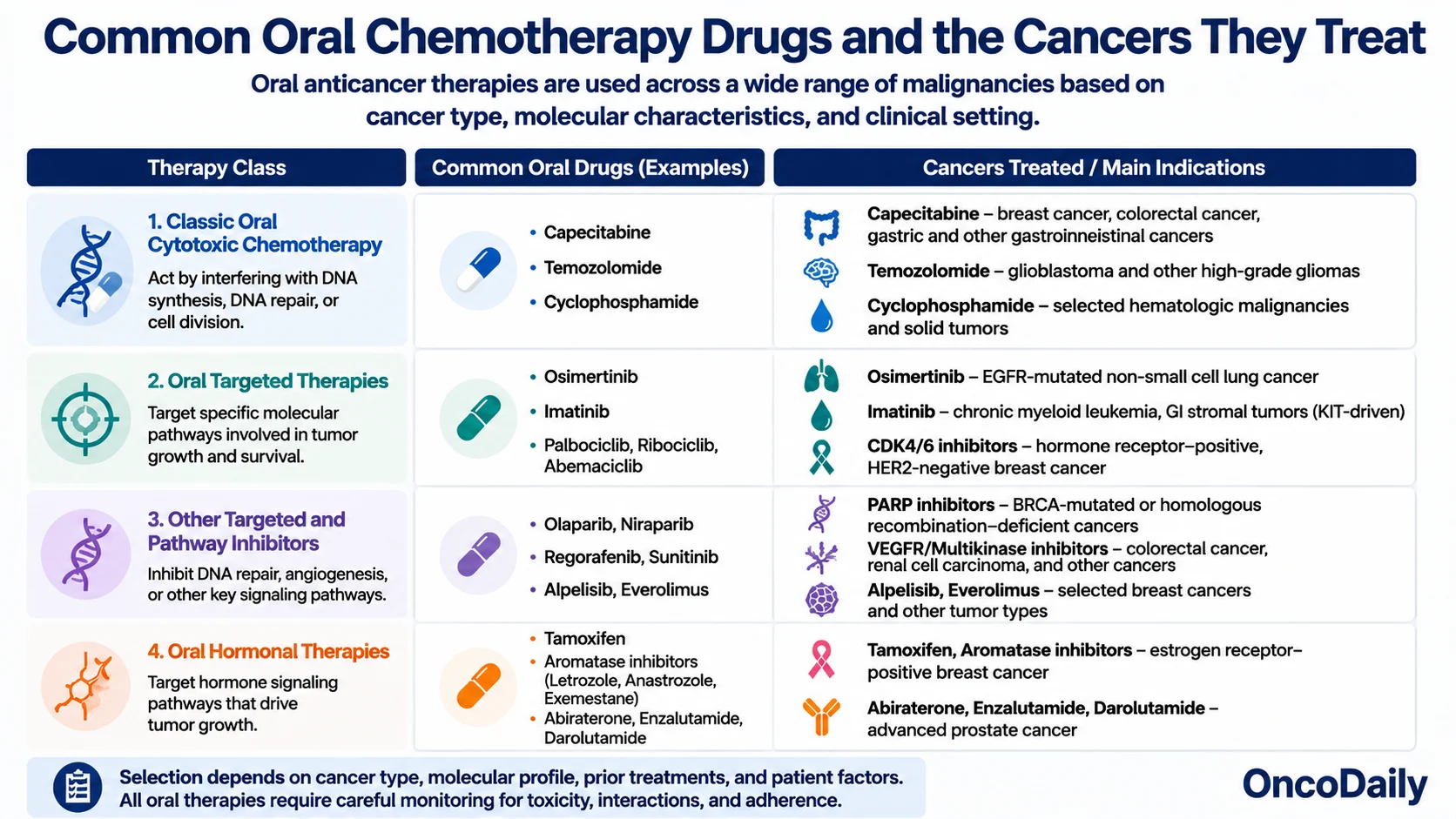
Oral chemotherapy and oral anticancer therapies are used across a wide range of malignancies, with treatment selection based on cancer type, molecular characteristics, and clinical setting. Traditional oral cytotoxic agents include capecitabine, commonly used in breast, colorectal, and gastrointestinal cancers; temozolomide, a key therapy for glioblastoma and other high-grade gliomas; and cyclophosphamide, used in selected hematologic malignancies and solid tumors (Walko and Lindley, 2005; Newlands et al., 2006).
Modern oral targeted therapies have expanded treatment options for molecularly defined cancers. Osimertinib is a standard therapy for EGFR-mutated non-small cell lung cancer, while imatinib targets BCR-ABL in chronic myeloid leukemia and KIT-driven gastrointestinal stromal tumors. CDK4/6 inhibitors, including palbociclib, ribociclib, and abemaciclib, are widely used in hormone receptor–positive, HER2-negative breast cancer (Harbeck et al., 2025).
Other important oral agents include PARP inhibitors such as olaparib and niraparib for selected BRCA-mutated or homologous recombination–deficient cancers, VEGFR/multikinase inhibitors such as regorafenib and sunitinib for colorectal cancer, renal cell carcinoma, and other malignancies, and pathway inhibitors such as alpelisib and everolimus in selected breast cancers and other tumor types (Cohen et al., 2025).
Oral hormonal therapies also represent an important component of systemic cancer treatment. Tamoxifen and aromatase inhibitors are used in estrogen receptor–positive breast cancer, while abiraterone and androgen receptor inhibitorssuch as enzalutamide and darolutamide are used in advanced prostate cancer by suppressing androgen-driven tumor growth (Harbeck et al., 2025).
Benefits of Oral Chemotherapy Treatment
Oral chemotherapy provides several advantages compared with infusion-based therapies, including greater convenience, reduced treatment burden, and increased flexibility for patients. By allowing treatment to be administered at home, oral therapies can reduce the need for frequent clinic visits and help patients maintain daily routines during treatment (Drury et al., 2026).
A major benefit is greater patient autonomy and convenience. Oral administration eliminates the need for intravenous access and infusion appointments, reducing travel time, waiting periods, and treatment-related disruptions, particularly for patients living far from cancer centers (Drury et al., 2026).
For appropriately selected patients, oral anticancer therapies can provide comparable clinical effectiveness to intravenous treatments. Several oral agents, including capecitabine and temozolomide, have demonstrated similar efficacy to intravenous alternatives in specific clinical settings when adequate drug exposure and adherence are maintained (Walko and Lindley, 2005; Newlands et al., 2006).
Oral therapies may also reduce healthcare system burden by decreasing demand for infusion resources and outpatient treatment capacity. However, these benefits depend on appropriate patient selection, adherence support, toxicity monitoring, and patient education (Drury et al., 2026).
Side Effects of Oral Chemotherapy Drugs
The side effects of oral chemotherapy drugs vary depending on the medication class, mechanism of action, and individual patient factors. Similar to intravenous chemotherapy, common toxicities include myelosuppression, gastrointestinal symptoms, fatigue, and mucocutaneous reactions, although targeted therapies often produce more specific adverse effects.
Traditional oral cytotoxic agents can cause neutropenia, anemia, thrombocytopenia, nausea, vomiting, diarrhea, mucositis, and fatigue due to their effects on rapidly dividing normal tissues. For example, capecitabine is commonly associated with diarrhea and hand-foot syndrome, while temozolomide may cause myelosuppression and nausea (Walko and Lindley, 2005; Newlands et al., 2006).
Targeted oral therapies have distinct toxicity patterns. CDK4/6 inhibitors commonly cause neutropenia, fatigue, and gastrointestinal symptoms, while tyrosine kinase inhibitors (TKIs) may cause rash, diarrhea, hypertension, and liver enzyme abnormalities. PARP inhibitors are associated with fatigue, nausea, anemia, and other hematologic toxicities (Bałata et al., 2025; Cohen et al., 2025).
Hormonal therapies also have characteristic adverse effects. Aromatase inhibitors may cause arthralgia, hot flashes, and bone loss, while androgen pathway inhibitors used in prostate cancer can contribute to fatigue, hypertension, edema, and metabolic changes (Harbeck et al., 2025).
Management of toxicity requires regular monitoring, supportive care, dose modifications when necessary, and patient education. Because these medications are self-administered, early recognition of adverse effects is essential to maintain treatment safety and effectiveness (Drury et al., 2026).
How Are Patients Monitored During Oral Chemotherapy?
Monitoring during oral chemotherapy involves a combination of clinical assessment, laboratory testing, toxicity evaluation, and adherence monitoring. Because patients take these medications outside the clinic, structured follow-up is essential to identify adverse effects early and maintain treatment effectiveness (Drury et al., 2026).
Before starting therapy, patients typically undergo baseline assessments, including complete blood counts (CBC), metabolic panels, and drug-specific evaluations such as liver function tests, ECG monitoring, or glucose assessment depending on the medication. During treatment, monitoring frequency is adjusted according to the drug’s toxicity profile and the patient’s individual risk factors.
Early follow-up focuses on reviewing symptoms, medication use, possible drug interactions, and adherence. Ongoing monitoring may include assessment of blood counts, kidney and liver function, blood pressure, cardiac parameters, and treatment-related toxicities (Drury et al., 2026).
Adherence monitoring is a key component of oral chemotherapy management because treatment effectiveness depends on patients taking medications as prescribed. Oncology teams may use pharmacy refill data, patient-reported outcomes, and regular communication to identify barriers and support continued therapy (Drury et al., 2026).
If significant toxicities occur, treatment may require supportive care, dose adjustments, temporary interruptions, or additional monitoring. This approach allows oral therapies to provide the convenience of at-home treatment while maintaining safety and clinical oversight.
You can also read Preparing Your Home for Chemotherapy: Safety and Comfort Tips on OncoDaily.

The Future of Oral Chemotherapy in Cancer Care
The future of oral chemotherapy is moving toward precision oral therapies that combine molecular targeting, improved drug delivery, and digital monitoring. As cancer biology becomes better understood, more oral agents are being developed to target specific genetic alterations and signaling pathways that drive tumor growth.
One of the most promising areas is the expansion of next-generation targeted therapies, particularly in RAS-driven cancers. KRAS G12C inhibitors such as sotorasib and adagrasib have demonstrated the potential of targeting previously difficult cancer drivers, while newer RAS pathway inhibitors are being investigated to overcome resistance and expand treatment options across cancers such as non-small cell lung cancer, colorectal cancer, and pancreatic cancer (Mullard, 2025).
Advances in oral drug delivery systems may further broaden the role of oral therapies. Nanoparticle-based formulations and other delivery technologies aim to improve drug absorption, stability, and bioavailability, potentially allowing more anticancer agents to be effectively administered by mouth (Zhang et al., 2026).
Digital health technologies will also play an increasing role in the safe use of oral anticancer therapies. Remote symptom monitoring, electronic patient-reported outcomes, and adherence tracking can help detect toxicity earlier and support timely treatment adjustments (Drury et al., 2026).
As these developments continue, oral anticancer therapies are expected to become an increasingly important component of personalized oncology, offering patients more flexible treatment options while maintaining precision, safety, and clinical oversight.
Written by Marine Marachlian, MD
FAQ
What are oral chemotherapy drugs?
Oral chemotherapy drugs are anticancer medications taken by mouth as tablets, capsules, or liquids.
Are oral chemotherapy drugs the same as traditional chemotherapy?
Some are traditional chemotherapy agents, while others are targeted therapies, hormonal therapies, or other oral anticancer treatments.
How do oral chemotherapy drugs work?
They work by damaging cancer cell DNA, blocking cell division, or inhibiting specific pathways involved in tumor growth.
What cancers can be treated with oral chemotherapy?
They are used in many cancers, including breast, colorectal, lung, prostate, brain tumors, and hematologic malignancies.
Are oral chemotherapy drugs as effective as IV chemotherapy?
For selected cancers, oral therapies can provide similar effectiveness when used appropriately with proper monitoring.
What are the common side effects of oral chemotherapy?
Common side effects include fatigue, nausea, diarrhea, low blood counts, skin changes, and mucositis.
Do oral chemotherapy drugs require monitoring?
Yes. Patients need regular follow-up, laboratory tests, and toxicity monitoring to ensure safe treatment.
Can oral chemotherapy be taken at home?
Yes. Many oral anticancer therapies are designed for home administration with ongoing clinical supervision.
What factors affect the effectiveness of oral chemotherapy?
Treatment response depends on drug absorption, cancer biology, adherence, interactions, and appropriate dosing.
What is the future of oral chemotherapy?
Future therapies are moving toward more precise targeted treatments, improved drug delivery systems, and digital monitoring approaches.