Key takeaways
- Thrombosomes could improve emergency bleeding care, offering three-year room-temperature storage and rapid preparation.
- Early clinical results are encouraging, with 69% of treated patients experiencing reduced or resolved bleeding within 72 hours in a small Phase II trial.
- Thrombosomes may help patients with platelet refractoriness, maintaining thrombin generation despite anti-HLA antibodies in laboratory studies.
- Two expanded-access cases showed promising improvements in life-threatening intracranial hemorrhage, although effectiveness remains unproven.
- Larger trials are needed to confirm safety and efficacy, while potential benefits include reduced platelet wastage and improved access to hemostatic products.
At LeukO 2026: Global Virtual Congress on Leukemias, organized by OncoDaily, Maro Ohanian, Professor in the Department of Leukemia at The University of Texas MD Anderson Cancer Center, presented emerging clinical evidence on Thrombosomes, an investigational freeze-dried, platelet-derived hemostatic product designed to provide a rapidly available alternative for controlling bleeding in patients with hematologic malignancies.
For patients with acute leukemia and advanced myelodysplastic syndromes (MDS), bleeding can become life-threatening, particularly when severe thrombocytopenia is accompanied by poor responses to conventional platelet transfusions. Platelet shortages and limited storage times further complicate care, leaving clinicians with few alternatives when bleeding continues despite supportive treatment.
Ohanian explored whether a product capable of remaining on the shelf for years, rather than days, could help address these challenges. Drawing on a randomized Phase II trial and two expanded-access cases involving severe intracranial hemorrhage, she examined the potential of Thrombosomes to improve bleeding control in patients for whom conventional platelet support may be insufficient.
The Problem With Platelets Isn’t Just Their Availability
Platelet transfusions are essential in the supportive care of patients with leukemia, but they come with limitations.
Conventional platelets typically have a shelf life of only five to seven days and require carefully controlled storage conditions. This creates ongoing challenges for hospital blood banks, especially during periods of high demand, donor shortages, or disruptions to blood collection.
Several factors can increase bleeding risk in patients with hematologic malignancies:
- Chemotherapy-induced thrombocytopenia: Reduced platelet counts following treatment.
- Impaired platelet function: Platelets may be unable to form effective blood clots.
- Disease-related coagulation abnormalities: Disruptions in normal clotting mechanisms associated with the underlying malignancy.
Some patients also develop platelet transfusion refractoriness, meaning their platelet counts fail to increase adequately after repeated transfusions.
The problem may result from nonimmune causes, such as infection or inflammation, or immune mechanisms involving antibodies against human leukocyte antigens (HLA).
For patients who are actively bleeding, particularly those with severe or life-threatening hemorrhage, conventional platelet transfusions may not provide sufficient hemostatic control.
“Alternative platelet products are needed for our patients.”
Ohanian emphasized that an ideal alternative would combine reliable availability, a long shelf life, rapid preparation, and effective bleeding control while minimizing transfusion-related risks.
Thrombosomes were developed with these challenges in mind.
Three Years on the Shelf, Minutes to Prepare
Thrombosomes are a freeze-dried platelet-derived hemostatic product manufactured from donated human platelets.
Unlike conventional platelet units, which must be stored under controlled conditions and used within days, Thrombosomes are designed to remain stable at room temperature for up to three years.
Their production begins with apheresis platelets collected from blood group O donors.
The platelets are pooled, reducing variability between individual donors, and treated with trehalose, a naturally occurring sugar that helps stabilize cellular membranes during dehydration.
The product then undergoes freeze-drying, producing a powder that can be stored without the same continuous temperature-control requirements as liquid platelets.
Before administration, the powder is reconstituted with sterile water.
The role of trehalose is central to this technology.
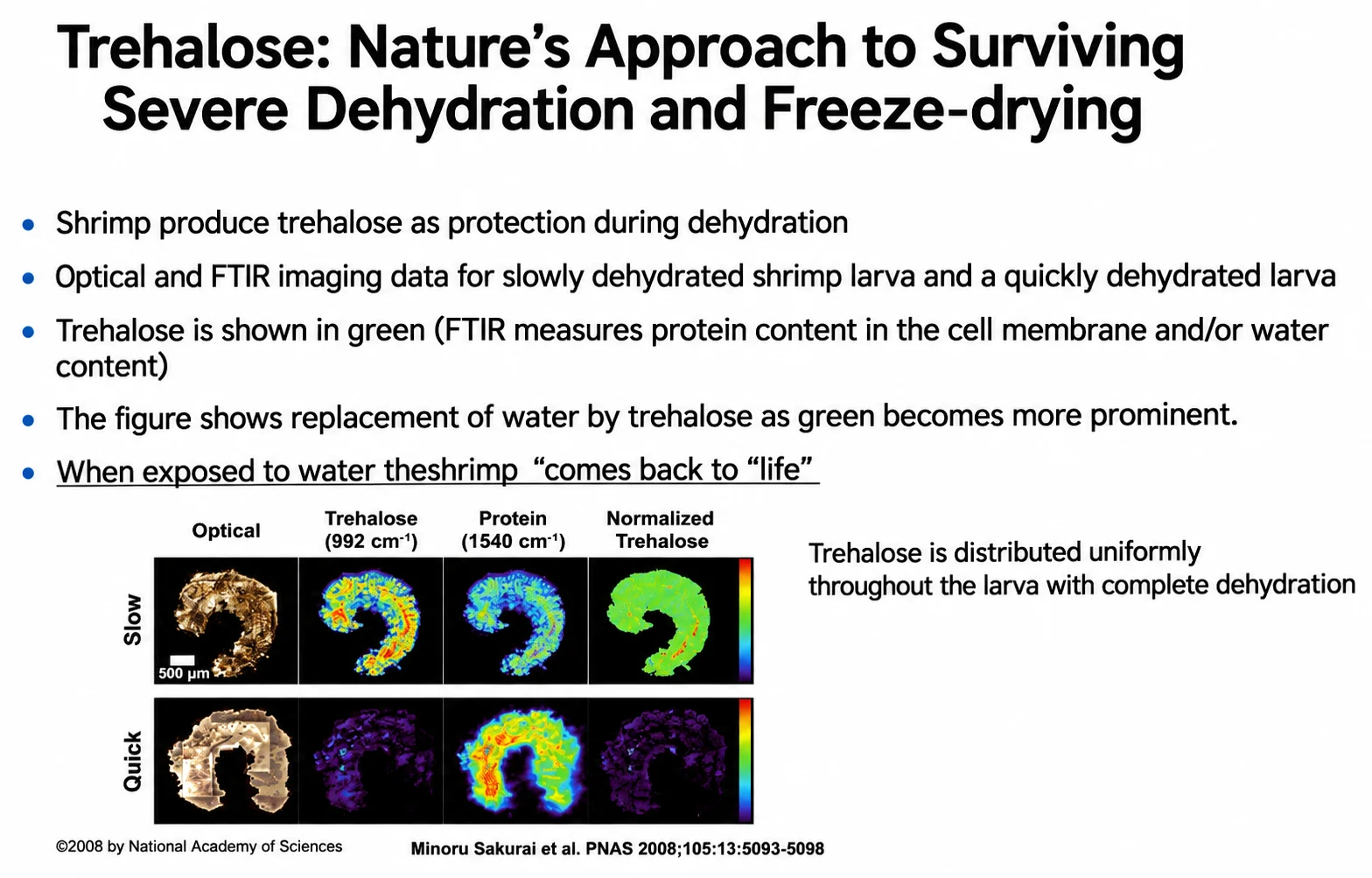
Ohanian illustrated its protective properties through examples from nature, including organisms capable of surviving extreme dehydration.
In Thrombosomes, trehalose helps preserve platelet membrane integrity and biological activity during the drying and rehydration process.
The resulting product retains important hemostatic characteristics, including the ability to adhere to collagen, interact with other platelets, and promote thrombin generation.
Another distinctive feature is that Thrombosomes display an activated platelet phenotype before infusion.
This differs from conventional platelets, which circulate and respond to physiological activation signals following transfusion.
Because Thrombosomes are already activated, researchers hypothesize that they may contribute rapidly to clot formation at sites of vascular injury.
Their reduced plasma content and smaller infusion volume could also offer advantages for patients at risk of transfusion-associated volume overload.
The manufacturing process includes a heat-treatment step intended to reduce pathogen transmission risk, although its clinical safety advantages still require further evaluation.
Together, these properties make Thrombosomes an attractive candidate for situations requiring immediate hemostatic support.
But the critical question is whether these theoretical advantages translate into better bleeding outcomes in patients.
What the Randomized Phase II Trial Found
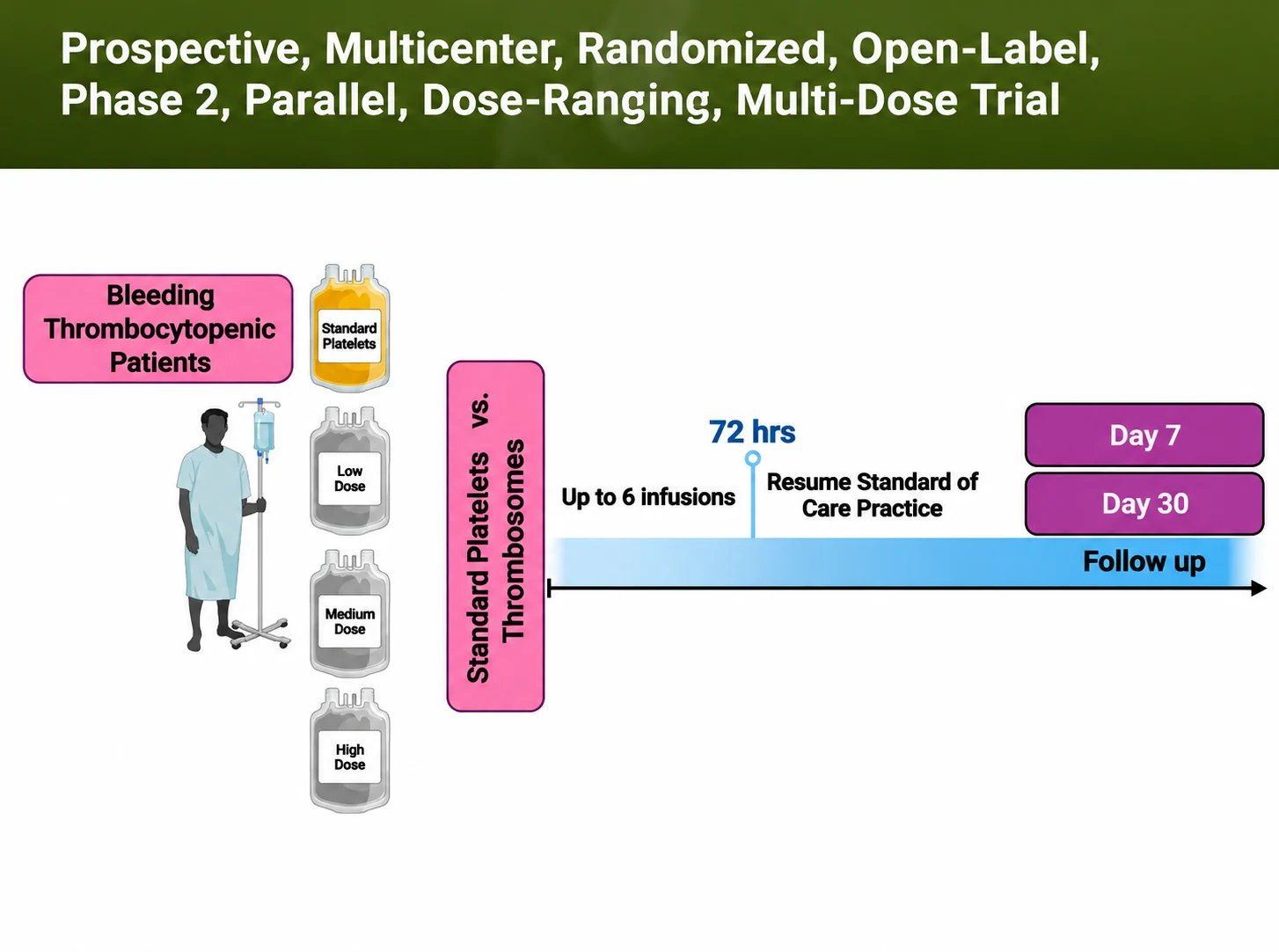
To investigate that question, Ohanian and colleagues conducted a multicenter, prospective, randomized, open-label Phase II trial comparing Thrombosomes with conventional room-temperature-stored platelets.
The study enrolled adults with advanced hematologic malignancies, including acute leukemia and MDS, who had thrombocytopenia and clinically significant bleeding.
Patients were assigned to one of three Thrombosomes dose levels or to a conventional platelet transfusion control group.
The primary endpoint was cessation or reduction of bleeding at the primary bleeding site within 24 hours, assessed using the World Health Organization (WHO) bleeding scale.
 However, the study encountered an unexpected obstacle.
Shortly after enrollment began, the COVID-19 pandemic disrupted research activities. Although multiple centers had been activated, MD Anderson was the only institution able to enroll patients, and the trial ultimately closed prematurely after funding was lost.
As a result, only 19 patients received study treatment:
- Four received low-dose Thrombosomes.
- Five received medium-dose Thrombosomes.
- Seven received high-dose Thrombosomes.
- Three received conventional platelets.
Despite the small sample, the investigators observed encouraging signals.
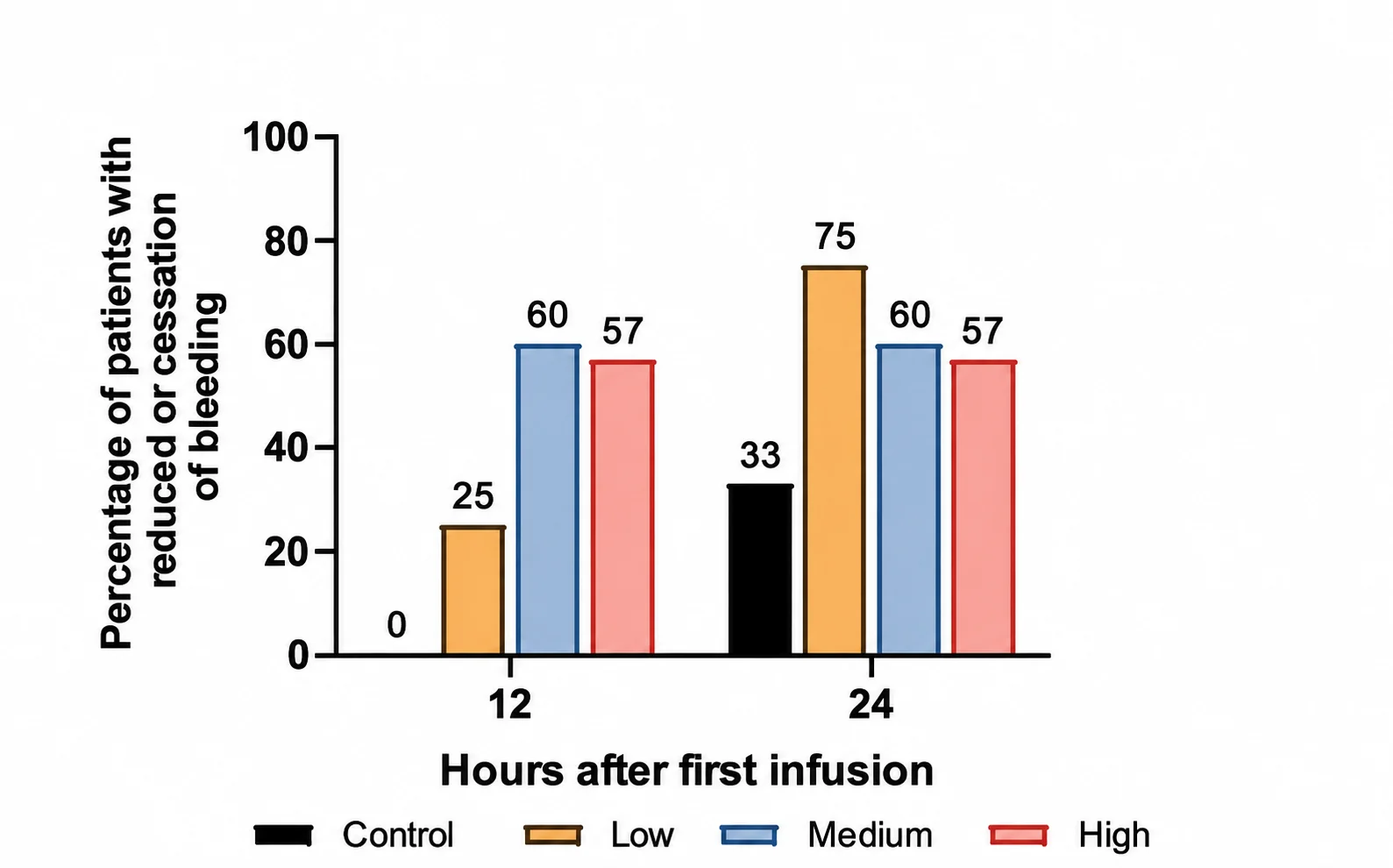
At 24 hours, the primary bleeding response endpoint was achieved in 75% of the low-dose group, 60% of the medium-dose group, and 57% of the high-dose group, compared with 33% of patients receiving conventional platelets.
There was no clear dose-response relationship, but improvements were observed across all three Thrombosomes cohorts.
By 72 hours, 11 of 16 Thrombosomes-treated patients (69%) had experienced reduced or completely resolved bleeding at the primary site.
Among them, seven patients achieved complete cessation of bleeding.
In the conventional platelet group, one of three patients showed improvement.
These findings were promising, but the difference in group sizes was substantial.
With only three patients in the control arm, the trial could not reliably establish that Thrombosomes were superior to conventional platelets.
The study also lacked the statistical power needed to draw definitive conclusions about clinical effectiveness.
Nevertheless, the observations provided an important early signal that the freeze-dried product could contribute to bleeding control in a particularly vulnerable patient population.
Bleeding Control Without a Sustained Increase in Platelet Counts
Another finding raised an interesting question about how Thrombosomes work.
Unlike conventional platelet transfusions, which are commonly used to increase circulating platelet counts, Thrombosomes are rapidly cleared from circulation.
Their hemostatic effect may therefore depend more on immediate activity at sites of vascular injury than on sustained increases in platelet count.
In the trial, several patients experienced improved bleeding scores even when their platelet counts did not rise.
Ohanian highlighted five patients whose platelet counts had decreased by 72 hours despite improvements in their WHO bleeding scores.
This suggested that the clinical effect of the product might not be adequately captured by conventional platelet count measurements alone.
The distinction is important because raising the platelet count and controlling active bleeding are related but not identical treatment objectives.
The investigators also assessed the number of days patients remained alive without grade II or greater bleeding during the first week.
The median was five days in the conventional platelet group, compared with five, six, and seven days across the medium-, low-, and high-dose Thrombosomes groups, respectively.
No deaths occurred during the first seven days.
Although the small sample limits interpretation, these findings provided additional support for investigating the product’s hemostatic activity.
Regarding safety, 29 serious adverse events were reported during the study. None were attributed to Thrombosomes by the investigators.
However, larger studies will be needed to establish its safety profile, particularly with respect to thrombotic complications.
A Possible Answer for Patients Resistant to Platelet Transfusions
One of the most interesting findings concerned patients with antibodies that can make conventional platelet transfusions less effective.
Immune-mediated platelet refractoriness frequently involves antibodies against HLA class I antigens expressed on donor platelets.
These antibodies can cause transfused platelets to be cleared rapidly, limiting the effectiveness of subsequent transfusions.
For some patients, finding compatible platelet units becomes extremely difficult.
Ohanian discussed an exploratory analysis of patient samples examining anti-HLA antibodies and the hemostatic activity of Thrombosomes.
Of 13 samples evaluated, five (38%) contained anti-HLA class I antibodies.
Two patients had particularly high calculated panel-reactive antibody (cPRA) scores of 92% and 100%.
These scores indicate that finding compatible conventional platelet donors would be exceptionally difficult.
Yet the laboratory findings suggested that Thrombosomes could retain thrombin-generating activity despite the presence of these antibodies.
Further experiments showed that thrombin generation remained relatively consistent across samples with different anti-HLA antibody levels.
The investigators also evaluated the effects of abciximab, a potent antiplatelet agent that blocks glycoprotein IIb/IIIa receptors.
In laboratory testing, abciximab inhibited thrombin generation associated with conventional platelets but did not significantly suppress thrombin generation by Thrombosomes.
These results suggest that Thrombosomes may function through mechanisms that are less affected by some antibodies interfering with conventional platelet activity.
For patients with severe platelet refractoriness, this could represent an important potential advantage.
However, these were exploratory findings, including ex vivo experiments, and they do not establish that the product consistently overcomes immune-mediated platelet refractoriness in clinical practice.
Further trials will be necessary to determine whether this laboratory activity translates into reliable bleeding control.
Two Life-Threatening Brain Hemorrhages
The Phase II trial excluded patients with WHO grade IV bleeding, leaving an important unanswered question: could Thrombosomes help patients experiencing life-threatening hemorrhage when conventional treatments were failing?
Ohanian presented two expanded-access cases in which the investigational product was administered to patients with AML and severe intracranial bleeding.
These cases provided an opportunity to observe its use in circumstances more critical than those studied in the randomized trial.
Case 1: Progressive Subdural Hemorrhage After Transplantation
The first patient was a 37-year-old man with TP53-mutated refractory AML.
He had experienced progressive subdural hemorrhages before undergoing stem cell transplantation.
Despite middle meningeal artery embolization and repeated platelet transfusions, the hemorrhage continued to worsen.
Following transplantation, severe thrombocytopenia made additional neurosurgical intervention unsafe.
The patient was receiving platelet transfusions twice daily, but the bleeding remained difficult to control.
On day six after transplantation, he began receiving high-dose Thrombosomes under expanded access.
He received six doses over 72 hours.
Subsequent computed tomography (CT) imaging demonstrated improvement.
Over six days, the width of the left subdural hematoma decreased from 22 mm to 18 mm, while its measured density decreased from 57 to 44 Hounsfield units.
A previously observed midline shift also resolved.
The findings were consistent with interval improvement in the hemorrhage following treatment.
Although the timing was encouraging, a single case cannot establish that Thrombosomes caused the improvement, particularly in a patient receiving multiple interventions and supportive treatments.
Case 2: A Patient in Critical Condition With Subarachnoid Hemorrhage
The second case involved a 34-year-old woman with relapsed or refractory AML who developed severe septic shock during treatment.
Her condition was complicated by Escherichia coli bacteremia, multiorgan failure, renal failure requiring dialysis, liver dysfunction, coagulopathy, and mechanical ventilation.
During her intensive care admission, she developed a multifocal subarachnoid hemorrhage.
Despite aggressive treatment with conventional platelets, fresh frozen plasma, and vitamin K, repeat brain imaging showed continued bleeding and new hemorrhagic areas.
Because of persistent thrombocytopenia and coagulopathy, the team obtained high-dose Thrombosomes through expanded access.
The subsequent clinical observations were notable.
Approximately 10 hours after treatment began, the patient was consistently following commands, with no motor deficits reported.
She received six doses over three days.
Serial CT scans demonstrated progressive improvement in the intracranial hemorrhage.
By day 16 after initiation of Thrombosomes, the imaging findings showed resolution of the previously identified blood products.
The patient’s neurological improvement and imaging changes were encouraging, particularly given the severity of her illness.
However, her condition was complex, and she was receiving multiple concurrent treatments. The observations do not demonstrate that Thrombosomes alone were responsible for her recovery.
Both cases highlight a potential application of the product in severe bleeding when conventional hemostatic support is insufficient.
They also reinforce the need for systematic clinical trials before its role in life-threatening intracranial hemorrhage can be established.
Could Longer Shelf Life Change More Than Bleeding Care?
Beyond the clinical findings, Ohanian drew attention to a practical advantage that could affect healthcare delivery more broadly: the ability to store Thrombosomes for years.
Conventional platelets are particularly vulnerable to wastage because of their short shelf life.
Hospitals must continually balance the risk of running out of platelet units against the likelihood that unused products will expire.
Ohanian cited U.S. blood collection data from 2017 showing that 344,015 apheresis platelet units became outdated out of approximately 2.34 million units collected.
At an estimated median cost of $750 per unit, this represented roughly $258 million in expired platelet inventory.
A product with a three-year shelf life could potentially reduce such wastage and allow hospitals to maintain a more reliable reserve for emergencies.
It could also improve access during natural disasters, pandemics, and other situations where platelet collection and transportation are disrupted.
And because Thrombosomes require relatively little storage infrastructure, they may eventually have applications in settings where conventional platelet products are difficult to maintain.
These logistical benefits remain potential advantages rather than demonstrated healthcare savings, but they represent an important part of the product’s appeal.
For clinicians treating patients with hematologic malignancies, a reliable supply of hemostatic products could be especially valuable during periods of severe thrombocytopenia and ongoing transfusion requirements.
What Comes Next for Thrombosomes?
The results presented by Ohanian offer an encouraging early picture of a different approach to bleeding management in hematologic malignancies.
Thrombosomes combine several practical features: prolonged room-temperature stability, rapid preparation, reduced infusion volume, and an activated hemostatic phenotype.
The Phase II trial demonstrated bleeding responses in patients receiving the investigational product, while laboratory analyses suggested that its hemostatic activity could be maintained despite certain anti-HLA and antiplatelet antibodies.
The two expanded-access cases also provided encouraging observations in patients with severe intracranial hemorrhage.
But important questions remain.
The randomized study was interrupted prematurely and included only 19 treated patients, with a particularly small control group. The intracranial hemorrhage cases were uncontrolled observations, and the product’s effects on thrombosis, survival, and other long-term outcomes require more extensive investigation.
Thrombosomes are therefore not yet an established replacement for conventional platelet transfusions.
Larger, adequately powered clinical trials will be necessary to determine which patients may benefit most, how the product should be dosed, and whether it offers measurable advantages over current treatment.
As Ohanian emphasized, the potential value extends beyond clinical effectiveness alone.
A hemostatic product that can be stored for years and prepared in minutes could help address one of the most persistent challenges in transfusion medicine: ensuring that the right blood product is available when a patient urgently needs it.
For patients with leukemia facing severe bleeding, the possibility of more reliable, rapidly available hemostatic support is worth investigating. The next step is determining how much of that promise can be demonstrated in larger clinical studies.
Written by Eliz Baloyan, MD, Features Writer and Editor at OncoDaily and CancerWorld