Eighteen months after being told his melanoma had not spread, Kevin Donaghy believed cancer was behind him.
At 10:40 on the morning of December 13, 2019, he walked into the Edinburgh Cancer Centre alone.
The back pain that had started weeks earlier had grown bad enough to lead to scans and, eventually, an oncology appointment.
His wife offered to come. A friend did too. Donaghy told them both it was fine.
So when this new appointment came around, he did not walk in expecting cancer.
What he heard that morning was very different.
“I had a tumour on my right lung, I had a tumour next to my spine which was causing the pain, and I had stage IV metastatic melanoma, which was life-limiting and incurable.”
There was another number to absorb. If he did not respond to immunotherapy, he was told his life expectancy could be around nine months.
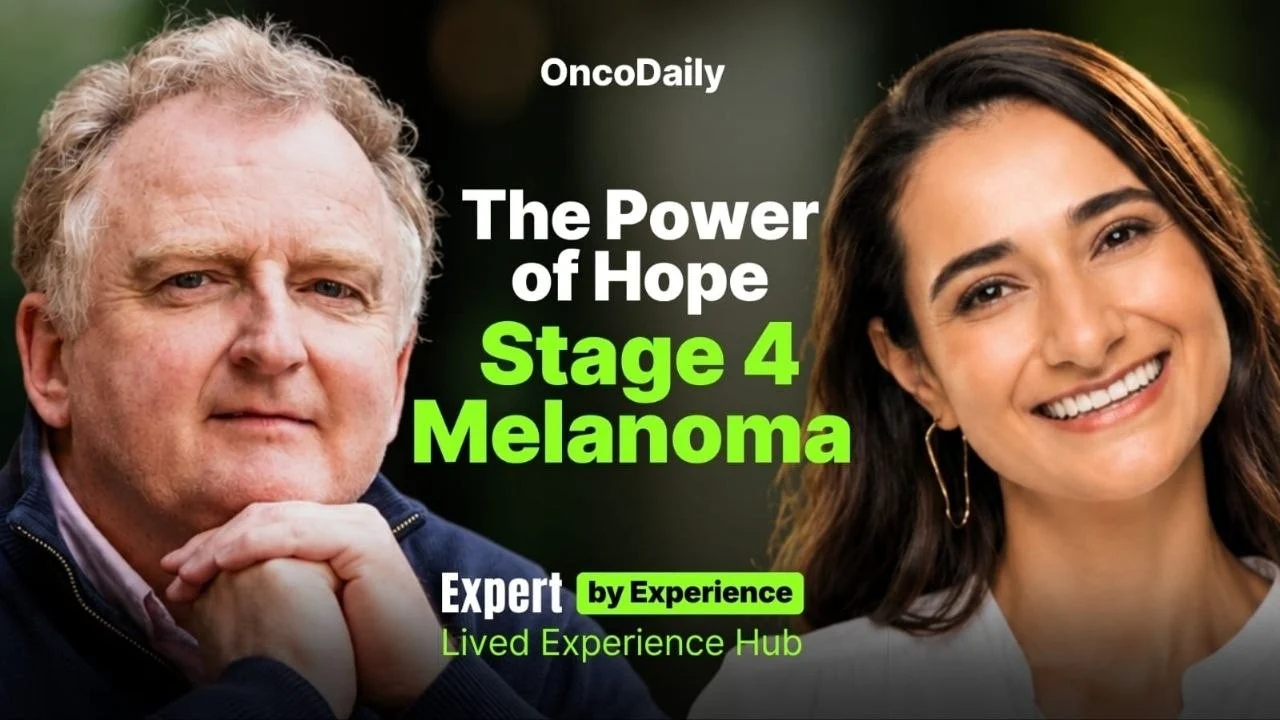
Years later, speaking with Carmen Monge for OncoDaily’s Experts by Experience, Donaghy can tell the story with the distance of someone who has lived far beyond those first frightening calculations.
But much of what followed grew from the loneliness of that day – and from what happened when he eventually discovered that he did not have to go through cancer alone.
The Day He Thought Cancer Was Over
Donaghy’s first melanoma diagnosis came in 2018.
It began with a blemish on his left forearm that would not disappear. Several examinations had not raised major concern, but when it changed, he was referred to a dermatologist and underwent a biopsy.
The result was stage II melanoma.
Surgery removed the melanoma and surrounding tissue, along with a lymph node to determine whether the disease had spread.
A few weeks later, Donaghy was walking along Princes Street in Edinburgh when his phone rang.
The news was good.
“I got a phone call to tell me that I could have a very good weekend because the cancer had not spread.”
His reaction came before he could contain it.
“I collapsed onto my knees in the middle of the busy street in Edinburgh and started crying because the relief was immense. I was cancer-free, everything had been treated on the NHS in Scotland, and I could carry on with life.”
And for 18 months, he did.
So when back pain appeared during a business trip to Manchester, recurrence was not the explanation he expected. Even after an emergency hospital visit, X-rays and the request for a CT scan, his mind kept returning to what he had already been told: the cancer had been treated.
That was why he went to the oncology appointment alone.
Looking back, he calls it “the worst decision of my life.” At the time, though, he had no reason to know what was coming.
“I was completely unprepared, as most people are, for a cancer diagnosis.”
The word stage IV carried its own history for him. Growing up in the 1970s and 1980s, cancer was rarely discussed openly, and advanced disease was closely associated with death.
Now the term applied to him.
“I didn’t know anybody else with melanoma, I didn’t know anybody else at stage IV, and to me stage IV just meant, well, how long until you die? You know, how long have I got?”
The Christmas They Tried to Protect
Donaghy was 50. His children were 16 and 18.
His diagnosis came less than two weeks before Christmas.
He and his wife decided not to tell their children immediately. They waited until December 26.
“We wanted potentially our last Christmas to be as memorable as possible.”
The calculation behind that decision was devastatingly practical. If the immunotherapy did not work, Donaghy believed this could be his final Christmas with them.
So the bucketlist for 2020 became urgent: travel, see friends, spend time with family, fit as much life as possible between treatments.
He still did not know what immunotherapy would feel like. He wondered whether he would lose his hair, whether treatment would leave him too ill to travel, whether he would have the strength for everything he wanted to do.
Then, six weeks after starting treatment, the first COVID-19 lockdown began.
The plans disappeared almost overnight. Life narrowed to home, family and hospital visits, one of the few reasons he could still leave the house.
For families everywhere, lockdown brought separation and uncertainty. Donaghy was experiencing both with a timeline that, at least in his mind, might be brutally short.
“There was a huge, huge fear of missing out that the whole world was going through, FOMO, at that point in time because nobody could go out. But, you know, our potential timeline was very short.”
There was another side to those months. He and his wife were suddenly home with their children for an amount of time they would never otherwise have had.
“Looking back on it, we got to spend a lot of time, my wife and I, with our kids, perhaps a bit too much time as far as they were concerned. But it was an invaluable period because we just didn’t know what was going to happen.”
When Isolation Gave Way to Connection
The immunotherapy began to work.
But physically responding to treatment did not remove the isolation that had settled around Donaghy.
He could read about melanoma. He could learn about pembrolizumab and what treatment might do. What he could not find in his immediate world was somebody who knew what it felt like to be where he was.
“I didn’t know anyone else with melanoma. I didn’t know anyone else on immunotherapy, and I didn’t know anyone else with stage IV cancer.”
During lockdown, that absence grew heavier.
“There was this sense of isolation that it was only happening to me. There was no one else this was happening to.”
Then he found a virtual support group for people with melanoma in the UK.
The difference was immediate.
“I joined that group, and immediately I felt as if I’d found my tribe. I found people who just understood.”
They compared treatments and side effects. They talked about the mental strain. They laughed, including at the kind of dark humour that can be difficult to explain to someone who has never been through cancer treatment.
Donaghy did not suddenly need everyone in that group to have his exact experience. He needed people who understood enough of it that nothing had to be translated first.
“I just found the power of hearing other people’s stories really gave me hope.”
That feeling became the beginning of Stories of Cancer and Hope.
Turning Other People’s Stories Into Something You Could Hold
The first idea was modest.
Donaghy wanted to collect stories from people affected by cancer, publish them as a physical book and give the copies away.
“Something tangible, something physical that you could, you know, give to somebody.”
He began speaking with people in his personal and professional circles. One of the first was Ricky Nicol, an IT customer who had been through cancer himself.
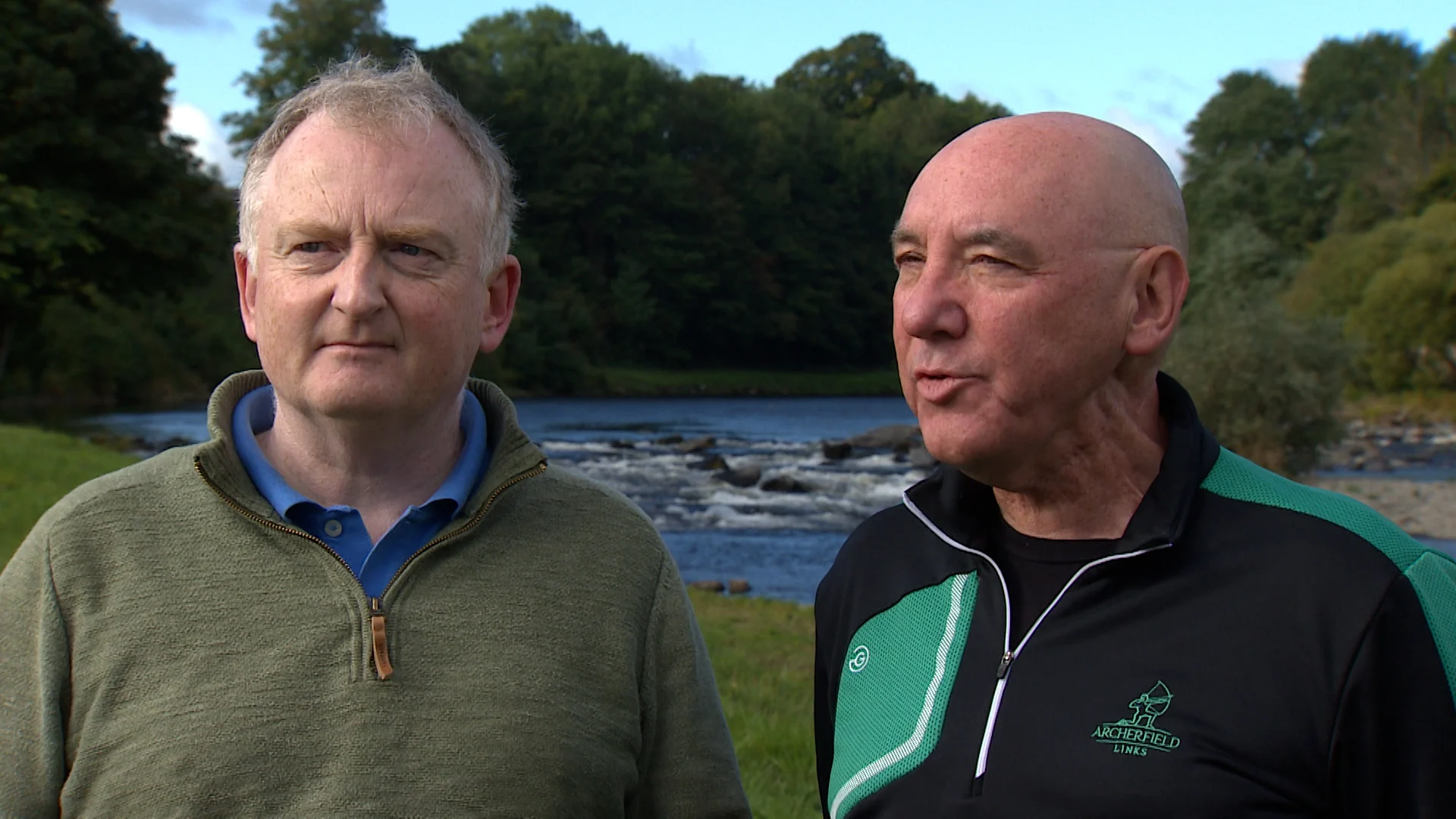
Kevin Donaghy with Ricky Nicol. Photo: ITV News Border.
After Donaghy recorded his story, Nicol asked what he planned to do with the book.
Donaghy told him he wanted to give away at least 1,000 copies to individuals, cancer charities and treatment centres. He would just need to work out how to fund it.
The next day, Nicol called and offered to finance the project.
Then others joined.
A graphic designer friend helped build the book. Donaghy’s sister, son and a friend worked on editing. Nieces and nephews with backgrounds in English and journalism helped read the stories. His daughter Katherine, then studying illustration, worked on the design and created an illustration for the book.
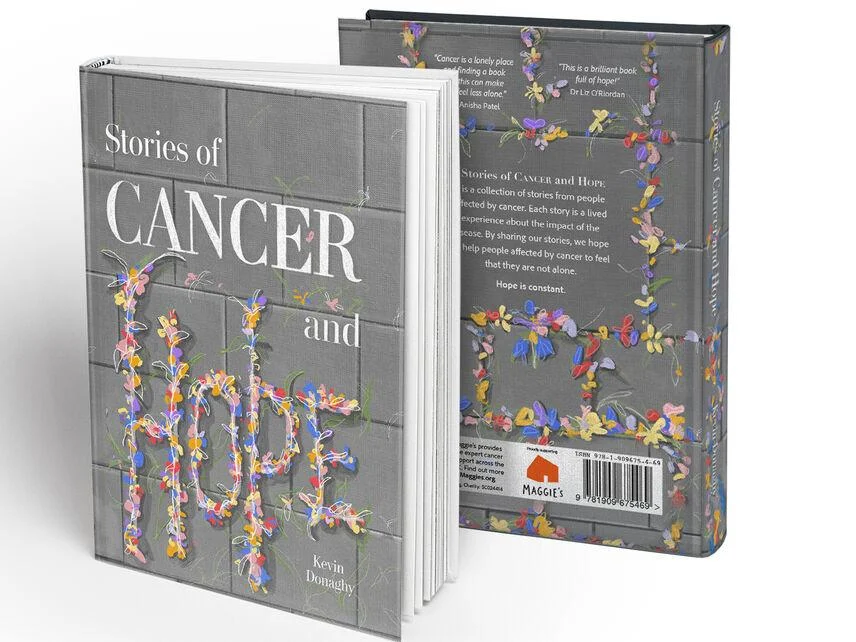
Kevin Donaghy’s Stories of Cancer and Hope, a collection of lived experiences from people affected by cancer. Photo: Stories of Cancer and Hope / Buy Social Scotland.
What had begun during a period of profound isolation became, almost by definition, collaborative.
The first edition contained 39 stories. The hardback now contains 42.
Donaghy was determined that they would not all end neatly.
“It was very important when we were producing the book that we could not have every story that, you know, ended and everyone lived happily ever after, because that is not the reality of cancer.”
Some contributors had lost partners. Some were living with terminal disease. Some contributors have since died, and when the book is republished, their families are invited to add to their stories.
At the time of the conversation, Donaghy said 11,000 copies were in circulation, including 8,000 donated to more than 100 cancer charities and treatment centres across the UK and Ireland.
The project had become far larger than the book he first imagined giving away.
But its purpose remained close to the feeling that started it.
Hope Does Not Always Mean the Same Thing
There is a phrase Donaghy returns to throughout the conversation.
It came from a friend and former oncology nurse whose story appears in the book:
“Hope is constant.”
For Donaghy, the second half matters just as much.
“There is always hope, but hope can change as well.”
At the beginning, hope may mean that the test comes back negative.
After diagnosis, it may mean cure.
Later, it may become the hope that treatment works, that disease can be controlled, that there will be more time.
Donaghy has lived through that shift himself. He was told his cancer was incurable. Six years later, he is still here.
But not every story in Stories of Cancer and Hope ends that way. Some are about people living with terminal disease, and some about families preparing for loss.
In those circumstances, hope may become something quieter.
“They hope that their end of life can be managed, that it can be pain-free, and they hope that their family will be able to continue without them.”
There is no attempt to make every cancer story inspirational. No promise that everything will work out.
“Hope is constant, and it means different things to different people.”
Do Not Walk the Mountain Alone
When Donaghy tries to explain the value of lived experience, he uses the image of a mountain.
“If you see that mountain in the distance and think, okay, I need to get to that mountain, do you just set off? Do you go out with a pair of flip-flops and a T-shirt and a small bottle of water? No, you’re prepared.”
Cancer, he says, requires its own kind of preparation. The medical team can explain the treatment plan and possible side effects. But the people who have already walked part of that path can help with something different: what it actually feels like to be on it.
The medical team explains the treatment plan and the possible side effects. But the people who have already walked part of that path can tell you what the journey feels like.
They become guides.
“For me, the guides on that journey are the people that we meet, primarily through cancer charities, who have that lived experience as well, who have been on that journey or are on that journey at the same time.”
They cannot predict another person’s experience. But they can recognise parts of the landscape.
For Donaghy, those connections became especially valuable at the lowest points.
“It gave me hope. It gave me comfort. It gave me support.”
His advice now is straightforward:
“Do not try and do this on your own. Try and find those guides that can walk with you or perhaps have walked ahead of you.”
He speaks particularly about men, who in his experience can struggle to share their fears and emotions. Often, he has found, one person opening up gives somebody else permission to do the same.
The diagnosis does not even have to match exactly.
What matters is the recognition that sometimes comes before any explanation is necessary.
“Oh, you’ve had cancer too. Instantly, there’s a connection, and we feel drawn to people when we find that connection.”
The Life Beyond the Diagnosis
By the end of the conversation, the timeline looks very different. Donaghy is six years beyond the diagnosis that once made the future feel impossibly short, and approaching four years since he was told there was no evidence of disease. Both tumours are no longer visible.
He will still be classed as having stage IV melanoma. But these days, he allows himself to look further ahead.
“I can now look a bit further forward than I did five years ago when I was initially told of my diagnosis.”
That longer horizon has changed what Donaghy can imagine for himself, but it has not changed the way he speaks about cancer. He is careful not to romanticize what happened or turn the diagnosis into something he would ever have chosen. What he does acknowledge is everything that entered his life alongside it – the people he met, the stories he was trusted with, and the community that grew around them.
“I would not have wanted, I did not want cancer, but I have met so many amazing people that I would not have met without cancer. And that, you know, that’s been a gift.”
The book that emerged from those relationships now carries dozens of different versions of cancer: different diagnoses, treatments, losses, responses, fears and futures.
Donaghy does not expect every reader to recognise themselves in every page.
One story may be enough.
“You will find something within some of the stories that you can relate to. Whether it’s, you know, a similar diagnosis, similar treatment, hopes, fears, ambitions, highs, lows.”
And then, finally, the message he once needed to hear himself:
“You’re not alone. That’s the important message in the book.”
Written by Eliz Baloyan, MD, Features Writer and Editor at OncoDaily and CancerWorld
Interview by Carmen Monge-Montero, Lead of the OncoDaily Lived Experience Advocacy Hub