ESMO 2026 highlighted emerging strategies across melanoma treatment settings, from individualized mRNA neoantigen therapy after surgery to TIL-based combinations and antibody–drug conjugates in advanced disease.
This overview examines findings from IOV-COM-202, MIZAR-003, and PLUG-IN GEM 2301, with attention to efficacy, safety, and the limitations of each study.
IOV-COM-202: Lifileucel Plus Pembrolizumab Shows Durable Responses in ICI-Naïve Advanced Melanoma
Final results from cohort 1A of IOV-COM-202 showed encouraging activity with lifileucel plus pembrolizumab in immune checkpoint inhibitor (ICI)-naïve advanced melanoma.
Among 24 patients receiving lifileucel that met the specified cell-dose and manufacturing requirements, the objective response rate (ORR) was 62.5%, including complete responses in 29.2%. Median duration of response (DOR) was not reached, and median progression-free survival (PFS) was 19.8 months.
Andrew J. Furness presented the findings at ESMO Congress 2026 (abstract 2072O).
Background
Despite advances in immunotherapy, some patients with advanced melanoma do not achieve durable disease control. Lifileucel is a one-time autologous tumor-infiltrating lymphocyte (TIL) therapy that has demonstrated activity after prior ICI treatment.
Cohort 1A of IOV-COM-202 evaluated lifileucel combined with pembrolizumab in patients with ICI-naïve advanced melanoma.
Methods and Study Design
Cohort 1A evaluated the safety and efficacy of lifileucel plus pembrolizumab without a randomized comparator. The primary endpoint was investigator-assessed ORR according to RECIST v1.1.
Treatment included nonmyeloablative lymphodepletion with cyclophosphamide and fludarabine, followed by a lifileucel infusion and up to six doses of interleukin-2, as part of the pembrolizumab-containing regimen.
The reported full analysis set included 24 patients who received at least 5.58 billion TILs meeting manufacturing product specifications.
Exploratory translational analyses assessed T-cell receptor sequences in the lifileucel product, blood, and tumor tissue from 13 patients. Single-cell RNA sequencing was performed on tumor tissue and the cell product from two patients.
Results
At the December 12, 2025 data cutoff:
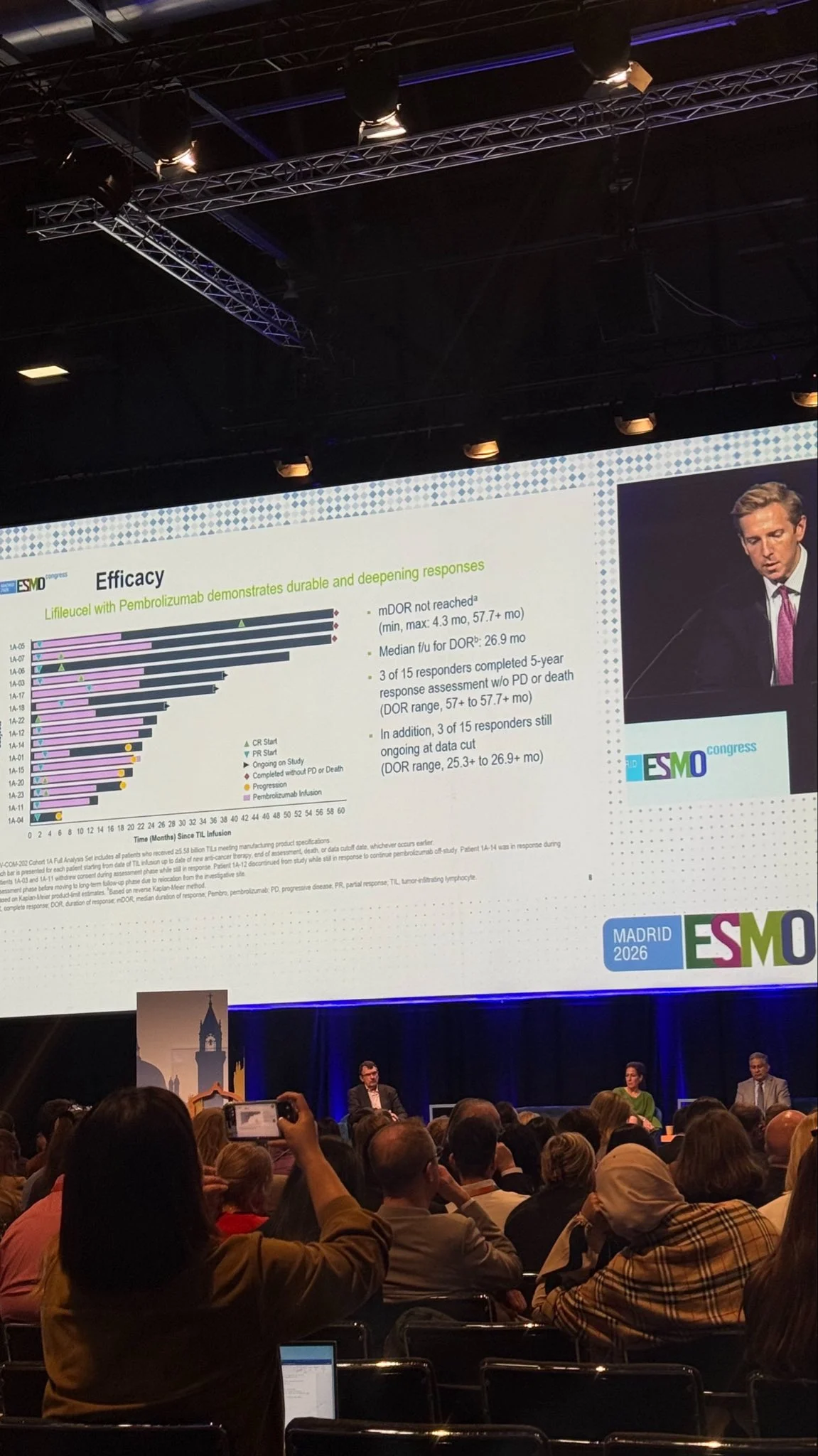
- Objective response: Fifteen of 24 patients responded, corresponding to an ORR of 62.5% (95% CI 40.6–81.2).
- Depth of response: Seven patients achieved a complete response (29.2%), and eight achieved a partial response (33.3%).
- Disease control: Disease control was reported in 20 patients (83.3%; 95% CI 62.6–95.3%). Five patients had stable disease, three had progressive disease, and one was not evaluable.
- Response durability: Median DOR was not reached. Observed response durations ranged from 4.3 to 57.7+ months, with median follow-up for DOR of 26.9 months.
- Long-term responses: Three of 15 responders completed five years of response assessment without progression or death. Three additional responders remained on study with ongoing responses at the cutoff.
- Progression-free survival: Median PFS was 19.8 months (95% CI 3.6–not reached), measured from the first pembrolizumab infusion.
The response-duration presentation distinguished patients with ongoing responses on study from those who ended assessment without documented progression or death. These categories should not be interpreted as equivalent evidence of an ongoing response at the cutoff.
Safety
The abstract described safety as consistent with the known profiles of the treatment regimen but did not provide numerical adverse-event rates.
The regimen includes lymphodepleting chemotherapy and interleukin-2 as well as lifileucel and pembrolizumab. Without detailed adverse-event frequencies, grades, and attribution, the supplied results do not allow a comprehensive assessment of treatment burden or comparative safety.
Translational Findings
Exploratory analyses found greater persistence of tumor-derived T-cell receptor sequences in responders than in nonresponders.
Single-cell analyses identified sustained high proportions of predicted tumor-reactive T cells with reinvigorated phenotypes in the TIL product.
These findings provide biological context for the clinical responses but remain exploratory. The small translational sample, particularly the two-patient single-cell analysis, limits broader conclusions and does not establish a validated predictive biomarker.
Interpretation
The combination produced responses in approximately two-thirds of the reported analysis population, including complete responses in nearly one-third. The unreached median DOR and several prolonged responses support further investigation of response durability.
However, the analysis involved only 24 patients who received a product meeting specified manufacturing requirements. It should not be interpreted as describing outcomes for every patient considered for, enrolled in, or beginning the treatment process.
The absence of a randomized comparator also prevents determination of the additional benefit attributable to lifileucel over pembrolizumab alone.
Conclusion
Final cohort 1A results from IOV-COM-202 showed encouraging response depth and durability with lifileucel plus pembrolizumab in ICI-naïve advanced melanoma.
The small cohort and absence of a randomized comparator limit conclusions about comparative efficacy and safety. These findings support further evaluation in the phase III TILVANCE-301 trial comparing lifileucel plus pembrolizumab with pembrolizumab alone.
MIZAR-003: GC101 TIL Regimen Maintains PFS Benefit in Previously Treated Advanced Melanoma
Extended follow-up from the randomized phase II MIZAR-003 trial showed a sustained progression-free survival (PFS) benefit with a GC101 tumor-infiltrating lymphocyte (TIL) regimen compared with investigator-choice chemotherapy in advanced melanoma after at least two prior systemic regimens, including anti-PD-1 treatment.
Median PFS was 4.37 versus 1.61 months (HR 0.44; 95% CI 0.28–0.70; P = 0.0004). Overall survival (OS) remained immature, and a statistically significant OS benefit was not established. Grade ≥3 treatment-related adverse events were more frequent with the GC101 regimen.
Lu Si presented the findings at ESMO Congress 2026 (abstract LBA55).
Background
Conventional TIL treatment can involve intensive lymphodepleting chemotherapy and interleukin-2 support. The GC101 regimen uses lower-intensity preconditioning and omits interleukin-2, with the aim of reducing treatment burden.
MIZAR-003 evaluated this approach, incorporating sintilimab, against investigator-choice chemotherapy. Following preliminary results presented at ASCO 2026, the updated analysis provided longer follow-up and additional findings in acral and mucosal melanoma.
Methods and Study Design
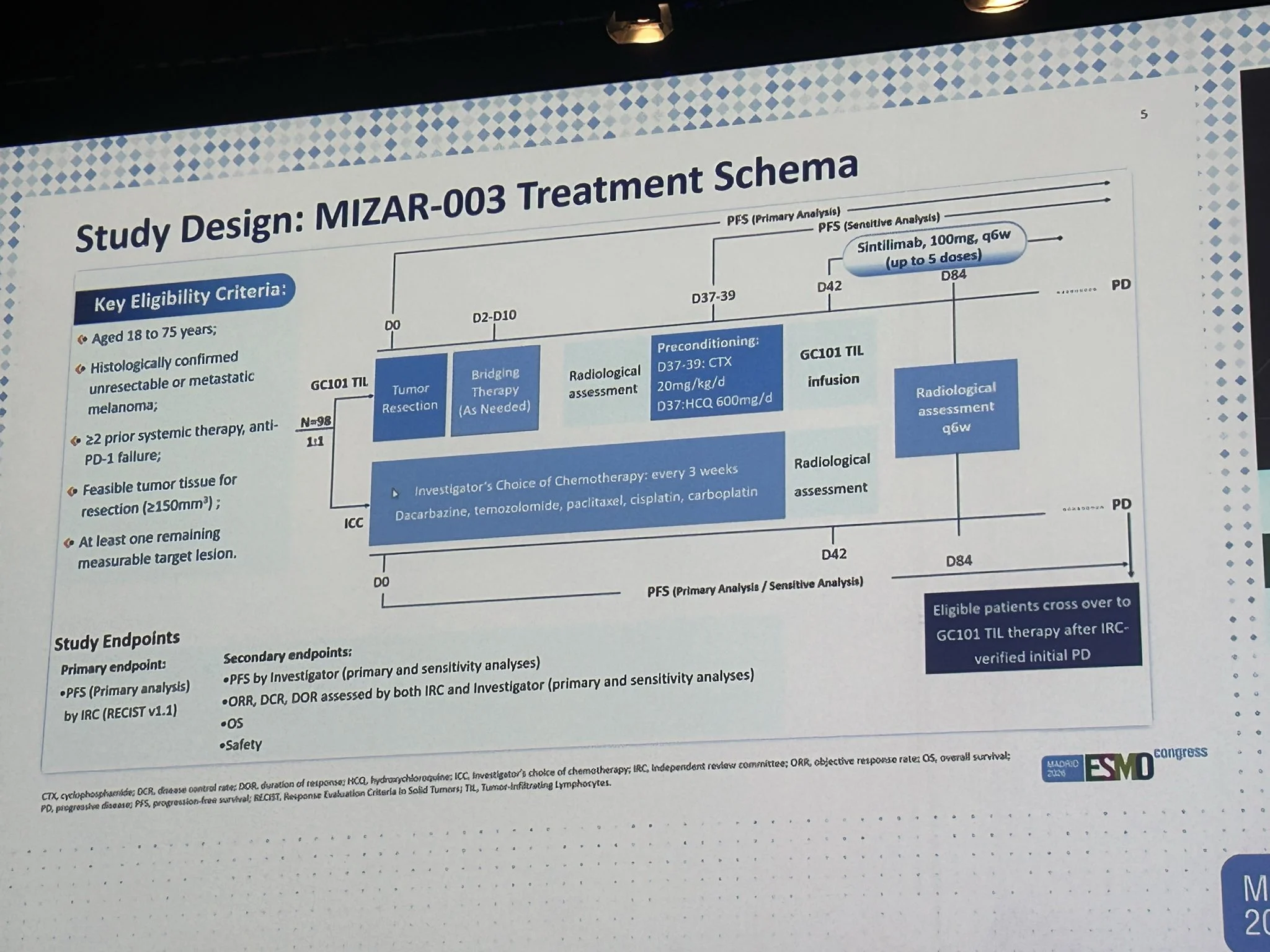
MIZAR-003 was a multicenter, randomized, open-label phase II trial conducted at 25 Chinese centers.
Eligible patients were aged 18–75 years and had histologically confirmed unresectable or metastatic melanoma after at least two prior systemic regimens, with anti-PD-1 treatment failure. Patients needed tumor tissue suitable for resection and at least one remaining measurable target lesion.
Patients were randomized 1:1 to:
- GC101 TIL regimen: Tumor resection for TIL production, with bridging therapy as needed, followed by preconditioning with cyclophosphamide 20 mg/kg daily for three days and hydroxychloroquine 600 mg on the first preconditioning day. GC101 was then infused without interleukin-2. Sintilimab was administered at 100 mg every six weeks for up to five doses.
- Investigator-choice chemotherapy: Options included dacarbazine, temozolomide, paclitaxel, cisplatin, and carboplatin.
Eligible patients in the chemotherapy arm could cross over to GC101 after independent review committee (IRC)-confirmed progression.
The primary endpoint was IRC-assessed PFS according to RECIST v1.1. Secondary endpoints included investigator-assessed PFS, objective response rate (ORR), disease control rate (DCR), duration of response, OS, and safety.
Results
At the July 2, 2026 cutoff, median follow-up had increased from 5.2 to 8.3 months.
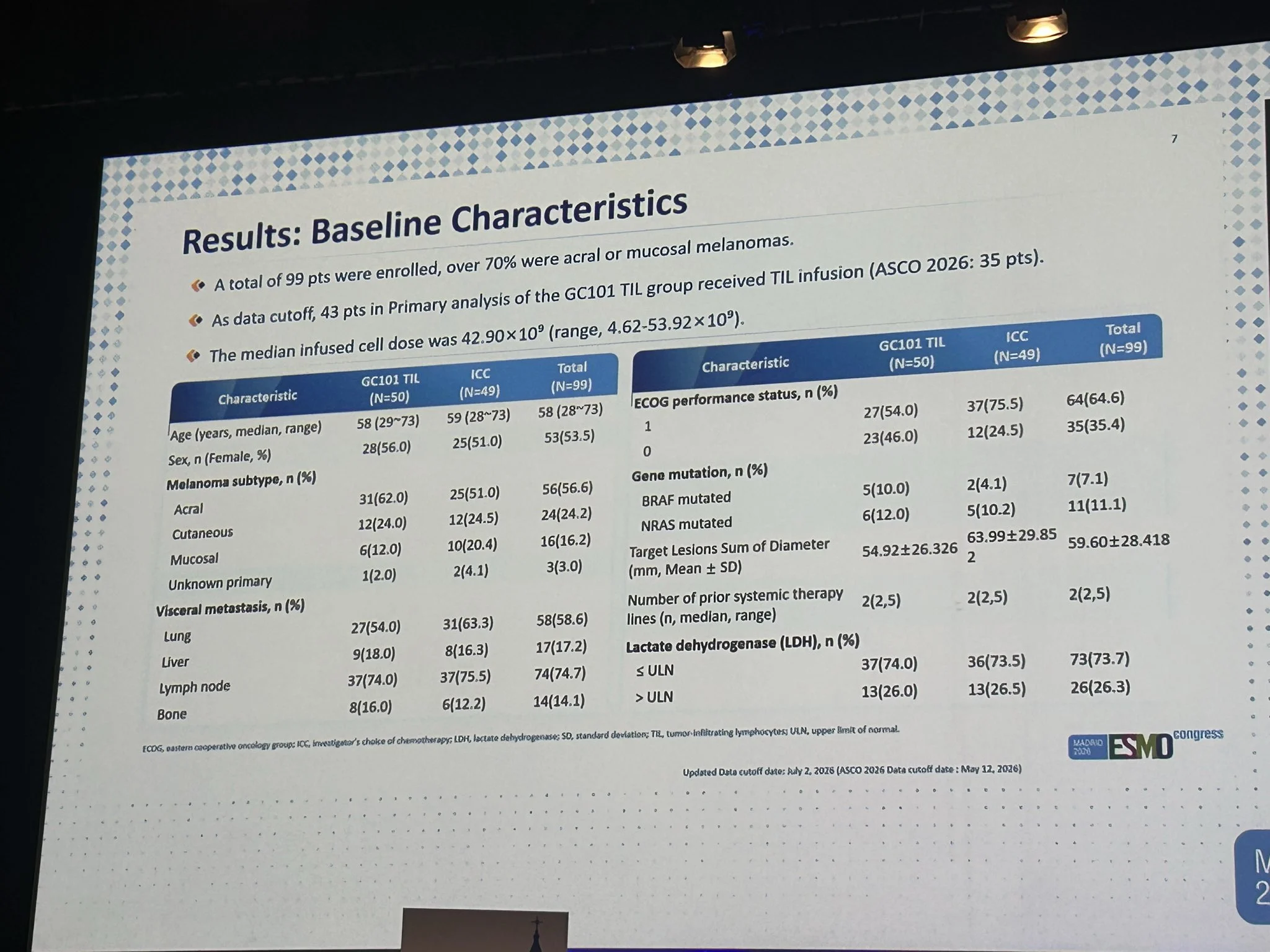
The reported full analysis set included 99 patients: 50 assigned to the GC101 regimen and 49 assigned to chemotherapy. Acral and mucosal melanoma accounted for 72.8% of this population. The median number of prior systemic treatment lines was two, with a range of two to five.
Of the 50 patients in the GC101 analysis group, 43 had received TIL infusion by the cutoff.
- Progression-free survival: Median PFS was 4.37 months (95% CI 2.99–5.55) with the GC101 regimen versus 1.61 months (95% CI 1.28–2.76) with chemotherapy. The HR was 0.44 (95% CI 0.28–0.70; P = 0.0004), corresponding to a 56% reduction in the hazard of progression or death.
- Objective response: ORR was 44.0% versus 8.2%, respectively.
- Disease control: DCR was 68.0% versus 40.8%.
- Overall survival: Median OS was not reached with the GC101 regimen versus 12.55 months (95% CI 8.74–not reached) with chemotherapy. The HR was 0.61 (95% CI 0.26–1.41; P = 0.2571). OS remained immature, and a statistically significant benefit was not established.
- Crossover: The presentation reported 59% crossover from chemotherapy to GC101, which is relevant when interpreting the OS findings.
- Mucosal melanoma: Among six patients assigned to GC101 and ten assigned to chemotherapy, median PFS was 4.81 versus 1.45 months (HR 0.23; 95% CI 0.06–0.88; reported P = 0.0215).
- Acral melanoma: Among 31 patients assigned to GC101 and 25 assigned to chemotherapy, median PFS was 4.37 versus 1.38 months (HR 0.41; 95% CI 0.22–0.77; reported P = 0.0034).
The melanoma-subtype findings should be interpreted cautiously because of the small subgroup populations, particularly in mucosal disease.
Safety
Grade ≥3 treatment-related adverse events occurred in 42.0% of patients receiving the GC101 regimen versus 30.6% receiving chemotherapy.
Although the regimen used lower-intensity preconditioning and omitted interleukin-2, these design features do not establish lower toxicity. Severe treatment-related adverse events were more frequent than with the chemotherapy comparator.
Interpretation
The updated analysis showed that the PFS advantage observed in the initial report was maintained with longer follow-up. Response and disease control rates also favored the GC101 regimen.
The comparison evaluated the complete treatment strategy, including tumor procurement, preconditioning, GC101 infusion, and sintilimab. It cannot isolate the contribution of GC101 TIL therapy from the other regimen components.
The high proportion of acral and mucosal melanoma is important when considering the applicability of the findings to populations with different melanoma-subtype distributions. Subgroup estimates favored GC101 but do not independently establish efficacy within each subtype.
OS remained immature. Crossover may affect the observed comparison, but does not explain or establish an underlying survival benefit.
Conclusion
MIZAR-003 demonstrated sustained PFS improvement and higher response rates with the GC101 regimen compared with investigator-choice chemotherapy in previously treated advanced melanoma after anti-PD-1 failure.
These findings support further evaluation of the regimen, including in acral and mucosal melanoma. Longer follow-up is needed to clarify OS, response durability, and the overall benefit–risk balance.
PLUG-IN GEM 2301: Enfortumab Vedotin Plus Pembrolizumab Shows Activity in Refractory Advanced Melanoma
The phase II PLUG-IN GEM 2301 trial reported a confirmed objective response rate (ORR) of 25% with enfortumab vedotin plus pembrolizumab in previously treated advanced melanoma.
The updated presentation reported a best observed response rate of 31.7%, which should be distinguished from confirmed ORR. Median follow-up was 6.5 months, and median duration of response was not reached in either BRAF-defined cohort.
Guillermo de Velasco presented the findings at ESMO Congress 2026 (abstract 2074RO).
Background
NECTIN-4 expression in melanoma provides a rationale for investigating enfortumab vedotin, a NECTIN-4-directed antibody–drug conjugate.
PLUG-IN GEM 2301 evaluated enfortumab vedotin combined with pembrolizumab after progression on standard treatment, without requiring a specific level of NECTIN-4 expression for enrollment.
Methods and Study Design
PLUG-IN was a multicenter, single-arm phase II trial enrolling adults with locally advanced or metastatic melanoma, ECOG performance status 0–1, and measurable disease according to RECIST v1.1.
Patients with uncontrolled brain metastases or receiving systemic corticosteroids were excluded.
The study enrolled two cohorts:
- BRAF-wild-type cohort (n = 45): Patients with prior progression after immunotherapy.
- BRAF-mutated cohort (n = 15): Patients with prior progression after immunotherapy and targeted therapy.
Enfortumab vedotin was administered at 1.25 mg/kg on days 1, 8, 22, and 29, with pembrolizumab 400 mg on day 1 of each six-week cycle.
The primary endpoint was confirmed ORR. The planned enrollment was 60 patients, testing a historical ORR of 15% against a target of 30%, with α = 0.05 and 80% power.
Exploratory analyses examined associations between NECTIN-4 expression and clinical outcomes.
Results
The updated presentation included 60 patients, with median follow-up of 6.5 months (95% CI 4.5–7.5). Median age was 63 years, with a range of 25–88 years.
Acral melanoma accounted for 20.0% of patients and mucosal melanoma for 16.7%. Liver metastases were present in 28.3%.
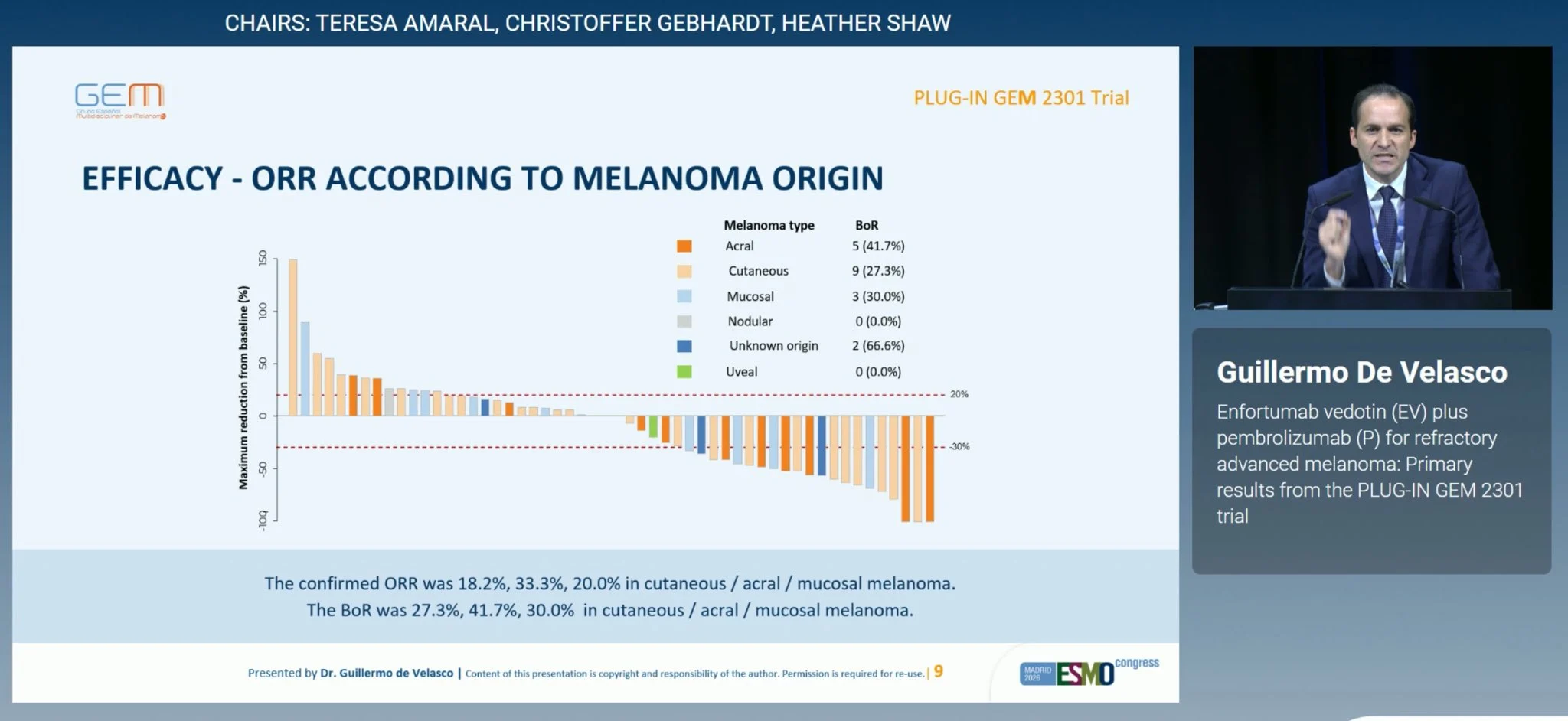
- Confirmed response: Confirmed ORR in the overall population was 25%.
- Best observed response: The reported best observed response rate was 31.7%. This included responses that had not necessarily met confirmation requirements and should not be presented as confirmed ORR.
- Response duration: Median duration of response was not reached in either BRAF-defined cohort. Longer follow-up is needed to characterize response durability.
- Cutaneous melanoma: Confirmed ORR was 18.2%, while the best observed response rate was 27.3%.
- Acral melanoma: Confirmed ORR was 33.3%, while the best observed response rate was 41.7%.
- Mucosal melanoma: Confirmed ORR was 20.0%, while the best observed response rate was 30.0%.
The subtype findings were exploratory and based on small populations. They do not establish differences in treatment benefit between melanoma subtypes.
Exploratory NECTIN-4 Analysis
NECTIN-4 expression was higher in the cytoplasm than at the cell membrane, with median H-scores of 100 and 2, respectively.
No statistically significant associations were identified between the assessed NECTIN-4 measures and response, progression-free survival (PFS), or overall survival (OS) after adjustment for multiple testing.
These analyses had limited statistical power and did not establish NECTIN-4 expression as a predictive biomarker for selecting patients for treatment.
Treatment Exposure and Safety
The earlier abstract analysis reported median treatment durations of 3.0 months for enfortumab vedotin and 2.7 months for pembrolizumab. Treatment remained ongoing in 32 patients (53.3%) at that analysis.
Enfortumab vedotin dose reductions occurred in 25% of patients and interruptions in 50%. Pembrolizumab was interrupted in 6.7%.
Grade 3–4 toxicities were reported in 14 patients (23.3%). The most common were asthenia (6.7%), followed by rash, bullous dermatitis, diarrhea, and vomiting (3.3% each).
These exposure and safety figures came from the earlier abstract analysis and should be distinguished from the updated efficacy findings presented at the congress.
Interpretation
PLUG-IN GEM 2301 identified a preliminary signal of activity for enfortumab vedotin plus pembrolizumab in refractory advanced melanoma.
The confirmed ORR of 25% is the relevant primary-endpoint measure and should remain separate from the higher best observed response rate of 31.7%. The supplied presentation did not establish whether the prespecified statistical criterion for primary-endpoint success was met.
The single-arm design prevents assessment of the combination’s comparative efficacy or the contribution of each drug. Short follow-up and small subtype populations also limit conclusions about response durability and patient selection.
Updated median PFS and OS results were not provided in the supplied material.
Conclusion
Enfortumab vedotin plus pembrolizumab showed preliminary activity in previously treated advanced melanoma, with a confirmed ORR of 25% in the updated PLUG-IN GEM 2301 presentation.
Further follow-up is needed to clarify response durability, survival outcomes, and the regimen’s benefit–risk balance. Exploratory NECTIN-4 analyses did not identify a validated biomarker for treatment selection.
INTerpath-001 Trial: Personalized mRNA Cancer Vaccine in High-Risk Melanoma