
Key takeaways
- Imetelstat (Rytelo) marks a major milestone in cancer therapeutics as the first approved telomerase inhibitor, translating decades of scientific research into a new treatment option for lower-risk MDS.
- Lower-risk MDS can place a substantial burden on patients, with chronic anemia and recurring blood transfusions affecting independence, daily activities, and quality of life.
- Telomerase inhibition introduces a distinct therapeutic approach, targeting a biological mechanism that supports malignant cell proliferation rather than focusing solely on managing anemia.
- The Phase III IMerge trial demonstrated meaningful and durable transfusion independence in a proportion of patients receiving imetelstat, supporting its regulatory approval.
- Beyond clinical endpoints, sustained transfusion independence can give responding patients greater freedom, reducing time spent receiving transfusions and creating more opportunities for everyday life.
For patients with lower-risk myelodysplastic syndromes (MDS), life can gradually become organized around blood transfusions. Hospital appointments, repeated monitoring, and persistent fatigue can affect everyday activities, while the need for ongoing treatment places additional demands on families and caregivers.
At LeukO 2026: Global Virtual Congress on Leukemias, organized by OncoDaily, Joseph Eid, Executive Vice President of Research and Development and Chief Medical Officer at Geron Corporation, explored how decades of research into telomeres and telomerase led to the development of imetelstat (Rytelo), the first approved telomerase inhibitor.
The presentation traced a scientific journey from understanding how malignant cells sustain their growth to developing a treatment capable of reducing transfusion dependence in eligible patients with lower-risk MDS.
Beyond the Risk Classification: The Reality of Living With MDS
Myelodysplastic syndromes are a heterogeneous group of hematologic malignancies characterized by ineffective blood cell production and an increased risk of progression to acute myeloid leukemia.
Although a substantial proportion of patients are classified as having lower-risk disease, that classification does not necessarily reflect the impact of MDS on their daily lives.
“Despite the name lower-risk MDS, lower-risk does not mean lower burden.”
Anemia is among the most common manifestations of lower-risk MDS, affecting approximately 90% of patients, according to the figures presented by Eid.
For many, it causes persistent fatigue, weakness, shortness of breath, and difficulty maintaining everyday activities. As anemia becomes more severe, patients may require increasingly frequent red blood cell transfusions.
The burden extends well beyond the time spent receiving blood products. Patients and caregivers must arrange transportation, attend appointments, undergo monitoring, and adjust personal and professional commitments around treatment schedules.
Historically, management relied heavily on transfusion support and erythropoiesis-stimulating agents (ESAs), which encourage the bone marrow to produce additional red blood cells.
These approaches can provide clinical benefits, but responses may diminish or become insufficient over time.
For patients who stop responding to ESAs or are ineligible for them, the need for alternative treatments becomes particularly important.
Geron’s interest in telomerase inhibition emerged from this unmet need: the possibility of developing a treatment with a different mechanism of action that could produce meaningful and sustained reductions in transfusion dependence.
How Telomerase Became a Therapeutic Target
The scientific foundation of imetelstat reaches back decades, to discoveries about how chromosomes are protected during cell division.
Telomeres are specialized structures at the ends of chromosomes that protect genetic material. With successive cell divisions, telomeres typically shorten. When they become critically short, cells may stop dividing or undergo programmed cell death.
Telomerase, an enzyme capable of maintaining telomere length, helps certain cells overcome this limitation.
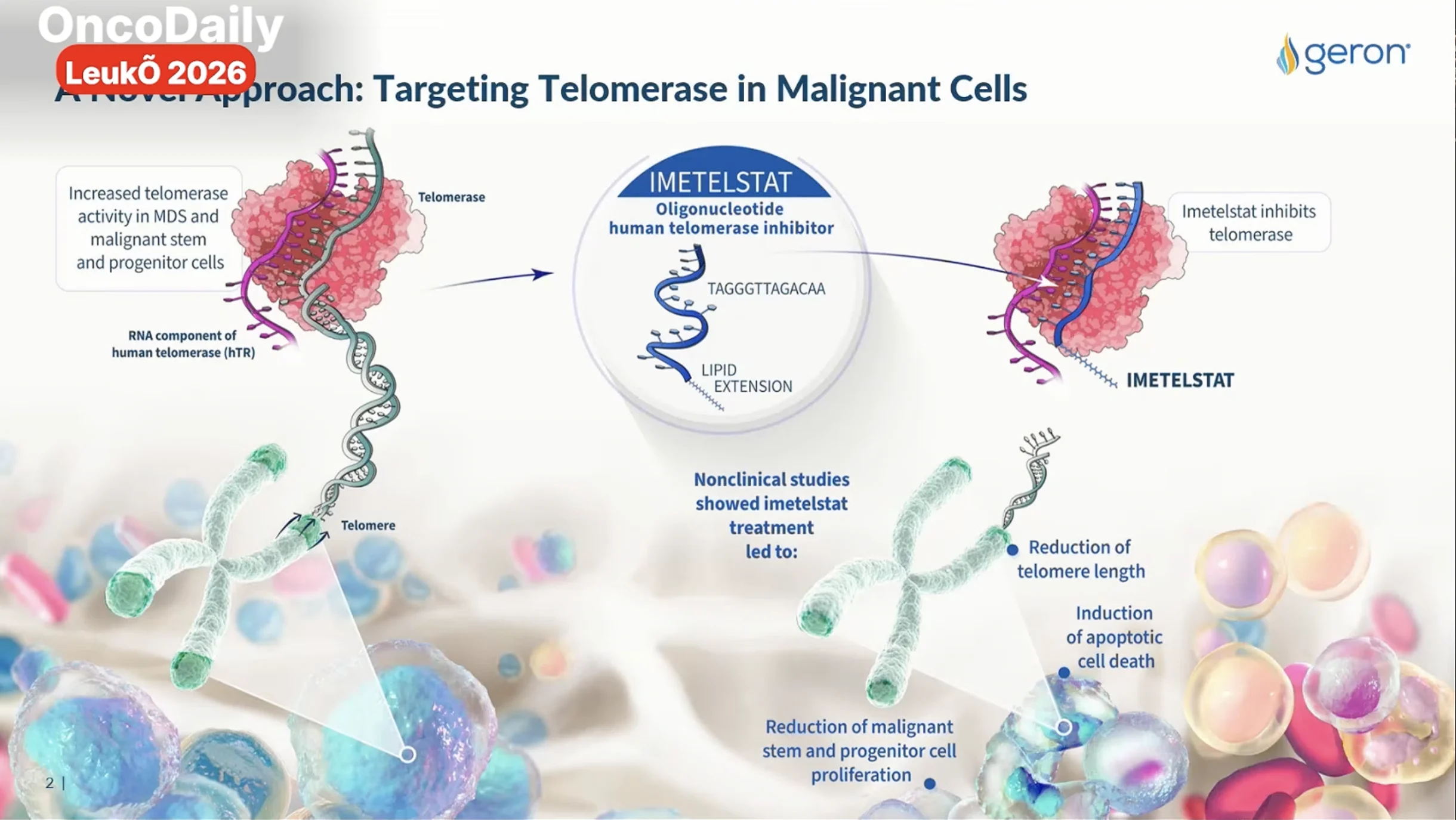
Its activity is normally regulated in healthy tissues, but many malignant cells reactivate or maintain telomerase activity, supporting continued proliferation.
The importance of telomeres and telomerase was recognized with the 2009 Nobel Prize in Physiology or Medicine, awarded for discoveries explaining how chromosomes are protected by telomeres and the enzyme telomerase.
For cancer researchers, these discoveries raised an important possibility: if malignant cells depend on telomerase to maintain their proliferative capacity, could inhibiting the enzyme become a therapeutic strategy?
Geron pursued that hypothesis through the development of imetelstat, an oligonucleotide designed to directly inhibit telomerase activity.
Imetelstat binds to the RNA template component of telomerase, preventing the enzyme from maintaining telomeres. In susceptible malignant cells, this interference may contribute to impaired proliferation and cell death.
Unlike treatments primarily intended to stimulate red blood cell production, telomerase inhibition was developed to target a biological process associated with the survival of malignant cells.
That distinction was central to Geron’s research strategy.
However, translating the concept into a medicine was far from straightforward.
“Developing a first-in-class therapy requires diligent research, learning from evidence, adapting along the way, and most importantly, persistence.”
Early clinical investigations in myeloid malignancies helped establish the potential of imetelstat and provided the foundation for its subsequent development in lower-risk MDS.
The next challenge was determining whether this mechanism could deliver a clinically meaningful benefit in a randomized trial.
IMerge: From Scientific Hypothesis to Clinical Evidence
The pivotal Phase III IMerge trial evaluated imetelstat in adults with lower-risk MDS and transfusion-dependent anemia who had not responded to, had lost response to, or were ineligible for treatment with ESAs.
The randomized, double-blind, placebo-controlled trial enrolled 178 patients, comparing imetelstat with placebo, both alongside supportive care.
Its primary endpoint was red blood cell transfusion independence lasting at least eight consecutive weeks.
The results demonstrated a significant difference between the treatment groups.
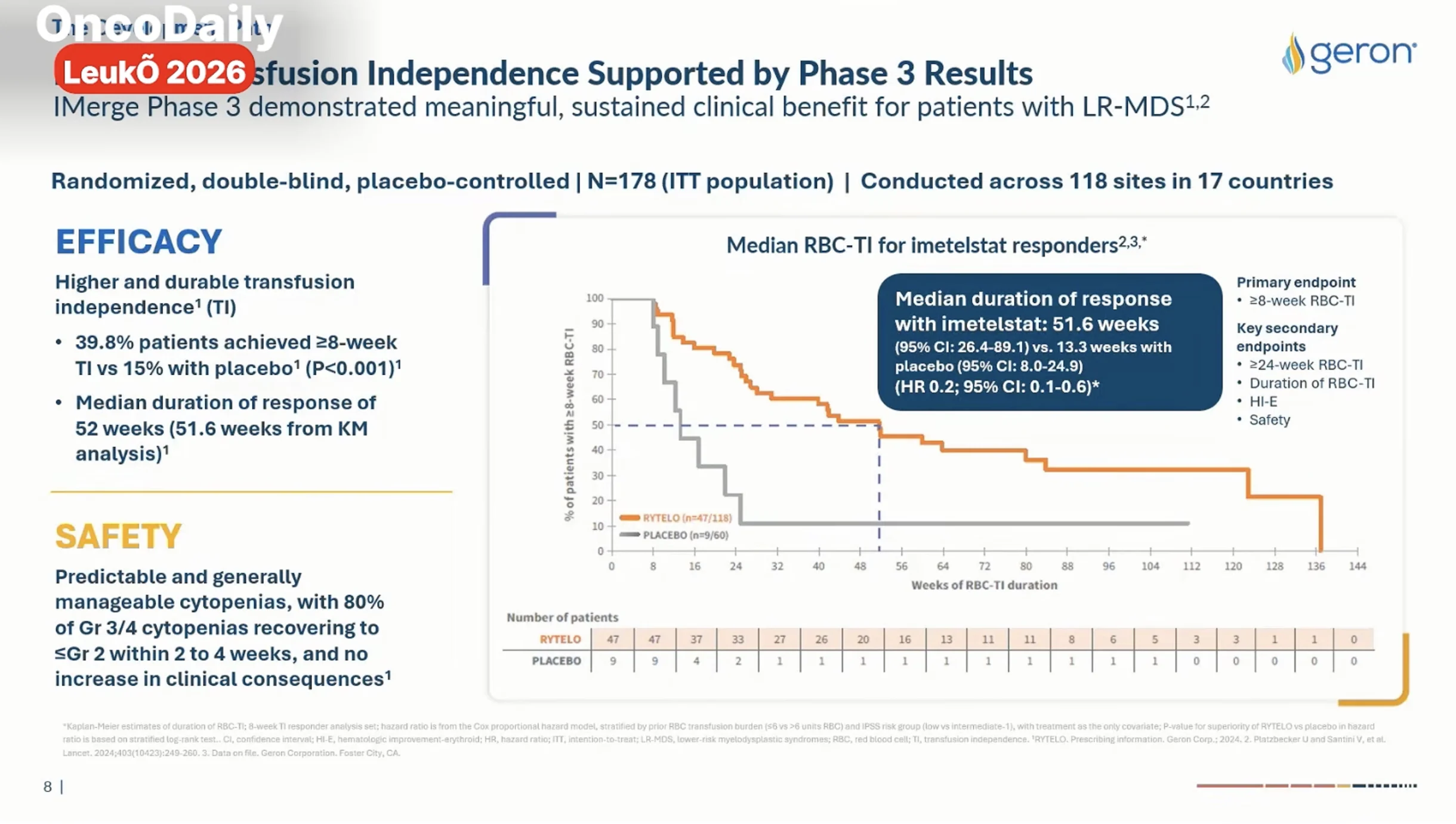
Nearly 40% of patients receiving imetelstat achieved at least eight weeks of transfusion independence, compared with 15% receiving placebo.
The benefit extended beyond the initial response period.
Transfusion independence lasting at least 24 weeks occurred in 28% of patients receiving imetelstat, compared with 3.3% in the placebo group.
Among patients treated with imetelstat who achieved the eight-week transfusion-independence endpoint, the median duration of that response was approximately one year.
This durability was particularly meaningful for a population whose treatment experience could otherwise involve recurring transfusions over prolonged periods.
For patients who respond, transfusion independence can reduce the frequency of hospital visits and the practical burden associated with managing chronic anemia.
The trial findings provided the evidence supporting a major regulatory milestone.
In June 2024, the US Food and Drug Administration approved Rytelo (imetelstat) for adults with low- to intermediate-1-risk MDS and transfusion-dependent anemia requiring at least four red blood cell units over eight weeks, following ESA failure, loss of response, or ineligibility.
The European Union granted marketing authorization in March 2025, with its own eligibility criteria for patients with transfusion-dependent lower-risk MDS.
These approvals established imetelstat as the first telomerase inhibitor to enter clinical practice.
For Geron, they marked the culmination of decades of scientific investigation, drug development, and clinical research.
Yet Eid emphasized that regulatory approval was not the end of the effort to understand the treatment.
What Researchers Are Learning Beyond IMerge
Following the pivotal trial, further analyses have explored how patients respond to imetelstat, how treatment-related adverse effects can be managed, and whether its biological activity may extend beyond reducing transfusion dependence.
An important area of investigation has been the occurrence of treatment-emergent cytopenias.
Imetelstat can cause clinically significant neutropenia and thrombocytopenia, requiring blood count monitoring and, when appropriate, dose adjustments or treatment interruptions.
At the American Society of Hematology (ASH) Annual Meeting in 2025, researchers presented post-hoc analyses of the IMerge program examining associations between early treatment-related cytopenias and subsequent hematologic responses.
The findings suggested that reductions in neutrophil and platelet counts during the initial treatment cycles may be associated with hemoglobin improvements and transfusion-independence responses.
Although exploratory, these analyses offer insights into treatment response patterns and may help inform clinical management.
The research has also examined whether telomerase inhibition might have disease-modifying effects.
Exploratory molecular findings have suggested effects on malignant clones, but a definitive disease-modifying benefit, including an overall survival advantage, has not been established in lower-risk MDS.
For that reason, Eid described disease modification as a potential area of investigation rather than a confirmed clinical outcome.
Another important step has been evaluating imetelstat outside controlled clinical trials.
At the European Hematology Association (EHA) Congress in 2026, investigators presented the first real-world evidence study of imetelstat in lower-risk MDS, conducted at Moffitt Cancer Center.
The retrospective analysis included patients with substantial transfusion requirements and extensive prior treatment exposure, including individuals who had previously received other therapies.
The study reported safety and efficacy findings generally consistent with those observed in IMerge, although its limited size and observational design mean the results should be interpreted cautiously.
A prospective component of the investigation is continuing.
Together, these analyses are contributing to a better understanding of imetelstat in clinical practice, including treatment sequencing, response durability, and the management of adverse effects.
Beyond the Approval: More Time for Patients
For Eid, the meaning of transfusion independence is best understood through its effect on daily life.
“Ultimately, the measure of success isn’t simply developing and gaining approval for a first-in-class medicine. It’s what the medicine can make possible for patients.”
For someone who has become dependent on frequent transfusions, achieving a sustained response may mean fewer visits to an infusion center and less time spent organizing daily life around treatment.
That time can instead be spent with family, enjoying hobbies, traveling, or participating in ordinary activities that may have become difficult to maintain.
These benefits are not experienced by every patient treated with imetelstat. They depend on whether the individual achieves and maintains a meaningful response.
Nevertheless, the possibility of reducing a substantial treatment burden represents an important advance for eligible patients with lower-risk MDS.
Meanwhile, Geron’s research into telomerase inhibition continues beyond this indication.
The company is investigating imetelstat in other hematologic malignancies, including through the Phase III IMpactMF trial in patients with relapsed or refractory myelofibrosis following treatment with Janus kinase (JAK) inhibitors.
Further clinical and investigator-sponsored studies are exploring its potential in additional disease settings, while continued analyses in lower-risk MDS seek to improve understanding of its clinical use.
Those investigations remain distinct from imetelstat’s established approved indication, and their outcomes will determine whether telomerase inhibition can offer benefits to additional patient populations.
Reflecting on the development journey, Eid returned to the importance of scientific persistence.
“The path wasn’t always a straight line, but the reason to keep going remained the same.”
That reason, he explained, was the possibility of making a difference for patients who needed additional treatment options.
The development of imetelstat demonstrates how discoveries in fundamental cell biology can eventually translate into a clinically useful treatment, even when the process spans decades.
From the identification of telomerase as a potential cancer target to the approval of a first-in-class inhibitor, the journey reflects both the persistence required to advance a novel therapeutic concept and the importance of measuring success through the benefits patients can actually experience.
Written by Eliz Baloyan, MD, Features Writer and Editor at OncoDaily and CancerWorld