Key takeaways
- FLT3 inhibitors remain central to frontline treatment of FLT3-mutated AML, with intensive chemotherapy plus an appropriate FLT3 inhibitor remaining an established approach for medically fit patients.
- Venetoclax-based triplet therapies are showing promising results, achieving deep molecular responses and potentially expanding lower-intensity treatment options, although randomized trials are still needed.
- Ultrasensitive MRD testing could transform transplant decisions, helping identify selected patients who may achieve durable remission without transplantation, but prospective evidence is still lacking.
- Resistance to FLT3 inhibitors often involves changes in leukemia biology, including loss of detectable FLT3 mutations and emergence of RAS/MAPK pathway alterations, highlighting the importance of molecular reassessment at relapse.
- Post-transplant FLT3 inhibitor maintenance may reduce relapse risk, particularly in patients with detectable FLT3-ITD MRD, supporting more personalized treatment decisions based on molecular response.
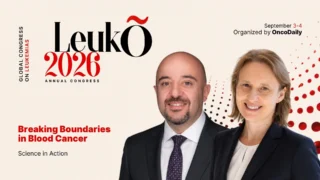
At LeukO 2026: Global Virtual Congress on Leukemias, organized by OncoDaily, Alexander Perl, Associate Professor of Medicine at the Perelman School of Medicine at the University of Pennsylvania and member of the Leukemia Program at Abramson Cancer Center, and Naval Daver, Professor in the Department of Leukemia and Director of the Leukemia Research Alliance Program at The University of Texas MD Anderson Cancer Center, joined an expert discussion on the evolving treatment of FLT3-mutated AML.
Moderated by Khaoula Mazouzi, the conversation addressed some of the most important decisions facing hematologists today:
- Whether intensive chemotherapy remains necessary for every eligible patient,
- How to choose between FLT3 inhibitors,
- Whether increasingly sensitive molecular tests can identify patients who may safely avoid stem cell transplantation.
As new clinical evidence emerges, familiar treatment strategies are being reconsidered. Yet throughout the discussion, Perl and Daver returned to an important distinction: the encouraging outcomes seen in early studies are not always sufficient to change established practice.
Their conversation offered both a practical framework for managing FLT3-mutated AML today and a closer look at the questions that could reshape treatment in the coming years.
Does Every Patient Still Need Intensive Chemotherapy?
For years, intensive chemotherapy was the foundation of curative-intent treatment for patients with newly diagnosed FLT3-mutated AML.
The combination of cytarabine and an anthracycline, commonly known as 7+3, became more effective with the introduction of FLT3 inhibitors, which target the abnormal signaling that drives leukemia cell proliferation.
But as Perl explained, the expanding role of lower-intensity treatments is changing how clinicians approach newly diagnosed patients.
“In days of old, we really didn’t have a lot of great opportunities for patients outside of intensive chemotherapy.”
For younger, medically fit patients being treated with curative intent, Perl continues to favor intensive chemotherapy combined with an FLT3 inhibitor.
His approach follows the evidence from two landmark trials: RATIFY, which established the benefit of adding midostaurin to chemotherapy in FLT3-mutated AML, and QuANTUM-First, which demonstrated improved survival with quizartinib in FLT3-ITD-positive disease.
The specific mutation matters.
Perl generally uses quizartinib for FLT3-ITD AML, while midostaurin remains an established option for patients with FLT3-TKD mutations.
However, the decision becomes more complicated in older patients or those with significant comorbidities.
Azacitidine combined with venetoclax (AZA-VEN) has become an established lower-intensity treatment for patients who are ineligible for intensive chemotherapy. Increasingly, clinicians are considering whether such approaches might benefit patients traditionally considered fit enough for intensive treatment.
One important development discussed by Perl was the PARADIGM trial, published in the New England Journal of Medicine on September 2, 2026.
The randomized Phase II study compared azacitidine-venetoclax with conventional induction chemotherapy in 172 patients considered eligible for intensive treatment.
Median event-free survival was 14.5 months with AZA-VEN compared with 6.2 months with intensive chemotherapy.
The findings supported the growing role of lower-intensity therapy in selected patients.
However, Perl emphasized a critical limitation: patients with FLT3-mutated AML were excluded from PARADIGM.
Its findings therefore cannot be directly applied to this molecular subgroup.
For FLT3-mutated AML, the challenge is determining whether a lower-intensity treatment incorporating an FLT3 inhibitor can deliver comparable disease control without the toxicity of conventional intensive chemotherapy.
That question is now being investigated in clinical trials.
The Promise of Three-Drug Combinations
One of the most promising developments discussed was the combination of a hypomethylating agent, venetoclax, and an FLT3 inhibitor.
These regimens, often called triplet therapies, target AML through complementary mechanisms.
Azacitidine affects abnormal epigenetic regulation, venetoclax inhibits the anti-apoptotic protein BCL-2, and FLT3 inhibitors suppress signaling driven by FLT3 mutations.
The rationale is straightforward: combining treatments that attack different leukemia survival pathways may produce deeper remissions and help overcome resistance.
Daver has been closely involved in developing these approaches at MD Anderson.
“The triplets are still considered not standard of care, but the data is mounting.”
He highlighted studies investigating azacitidine-venetoclax-gilteritinib and decitabine-venetoclax-quizartinib, both of which have demonstrated encouraging activity.
In the Phase II study of azacitidine, venetoclax, and gilteritinib involving 30 patients with newly diagnosed FLT3-mutated AML who were unfit for intensive chemotherapy, the complete remission or complete remission with incomplete hematologic recovery rate reached 96%.
With longer follow-up, three-year overall survival was 46%, while 47% of patients proceeded to stem cell transplantation in first remission.
These results are encouraging in a patient population with a median age of 71 years, but they also show why high initial remission rates should not be confused with long-term disease control.
The regimen required careful management of prolonged cytopenias, including adjustments to treatment doses and schedules.
Perl described an increasingly common approach in which azacitidine-venetoclax is used as an initial lower-intensity backbone, with an FLT3 inhibitor added when the response is inadequate or as part of an investigational triplet regimen.
However, he cautioned against considering routine upfront triplet treatment fully established.
“I can’t say that’s a proven approach at this point.”
Randomized studies, including VICEROY and investigations within the myeloMATCH program, are evaluating whether adding FLT3 inhibition to lower-intensity therapy provides a meaningful advantage over existing approaches.
The results could influence how clinicians treat older patients and potentially expand treatment options for some younger patients.
For now, Perl and Daver agreed that intensive chemotherapy combined with an FLT3 inhibitor remains an important standard for medically fit patients, particularly those with FLT3-ITD AML.
Choosing the Right FLT3 Inhibitor
With multiple FLT3 inhibitors available, Mazouzi raised a practical question: how should clinicians choose between midostaurin and quizartinib?
Daver argued that newer-generation inhibitors have important pharmacological advantages.
Quizartinib and gilteritinib were developed as more selective and potent FLT3 inhibitors than midostaurin, and clinical studies have demonstrated substantial activity.
However, differences in drug potency do not automatically establish superiority in long-term survival.
The RATIFY and QuANTUM-First trials demonstrated survival benefits for midostaurin and quizartinib, respectively, but they compared different treatments against their own control groups.
Directly comparing survival percentages between those trials is therefore unreliable.
Perl and Daver also discussed emerging comparative evidence.
The PASHA trial, which directly compared gilteritinib with midostaurin alongside intensive chemotherapy in newly diagnosed FLT3-mutated AML, reported lower relapse rates with gilteritinib and encouraging differences in measures of disease control.
However, the trial did not demonstrate an overall-survival advantage for gilteritinib over midostaurin.
Daver also referenced retrospective comparisons suggesting favorable outcomes with quizartinib.
These data have influenced treatment preferences but do not replace a randomized head-to-head comparison of quizartinib and midostaurin.
Perl emphasized that treatment choice should also reflect the FLT3 mutation subtype.
Quizartinib is active against FLT3-ITD but does not adequately target the FLT3-TKD mutations that can confer resistance to the drug.
Midostaurin and gilteritinib have activity against both mutation categories, although the evidence and approved indications differ by treatment setting.
The discussion also addressed whether emerging menin inhibitors might eventually replace FLT3 inhibitors in patients with overlapping molecular abnormalities, such as FLT3 and NPM1 mutations.
Daver was cautious.
Although menin inhibitors have demonstrated important activity in molecularly defined AML subgroups, replacing an established FLT3-targeted strategy would require convincing comparative evidence.
For now, combining targeted therapies and potentially reducing chemotherapy intensity remains an important research direction rather than a proven replacement for existing treatment.
The Clinical Details That Matter When Prescribing FLT3 Inhibitors
The discussion moved beyond trial outcomes to the practical challenges clinicians face when administering FLT3 inhibitors.
Daver emphasized that understanding the different toxicity profiles is essential, particularly when these agents are combined with intensive chemotherapy.
Quizartinib requires careful monitoring for QTc prolongation, which can increase the risk of serious cardiac arrhythmias.
Electrocardiograms, electrolyte monitoring, and review of concurrent medications are therefore important.
Drugs commonly used during leukemia treatment, including some antifungal agents, antibiotics, and antiemetics, can contribute to QT prolongation or affect quizartinib exposure.
Perl highlighted the importance of dose adjustments when quizartinib is administered alongside strong CYP3A inhibitors such as posaconazole or voriconazole.
Gilteritinib generally has a manageable safety profile but can cause myelosuppression and abnormalities in liver enzymes.
Rare complications, including differentiation syndrome, also require recognition and appropriate management.
Midostaurin, meanwhile, is frequently associated with gastrointestinal side effects such as nausea, vomiting, and reduced appetite.
Perl noted another consideration with newer FLT3 inhibitors: delayed blood count recovery during the initial intensive treatment cycle.
These differences may influence treatment choice, monitoring, and supportive care.
The key message was that selecting the appropriate FLT3 inhibitor involves more than comparing efficacy.
Drug interactions, baseline cardiac risk, treatment-related cytopenias, and the patient’s overall condition can all affect how safely treatment is delivered.
Could Deep Molecular Remission Change the Need for Transplantation?
Perhaps the most consequential part of the discussion concerned measurable residual disease (MRD).
Allogeneic stem cell transplantation has traditionally played a major role in treating FLT3-ITD AML because of its association with relapse risk.
But increasingly sensitive molecular techniques are revealing that not all patients who achieve remission have the same probability of recurrence.
Perl discussed the use of ultrasensitive next-generation sequencing assays capable of detecting FLT3-ITD at approximately one leukemic sequence in a million, or 10⁻⁶ sensitivity.
These tests provide information beyond conventional morphologic remission and may detect residual leukemia that would otherwise remain unrecognized.
The implications for transplantation are substantial.
“I’m not sending every MRD-negative patient to transplant, but I’m careful, very careful about who I am withholding transplant in and by what mechanism I’m defining MRD negativity.”
Perl highlighted an exploratory analysis from QuANTUM-First, examining patients who received quizartinib with induction and consolidation chemotherapy and subsequently continued quizartinib maintenance without transplantation.
Among patients with no detectable FLT3-ITD MRD at the beginning of maintenance, three-year overall survival reached approximately 89%.
This suggested that a selected group of patients might achieve excellent outcomes without allogeneic transplantation.
However, the findings require careful interpretation.
These patients had achieved deep molecular responses and received maintenance treatment. They were not randomly assigned to transplantation versus no transplantation.
The result therefore does not prove that transplantation can safely be omitted in all MRD-negative patients.
It does, however, provide a rationale for investigating whether transplant decisions can become more individualized.
Daver described a similar approach in selected older patients receiving lower-intensity triplet therapies.
For someone around 70 years old who achieves deep MRD negativity but has substantial comorbidities or no suitable donor, he may consider delaying or avoiding transplantation after discussing the risks and available evidence.
For younger and medically fit patients, however, the threshold for changing an established curative-intent strategy remains considerably higher.
The distinction is important because MRD negativity is not a single universally equivalent result.
Its prognostic meaning depends on the marker being measured, the sensitivity of the assay, the timing of testing, and whether the response remains stable.
For FLT3-ITD AML, highly sensitive molecular testing is helping clinicians make more informed decisions, but prospective studies are still needed to establish when a negative result is sufficient to safely omit transplantation.
When AML Escapes FLT3 Inhibition
Achieving remission is one challenge. Preventing leukemia from developing resistance is another.
Daver explained that resistance to FLT3 inhibitors has become increasingly complex as combination therapies have improved.
One striking observation is that leukemia may relapse without the FLT3 mutation that was present at diagnosis.
In the long-term follow-up of the azacitidine-venetoclax-gilteritinib Phase II study, 67% of evaluable relapses no longer had detectable FLT3 mutations.
This has important treatment implications.
If the dominant leukemia population at relapse is no longer FLT3-mutated, switching to another FLT3 inhibitor may not provide the expected benefit.
Instead, resistant disease may be driven by alternative survival pathways.
Daver highlighted the RAS/MAPK signaling pathway, including alterations involving NRAS, KRAS, PTPN11, and NF1.
These abnormalities may already be present in small subclones at diagnosis and subsequently expand under the selective pressure of treatment.
Perl described how single-cell sequencing studies are helping researchers understand this process.
The resistant population may not always represent an entirely new mutation. Sometimes it is a previously minor clone that becomes dominant after other leukemia cells have been eliminated.
This explains why adding more drugs does not necessarily prevent every form of resistance.
Even among patients treated with intensive combination regimens, residual leukemia populations may survive through pathways that are not adequately targeted.
For clinicians, the practical implication is that molecular reassessment at relapse is essential.
The genetic profile that guided frontline therapy may no longer describe the disease that has returned.
Understanding these changes could also help identify new combinations involving menin inhibitors or other therapies directed against resistant disease.
After Relapse, FLT3 Inhibitors Still Have an Important Role
Mazouzi also raised a question relevant to clinicians working in countries where access to targeted therapies remains limited.
What happens when a patient with FLT3-mutated AML receives conventional chemotherapy without an FLT3 inhibitor and subsequently relapses?
Both Perl and Daver agreed that an FLT3 inhibitor should be strongly considered if a targetable mutation is detected at relapse.
Daver pointed to the ADMIRAL trial, which established gilteritinib as an important treatment for relapsed or refractory FLT3-mutated AML.
The trial demonstrated a survival advantage compared with conventional salvage chemotherapy.
The choice between single-agent gilteritinib and combination approaches depends on the clinical situation.
For patients being prepared for transplantation, a more intensive salvage strategy may be appropriate to achieve deeper remission.
For patients whose treatment priorities are symptom control, preserving quality of life, or extending survival without additional intensive therapy, single-agent treatment may offer a reasonable balance of effectiveness and tolerability.
Perl also emphasized that responses to gilteritinib can take time.
“The one thing I would say about the single-agent FLT3 inhibitor, in specific gilteritinib that’s approved for that, is give it time.”
Some patients may improve gradually over several months, with delayed platelet count recovery even as other signs of disease control become apparent.
A slow hematologic response does not necessarily indicate treatment failure.
Clinical improvement, transfusion requirements, laboratory findings, and overall treatment goals must all be considered before deciding whether to continue or change therapy.
This is especially relevant in settings where subsequent treatment options may be limited.
Post-Transplant Maintenance: Who Benefits Most?
The final major topic was the role of FLT3 inhibitors after allogeneic transplantation.
Although transplantation can provide durable disease control, patients with FLT3-ITD AML remain at risk of relapse, particularly when residual leukemia is detectable.
Perl discussed the randomized Phase III MORPHO trial, which evaluated gilteritinib maintenance after transplantation in patients with FLT3-ITD AML in first remission.
The trial did not meet its primary endpoint of a statistically significant improvement in relapse-free survival across the entire study population.
However, a prespecified analysis demonstrated an important difference according to MRD status.
Patients with detectable FLT3-ITD MRD before or after transplantation experienced a significant relapse-free survival benefit with gilteritinib maintenance.
No comparable benefit was evident among patients without detectable MRD.
The findings suggest that MRD may help identify those most likely to benefit from post-transplant FLT3 inhibition.
For Perl, detectable FLT3-ITD MRD around transplantation is a strong reason to consider maintenance treatment.
Daver emphasized the challenges of applying this approach globally.
Highly sensitive FLT3-ITD MRD testing is not universally available, particularly in settings where molecular diagnostics and targeted therapies are constrained by cost and infrastructure.
In such circumstances, he favors considering post-transplant FLT3 inhibitor maintenance more broadly in appropriate high-risk patients, taking into account the available evidence, drug access, and tolerability.
Both experts highlighted that other FLT3 inhibitors, including sorafenib, have supporting post-transplant maintenance data.
The discussion demonstrated how the same scientific evidence may lead to different practical decisions depending on the resources available.
At a center with access to ultrasensitive MRD testing, treatment may be increasingly tailored according to molecular response.
Elsewhere, clinicians may need to make decisions using less sensitive testing, established clinical risk factors, and the treatments they can reliably provide.
A More Personalized Future for FLT3-Mutated AML
The discussion between Perl and Daver illustrated how quickly FLT3-mutated AML management is evolving.
FLT3 inhibitors have already improved outcomes and become integral to treatment. Now, newer combinations and more sensitive monitoring are raising questions that would have been difficult to consider a decade ago.
- Can lower-intensity triplets provide comparable outcomes to intensive chemotherapy?
- Which patients can maintain durable remission without transplantation?
- And how can treatment be adapted when leukemia evolves beyond its original FLT3 mutation?
The answers are beginning to emerge, but much of the evidence remains preliminary.
For the moment, intensive chemotherapy with an appropriate FLT3 inhibitor remains an important standard for eligible patients, while lower-intensity triplets, molecularly guided transplant decisions, and newer combinations continue to be evaluated.
What is changing is the level of information available to guide those decisions.
Rather than basing treatment primarily on age, fitness, and the presence of an FLT3 mutation, clinicians are increasingly able to consider the depth of molecular response, the emergence of resistant clones, and the probability of sustained remission.
The goal is no longer simply to make FLT3-mutated AML respond to treatment. It is to understand which patients need more treatment, which may safely need less, and how to make those decisions with greater confidence.
Written by Eliz Baloyan, MD, Features Writer and Editor at OncoDaily and CancerWorld
You can also read: Sorafenib Maintenance After Allo-SCT in FLT3-Mutated AML: Long-Term Survival Outcomes From a German Registry