Key takeaways
- ADC sequencing is becoming more complex as sacituzumab govitecan, trastuzumab deruxtecan, and datopotamab deruxtecan move into earlier treatment settings.
- Oncology pharmacists can play a key role in toxicity monitoring, patient education, supportive care, and rapid communication with the clinical team.
- Safe delivery of newer therapies depends on more than drug availability; it also requires trained nurses, pharmacists, pathologists, radiologists, and reliable diagnostic infrastructure.
- In some settings, the barrier is still access to essential medicines and basic cancer-care resources, not only access to the newest therapies.
- Clinical trials, compassionate-use programs, and stronger health-system infrastructure may help expand access to innovative treatments in resource-limited settings.
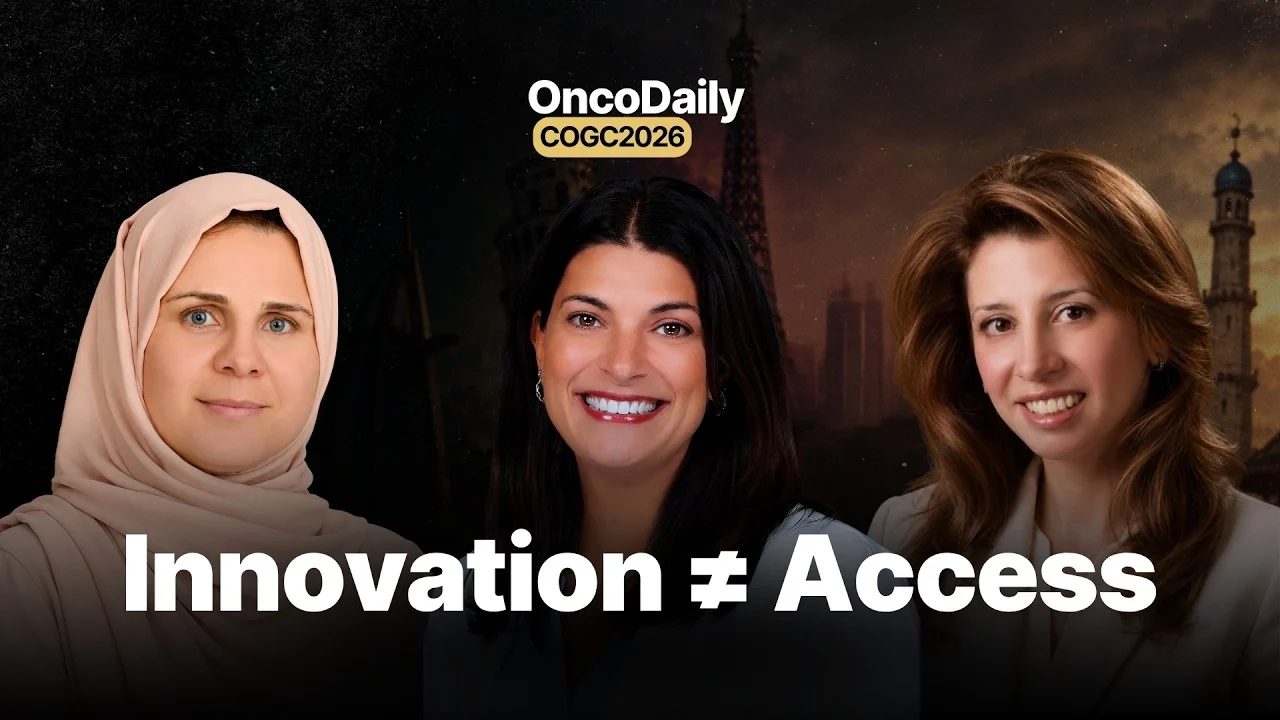
At the Community Oncology Global Congress (COGC 2026), organized by OncoDaily, Wajeeha Aiman, Hematology-Oncology fellow at Roswell Park Comprehensive Cancer Center, moderated an expert discussion on treatment sequencing, toxicity management, and access to increasingly complex breast cancer therapies.
Jeanine Frances Ewing, an oncology pharmacist at Florida Cancer Specialists and Research Institute, focused on the practical challenges that come with a growing number of antibody-drug conjugates, from deciding how to sequence them to preparing patients for very different toxicity profiles. Sana Al-Sukhun widened the discussion to the health-system level, where the barriers may begin much earlier – with shortages in trained staff, basic diagnostics, essential medicines, and access to newer treatments.
The contrast was important. In well-resourced settings, the challenge is increasingly how to use multiple effective therapies safely and in the right order. In other settings, the more immediate question is whether the workforce, infrastructure, and access pathways are strong enough to deliver those therapies at all.
More Treatment Options Make Sequencing More Complicated
As targeted therapies and antibody-drug conjugates move into earlier lines of treatment, deciding what to give first is becoming increasingly important.
Ewing pointed to sacituzumab govitecan, trastuzumab deruxtecan, and datopotamab deruxtecan as examples of therapies now entering increasingly crowded treatment pathways.
“Sequencing is a big concern, but they do have significantly different toxicity profiles.”
Emerging data may eventually help clarify the optimal order of these agents, but Ewing emphasized that sequencing decisions cannot be separated from the individual patient.
The expected toxicities, supportive care needs, caregiver support, and the patient’s ability to recognize and respond to side effects all become part of the decision.
That is particularly relevant as combinations and newer therapies introduce different toxicity profiles into routine practice.
Toxicity Management Starts Before the First Dose
Datopotamab deruxtecan was used as one example of why supportive care has to be planned before treatment begins.
Stomatitis is a recognized concern with the drug, making preventive oral care an important part of treatment preparation. Ewing noted that access to steroid-containing mouth rinses had itself become difficult in her practice.
The larger point was that patients need more than a prescription.
They need to know what toxicities may occur, when they might appear, what they can manage at home, and when they need to contact the clinic.
“Making sure that patients have good caregiver support, are educated about toxicities, what to do if this happens, when to expect it to potentially happen, and then making sure that they have the resources at their fingertips to minimize the severity of whatever toxicity or side effect that may occur.”
As treatment becomes more complex, that preparation becomes part of safe delivery rather than an additional service after problems develop.
Pharmacists Can Connect the Prescription to the Clinic
Ewing described a medically integrated oral dispensing model in which pharmacists remain involved after treatment is prescribed.
Patients beginning oral therapy receive follow-up calls during the first days, weeks, and sometimes months of treatment.
Because the pharmacists can access the medical record and laboratory results, they can evaluate a reported problem in the context of the patient’s treatment and communicate directly with nurses and physicians.
Minor toxicities may be managed with supportive care advice. More serious concerns can be escalated quickly to the clinic.
That model gives pharmacists a role beyond dispensing medication.
They become part of the surveillance system around the patient, particularly during the period when a new treatment and its toxicities are still unfamiliar.
“It’s exciting to have a lot of different options and all of these different biomarkers and targeted therapies. But with that, and as we continue to combine therapies, the toxicity and the support needs are really huge.”
Cancer Care Is Not Delivered by the Oncologist Alone
Aiman then shifted the discussion toward settings where this level of pharmacy integration may not be available.
Al-Sukhun described pharmacists in Jordan as an important part of cancer care, particularly in medication preparation and review, even if they are not routinely responsible for toxicity management.
But she widened the question beyond pharmacy.
“You always think about treatment, you think of the medical oncologist, but we are not magical.”
Safe cancer treatment depends on trained nurses, pharmacists, surgeons, radiation therapists, palliative care teams, pathologists, radiologists, and other professionals working within a functioning system.
For Al-Sukhun, that workforce and infrastructure have to come before conversations about increasingly sophisticated technologies.
“We need the infrastructure to work before we think about ctDNA, before we think about rebiopsy, before we go even to ADCs.”
The point was not to dismiss those advances. It was to place them in the order in which a health system can realistically use them.
A new biomarker test has limited value if pathology and diagnostic pathways are unreliable. A new therapy is difficult to deliver safely without trained nurses and pharmacists. And expanding treatment options has little effect when the medicines themselves remain inaccessible.
Sometimes the Barrier Is an Essential Drug
Al-Sukhun also pointed to a contradiction that can be overlooked in discussions about innovation.
While oncology is debating newer targeted therapies and ADC sequencing, some systems can still face shortages of inexpensive, long-established medicines.
She cited cyclophosphamide as an example from Jordan, describing a supply problem despite the drug itself being relatively inexpensive.
The example illustrated how access problems are not always explained by the price of innovation.
Supply chains, procurement, workforce capacity, diagnostics, and communication can all determine whether a patient ultimately receives appropriate treatment.
Jordan, she noted, has benefited from the role of King Hussein Cancer Center in developing training programs for nurses, pharmacists, and other healthcare professionals, with some of that expertise spreading beyond the institution.
The remaining challenge is increasingly access to innovative medicines.
Access to Innovation Requires More Than Approval
For Al-Sukhun, improving access will require more deliberate use of clinical trials and compassionate-use programs, particularly in settings where the cost of newer treatments places them beyond routine reach.
But she also cautioned against treating all resource-limited settings as if they face the same problem.
Jordan may have a relatively well-trained oncology workforce while struggling with access to innovative medicines.
Other countries may be dealing with much more fundamental shortages.
She pointed to Yemen as an example where the challenge may begin with basic infrastructure, workforce, diagnostics, and communication.
That distinction matters because the solution changes with the level of the problem.
A health system that already has trained oncology pharmacists may need better pathways to newer medicines. Another may first need enough pharmacists, nurses, pathologists, and diagnostic capacity to deliver standard treatment safely.
The discussion therefore moved beyond a simple question of whether newer cancer therapies are available.
As treatment becomes more sophisticated, the systems around those treatments have to develop with it – from pharmacists managing toxicity and oral therapies to the workforce, diagnostics, supply chains, and access programs that determine whether modern cancer care can actually reach the patient.
Written by Eliz Baloyan, MD, Features Writer and Editor at OncoDaily and CancerWorld