





 India
India The global oncology community is currently caught in a frustrating “platinum paradox.” While we celebrate breakthroughs in targeted therapies and AI-driven diagnostics, the reliable backbones of cancer care – cisplatin, carboplatin, and oxaliplatin are vanishing from pharmacy shelves. As of mid-2026, the shortage of platinum-based chemotherapy in India has moved beyond a logistical hiccup; it has become a full-blown clinical crisis that is shaking the foundations of cancer treatment worldwide.
An Oncologist’s Viewpoint
For an oncologist, these aren’t just names on a formulary list; they are the backbone of curative intent. Whether it’s a young patient with a germ cell tumour, a woman receiving neoadjuvant therapy for triple-negative breast cancer, or an older patient receiving treatment for lung cancer, platinum agents are often the difference between a chance at cure and a palliative compromise. Globally, up to 20% of all cancer patients require platinum-based compounds as part of their treatment, a figure that underscores how irreplaceable these drugs truly are.
The shortage in India is driven by a complex interplay of economics. Platinum is mined in facilities located in Russia and South Africa, converted into an active ingredient in Germany and India, and finally distributed through highly specialized manufacturing facilities. In early 2026, the price of raw platinum surged from ₹3,869 per gram in September 2025 to nearly ₹8,000 per gram by February 2026, almost a doubling in six months, fuelled by geopolitical uncertainty, global mining instability, and soaring demand from the semiconductor and AI data centre industries. Because these life-saving drugs are rightly under strict price controls in India to keep them affordable, manufacturers are finding it nearly impossible to produce them without incurring a loss. When the cost of the raw metal exceeds the government-mandated ceiling price of the finished vial, production lines stall and ultimately stop.
A Global Ripple Effect
The world looks to India as its “pharmacy,” particularly for the affordable generics that sustain oncology programs across Southeast Asia, Africa, and Latin America. When an Indian manufacturing plant slows down, the consequences travel thousands of miles. In January 2023, the US Food and Drug Administration (FDA) completed an inspection on an Intas plant in India and reported several concerns ranging from record keeping to drug delivery. This demonstrated how regulatory disruptions affecting a single major manufacturer in India can rapidly destabilize global oncology supply chains.
Real-world evidence from the 2023 U.S. shortage offers a chilling preview of what prolonged disruption looks like: at the peak of that crisis, platinum prescribing fell by 15.1% in absolute terms, with a near one-third drop at certain cancer centres. Closer to home, clinicians in Kerala, Maharashtra, and other high-volume Indian oncology hubs are already reporting informal rationing – a heartbreaking triage where the oncologist must decide who gets the remaining vials and who must accept a second-tier alternative. These are not hypothetical scenarios; they are happening now, in our clinics, to our patients.
What Oncologists Can Do Now
While systemic solutions remain in the hands of policymakers, oncologists on the front lines are not without agency. The following framework offers a practical starting point:
- Prioritise curative intent: Reserve platinum agents for patients receiving treatment with curative or near-curative intent — germ cell tumours, early-stage NSCLC, neoadjuvant breast cancer regimens.
- Dose optimisation: Where clinically appropriate, consider evidence-based vial optimization and minimization of drug wastage before implementing more substantial dose modifications.
- Consider alternatives in palliative settings: In platinum-resistant or recurrent disease where prolonged benefit is less certain, consider guideline-supported non-platinum alternatives when clinically appropriate.
- Communicate proactively: Patients deserve early, honest conversations when treatment modifications are being considered due to supply constraints, not as an afterthought.
- Institutional coordination: Oncology pharmacists and tumour boards should maintain active shortage logs, flag anticipated treatment gaps, and explore regional drug-sharing frameworks within hospital networks.
Recent Shifts and Small Mercies
The Indian government’s 2026 Union Budget waived customs duties on several cancer medications — a welcome step that eases the patient’s financial burden, but does not address the supply shortage. The real bottleneck is manufacturing viability. Pharmaceutical manufacturers have now formally approached the National Pharmaceutical Pricing Authority (NPPA), seeking a 50% increase in ceiling prices for carboplatin, cisplatin, and oxaliplatin. While a price hike carries risks for patient affordability, the alternative — no drug at all — is far worse. A calibrated, time-bound price adjustment paired with a commitment to supply continuity may be the most pragmatic path forward.
Until India builds a strategic reserve of platinum metal stocks or establishes a “viability gap” funding mechanism for essential generics, similar to models used in the infrastructure sector, the oncology community will remain hostage to the commodities market.
The Path Forward
Modern oncology is rightly excited about the next big thing, but this crisis forces us to protect the current essential thing. A patient’s survival must not depend on the daily trading price of a precious metal on global commodity exchanges.
The path forward requires coordinated action across multiple stakeholders:
- Government: A dynamic pricing mechanism for essential chemotherapy drugs that responds to raw material cost fluctuations, rather than rigid multi-year caps.
- Industry: Investment in domestic platinum recycling and API supply chain diversification.
- Regulators: Fast-tracked approvals for new manufacturers of platinum-based generics.
- International bodies: Recognition of platinum-based chemotherapy as a globally strategic medication under WHO and UN frameworks, warranting coordinated supply buffers.
As we navigate the rest of 2026, the goal is clear: we need a supply chain as resilient as the patients we treat. Protecting the platinum backbone of oncology is not a logistical issue — it is a matter of equity, dignity, and the fundamental human right to access cancer care.
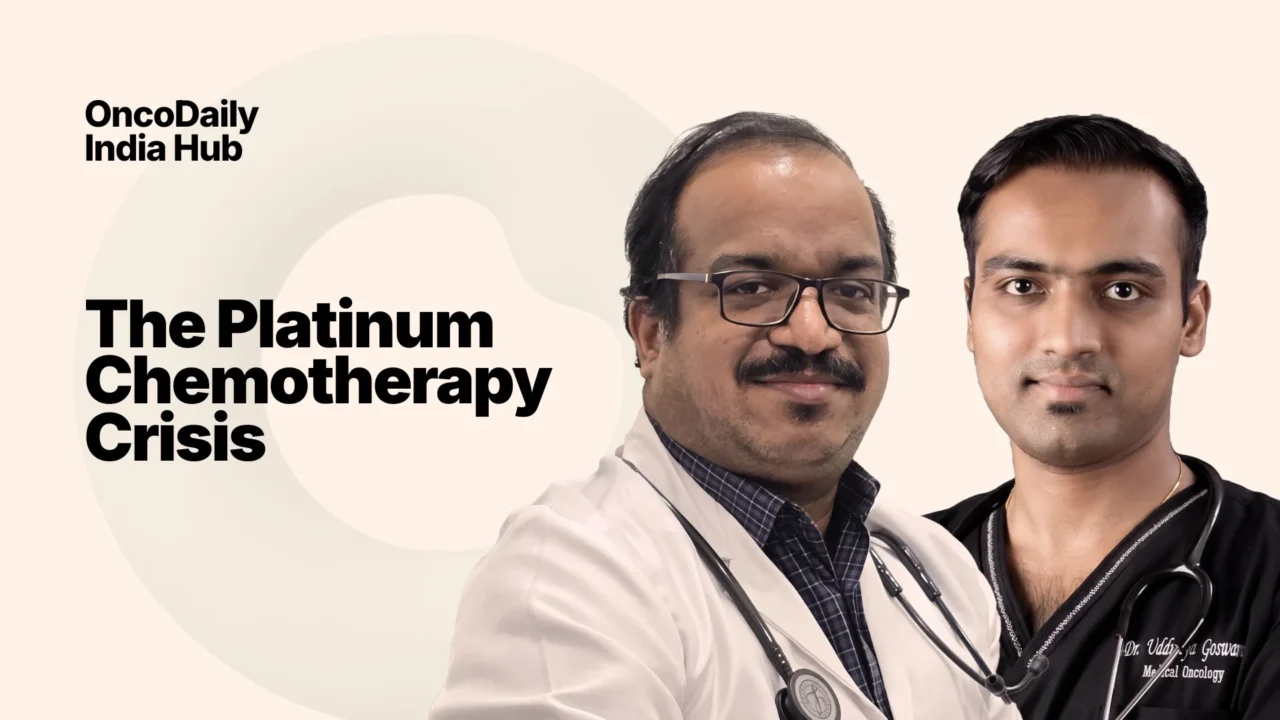
Written By Dr Mintu Mathew, Dr Uddiptya Goswami