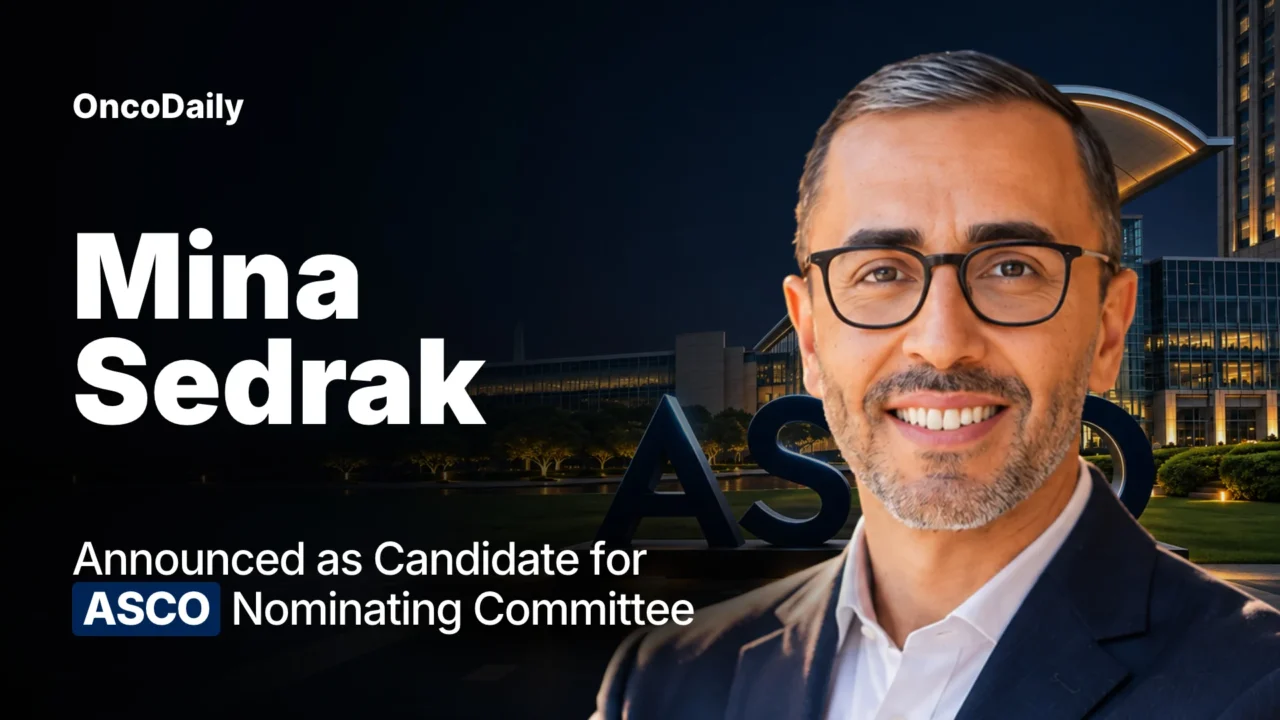
Mina Sedrak, MD, MS, FASCO, geriatric oncologist and Director of the Center for Cancer and Aging at the University of California, Los Angeles (UCLA), has been announced as a candidate for the American Society of Clinical Oncology (ASCO) Nominating Committee in the Undesignated Member category.
The election includes two available seats, each carrying a three-year term.
With a professional background spanning geriatric oncology, clinical research, cancer survivorship, and healthcare quality, Dr. Sedrak has contributed to several ASCO initiatives addressing the needs of patients and the development of clinical research.
His leadership includes serving as Past Chair of the ASCO Clinical Research Committee and co-chairing the joint ASCO–Friends of Cancer Research–FDA task force on Improving Older Adult Participation in Cancer Clinical Trials.
His work reflects an important question in contemporary oncology: how can clinical research better represent the patients who receive cancer treatment in everyday practice?
Cancer and Aging: An Increasingly Important Area of Oncology
Dr. Sedrak currently serves as Director of the Center for Cancer and Aging at UCLA, where he is also co-lead of the Cancer Control and Survivorship Program.
As a geriatric oncologist, his clinical and academic focus is connected to the care of older adults with cancer, a patient population that presents distinct challenges in treatment planning and long-term management.
Older adults account for a substantial proportion of cancer diagnoses worldwide. Yet chronological age alone cannot adequately describe an individual’s functional status, treatment tolerance, or healthcare needs.
Comorbidities, physical function, cognition, nutritional status, social support, and personal treatment goals can all influence clinical decision-making.
Geriatric oncology addresses these considerations by integrating cancer-directed treatment with a broader assessment of the patient’s health and circumstances.
Dr. Sedrak’s leadership at the Center for Cancer and Aging places him within this specialized field, where research and clinical care increasingly focus on improving treatment decisions and outcomes for older patients.
Bringing Older Adults Into Cancer Clinical Trials
One of Dr. Sedrak’s current leadership responsibilities is his role as co-chair of the ASCO–Friends of Cancer Research–FDA Joint Task Force on Improving Older Adult Participation in Cancer Clinical Trials.
The initiative addresses a longstanding challenge in oncology research: the underrepresentation of older adults in clinical trials.
Although cancer incidence increases with age, older patients have historically been enrolled in cancer trials at rates that do not always reflect their representation in the population receiving treatment.
This gap can limit the evidence available to clinicians when making treatment decisions for older adults, particularly those with additional medical conditions or functional limitations.
Improving trial participation requires consideration of eligibility criteria, study design, recruitment practices, and barriers that may prevent older patients from enrolling in research.
The joint task force brings together perspectives from professional oncology, cancer research, and regulatory stakeholders to examine ways to improve participation.
Dr. Sedrak’s role as co-chair places him within an initiative focused on making clinical research more representative of the patients treated in routine oncology practice.
Leadership in ASCO Clinical Research
Dr. Sedrak previously served as Chair of the ASCO Clinical Research Committee.
Clinical research is central to the development and evaluation of cancer treatments, providing the evidence used to assess therapeutic effectiveness, safety, and patient outcomes.
The design and conduct of oncology studies also involve broader questions about access, patient participation, research infrastructure, and the applicability of trial findings to clinical practice.
ASCO’s Clinical Research Committee contributes to the Society’s activities and priorities related to oncology research.
Dr. Sedrak’s previous leadership of the committee reflects his involvement in these discussions and in the broader research activities of the Society.
His work in this area is closely connected to his current efforts to improve older adult participation in cancer trials.
Together, these responsibilities demonstrate his engagement with both the conduct of clinical research and the question of who is represented in the evidence used to guide cancer care.
From Symptom Science to Quality Cancer Care
Dr. Sedrak has also served as a track leader on the ASCO Annual Meeting Scientific Program Committee.
His responsibilities included leadership of the Symptom Science/Palliative Care and Quality Care/Health Services Research tracks.
These areas address important dimensions of oncology that extend beyond tumor response and survival outcomes.
Symptom science and palliative care focus on understanding and managing the physical and psychological burden of cancer and its treatment, including pain, fatigue, and other symptoms affecting patients’ daily lives.
Quality care and health services research examine how cancer care is organized, delivered, evaluated, and improved across different healthcare settings.
Both fields are particularly relevant to older adults with cancer, for whom treatment decisions may involve balancing clinical effectiveness with functional independence, symptom burden, and quality of life.
Through his work on the Annual Meeting Scientific Program Committee, Dr. Sedrak has contributed to scientific programming in areas that connect cancer treatment with patient experience and healthcare delivery.
Connecting Research With Cancer Survivorship
At UCLA, Dr. Sedrak also serves as co-lead of the Cancer Control and Survivorship Program.
Cancer survivorship has become an increasingly important area of oncology as improvements in detection and treatment have increased the number of people living with and beyond cancer.
Survivorship care addresses a wide range of needs, including long-term treatment effects, physical and psychological well-being, functional recovery, and coordination of ongoing healthcare.
For older adults, these issues may intersect with age-related health conditions, making individualized follow-up and supportive care especially important.
Dr. Sedrak’s role in the Cancer Control and Survivorship Program connects his work in geriatric oncology with broader efforts to understand and improve outcomes throughout the cancer care continuum.
His professional responsibilities therefore span multiple stages of care, from clinical trial participation and treatment decisions to survivorship and long-term health.
Continued Service to ASCO
In addition to his previous committee leadership, Dr. Sedrak currently serves on the ASCO CDK Study Advisory Group.
He is also a graduate of the ASCO Leadership Development Program, which provides professional development opportunities for oncology professionals interested in leadership within the field.
His participation in these initiatives adds to his experience across the Society’s scientific, educational, and organizational activities.
From clinical research and scientific programming to patient-centered care and professional development, Dr. Sedrak has contributed to several areas of ASCO’s work.
The Role of the ASCO Nominating Committee
The ASCO Nominating Committee plays an important role in the Society’s governance by identifying and evaluating candidates for leadership positions.
Its work contributes to the process through which oncology professionals are considered for service within ASCO’s leadership structure.
For the upcoming election, two Undesignated Member seats are available, each carrying a three-year term.
The category allows candidates from different oncology specialties and professional backgrounds to participate in the Society’s leadership selection process.
Dr. Sedrak’s candidacy brings experience in geriatric oncology, clinical research, cancer survivorship, healthcare quality, and professional leadership.
His previous service as Chair of the Clinical Research Committee, combined with his work on the Annual Meeting Scientific Program Committee and current participation in ASCO initiatives, provides a background relevant to the responsibilities of the Nominating Committee.
A New Chapter in ASCO Leadership
Dr. Mina Sedrak’s candidacy for the ASCO Nominating Committee represents a potential extension of his work in clinical research, geriatric oncology, and professional service.
His leadership at UCLA’s Center for Cancer and Aging and Cancer Control and Survivorship Program reflects his involvement in improving cancer care for older adults and addressing patient needs beyond initial treatment.
His role in the ASCO–Friends of Cancer Research–FDA joint task force also highlights an ongoing priority in oncology: ensuring that clinical trials generate evidence relevant to the patients who will ultimately receive treatment.
If elected, Dr. Sedrak would serve a three-year term on the ASCO Nominating Committee, contributing to the identification and evaluation of future leaders within the Society.
The election will determine the two representatives selected for the Undesignated Member seats as ASCO prepares for its upcoming leadership cycle.
Discover more articles like this on OncoDaily.