In 1982, an Australian pathologist swallowed a petri dish of bacteria to prove a point nobody in medicine wanted to hear. Barry Marshall was convinced that stomach ulcers weren’t caused by stress or spicy food, as decades of consensus insisted, but by a bacterium his colleague Robin Warren had spotted under a microscope in Perth. When the scientific establishment wouldn’t take the theory seriously, Marshall infected himself to settle the argument. He was right. The discovery of Helicobacter pylori rewrote gastroenterology overnight and, in 2005, earned both men the Nobel Prize in Physiology or Medicine.
It’s a very Australasian kind of breakthrough: unglamorous surroundings, a willingness to test orthodoxy against evidence, and a result the rest of the world eventually had to catch up to. The same instinct produced the cochlear implant in Melbourne, spray-on skin for burns victims in Perth, and Peter Doherty’s Nobel Prize-winning discovery of how T cells recognize virus-infected cells, transforming modern immunology.
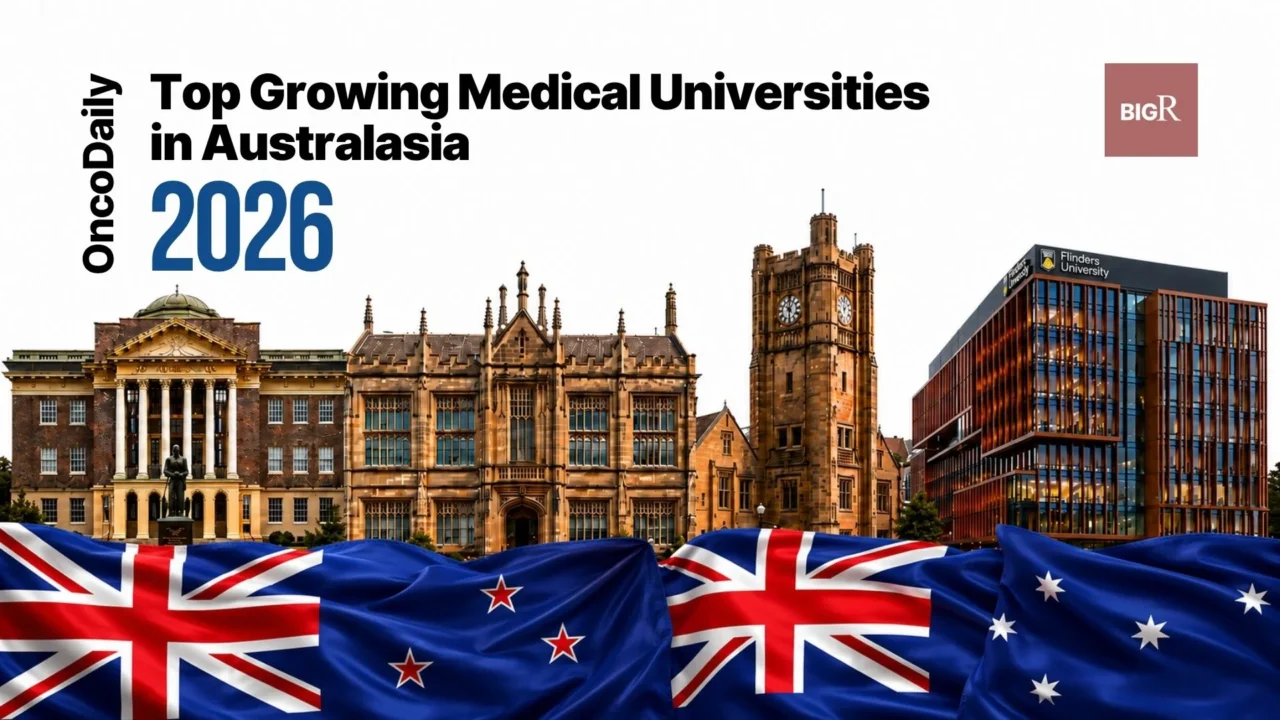
Australia and New Zealand may lack the scale of the world’s largest research powers, but their universities and hospital-linked institutes punch far above their size. From Sydney’s biomedical precincts to Auckland’s clinical research hubs, from remote-health innovation across the Outback to Dunedin’s teaching hospitals, Australasian medicine has built an outsized reputation for doing more with less and for being unafraid to challenge what everyone else assumed was settled. For two countries that together hold barely 0.4% of the world’s population, the density of field-defining medical discovery is difficult to overstate.
But which institutions across Australasia are not simply resting on that inheritance — and which are compounding new momentum on top of it?
To find out, the Boston Institute for Global Rankings (BIGR) applied its signature Exponentially Weighted Growth Index (EWGI) to medical research output indexed in the National Library of Medicine’s PubMed database from 2000 to 2024. This Australasia 2026 edition is the latest installment of BIGR’s global series, following our analyses of USA and Canada, the Post-Soviet Region, Europe, Latin America, and Asia.
Scope of the Study
- Geography: Australasia (Australia and New Zealand)
- Period analyzed: 2000-2024 (inclusive)
- Data source: All publications indexed in PubMed affiliated with each institution, across all medical and biomedical disciplines
- Inclusion threshold: ≥ 500 PubMed-indexed publications across the period
- Final sample: 24 medical institutions meeting the criterion
Note: Rankings are based on data collected in 2025–2026 and cover the period 2000–2024; publications from 2025 onward were not included in the analysis.
Our analysis began with the World Directory of Medical Schools, comprising medical institutions across Australia and New Zealand. Only universities with at least 500 publications indexed in PubMed during the 2000-2024 period were included, ensuring that every ranked institution has demonstrated sustained, meaningful research activity. Smaller or newly established faculties with insufficient publication records were excluded to preserve the analytical integrity of the ranking.
Why Measure Growth in Research Output?
Australasia presents a different puzzle from the regions BIGR has previously analyzed. This is not a continent racing to build research capacity from nothing. The University of Sydney has been producing medical graduates since 1856. The University of Melbourne since 1862. The University of Otago, New Zealand’s oldest medical school, since 1875 is the third medical school established anywhere in Australasia, after Sydney and Melbourne. These are, by any global standard, mature systems.
And yet newer institutions are still entering the field. Bond University became Australia’s first private medical school in 2005. The University of Notre Dame Australia opened medical schools in Fremantle and Sydney in the same decade. Flinders University pioneered a model building its medical school directly inside a public hospital that didn’t exist in Australia until 1974.
In a region this mature, the question is rarely who is biggest. It is who is still finding new gears.
A 160-year-old faculty that has doubled its recent output relative to its own history is arguably a more interesting story than a new faculty that is simply growing from zero, because it means an already excellent system found a way to reinvent itself. That is precisely the signal EWGI is built to detect.
For students choosing where to train, for researchers choosing where to build careers, and for policymakers assessing where investment is working, momentum is the most forward looking signal available arguably more so in a settled, high-income research system than anywhere else.
Methodology: The Exponentially Weighted Growth Index (EWGI)
To evaluate growth fairly across institutions of vastly different ages, sizes, and national contexts, we developed the Exponentially Weighted Growth Index (EWGI). Here is how it works:
Step 1: Assigning Exponential Weights
Each year from 2000 to 2024 was assigned a weight that naturally emphasized more recent years. Using a decay parameter of seven years (τ = 7), the method ensures that a publication from 2023 carries more weight than one from 2003, while still allowing every year of output to contribute to the overall picture.
Step 2: Calculating Weighted Average Growth (WAG)
We multiplied each year’s publication count by its respective weight and divided the total by the sum of all weights. This provides a measure of recent productivity that gradually prioritizes newer work without erasing historical contributions.
Step 3: Calculating Historical Average (HA)
We computed the simple, unweighted average number of publications across all years of active output. Only years with at least one publication were counted – years with zero output were excluded from the denominator to avoid penalizing institutions for periods of inactivity before their research programs began.
Step 4: Computing the EWGI
The weighted recent performance was compared to the historical average and expressed as a percentage. An EWGI above 100% signals that an institution is outperforming its own history – a sign of genuine acceleration.
What’s Powering the Surge?
Five structural forces explain why so many Australasian medical institutions are accelerating simultaneously:
- The Medical Research Future Fund (MRFF) – A perpetual, endowment-style fund launched by the Australian Government in 2015, now worth over AUD 20 billion. Grants began flowing in 2017, and the effect shows up across nearly every institution in this ranking which is a national-scale intervention comparable in impact, if not dollar terms, to China’s Project 985 or Saudi Arabia’s Vision 2030.
- The rural and regional medicine push – Since the early 2000s, Rural Clinical Schools and University Departments of Rural Health have built genuine research capacity outside the major cities. James Cook University, the University of New England, Newcastle, and Wollongong all show the payoff: a doctor-shortage problem turned into a research growth story.
- The rise of private and faith-based medical schools – Bond University (2005), Australia’s first private medical school, and the University of Notre Dame Australia (Fremantle 2005, Sydney 2008) are barely two decades old and already mid-table. Building a research culture from scratch that fast echoes the private-university story BIGR saw in Indonesia’s Asia edition.
- New Zealand’s twin-engine model – Just two institutions, Auckland and Otago, train the country’s doctors, both funded through the Health Research Council of New Zealand. Unsurprisingly, they post near-identical EWGI scores i.e a small, tightly coordinated system moving in lockstep.
- Precinct-based translational research – Over the past fifteen years, Australia’s biggest universities have co-located medical faculties with hospitals and research institutes: the Melbourne Biomedical Precinct, the Monash-Alfred-Baker cluster, UNSW’s ties to the Garvan and Kirby Institutes. It’s let even 19th-century faculties keep compounding new output well into their second century.
The 2026 List: Top Growing Medical Universities in Australasia
- Monash School of Medicine, Australia – 217.30%
- Flinders University College of Medicine and Public Health, Australia – 216.62%
- University of Melbourne Faculty of Medicine, Dentistry & Health Sciences, Australia – 215.11%
- University of New South Wales Faculty of Medicine, Australia – 211.80%
- University of Sydney, Sydney Medical School, Australia – 206.97%
- University of Tasmania College of Health and Medicine, Australia – 198.91%
- University of Queensland Faculty of Medicine, Australia – 198.43%
- University of Auckland Faculty of Medicine and Health Sciences, New Zealand – 197.23%
- University of Newcastle Faculty of Health and Medicine, Australia – 190.91%
- University of Otago Medical School, New Zealand – 190.87%
- University of Western Australia UWA Medical School, Australia – 186.35%
- James Cook University College of Medicine and Dentistry, Australia – 178.24%
- Australian National University School of Medicine and Psychology, Australia – 177.23%
- Griffith University School of Medicine, Australia – 176.77%
- University of Adelaide Faculty of Health and Medical Sciences, Australia – 172.31%
- Bond University Faculty of Health Sciences & Medicine, Australia – 163.31%
- University of Notre Dame Australia School of Medicine, Fremantle, Australia – 162.64%
- University of Notre Dame Australia School of Medicine, Sydney, Australia – 148.09%
- Deakin University School of Medicine, Australia – 148.07%
- Western Sydney University School of Medicine, Australia – 147.36%
- University of Wollongong Graduate School of Medicine, Australia – 146.43%
- University of New England Faculty of Medicine & Health, School of Rural Medicine, Australia – 121.59%
- Macquarie Medical School, Australia – 109.86%
- Curtin Medical School, Australia – 97.93%
Spotlights: The Leaders of Australasian Research Momentum
Monash School of Medicine, Australia – 217.30%
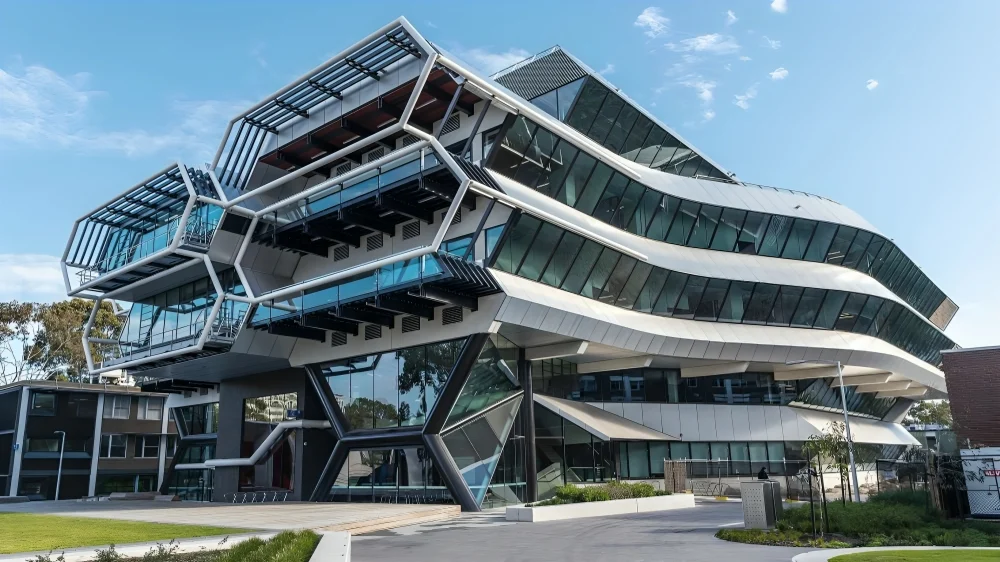
Monash University consistently ranks among the world’s top 50 universities for Medicine, reflecting its global leadership in biomedical research.
Monash University was established by an Act of the Victorian Parliament in 1958, taking its first students in 1961 at a single campus in Clayton with fewer than 400 people enrolled. It has since become Australia’s largest university, and its medical school has developed one of the country’s most consequential research records: Monash-affiliated researchers were central to the world’s first IVF pregnancies in the early 1980s, work led by Professor Carl Wood and Professor Alan Trounson, and Monash scientists later contributed to the discovery of zanamivir (Relenza), one of the first anti-influenza drugs of its kind. Today, the faculty sits within the Monash-Alfred-Baker academic health precinct in Melbourne, one of four advanced translational research clusters in the country.
Trajectory of growth: Founded barely six decades ago, Monash now tops this entire Australasian ranking by EWGI at 217.30% – a faculty younger than most of its peers on this list, still finding new acceleration rather than settling into the steadier, sustained growth pattern of its much older neighbors.
Flinders University College of Medicine and Public Health, Australia – 216.62%
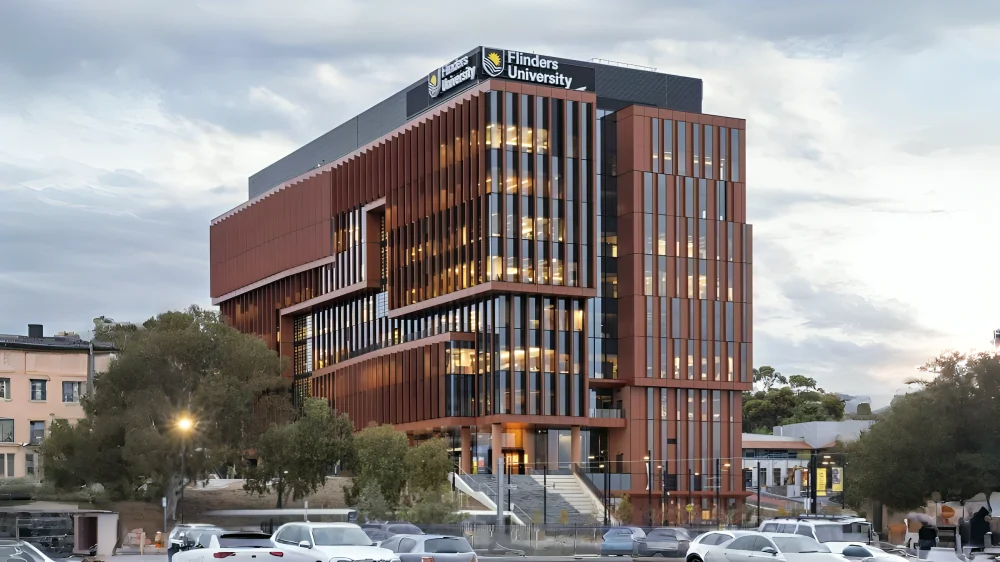
Flinders University researchers led the world’s largest clinical trial on sleep apnoea, helping shape international CPAP treatment guidelines.
Flinders University, established in 1966 in Adelaide, made an unusual decision when it built its medical school: rather than attaching the faculty to an existing hospital, it built the hospital around the faculty. Flinders Medical Centre opened in 1975, purpose-designed to co-locate teaching, research, and clinical care under one roof – the first such integration in Australia. The College’s footprint now stretches from metropolitan Adelaide through rural South Australia into the Northern Territory, and its research priorities in sleep health, eye and vision science, and Indigenous and rural health reflect that geography directly.
Trajectory of growth: 2024 marked fifty years of medicine at Flinders. Its EWGI of 216.62%, second in the entire region suggests that a faculty built around an unconventional model in a mid-sized city can accelerate as fast as institutions many times its age.
University of Melbourne Faculty of Medicine, Dentistry & Health Sciences, Australia – 215.11%
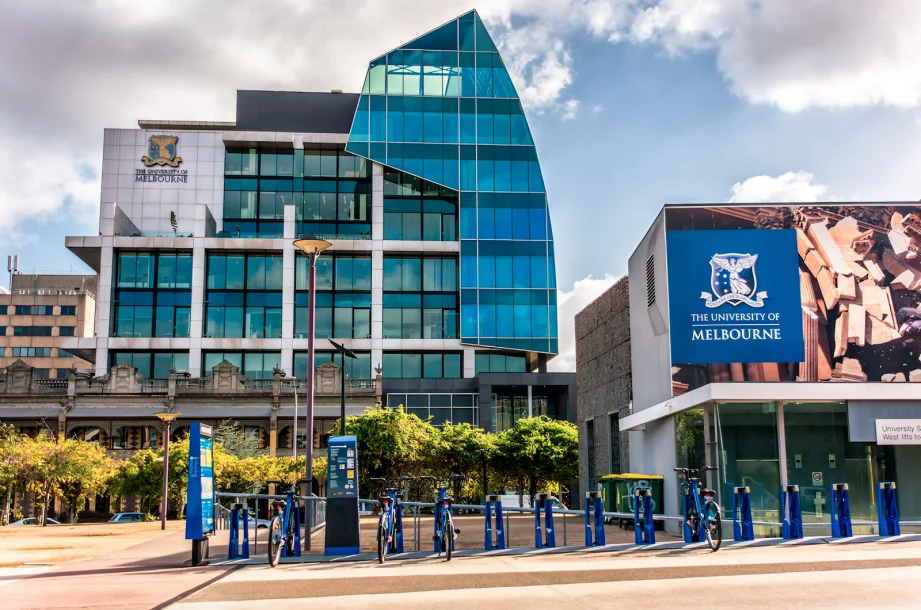
At the University of Melbourne, Professor Graeme Clark developed the world’s first successful multichannel cochlear implant, transforming hearing worldwide.
Founded in 1862, the University of Melbourne’s medical school is among the oldest in the Southern Hemisphere and has produced two Nobel laureates in Physiology or Medicine: Sir Frank Macfarlane Burnet, who graduated in medicine from Melbourne and later won the 1960 Nobel Prize for discovering acquired immunological tolerance – the foundational insight that made organ transplantation possible and Elizabeth Blackburn, who completed her undergraduate science degree at Melbourne before her Nobel Prize-winning discovery of telomerase in 1984 (awarded 2009). A faculty with that kind of 20th-century pedigree might be expected to plateau. Instead, it ranks third in this entire region by acceleration, powered in recent years by the Melbourne Biomedical Precinct, one of the most densely concentrated hospital-research clusters in the Asia-Pacific.
Trajectory of growth: A faculty with that kind of 20th-century pedigree might be expected to plateau. Instead, it ranks third in this entire region by acceleration at 215.11% EWGI, powered in recent years by the Melbourne Biomedical Precinct, one of the most densely concentrated hospital-research clusters in the Asia-Pacific.
❗ Special Mention:
The University of Melbourne Faculty of Medicine, Dentistry & Health Sciences is the only institution to rank 3rd in both our Current Research Output and All-Time Giants rankings showing its strength in both past and present research.
The All-Time Giants: Top 20 by Total Publications (2000-2024)
While EWGI measures momentum, the giants of Australasian medicine command a scale of output that anchors the region’s entire research base:
- University of Sydney, Sydney Medical School, Australia – 44,772 publications
- University of Queensland Faculty of Medicine, Australia – 26,696 publications
- University of Melbourne Faculty of Medicine, Dentistry & Health Sciences, Australia – 14,591 publications
- Monash School of Medicine, Australia – 14,146 publications
- University of Western Australia UWA Medical School, Australia – 12,873 publications
- University of New South Wales Faculty of Medicine, Australia – 12,839 publications
- University of Newcastle Faculty of Health and Medicine, Australia – 10,408 publications
- Deakin University School of Medicine, Australia – 5,824 publications
- Griffith University School of Medicine, Australia – 5,692 publications
- University of Auckland Faculty of Medicine and Health Sciences, New Zealand – 5,678 publications
- University of Tasmania College of Health and Medicine, Australia – 5,480 publications
- Macquarie Medical School, Australia – 5,165 publications
- University of Adelaide Faculty of Health and Medical Sciences, Australia – 4,939 publications
- Western Sydney University School of Medicine, Australia – 4,464 publications
- James Cook University College of Medicine and Dentistry, Australia – 3,729 publications
- University of Wollongong Graduate School of Medicine, Australia – 3,529 publications
- Australian National University School of Medicine and Psychology, Australia – 2,930 publications
- Bond University Faculty of Health Sciences & Medicine, Australia – 2,386 publications
- University of Otago Medical School, New Zealand – 2,022 publications
- University of Notre Dame Australia School of Medicine, Sydney, Australia – 1,988 publications
University of Sydney, Sydney Medical School, Australia – 44,772 publications
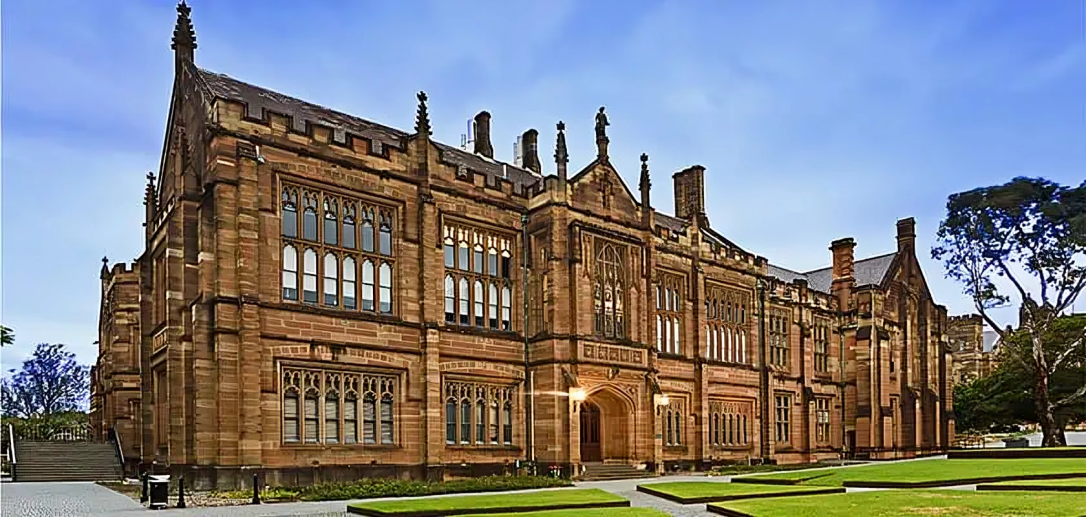
University of Sydney researchers have produced more than 380 NHMRC Investigator Grants—the highest number awarded to any Australian university—reflecting its sustained leadership in medical research.
Formally established in 1856, four years after the University of Sydney itself, the Faculty did not enroll its first students until 1883 — a Board of Examiners operated for its first quarter-century before any teaching began. Once it did, the school built a research and clinical legacy virtually unmatched in the Southern Hemisphere. Alumnus Dr Victor Chang pioneered heart transplant surgery in Australia in the 1980s; Professor Graeme Clark invented the multi-channel cochlear implant, restoring hearing to more than a million people worldwide and earning the title “father of the bionic ear.” Most recently, Professor Georgina Long and Professor Richard Scolyer, both graduates of Sydney Medical School, were jointly named 2024 Australians of the Year for their work transforming melanoma from one of the most lethal cancers into one of the most treatable through precision immunotherapy — work directly relevant to the oncology community this ranking is written for.
Trajectory of growth: With an EWGI of 206.97%, Sydney’s growth has been sustained rather than explosive — the trajectory of an institution that has published at world-class volume for over a century and has continued expanding through the 2010s and 2020s without ever plateauing, a pattern that places it fifth in the region for acceleration despite carrying, by far, the largest publication base.
University of Queensland Faculty of Medicine, Australia – 26,696 publications
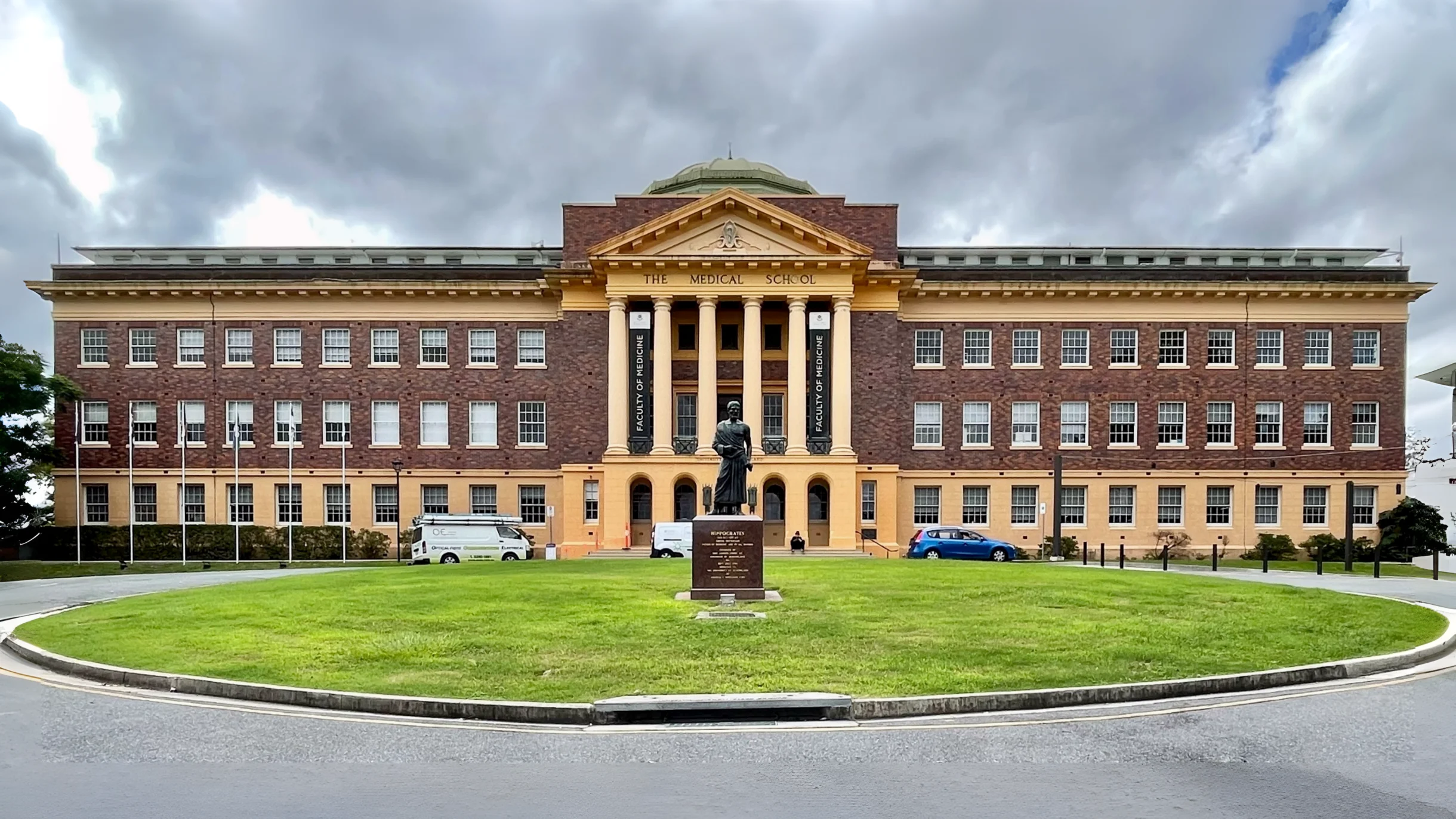
University of Queensland researchers developed the world’s first cervical cancer vaccine (Gardasil), transforming cancer prevention worldwide.
Founded in 1936, the University of Queensland Faculty of Medicine has grown into one of Australia’s largest medical research faculties. Home to the Frazer Institute where the technology behind the HPV vaccine was developed—the faculty spans four clinical schools, more than 20 teaching hospitals, and a network of internationally renowned research centres driving discoveries in cancer, neuroscience, infectious diseases, and precision medicine.
Trajectory of growth: UQ’s EWGI of 198.43% reflects an institution that was already a major producer by the early 2000s and has continued to expand steadily, adding substantial new output through the 2015-2024 period as Queensland’s biomedical research funding and translational infrastructure — including the Translational Research Institute co-founded by Frazer himself — matured around it.
University of Auckland Faculty of Medicine and Health Sciences – 5,678 publications
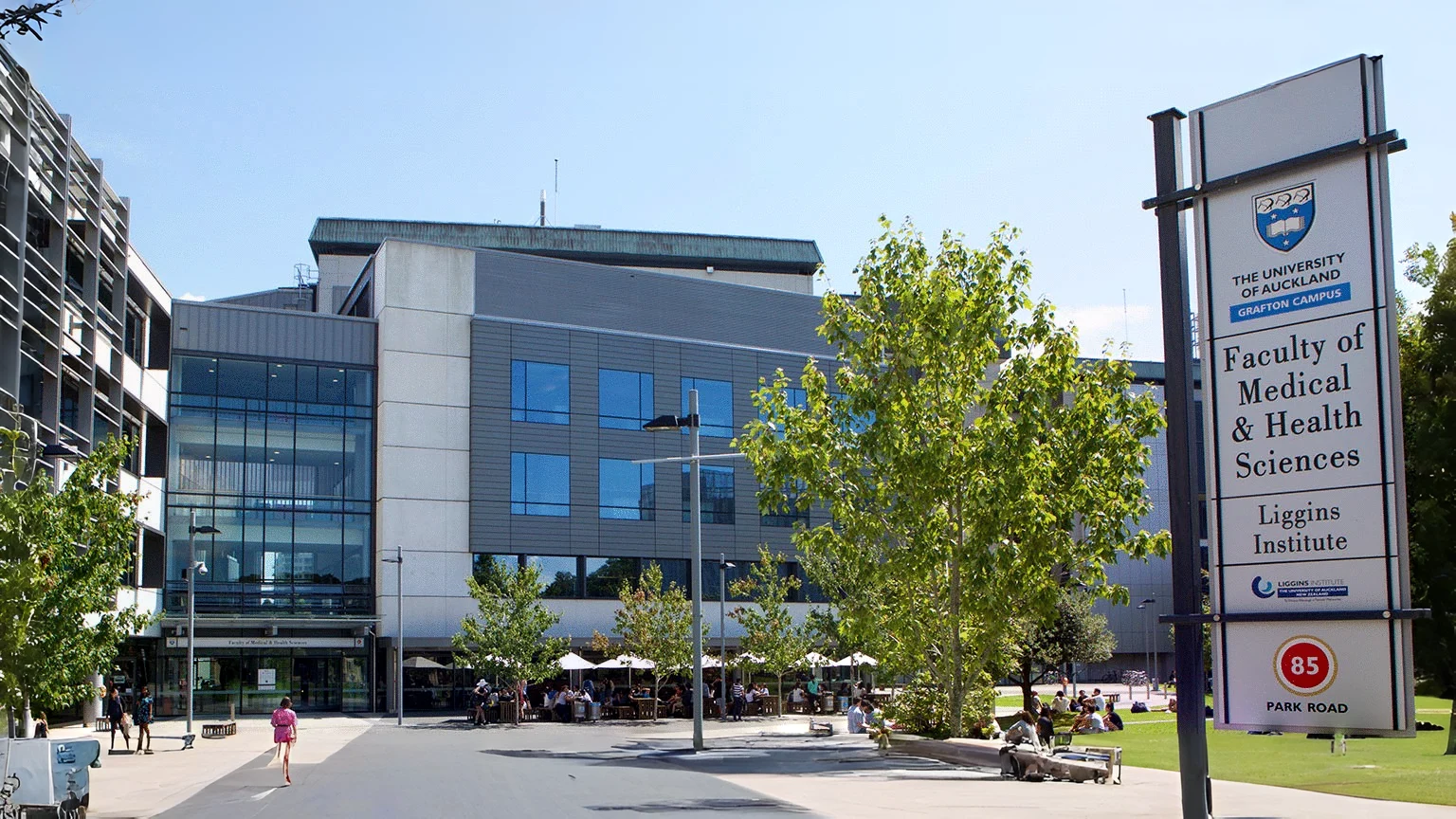
University of Auckland researchers developed the Auckland Heart Valve, an innovative bioprosthetic heart valve now used in cardiac surgery research worldwide.
Founded in 1968, the University of Auckland Faculty of Medical and Health Sciences is New Zealand’s largest medical school and the country’s leading centre for biomedical and clinical research. Closely integrated with Auckland City Hospital, Starship Children’s Hospital, and a network of specialist research institutes, the faculty has built internationally recognised strengths in cancer, cardiovascular disease, neuroscience, population health, and precision medicine, while serving as a major hub for clinical trials and translational research.
Trajectory of growth: Auckland’s EWGI of 197.23% reflects a faculty that entered a new phase of growth after 2013, maintaining strong gains in research output through the late 2010s and early 2020s.
The New Map of Australasian Medical Science
The picture that emerges from 24 institutions across 2 countries is one of a mature research system finding new pockets of acceleration in unexpected places.
Australia’s newer medical schools are punching above their age. Monash and Flinders, both younger than 65 years old, occupy the top two positions by EWGI, ahead of institutions with a century or more of history. This suggests that Australia’s research momentum right now is being driven as much by mid-century institutions hitting their stride as by its oldest universities.
The private and faith-based sector has arrived. Bond University and the University of Notre Dame Australia, all founded or opened for medical education since 2005, now appear comfortably in the middle of this ranking — a genuinely new category of research-active Australian medical education that did not exist a generation ago.
Rural and regional Australia is a research story, not just a workforce story. James Cook University, the University of Newcastle, the University of New England, and the University of Wollongong all appear across this ranking, reflecting two decades of deliberate policy investment in medical education outside the capital cities.
New Zealand’s two schools move almost in lockstep. The University of Auckland (197.23%) and the University of Otago (190.87%) sit within seven points of each other despite serving different parts of the country and different historical eras — Otago dating to 1875, Auckland to 1968, a signature of New Zealand’s small, centrally coordinated research funding system.
The Group of Eight is not coasting. Sydney, Melbourne, UNSW, Queensland, UWA, Adelaide, and ANU – the historic backbone of Australian medical research, all still register EWGI scores above 170%, meaning even the most established institutions in the region are outperforming their own multi-decade averages.
Discussion: What Australasia’s Momentum Tells the World
The EWGI analysis of Australasian medical universities tells a story that is easy to overlook precisely because the region is so small and so familiar to global science: momentum here is not coming from a handful of obvious giants. It is broad-based, running through a 1960s-era university in suburban Melbourne, a hospital-embedded faculty in Adelaide, a Catholic university’s decade-old medical school in Fremantle, and a rural training program in Armidale, all at once.
The most powerful force in research is not funding. It is not infrastructure. It is the decision – institutional, cultural, generational, to become something different than you were.
Australia and New Zealand made that decision decades ago when a small immunology lab in Brisbane decided a cancer-causing virus could be stopped before it started, and they are making it again now, in dozens of faculties simultaneously, at every scale from the newest private school to the country’s oldest teaching hospital.
Jian Zhou never lived to see Gardasil reach a single patient. Fred Hollows, an Otago-trained ophthalmologist half a world away in Dunedin, restored sight to hundreds of thousands of people before his own death, and the foundation that bears his name continues that work today. And the fastest-growing medical school across two entire countries is barely older than the researchers who now lead it.
The geography of medical science in the Southern Hemisphere is still being redrawn and two small, mature systems are proving that acceleration doesn’t require youth. It only requires the will to keep starting over.
Authors:
- Hana Maheen, MD, Research Associate at BIGR and Editor at OncoDaily
- Aren Petrosyan, MD, Research Associate at BIGR
- Elen Baloyan, MD, Director of BIGR and Managing Editor at OncoDaily.
About BIGR
This study was conducted by The Boston Institute for Global Rankings (BIGR) – an academic initiative dedicated to transparent, data-driven evaluation of excellence in universities, medical centers, and healthcare professionals worldwide. With a focus on performance, impact, and innovation, BIGR aims to create meaningful global benchmarks for the future.
Think BIGR.
Catch up on the previous chapters:
- Top Growing Medical Universities in Asia: 2026 Edition
- Top Growing Medical Universities in Latin America: 2026 Edition
- Top Growing Medical Universities in Europe: 2026 Edition
- Top Growing Medical Universities in USA and Canada: 2025 Edition
- Top Growing Medical Universities in the Post-Soviet Region: 2025 Edition