What if lung cancer could be detected before it becomes visible on a scan? What if artificial intelligence could identify who is most at risk, distinguish dangerous tumors from less threatening ones, and help physicians intervene before the disease progresses?
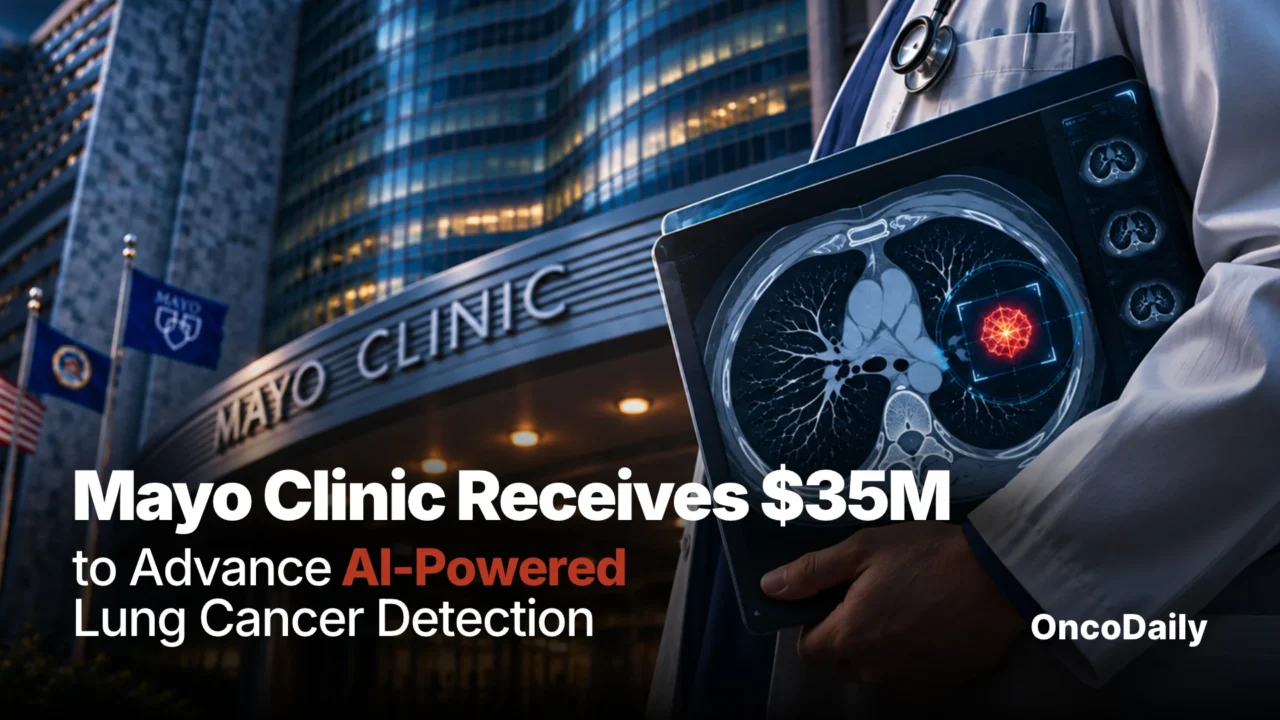
These are among the questions driving a new $35 million research initiative at Mayo Clinic Comprehensive Cancer Center.
The Paul Angell Foundation has committed $35 million to Mayo Clinic to accelerate lung cancer research, bringing together oncologists, scientists, data experts, and artificial intelligence specialists to develop new strategies for early detection, cancer interception, and personalized treatment.
The initiative aims to change not only how lung cancer is treated, but also when physicians can recognize and respond to the disease.
Why Lung Cancer Needs a New Approach
Despite significant advances in targeted therapies, immunotherapy, and screening, lung cancer remains the leading cause of cancer-related death in the United States.
According to the American Cancer Society’s 2026 estimates:
- 229,410 people will be diagnosed with lung cancer in the United States.
- 124,990 people will die from the disease.
- Lung cancer will account for approximately one in five cancer deaths.
One of the greatest challenges is timing.
Many patients are diagnosed when their cancer has already spread, limiting opportunities for potentially curative treatment.
Low-dose computed tomography (CT) screening has improved early detection in high-risk populations. The National Lung Screening Trial demonstrated approximately a 20% reduction in lung cancer mortality with low-dose CT screening compared with chest radiography.
However, screening still has important limitations. Not everyone who develops lung cancer meets current screening eligibility criteria, and suspicious lung nodules can be difficult to classify.
Mayo Clinic researchers hope that combining medical imaging, molecular information, and artificial intelligence could help address these gaps.
More Than 94,000 Patients: Turning Data Into Earlier Detection
One of the most significant elements of the initiative is the scale of Mayo Clinic’s existing patient data.
Researchers will have access to fully digitized longitudinal medical records from more than 94,000 people with lung cancer, supported by an extensive thoracic specimen registry.
Rather than examining imaging results or molecular findings independently, the research team plans to integrate multiple sources of information, including medical imaging, digital pathology, genomic data, clinical history, and patient-related risk factors.
The goal is to develop AI models capable of recognizing complex patterns associated with lung cancer development, progression, and treatment response. For example, could subtle changes in medical images, when combined with a patient’s biological and clinical information, reveal a developing cancer earlier than conventional screening?
Could researchers identify which lung nodules are most likely to become aggressive tumors?
And could these predictions help physicians determine who needs closer surveillance or earlier intervention?
These possibilities are central to the project, although the proposed models will require rigorous validation before they can be used to guide routine clinical decisions.
From Early Detection to Cancer Interception
The initiative extends beyond improving existing screening methods. Mayo Clinic intends to investigate the biological changes that occur during the earliest stages of lung cancer development, potentially identifying opportunities to intervene before the disease becomes clinically advanced.
This approach, often described as cancer interception, focuses on recognizing and disrupting the processes that lead to invasive or progressive cancer.
The research program will connect three major areas:
- AI-powered risk prediction: Integrating patient information to improve understanding of individual lung cancer risk and tumor behavior.
- Earlier biological detection: Searching for molecular and biological signals that could reveal cancer before conventional diagnostic approaches reliably identify it.
- New therapeutic strategies: Translating research findings into cellular therapies, immune-based approaches, and precision-targeted treatments.
The broader ambition is to establish a continuous research pathway, linking the earliest signs of disease with the development of more effective therapies for patients whose cancers have already advanced.
A $35 Million Investment in the Future of Lung Cancer Care
For Cheryl Willman, MD, Director of Mayo Clinic Comprehensive Cancer Center, the philanthropic commitment creates an opportunity to accelerate discoveries by combining scientific disciplines and research resources.
The new program will bring together clinical expertise, large-scale patient datasets, biological specimens, and advanced AI infrastructure, allowing scientists to examine questions that would be difficult to address using individual research approaches.
The initiative also reflects Mayo Clinic’s integrated research model, in which laboratory discoveries and clinical care can inform one another.
For patients, the potential implications extend across the lung cancer journey. Earlier identification of high-risk individuals could create opportunities for more personalized screening. Better characterization of suspicious findings could help reduce unnecessary interventions while identifying dangerous cancers sooner.
For those already diagnosed, a deeper understanding of tumor biology could eventually support more precisely selected treatments. Importantly, the funding represents an investment in research rather than evidence that these new AI approaches have already improved clinical outcomes.
The Paul Angell Foundation’s Commitment to Cancer Research
The contribution also reflects the Paul Angell Foundation’s growing involvement in biomedical research.
Sharon Angell, a member of the foundation’s Board of Directors, emphasized the importance of early detection and the potential to change outcomes for families affected by lung cancer.
The foundation has previously supported cancer research, including pancreatic cancer initiatives focused on improving early detection and developing new therapeutic approaches.
Its latest commitment to Mayo Clinic demonstrates how philanthropic investment can support large-scale, multidisciplinary research efforts that connect emerging technologies with unmet clinical needs.
Could AI Change What a Lung Cancer Diagnosis Means?
For decades, lung cancer research has focused heavily on developing more effective treatments after diagnosis. While these advances remain essential, Mayo Clinic’s new initiative reflects a broader shift toward understanding cancer before it becomes advanced, identifying people at greater risk, and exploring ways to intervene earlier.
The central question is no longer simply how to treat lung cancer more effectively. It is whether clinicians can recognize the disease early enough to change its course.
With $35 million in new philanthropic support, access to extensive patient data, and an interdisciplinary research strategy, Mayo Clinic is positioning itself to investigate that possibility.
The ultimate success of the initiative will depend on whether its discoveries can be validated and translated into measurable improvements in early detection, treatment decisions, and patient survival.
For people affected by lung cancer, that is the outcome that matters most.
Read further on OncoDaily: NHS Launches World’s Largest Breast Cancer Screening Trial Involving 660,000 Participants