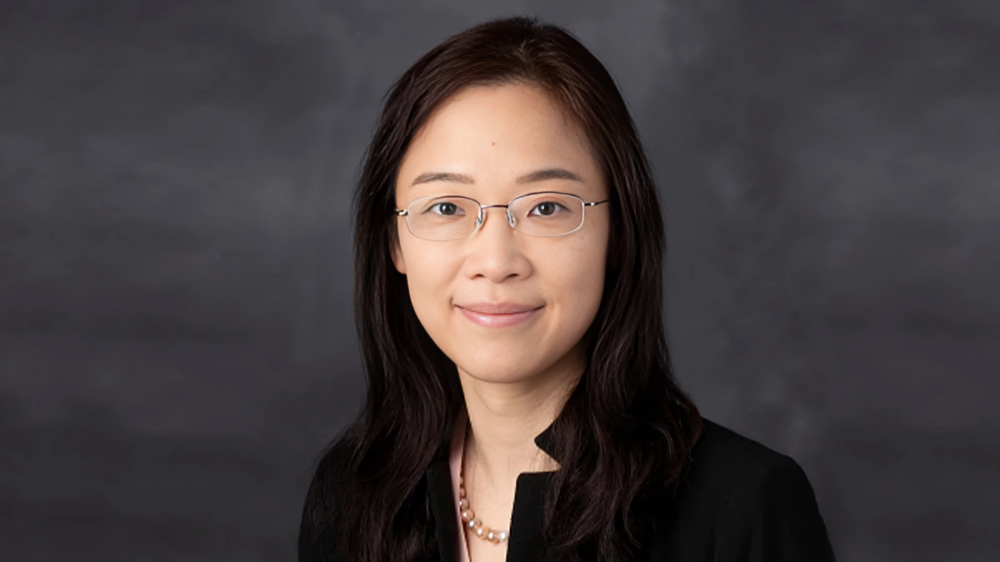
Xiuning Le, Associate Professor of Thoracic Head and Neck Medical Oncology MD Anderson Cancer Center, shared on LinkedIn:
“Now online at this issue of Cancer Discovery
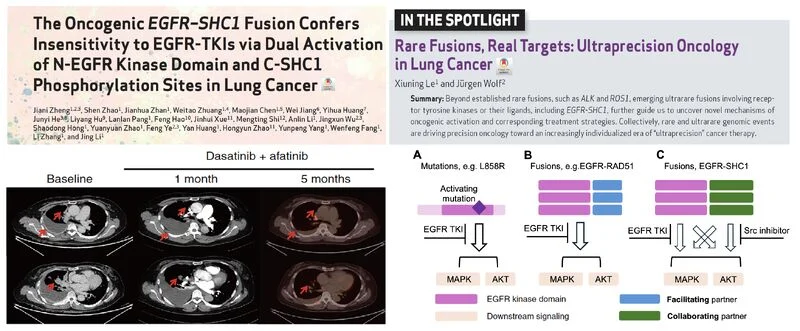
- The oncogenic EGFR–SHC1 fusion drives lung cancer through dual activation of the N-terminal EGFR kinase domain and C-terminal SHC1 phosphorylation sites. This biology requires combined inhibition of both EGFR and SRC-family kinases to achieve effective clinical control.
- Most importantly, this represents a novel fusion activation mechanism: SHC1 acts not merely as a facilitating fusion partner, but as a true collaborating partner in oncogenesis: a previously unrecognized mechanism with direct therapeutic implications.
- Could similar cooperative signaling by fusion partners help explain de novo or early resistance in other fusion-driven cancers?”
Title: The Oncogenic EGFR–SHC1 Fusion Confers Insensitivity to EGFR-TKIs via Dual Activation of N-EGFR Kinase Domain and C-SHC1 Phosphorylation Sites in Lung Cancer
Authors: Jiani Zheng, Shen Zhao, Jianhua Zhan, Weitao Zhuang, Maojian Chen, Wei Jiang, Yihua Huang, Junyi He, Liyang Hu, Lanlan Pang, Feng Hao, Jinhui Xue, Mengting Shi, Anlin Li, Jingxun Wu, Shaodong Hong, Yuanyuan Zhao, Feng Ye, Yan Huang, Hongyun Zhao, Yunpeng Yang, Wenfeng Fang, Li Zhang, Jing Li
Read the full article.