





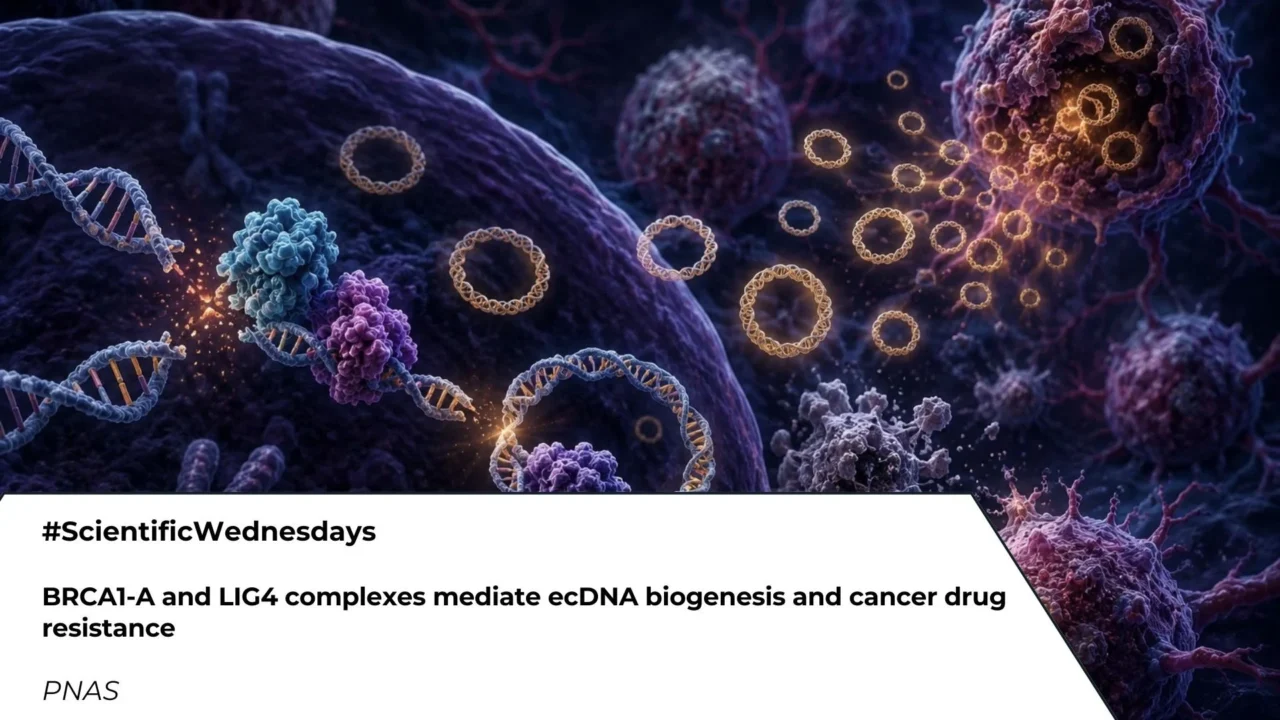
The Babak Lab shared a post on LinkedIn about a recent article by Oliver Chung et al, adding:
“Scientific Wednesdays: How ecDNA helps cancer evolve drug resistance
A new study published in PNAS explores how extrachromosomal circular DNA, or ecDNA, forms inside cancer cells and helps tumors rapidly adapt under treatment pressure.
Key Insights
- ecDNA acts like a mobile genetic shortcut, allowing cancer cells to amplify oncogenes and drug-resistance genes outside chromosomes
- Genome-wide CRISPR screening identified BRCA1-A and LIG4 complexes as key drivers of ecDNA formation
- BRCA1-A protects broken DNA ends from excessive resection, keeping them available for circularization
- LIG4 then joins these DNA ends together, enabling the formation of ecDNA circles
- In glioblastoma patient tumors, most ecDNA junctions carried a LIG4-like repair signature
- Disrupting BRCA1-A or LIG4 impaired ecDNA formation across cancer models
- Blocking these complexes prevented cancer cells from acquiring resistance to chemotherapy and targeted therapy
Conclusion
This study reveals ecDNA biogenesis as an active DNA repair-driven process rather than a random accident. By identifying BRCA1-A and LIG4 as key mediators, it points to a possible strategy for slowing tumor evolution and preventing ecDNA-driven drug resistance.
Image generated using Sora by OpenAI.”
Title: BRCA1-A and LIG4 complexes mediate ecDNA biogenesis and cancer drug resistance
Authors: Oliver Chung, Shun Yao, Ling Wang, Fu Yang, Lauren Schier, Melissa Aldana, Christian Cerda-Smith, Haley Hutchinson, Kris Wood, Weijia Su, Mustafa Khasraw, Lee Zou, Dale Ramsden, Zhao Zhang
Read the Full Article on PNAS
Maria Babak, Head of The Babak Lab and Assistant Professor at City University of Hong Kong, shared this post, adding:
“BRCA1-A protects the DNA ends, LIG4 closes the circle, and cancer gets a new shortcut to resistance. This work makes ecDNA feel much less mysterious and far more targetable.”
More posts about The Babak Lab.