Talha Badar, Hematology/Oncology Specialist at Mayo Clinic, shared on LinkedIn:
“Looking forward to presenting our work this weekend on how genotoxic stress shapes clonal evolution.
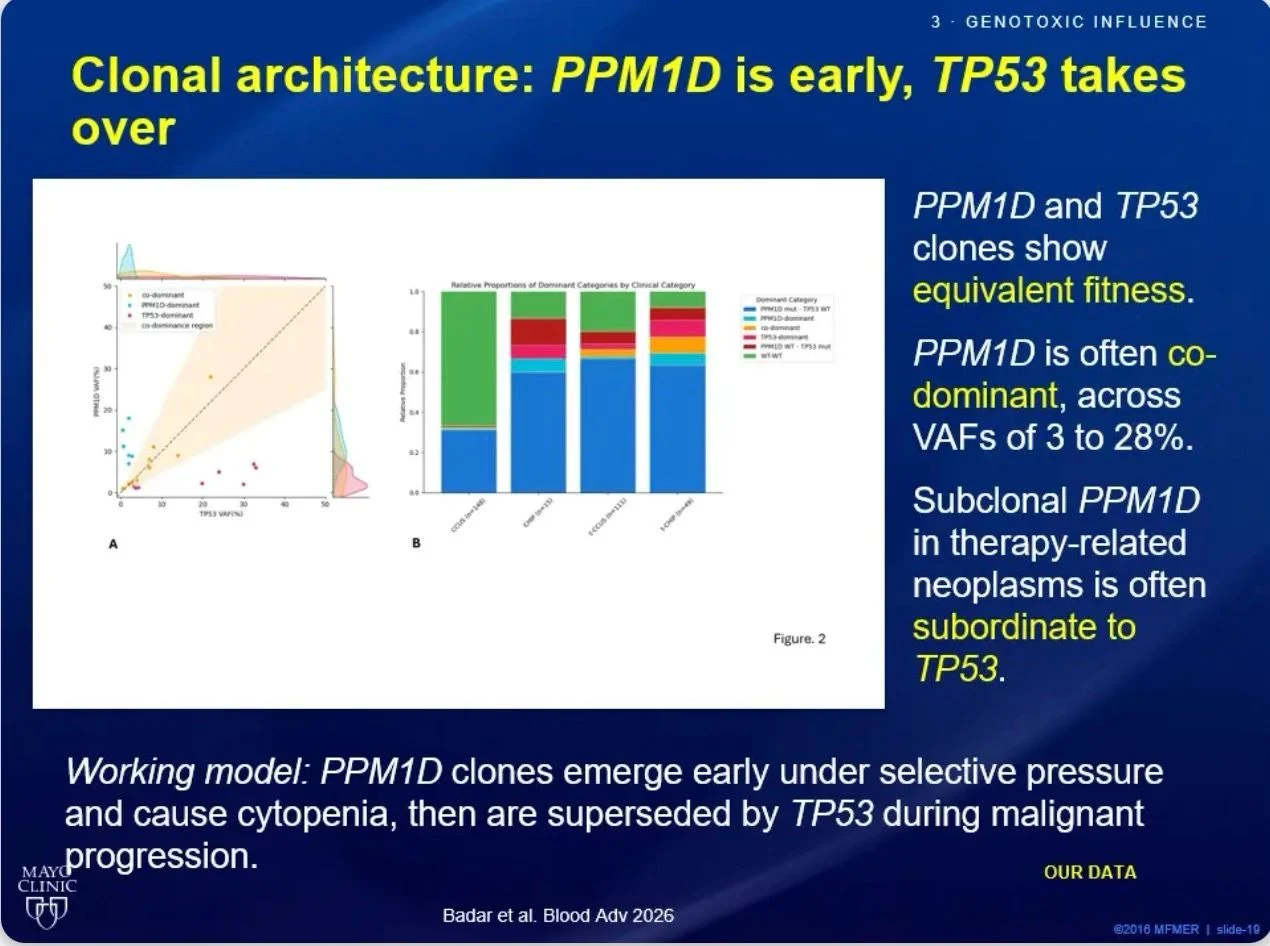
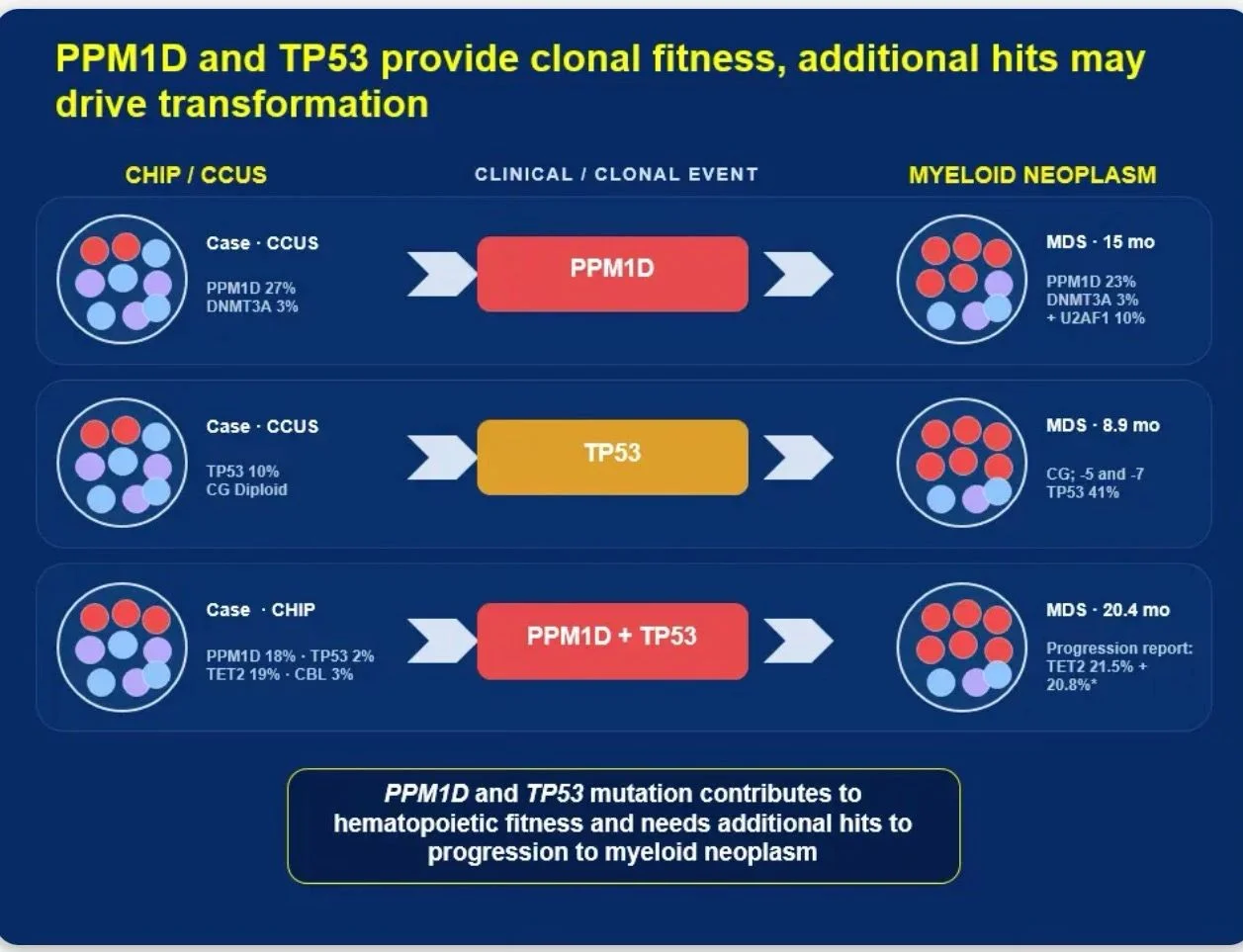
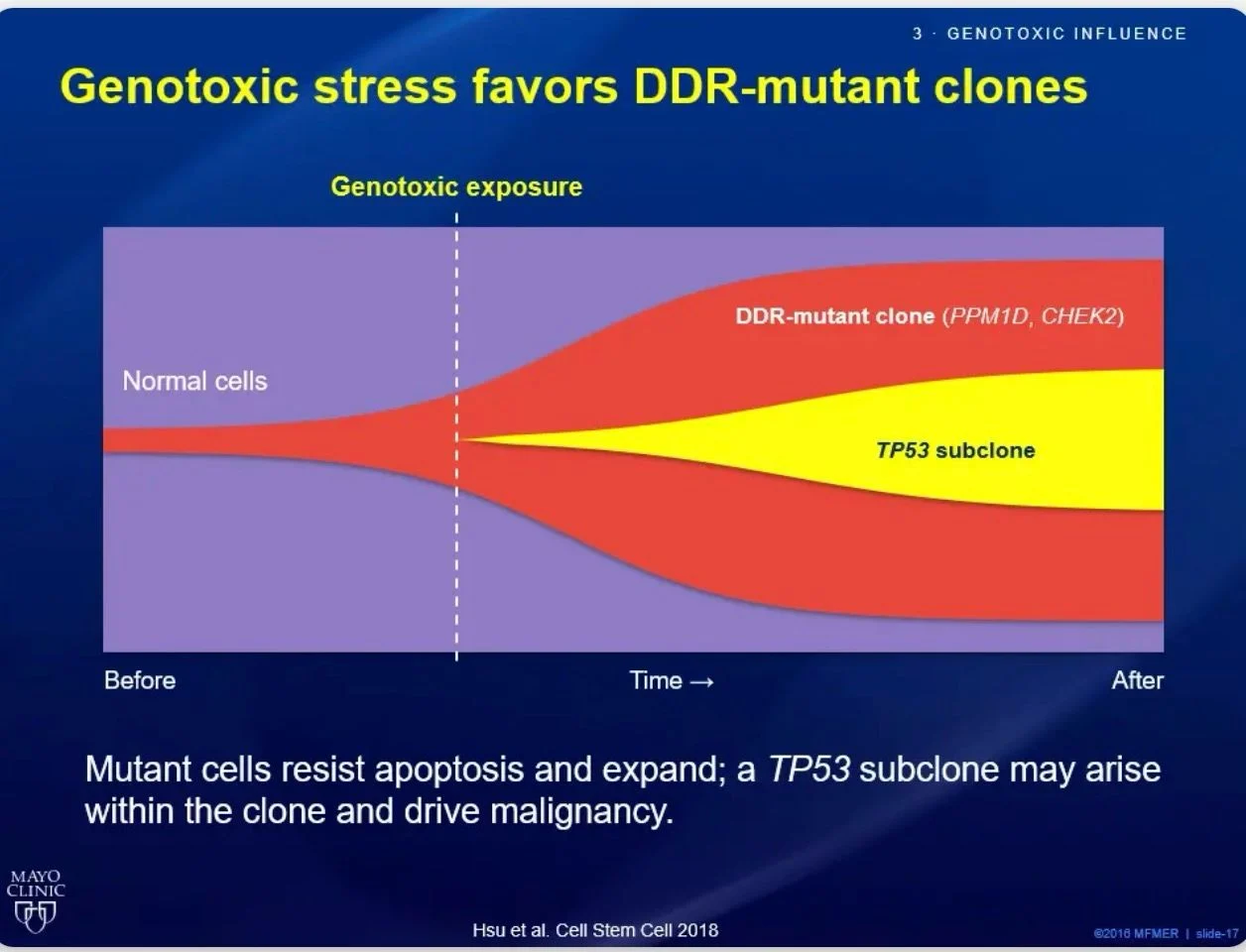
Our data suggest that genotoxic selective pressure can favor DNA damage response (DDR) pathway mutations, particularly PPM1D and TP53, providing clonal fitness and influencing the path from clonal hematopoiesis to myeloid neoplasms.
An intriguing pattern is emerging: PPM1D may gain an early foothold under genotoxic stress, while TP53 can ultimately take over during malignant progression.
Excited to share the data and discuss what this evolving clonal architecture may teach us about therapy-related myeloid neoplasms.”
You can also read: Clones and Clonality: Darwinian Natural Selection at the Cellular Level