






Talha Badar, Hematology/Oncology Specialist at Mayo Clinic shared several posters from ASCO 2026 on X, highlighting recent research and key findings presented during the meeting:
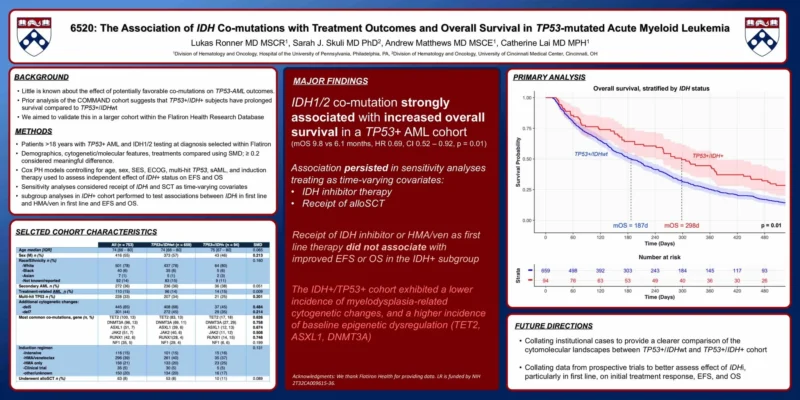
“Poster: TP53-IDH co-mutated AML
In a large real-world cohort (n=753), co-mutation with IDH1/2 was associated with significantly improved overall survival in patients with
- TP53-mutated AML. TP53+/IDH+ (n=94) vs TP53+/IDHwt (n=659)
- Median OS: 9.8 vs 6.1 months
- HR 0.69 (95% CI 0.52–0.92), p=0.01
- Benefit remained significant after accounting for IDH inhibitor therapy and allo-HCT as time-varying covariates.
Interestingly, first-line IDH inhibitor therapy or HMA/venetoclax did not independently improve EFS or OS within the IDH+ subgroup. The TP53+/IDH+ cohort demonstrated distinct biology, with fewer MDS-related cytogenetic abnormalities and greater enrichment of epigenetic regulator mutations (TET2, ASXL1, DNMT3A).
These findings suggest that IDH co-mutation may define a biologically distinct subset of TP53-mutated AML with a comparatively favorable prognosis, warranting further molecular and prospective investigation.
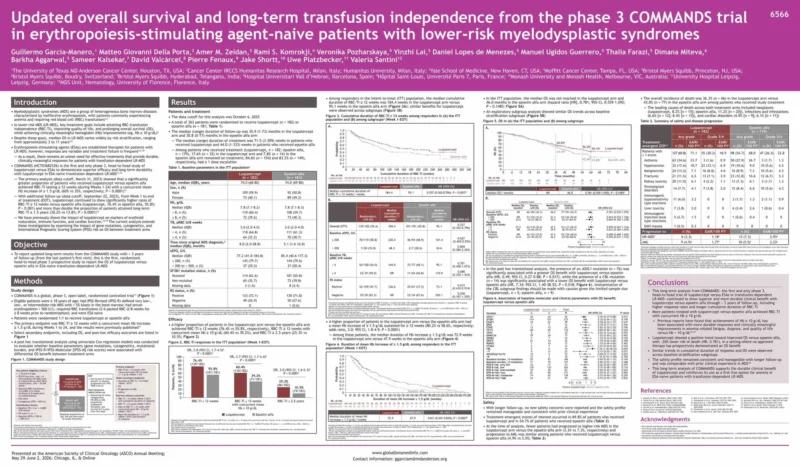
Poster: Updated COMMANDS data continue to support luspatercept as an effective frontline option for ESA-naïve, transfusion-dependent lower-risk MDS.
- Higher rates of durable RBC transfusion independence versus epoetin alfa
- Responses remained longer lasting with extended follow-up
- Trend toward improved overall survival, although OS difference did not reach statistical significance
- No new safety signals observed
While longer-term follow-up and biomarker-defined analyses remain important, these results further strengthen the role of luspatercept as a preferred first-line erythroid-directed therapy in lower-risk MDS.
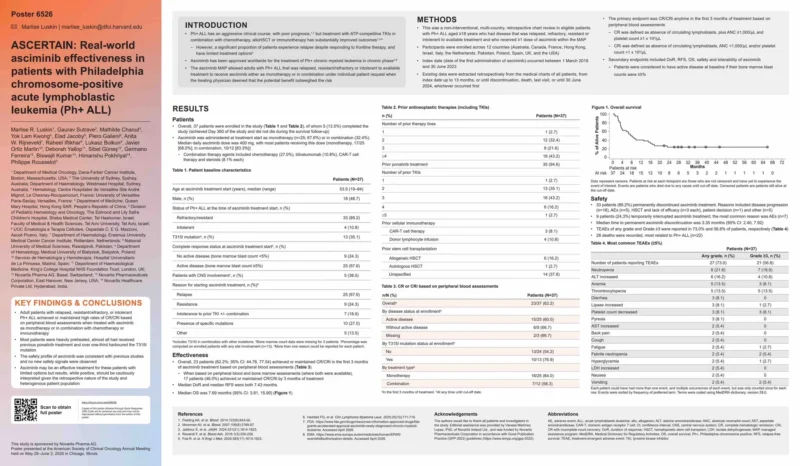
Poster: Real-world ASCERTAIN study evaluating asciminib in heavily pretreated adults with relapsed/refractory or TKI-intolerant Ph+ ALL.
- 37 patients across multiple countries
- Median 3 prior therapy lines; 95% previously exposed to ponatinib
- T315I mutation present in 35%
- CR/CRi achieved in 62% overall
- Responses observed regardless of T315I status
- Median OS 7.6 months; median RFS 7.4 months
- Safety profile consistent with prior asciminib experience
While limited by its retrospective design and small sample size, these data suggest asciminib may offer a meaningful treatment option for selected patients with heavily pretreated Ph+ ALL, including those with T315I mutations and prior exposure to multiple TKIs.
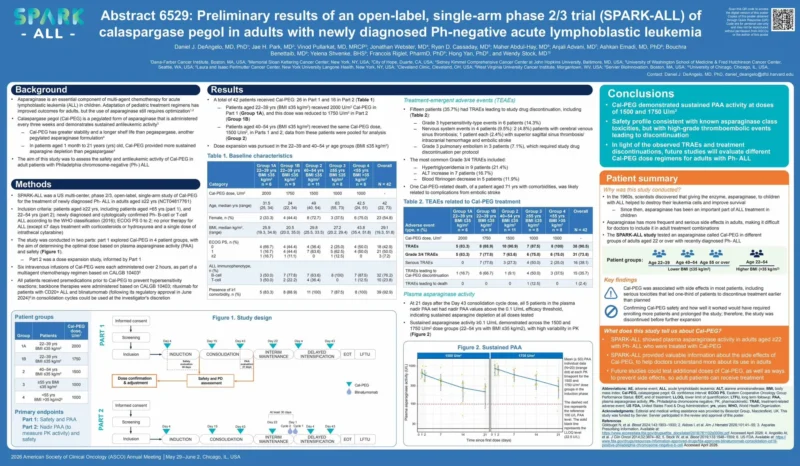
Poster: SPARK-ALL evaluated calaspargase pegol in adults with newly diagnosed Ph-negative ALL.
Key early signals:
- Sustained plasma asparaginase activity seen at 1500 and 1750 U/m²
- Safety profile consistent with known asparaginase toxicities
- High-grade thromboembolic events contributed to treatment discontinuation
- 35.7% discontinued study treatment; 1 treatment-related death reported
Cal-PEG appears pharmacodynamically active in adult Ph-negative ALL, but toxicity remains an important limitation. Future studies will need to optimize dose and patient selection to balance efficacy with safety.
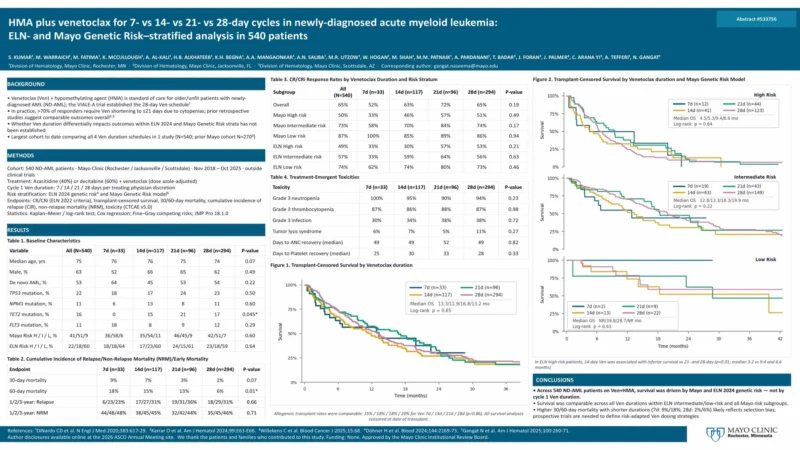
Does venetoclax duration matter in frontline HMA+Ven for AML?
Poster: In a Mayo Clinic Comprehensive Cancer Center analysis of 540 newly diagnosed AML patients, outcomes were driven primarily by disease biology, not venetoclax duration. Led by Dr. Naseema Gangat
- Similar OS across 7-, 14-, 21-, and 28-day schedules
- Comparable outcomes within ELN 2024 and Mayo genetic risk groups
- Higher early mortality with shorter durations likely reflected selection of frailer patients
- In ELN high-risk AML, 14-day venetoclax was associated with inferior survival compared with 21- and 28-day schedules
Take-home: Venetoclax duration should be individualized based on genetics, response, cytopenias, and patient fitness rather than a one-size-fits-all approach.”
 Other articles featuring Talha Badar on OncoDaily.