





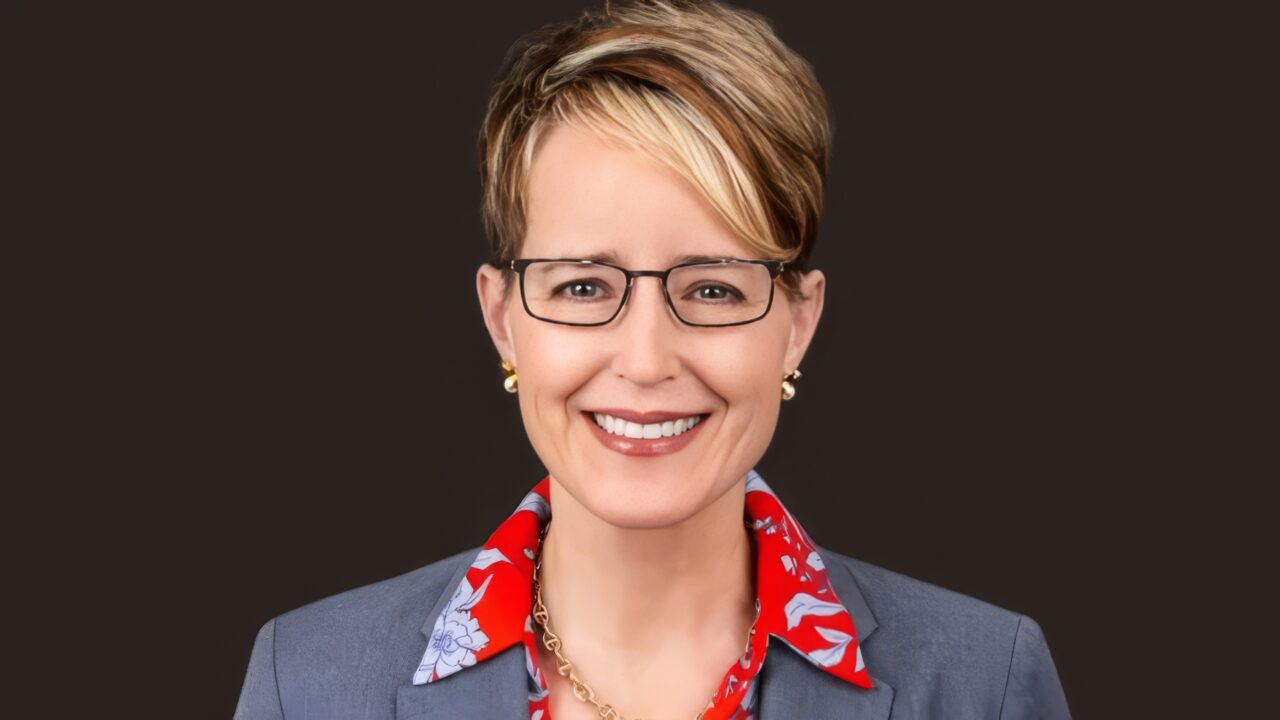
Susanna Fletcher Greer, Chief Scientific Officer of the V Foundation, shared a post on LinkedIn:
“What if remission doesn’t mean the cancer is gone, just that we can’t see it yet? The future of cancer care is moving earlier, detecting what’s invisible and acting before it’s too late.
What if remission doesn’t mean what we think it does?
For cancer patients, hearing the word remission can feel like everything. It’s the moment where the tests look clear, disease is no longer visible, and for the first time, there’s room to breathe.
But what if remission doesn’t actually mean the cancer is gone? A new V Foundation-funded study published in PNAS takes a closer look at patients with acute myeloid leukemia and reveals something both unsettling and incredibly important. Using a highly personalized blood test, V Foundation grantee Dr. Yuxuan Wang and team at The Johns Hopkins University were able to detect tiny traces of cancer that standard tests can’t. In fact, every patient in the study still had measurable disease, even when they were considered to be in remission by current clinical standards
This observation changes the conversation about remission because it suggests that what we call remission may, in some cases, be a period where the disease is still present, just hidden below the surface. That distinction matters because patients with higher levels of these previously invisible signals were far more likely to relapse. So this isn’t just about detecting cancer earlier. It’s about understanding risk in a way that allows us to act sooner.
What makes Dr. Wang’s approach powerful is how personal it is. Instead of using a one-size-fits-all test, the team built a blood test around each patient’s cancer, tracking dozens of unique markers over time. That means individual disease can be monitored continuously, without relying on repeated bone marrow biopsies. For patients, that’s a huge improvement in precision that’s also is less invasive, more dynamic, and potentially more meaningful.
There’s a bigger shift here about timing as well. Much of cancer care today is built around what we can see. We treat what is visible and we respond when something comes back. We define success based on whether disease shows up on a scan or under a microscope. But this study is further evidence that challenges that model because it suggests that the most important signals can come long before cancer is visible. And if we can detect those signals early enough, we may be able to intervene before relapse ever happens.
That is a fundamentally different way of thinking about cancer: not as something we chase, but something we anticipate. Which quite frankly, we should all have top of mind. Always.
In a recent newsletter, I wrote about how cancer may ‘decide’ where it will spread long before it gets there. This study builds on that idea in a different way. It shows that cancer may also persist long before we can detect it. Both studies point to the same conclusion: if we want to change outcomes, we have to move earlier.
This is exactly the kind of research the V Foundation is proud to support. Research that challenges how we define success, pushes us to see what was previously invisible, and ultimately gives patients a better chance not just to reach remission, but to stay there.
Find the Wang lab at Dr. Yuxuan Wang, MD, PhD – Baltimore, MD – Medical Oncology.”
Later, Susanna Fletcher Greer added:
“We’ve traditionally defined remission based on what we can see.
But what if that definition is no longer good enough? New research shows that sensitive tools can detect cancer ‘signals’ even when standard tests say disease is gone.
That suggests an important shift, that relapse may not begin when cancer becomes visible again.
It may begin much earlier, at a stage we’re only now learning how to detect. The future of cancer care may depend on how early we’re able to both see and act on those signals.
I shared more on this in this week’s newsletter…”
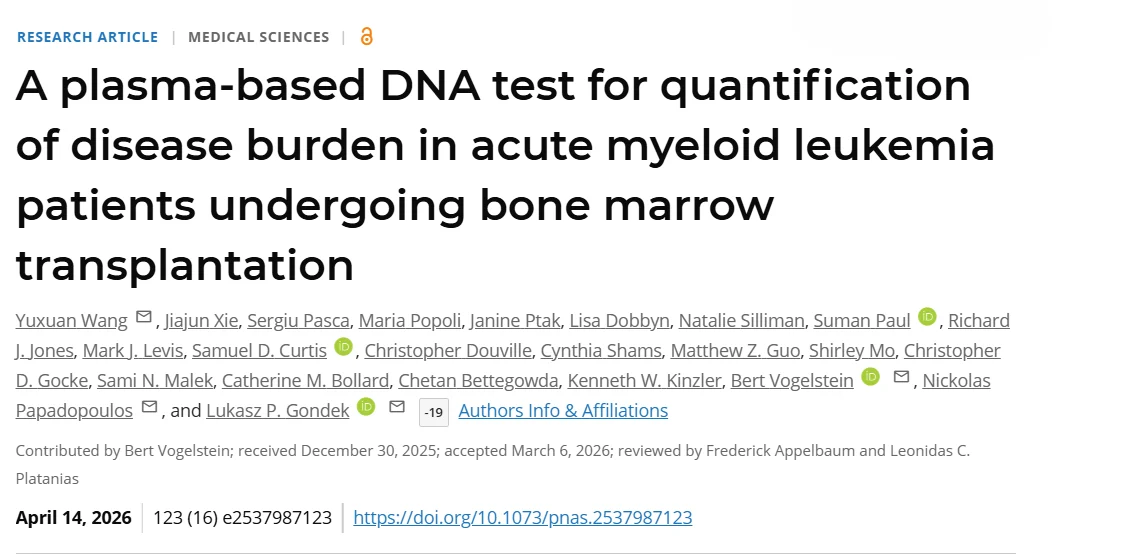
Title: A plasma-based DNA test for quantification of disease burden in acute myeloid leukemia patients undergoing bone marrow transplantation
Authors: Yuxuan Wang, Jiajun Xie, Sergiu Pasca, Maria Popoli, Janine Ptak, Lisa Dobbyn, Natalie Silliman, Suman Paul, Richard Jones, Mark Levis, Samuel Curtis, Christopher Douville, Cynthia Shams, Matthew Guo, Shirley Mo, Christopher Gocke, Sami Malek, Catherine Bollard, Chetan Bettegowda, Kenneth Kinzler, Bert Vogelstein, Nickolas Papadopoulos, Lukasz Gondek
Other articles featuring Susanna Fletcher Greer on OncoDaily.