Kefah Mokbel:
“FDA approval of gedatolisib (REVTORPYK): a new PAM-pathway option for HR-positive, HER2-negative advanced breast cancer
On 14 July 2026, the FDA approved gedatolisib (REVTORPYK), in combination with fulvestrant, with or without palbociclib, for adults with hormone receptor (HR)-positive, HER2-negative locally advanced or metastatic breast cancer without a detected PIK3CA mutation, following progression on at least one line of endocrine therapy in the metastatic setting.
Gedatolisib is a pan-PI3K/mTORC1/2 inhibitor, comprehensively blocking the PI3K/AKT/mTOR (PAM) pathway – a mechanism distinct from the more selective PI3Kα inhibitors already in use.
Approval was based on the PIK3CA wild-type cohort of the phase III VIKTORIA-1 trial (392 patients, randomised to gedatolisib plus fulvestrant plus palbociclib, gedatolisib plus fulvestrant, or fulvestrant alone), in patients who had progressed on prior CDK4/6 inhibitor plus aromatase inhibitor therapy.
Key findings:
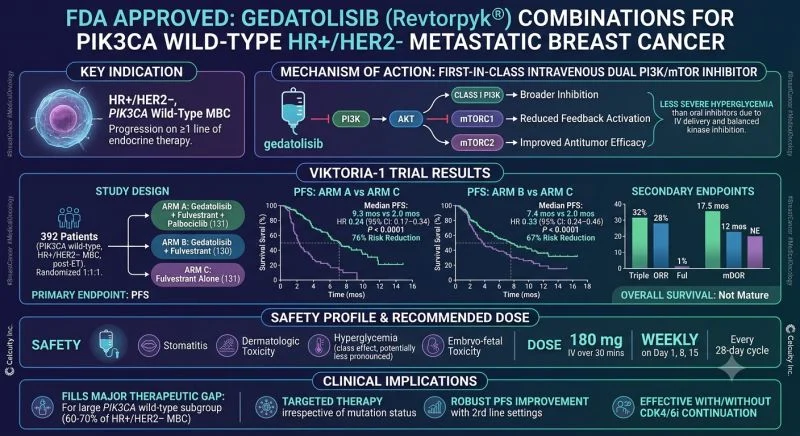
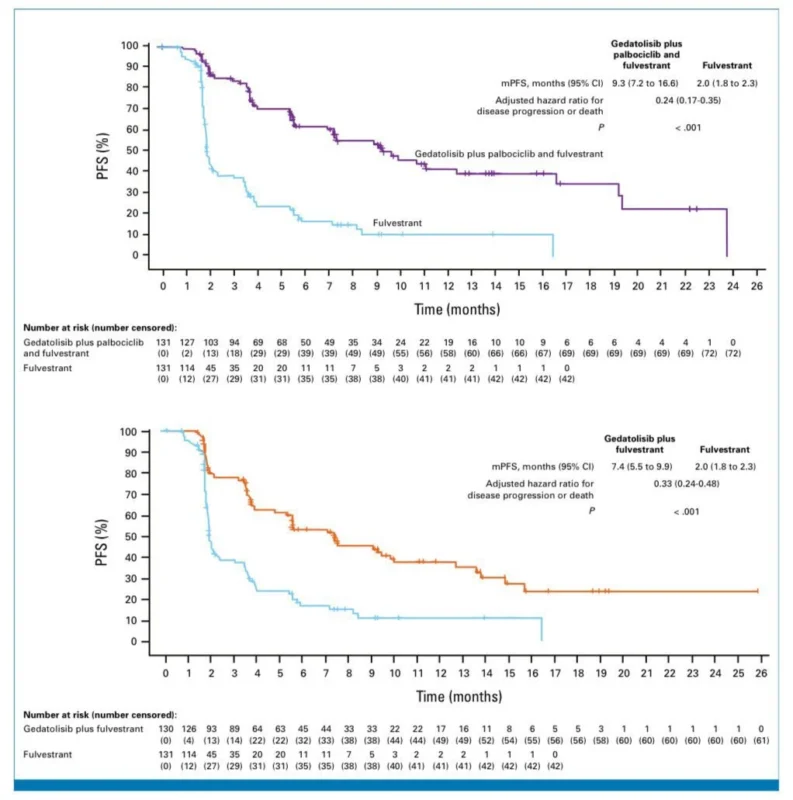
Triplet regimen (gedatolisib, fulvestrant, palbociclib): median PFS 9.3 months versus 2.0 months with fulvestrant alone (HR 0.24) – a 76% reduction in risk of progression or death.
Doublet regimen (gedatolisib, fulvestrant): median PFS 7.4 months versus 2.0 months with fulvestrant alone.
Overall survival data were not yet mature at the time of the PFS analysis.
Stomatitis was common – reported in 72% of patients on the triplet regimen, including Grade 3 events in 22% – alongside dermatologic adverse reactions and hyperglycemia; the label carries a warning for embryo-fetal toxicity.
Gedatolisib is administered as a weekly intravenous infusion, continued alongside fulvestrant, with or without palbociclib, until progression or unacceptable toxicity.
Notably, in the separate PIK3CA-mutant cohort of the same trial, the gedatolisib triplet also reduced the risk of progression or death by 50% versus alpelisib plus fulvestrant, with median PFS of 11.1 versus 5.6 months – though that indication is not part of today’s approval.
This approval adds a genuinely new mechanism of action to the HR-positive, HER2-negative treatment landscape for PIK3CA wild-type disease progressing after CDK4/6i-based therapy, an area where options have been limited. Careful proactive management of stomatitis and hyperglycemia will be key to keeping patients on treatment long enough to realise the PFS benefit.”

Harold J. Burstein:
“The FDA approves gedatolisib as 2nd line therapy in combo with fulvestrant in tumors w/o PIK3CA mutations. Median PFS F, 2.0m, F+G, 7.4m, F+G+palbo 9.3m.”
Susan G. Kome:
“New FDA approval: Gedatolisib with fulvestrant, with or without palbociclib, is now approved in the U.S. for hormone receptor-positive, HER2-negative metastatic breast cancer without a PIK3CA mutation. Backed by VIKTORIA-1 clinical trial results.
Paolo Tarantino:
“Gedatolisib now approved for PIK3CAwt ER+ MBC. Very active regimen, many open questions:
- triplet vs doublet. I’d favor doublet to optimize the benefit/risk ratio
- IV infusions clearly add burden, shared decision making is key
- if ESR1 mutant, SERD combos may be prioritized.”
MinhTri Nguyen:
“This approval adds another targeted option in a space where treatment sequencing continues to evolve. Dual PI3K/mTOR inhibition offers a different therapeutic approach and expands our options after endocrine resistance develops.
The key question now is where gedatolisib will fit into clinical practice alongside capivasertib, everolimus-based regimens, and other emerging therapies. As always, thoughtful patient selection and biomarker-driven treatment decisions will be critical.
Encouraging to see continued progress.”
Jame Abraham:
“FDA approves gedatolisib with fulvestrant, with or without palbociclib, for HR-positive, HER2-negative locally advanced or metastatic breast cancer.”
Parag Roy:
“FDA Approval Alert – A New Targeted Option for PIK3CA Wild-Type HR+/HER2− Metastatic Breast Cancer
The FDA has approved gedatolisib (Revtorpyk) in combination with fulvestrant, with or without palbociclib, for patients with HR-positive, HER2-negative locally advanced or metastatic breast cancer without a PIK3CA mutation, following progression on endocrine therapy.
This approval marks an important milestone, as it expands targeted treatment options for the majority of patients with HR+/HER2− metastatic breast cancer who are PIK3CA wild-type.
What makes gedatolisib different?
Gedatolisib is a first-in-class intravenous dual PI3K/mTOR inhibitor, targeting both: Class I PI3K. mTORC1 and mTORC2
Unlike earlier PI3K inhibitors, its activity is not dependent on PIK3CA mutations, enabling broader applicability while providing comprehensive inhibition of the PI3K/AKT/mTOR signaling pathway.
VIKTORIA-1 Trial Highlights
Study Design
- Phase III, randomized, open-label
- 392 patients with HR+/HER2− advanced/metastatic breast cancer
- PIK3CA wild-type disease
- Progression after endocrine therapy
Treatment Arms
- Gedatolisib + Fulvestrant + Palbociclib
- Gedatolisib + Fulvestrant
- Fulvestrant alone
Key Results
Triple combination
- Median PFS: 9.3 vs 2.0 months
- HR 0.24
- 76% reduction in the risk of progression or death
Double combination
- Median PFS: 7.4 vs 2.0 months
- HR 0.33
- 67% reduction in risk
Objective Response Rate
- 32% (triple therapy)
- 28% (double therapy)
- 1% (fulvestrant alone)
Overall survival data remain immature.
Safety Profile
The most common clinically relevant adverse events include:
- Stomatitis
- Dermatologic toxicities
- Hyperglycemia
- Embryo-fetal toxicity
Clinical Perspective
This approval addresses a long-standing unmet need for patients with PIK3CA wild-type endocrine-resistant HR+/HER2− metastatic breast cancer. The impressive improvement in progression-free survival reinforces the importance of continued targeting of the PI3K/mTOR pathway beyond endocrine resistance and introduces a new precision medicine strategy for a broader patient population.
It will be interesting to see how gedatolisib is integrated into future treatment algorithms and sequencing strategies alongside CDK4/6 inhibitors and emerging endocrine therapies.
What are your thoughts on where gedatolisib will fit into the evolving treatment landscape of HR+/HER2− metastatic breast cancer?”