


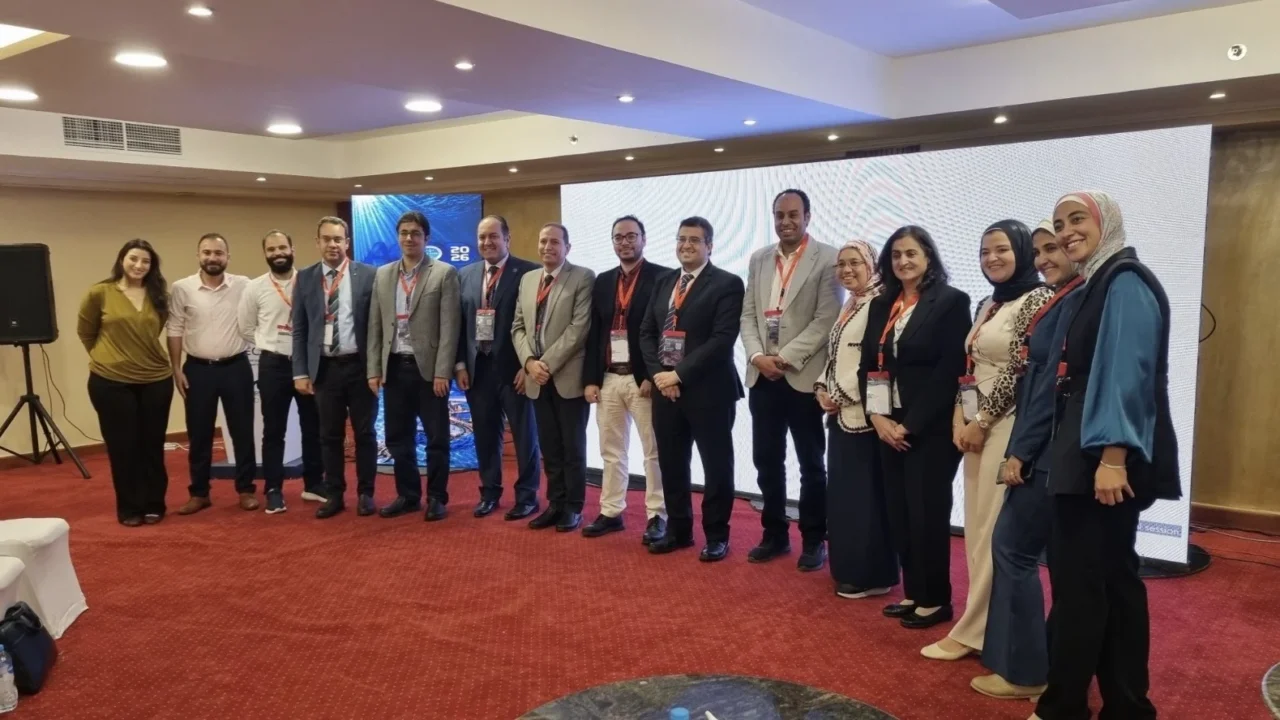
Rasha Aboelhassan, Council Member at International Association for the Study of Lung Cancer, Senior Oncology Consultant at Nasser Institute Hospital, shared on LinkedIn:
“From Global Representation to Local Impact: Our First IASLC Global Council Advisory Board – Egypt Activity
Yesterday, at the 29th Annual Scientific Conference of Alexandria Clinical Oncology Department (ACOD 2026), we took our first step towards building a stronger multidisciplinary thoracic oncology community in Egypt.
We brought together thoracic surgeons, medical oncologists, and pathologists for an open discussion covering the entire lung cancer journey – from biopsy and early diagnosis to mediastinal staging, surgery, and postoperative treatment.
Each specialty presented challenging cases, shared its perspective, highlighted real-world barriers, and discussed how these challenges could be overcome.
Two important gaps emerged throughout the discussion:
- Molecular subtype testing and its integration into treatment decisions.
- Accurate mediastinal staging and the challenges of implementing guidelines in clinical practice.
One case presented by our young oncologists Dr Eman Salah captured the essence of multidisciplinary decision-making:
A patient with T3N0M0 lung cancer and R2 resection – macroscopic residual disease after surgery.
The debate was particularly interesting:
- The surgical perspective: Is re-resection justified when a second operation may carry substantial technical difficulty and surgical risk?
- The medical oncology perspective: Can we accept leaving macroscopic residual disease when achieving complete resection might offer a better chance of disease control and potentially influence survival? Or should we approach the residual disease using treatment strategies for unresectable lung cancer?
No easy answers. Different perspectives, competing risks, and a shared responsibility to find the best strategy for the patient.
This is exactly why multidisciplinary discussions matter.
I left the session feeling genuinely proud.
This is what I wanted my role as IASLC Global Council Delegate for Egypt to mean: not simply representing Egypt globally, but creating connections, stimulating meaningful clinical discussions, and translating global knowledge into local action.
Today, we made a beginning. And there is much more to build.
Thanks for all IASLC Advisory Board members Egypt. Especial thanks for Prof Ahmed Ashour and his team from Alexandria, Prof Mohamed Farouk, Prof Amr Shafik Saad, Amany Saber, Mohamed Kamal for the fruitful discussion.”
You may also be interested in:
- Rasha Aboelhassan: What Can 5,296 Patients Teach Us About Precision Oncology in Egypt?
- IASLC Introduces the Second Thoracic Oncology Multidisciplinary Simulation Series