





Peter Ly, Assistant Professor at Children’s Research Institute at UT Southwestern, shared a post on X:
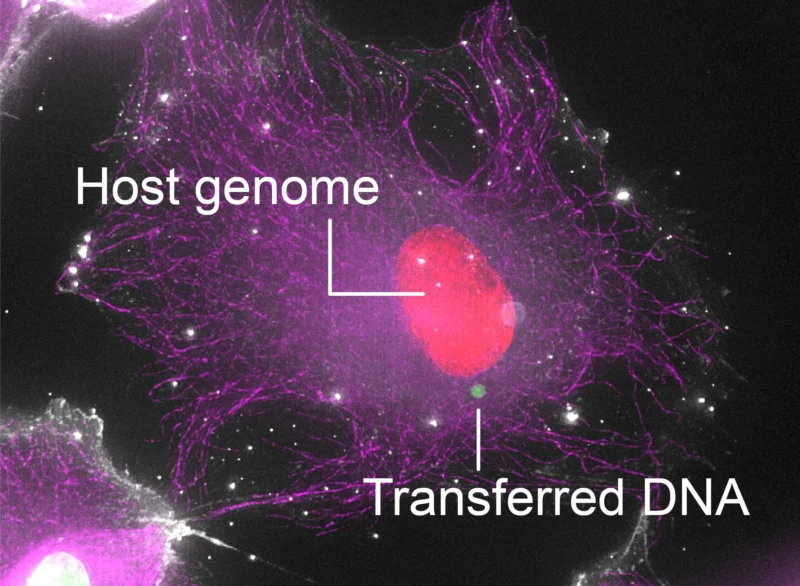
Excited to share our latest paper, out today on Cell. We found that large pieces of the human genome can transfer between cells upon direct contact, endowing recipient cells with heritable phenotypic changes.
How does it happen? DNA damage and mitotic errors can cause genomic DNA to mislocalize to the cytoplasm, allowing it to undergo intercellular transfer via cytoskeleton-based nanotube structures that connect adjacent cells.
Following transfer into the recipient cell cytoplasm, the DNA gains access to the host genome when the nuclear envelope disassembles during mitosis.
Transferred DNA fragments persist across cell divisions as heritable genetic elements, remain transcriptionally active, and can alter cellular function.
These findings challenge the assumption that somatic genomes evolve strictly through cell-autonomous mechanisms. Instead, we show that megabase-scale genomic alterations can also arise through non-cell-autonomous processes, with potential implications for cancer evolution.
Many questions remain. We now aim to define the prevalence, mechanisms, and biological impact of intercellular DNA transfer across physiological and disease contexts. We are recruiting postdocs to lead these efforts – please reach out if interested!
Congrats to grad student Lizz Maurais, who drove this project with relentless resilience alongside a remarkable team of lab members and collaborators!
Other articles on OncoDaily.