





Mohammad Jad Moussa, Postdoctoral Fellow at the Department of GU Oncology at MD Anderson Cancer Center, shared a post on X:
“Just Published in JCO Precision Oncology.
Immune Checkpoint Inhibitors in dMMR/MSI-H Advanced Upper Tract Urothelial Carcinoma (UTUC): A Distinct Population, A Remarkable Signal Co-led with Alexander Y. Andreev-Drakhlin.
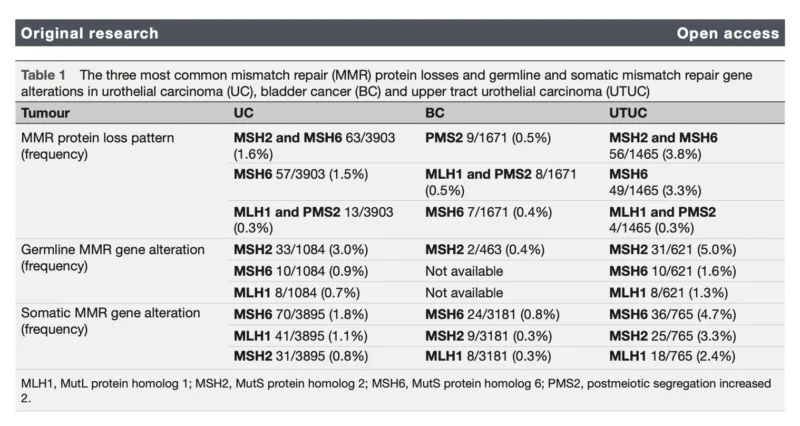
We know that dMMR/MSI-H tumors are highly immunogenic & respond well to PD-1 blockade. In UTUC, dMMR/MSI-H status is ~3x more common than in bladder cancer (High level of evidence: Meta-analysis by Elias Chandran et al, BMJ Oncol 2024).
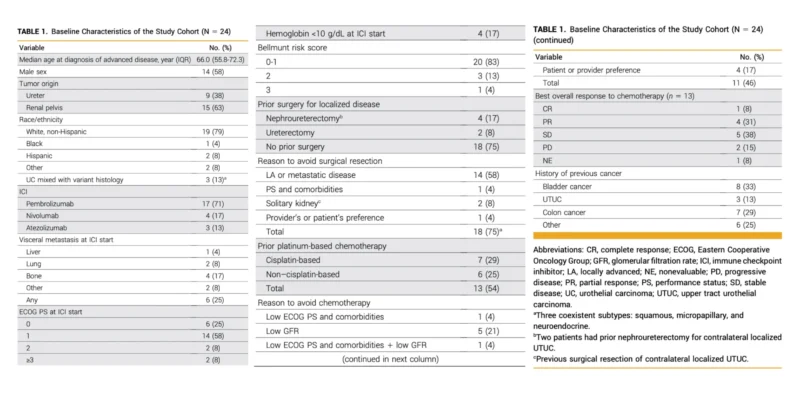
Here, we retrospectively review our cohort (2015–2024)
- n=24 All dMMR/MSI-H; 62% metastatic, 38% LA/unresectable
- 67% Lynch syndrome
- Single-agent ICI (mainly single-agent pembrolizumab, half treated in 1L setting). No tx combinations or escalation strategies.
Efficacy Signal
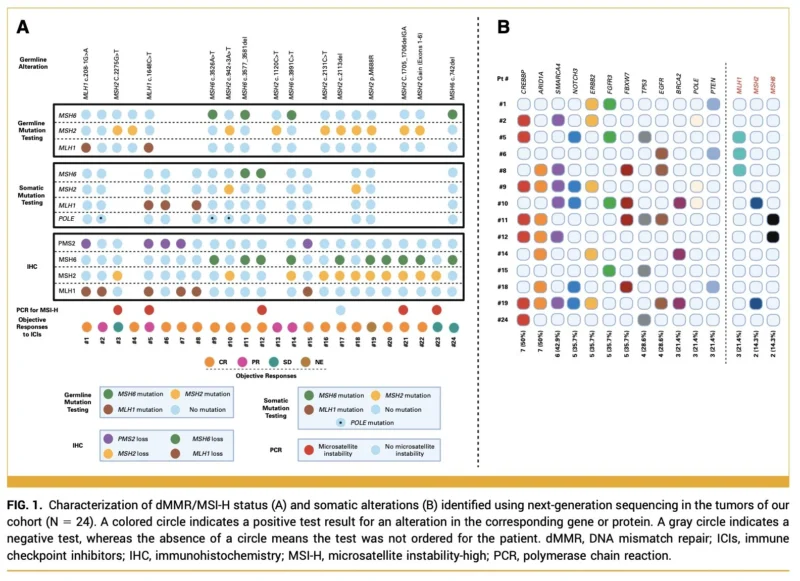
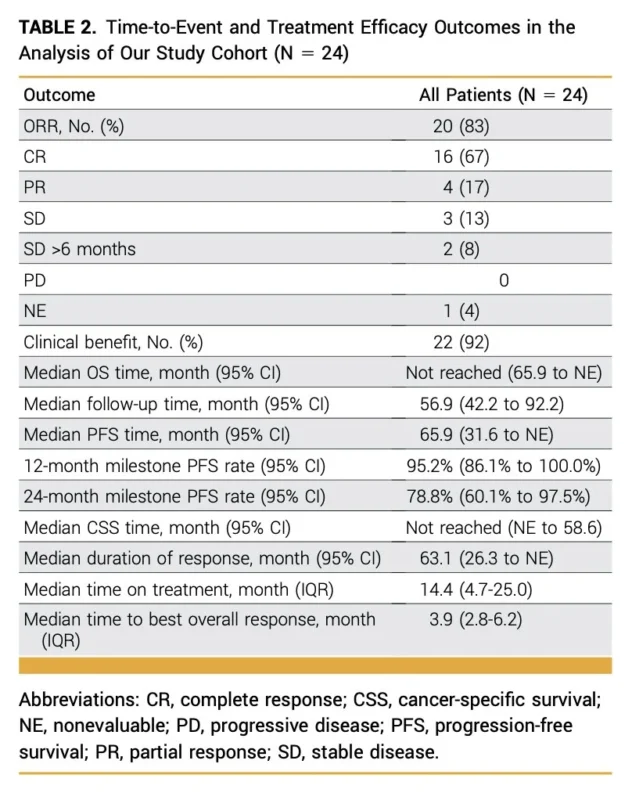
ORR 83%, radio CR rate 67%. Median time to response 4 mo. Molecular characterization of dMMR/MSI-H UTUC (mainly MSH2/MSH6 protein loss and frequently germline-associated) shows consistent MMR loss patterns and correlates with remarkably high CR rates
But the key story is DURABILITY
- Median PFS: 65.9 months; Median CSS: NOT reached
- 12-mo PFS: 95%; 24-mo PFS: 79%
- Median OS: NOT reached
These are not just deep responses, they’re long-lasting remissions.
Long-term signal:
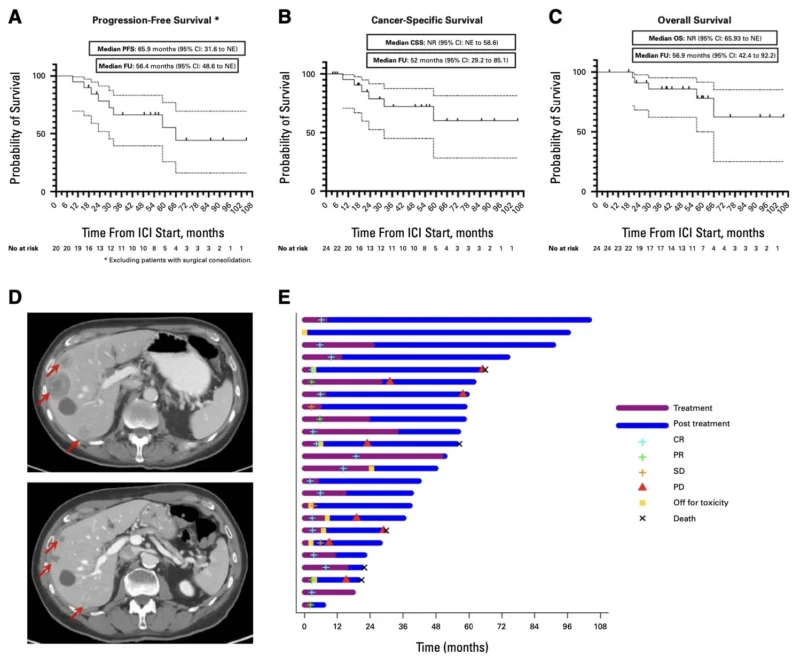
About 42% of patients remain progression-free at 4 years! Given historical outcomes in UTUC, this suggests we are looking at a fundamentally different disease trajectory in this subgroup.
A notable observation is that many patients discontinued ICIs due to toxicity, completion, or surgery – not progression. Despite this, responses were maintained, raising important questions about how long we truly need to treat!
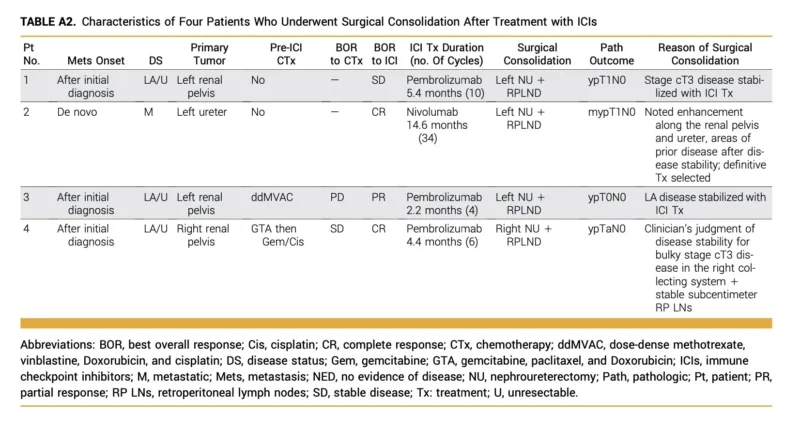
Some patients went on to surgical consolidation with low-stage or even pathologic complete responses. This suggests that immunotherapy may convert some cases to operability and opens the door to organ-preserving strategies!
Toxicity
Grade ≥3 immune-related adverse events occurred in about one-third of patients (33%). These were manageable but clinically meaningful, reinforcing the importance of defining optimal treatment duration.
Genetics
~2/3rds of patients had Lynch syndrome: not just a treatment signal but also a hereditary cancer signal implying genetic counseling & family screening
Importance of early dMMR/MSI-H testing in UTUC for treatment selection, sequencing & germline evaluation!
Limitations of our study include its single-arm, non- randomized design without a chemotherapy comparator, small sample size, retrospective single-center nature, and inherent susceptibility to selection and confounding biases
I am very grateful to my mentors UT MD Anderson for their continued support, our co-authors for their valuable contributions, our patients & patient advocates (Katie Coleman), our professional society ASCO (& affil. Conquer Cancer, the ASCO Foundation) for championing rare GU cancer research.”
Title: Efficacy of Immune Checkpoint Blockade in Advanced Upper Tract Urothelial Cancer With DNA Mismatch Repair Deficiency or Microsatellite Instability
Authors: Mohammad Jad Moussa, Alexander Y. Andreev-Drakhlin, Aradhana M. Venkatesan, Surena F. Matin, Lianchun Xiao, Rebecca S.S. Tidwell, Amishi Y. Shah, Ana C. Adriazola, Leah Shaw, Jianjun Gao, John K. Lin, Sangeeta Goswami, Pavlos Msaouel, Charles C. Guo, Nizar M. Tannir, Arlene O. Siefker-Radtke, Omar Alhalabi, Matthew T. Campbell
Read the Full Article.
Other articles featuring Mohammad Jad Moussa.