





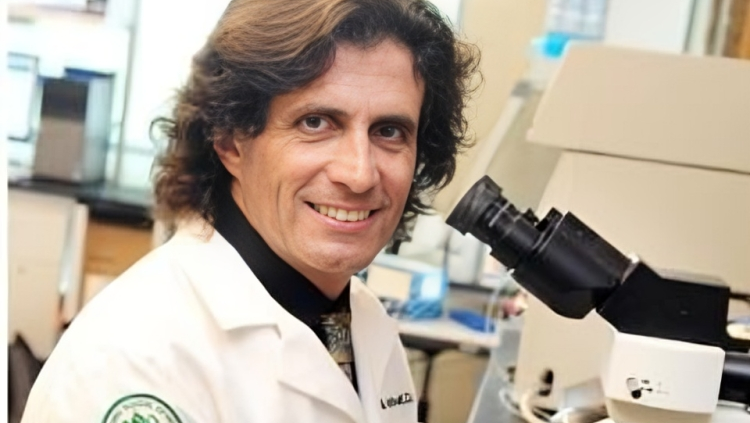
Michele Carbone, Director of Thoracic Oncology Program at the University of Hawaii Cancer Center, shared a post on LinkedIn:
“This morning I was woken up at 6:30 am by the committee of the NFCR Szent-Gyorgyi Prize award that told me that I was the winner for 2026. Incredible!
Of course I won because of a fantastic team of colleagues and friends who worked with me for many years.
Below the AI description of this award.
The Szent-Györgyi Prize is considered one of the most prestigious honors in oncology because it recognizes scientific breakthroughs that have directly transformed how cancer is understood, prevented, or treated.
Key reasons for its high standing in the scientific community include:
Honoring a Nobel Legacy: The award is named after Dr. Albert Szent-Györgyi, a 1937 Nobel Laureate who co-founded the National Foundation for Cancer Research (NFCR). It is designed to uphold his vision of curing cancer through innovative, ‘high-risk’ basic research.
Emphasis on High-Impact Breakthroughs: Candidates must have made an original discovery with a “high direct impact” on saving lives. Past winners include pioneers like James P. Allison, whose work led to the first immune checkpoint blockade therapy, and Mary-Claire King, who proved the genetic link to breast cancer.
Peer-Driven Selection: Winners are selected by a committee of world-renowned scientific leaders. A unique tradition that adds to its prestige is that the previous year’s winner typically serves as the Chair of the Selection Committee for the following year.
Focus on Fundamental Science: Unlike many clinical awards, this prize specifically highlights the essential role of ‘bench-to-bedside’ research, rewarding scientists who translate complex molecular mysteries into tangible patient therapies.
Recent Szent-Györgyi Prize Winners (2020 – 2025):
- 2025: Anthony R. Hunter – Discovered tyrosine phosphorylation, providing the molecular blueprint for modern targeted cancer therapies.
- 2024: Dennis J. Slamon – Identified the HER2 gene amplification in breast cancer, leading to the development of Herceptin.
- 2023: Isaac P. Witz – Pioneered the study of the tumor microenvironment, shifting focus to how cells surrounding a tumor influence its growth.
- 2022: Rakesh K. Jain – Discovered how to “normalize” tumor blood vessels to improve the delivery of chemotherapy and immunotherapy.
- 2021: Mark M. Davis and Tak W. Mak – Cloned the T-cell receptor genes, which laid the foundation for modern T-cell-based immunotherapies.
- 2020: Susan Band Horwitz – Unlocked the mechanism of Taxol, one of the most widely used chemotherapy drugs for breast, lung, and ovarian cancers.
Landmark Past Winners:
- 2018: Douglas R. Lowy and John T. Schiller – Developed the HPV vaccine, which prevents nearly all cervical cancers.
- 2016: Mary-Claire King – Discovered the BRCA1 gene, proving that breast cancer can be inherited.
- 2014: James P. Allison – Developed ‘checkpoint inhibitor’ immunotherapy; he later won the 2018 Nobel Prize.
- 2007: Webster K. Cavenee – Provided the first genetic evidence for tumor suppressor genes.”
Other articles featuring Michele Carbone on OncoDaily.