Calculators
 OncoCalendar






Muna Al-Khaifi, GP Oncologist at Mount Sinai Hospital (Toronto), Sinai Health. This article explores how menopausal symptoms affect cancer survivors compared with women without a history of cancer, focusing on symptom severity, quality of life, and sexual function. The findings highlight that cancer survivors experienced more frequent and severe vasomotor symptoms, particularly hot flushes, while psychological and somatic symptoms were often less severe. The article also examines common sexual health concerns, including vaginal dryness, loss of sexual interest, and physical difficulties with sexual activity, emphasizing the need for individualized and safe approaches to managing menopause after cancer treatment.
Menopausal symptoms and their impact on quality of life and sexual function in cancer survivors
We may think of menopause as a natural stage of aging, but how might this experience change when it occurs during or after cancer treatment, and do cancer survivors face different or more severe symptoms than women without a history of cancer?
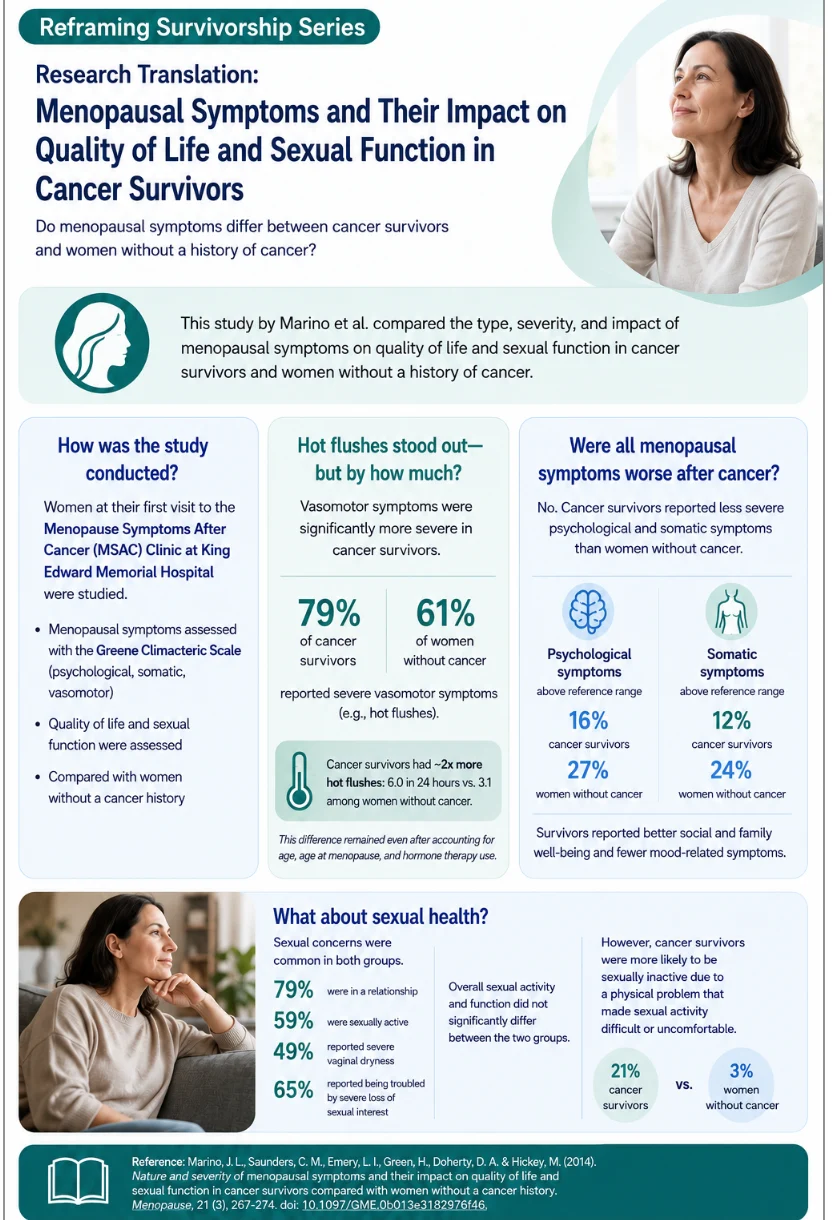
This research translation summarizes the study by Marino et al., Nature and Severity of Menopausal Symptoms and Their Impact on Quality of Life and Sexual Function in Cancer Survivors Compared With Women Without a Cancer History. The study explores whether menopausal symptoms differ between cancer survivors and women without a history of cancer, with a particular focus on the type and severity of symptoms and their impact on quality of life and sexual function.
How was the study conducted?
Researchers collected information from women attending their first visit at the multidisciplinary Menopause Symptoms After Cancer Clinic. Menopausal symptoms were assessed using the Greene Climacteric Scale, a validated questionnaire measuring psychological, physical, and vasomotor symptoms.
Researchers also assessed participants’ quality of life and sexual function, including their current sexual activity status, and compared findings with women without a cancer history.
Hot flushes stood out – but by how much?
One of the clearest differences involved vasomotor symptoms, such as hot flushes. Seventy-nine percent of cancer survivors reported severe vasomotor symptoms compared with 61% of women without cancer.
Cancer survivors also experienced approximately twice as many hot flushes, averaging 6.0 in 24 hours compared with 3.1 among women without cancer. They were also more likely to experience severe or very severe hot flushes. Importantly, the greater likelihood of severe vasomotor symptoms remained even after researchers accounted for factors such as age, age at menopause, and current hormone therapy use.
Table 1. Vasomotor symptoms: menopause clinic and menopause symptoms after cancer clinic at King Edward Memorial Hospital
Were all menopausal symptoms worse after cancer?
Interestingly, no. Cancer survivors actually reported less severe psychological and somatic symptoms than women without a cancer history.
- 16% of cancer survivors versus 27% of noncancer participants scored above the reference range for psychological symptoms.
- Cancer survivors were also less likely to report severe mood swings, irritability, and sadness and reported better social and family well-being.
- 12% of survivors compared with 24% of noncancer participants scored above the reference range for somatic symptoms.
What about sexual health?
- Sexual concerns were common regardless of cancer history. Although 79% of participants were in a relationship, only 59% were sexually active. Severe vaginal dryness affected 49% of the overall study population, while 65% reported being troubled by severe loss of sexual interest.
- Overall sexual activity and function did not significantly differ between the two groups. However, there was one important distinction: cancer survivors were much more likely to say they were sexually inactive because of a physical problem that made sexual activity difficult or uncomfortable—21% compared with only 3% of women without cancer.
What can we take away from these findings?
Cancer survivors are more troubled by vasomotor symptoms than noncancer participants, while psychological and somatic symptoms were often less severe than among women without cancer.
At the same time, vaginal dryness, loss of sexual interest, and other sexual concerns were common across both groups. Comprehensive cancer care should consider not only survival, but also the symptoms that can continue to affect a person’s comfort, relationships, sexuality, and overall quality of life.
Where should research go next?
The findings raise an important question: if menopausal symptoms affect cancer survivors differently, how can care be better tailored to their needs?
Future research should prioritize:
- More diverse cancer populations: Nearly 90% of cancer survivors in this study had a history of breast cancer, so research should include survivors of gynecological, colorectal, hematological, and other cancers.
- Greater ethnic and cultural diversity: Because menopausal experiences can vary across ethnic and cultural groups, more representative studies are needed.
- Understanding sexual health concerns: Although overall sexual dysfunction did not differ by cancer history, cancer survivors were more likely to report physical problems that made sexual activity difficult or uncomfortable. Qualitative research could help identify what these barriers are and how best to address them.
- Developing safe treatments: Many breast cancer survivors may need to avoid hormonal therapies. Research should therefore evaluate safe and effective non-hormonal approaches for managing hot flushes, vaginal symptoms, and other menopausal concerns.
The Bottom Line
Menopause after cancer is not simply “menopause as usual.” Cancer survivors experienced more frequent and severe hot flushes, while women without cancer reported greater psychological and somatic symptoms. Sexual concerns, including vaginal dryness and loss of sexual interest, were common in both groups.
Better understanding which symptoms survivors experience, and why, can support the development of individualized, evidence-based, and safe treatments that improve quality of life beyond cancer survival.
Reference
Marino, J. L. , Saunders, C. M. , Emery, L. I. , Green, H. , Doherty, D. A. & Hickey, M. (2014). Nature and severity of menopausal symptoms and their impact on quality of life and sexual function in cancer survivors compared with women without a cancer history.
You can also read: Muna Al-Khaifi: What BRCA1 and BRCA2 Testing Reveals About Lifetime Cancer Risk