






Karamvir Yadav, Medical Oncologist at Harish Renova Hospital, shared a post on LinkedIn:
“Can we reduce corticosteroid exposure without compromising CINV control?
The DESCEND Phase III trial, published in the Journal of Clinical Oncology, provides compelling evidence that we can.
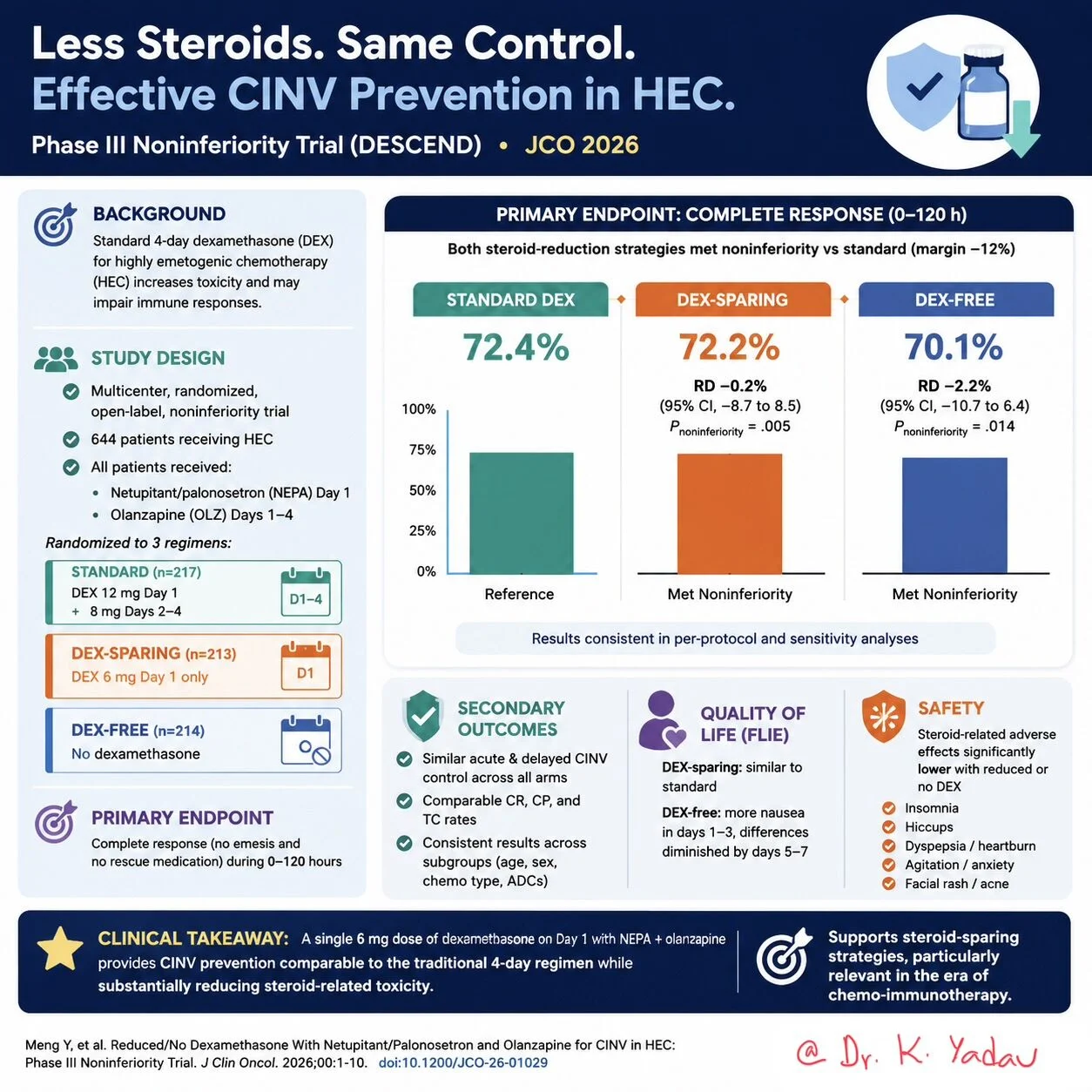
In patients receiving highly emetogenic chemotherapy (HEC), reducing dexamethasone to a single 6 mg dose on Day 1, when combined with netupitant/palonosetron (NEPA) and olanzapine, achieved noninferior prevention of chemotherapy-induced nausea and vomiting (CINV) compared with the conventional 4-day dexamethasone regimen.
Key Findings
Complete response (0–120 h):
- Standard DEX: 72.4%
- Single-day DEX: 72.2%
- DEX-free: 70.1% (also met noninferiority)
Significant reduction in steroid-related adverse effects:
- Insomnia
- Hiccups
- Dyspepsia/heartburn
- Agitation/anxiety
The DEX-sparing regimen maintained quality of life comparable to standard treatment, while complete omission of dexamethasone resulted in slightly higher early nausea.
Why this matters
As immune checkpoint inhibitors and antibody-drug conjugates become increasingly integrated into cancer treatment, minimizing unnecessary corticosteroid exposure is an important goal. This study supports steroid-sparing antiemetic strategies without sacrificing efficacy and may influence future supportive care guidelines.
While additional studies are needed in larger chemo-immunotherapy populations, the DESCEND trial represents an important advance in optimizing supportive oncology care.
How are you approaching dexamethasone de-escalation in your practice for patients receiving highly emetogenic chemotherapy?”
Other articles featuring Karamvir Yadav on OncoDaily.