






Jordan Johnson, Founder and Principal at Bridge Oncology and Legal Data Expert, shared a post on LinkedIn:
”2026 just exploited the issue and the fractures:
Radiation oncology may be entering its ‘Deepwater Horizon’ moment – not because of one catastrophic event, but because of years of small, rationalized decisions made inside a reimbursement and operational model that no longer works.
Consider the current U.S. landscape:
- ~3,900 megavoltage treatment machines
- ~2,300-2,800 radiation oncology sites
- ~11-12 LINACs per million population
- ~1.75 million theoretical annual treatment course capacity
- More than half of the world’s proton therapy capacity resides in the U.S.
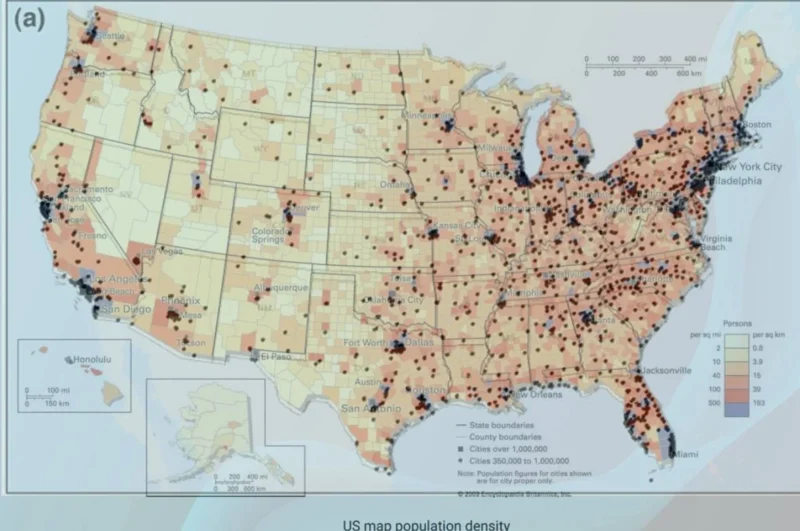
Yet despite extraordinary infrastructure density, many departments are facing severe margin compression. Why?
Because the economics that originally justified the infrastructure changed faster than the infrastructure itself.
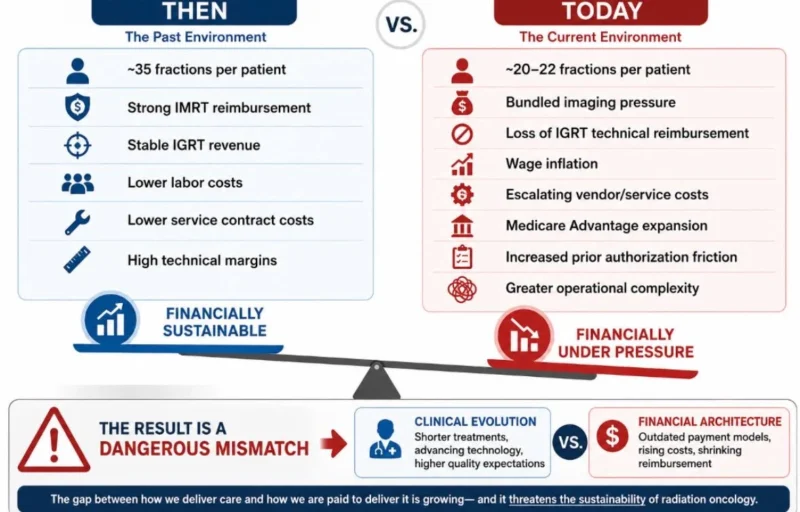
The result is a dangerous mismatch between: Clinical evolution and financial architecture.
The 2026 CPT restructuring did not create the problem. It exposed it.
For years, the industry rationalized warning signs:
- ‘Volume will make up for it.’
- ‘We can expand into another market.’
- ‘We’ll optimize later.’
- ‘The technology will justify itself.’
But fixed-cost infrastructure does not adapt quickly when reimbursement compresses and fractions decline.
And this is where the conversation around total cost of care and Certificate of Need (CON) laws becomes much more complicated than simply ‘more competition’ versus ‘less competition.’
Because total cost of care is not just reimbursement per fraction.
It includes:
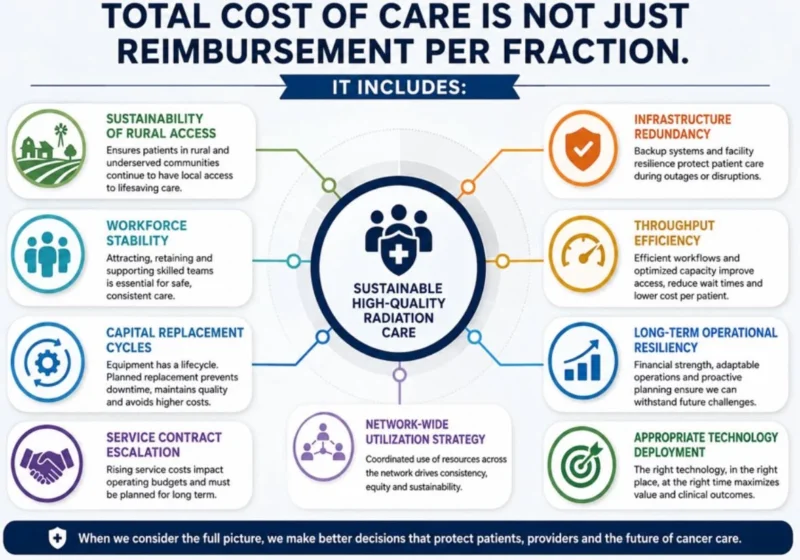
So, which of the above weren’t considered? At some point, the question becomes:
Does unlimited duplication of high-fixed-cost radiation infrastructure actually increase total healthcare costs while destabilizing long-term access?
Especially when:
- Machine utilization is declining overall, plus number of machines that need to be replaced
- Centers require higher patient volumes just to break even
- Vendor costs continue escalating
- Staffing shortages persist
- Capital deployment assumptions were built on a 2005 reimbursement environment, not a 2026 environment
The uncomfortable reality: The U.S. likely does not have a radiation oncology access problem nearly as much as it has a radiation oncology infrastructure utilization problem.
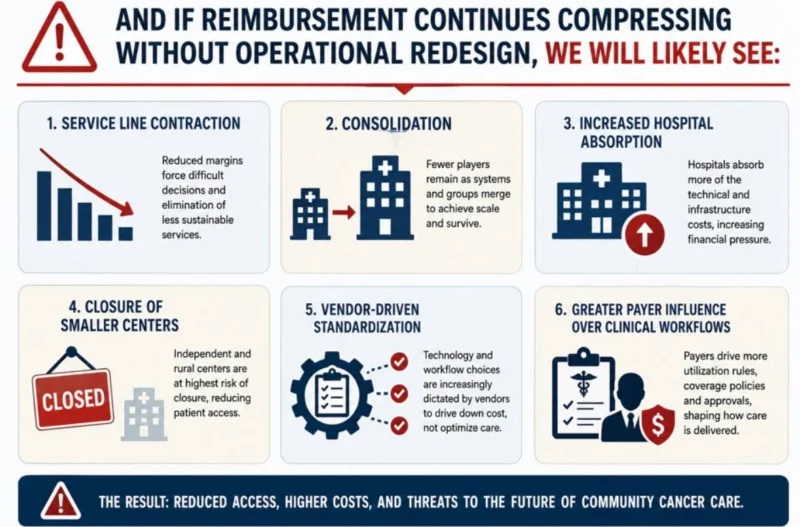
And if reimbursement continues compressing without operational redesign, we will likely see:
The next decade in radiation oncology will not be defined by who has the newest machine.
It will be defined by who can align: Clinical care, Operational discipline, Capital deployment, Policy trajectory, and total cost of care realities.
Because margin compression is no longer a temporary disruption.
It is now a structural signal.
Bridge Oncology operates with a level of understanding that extends far beyond traditional consulting. Our team evaluates radiation oncology through the combined lens of clinical operations, reimbursement methodology, health policy, technology deployment, payer behavior, workflow engineering, and long-term financial sustainability.
We understand not only how departments function today, but how changing reimbursement structures, workforce pressures, capital demands, and operational complexity reshape the future of cancer care delivery.
This depth of experience allows Bridge Oncology to identify risks, create actionable strategies, and help organizations build resilient, sustainable oncology service lines.”
Other Articles Featuring Jordan Johnson on OncoDaily.