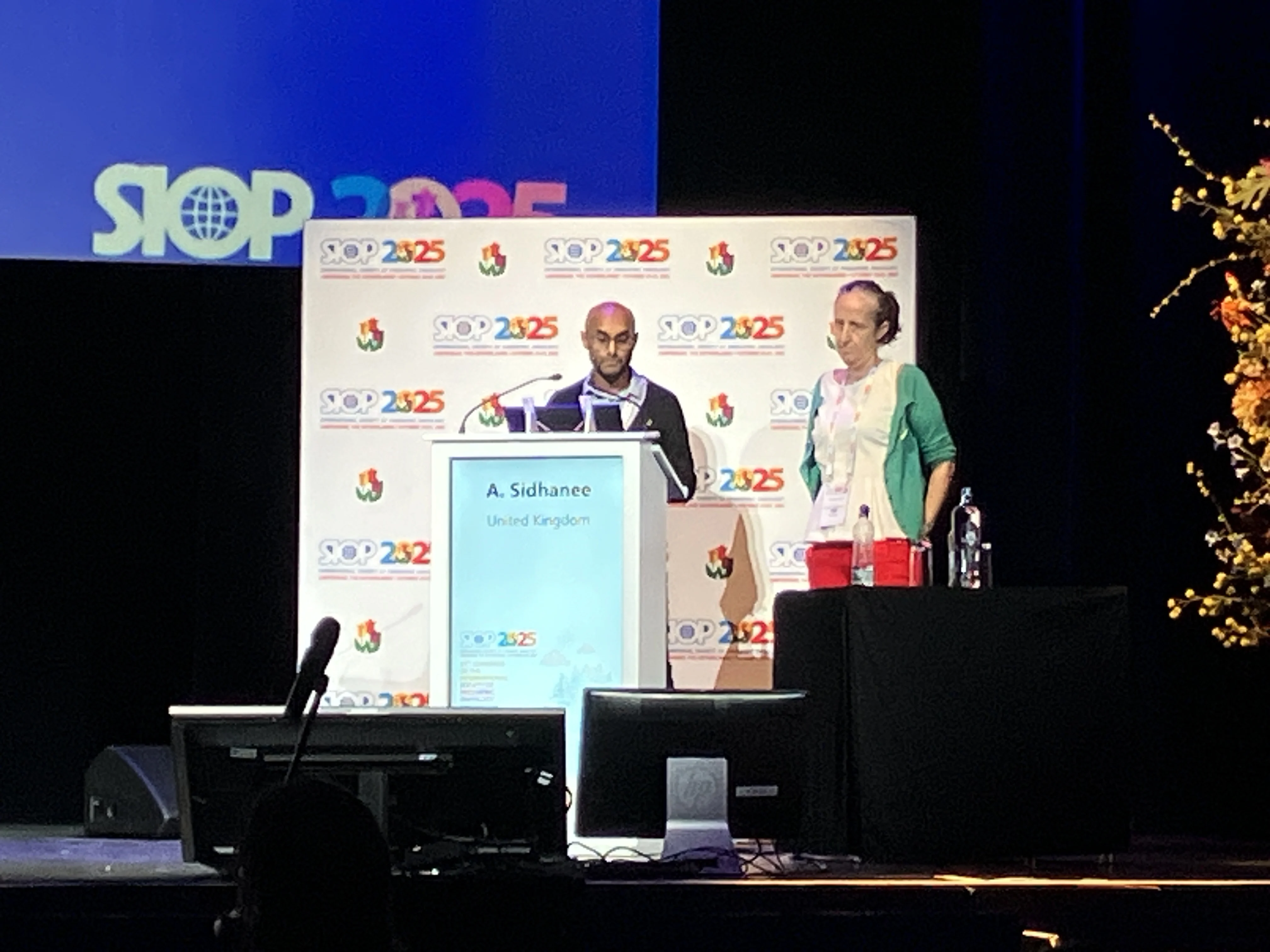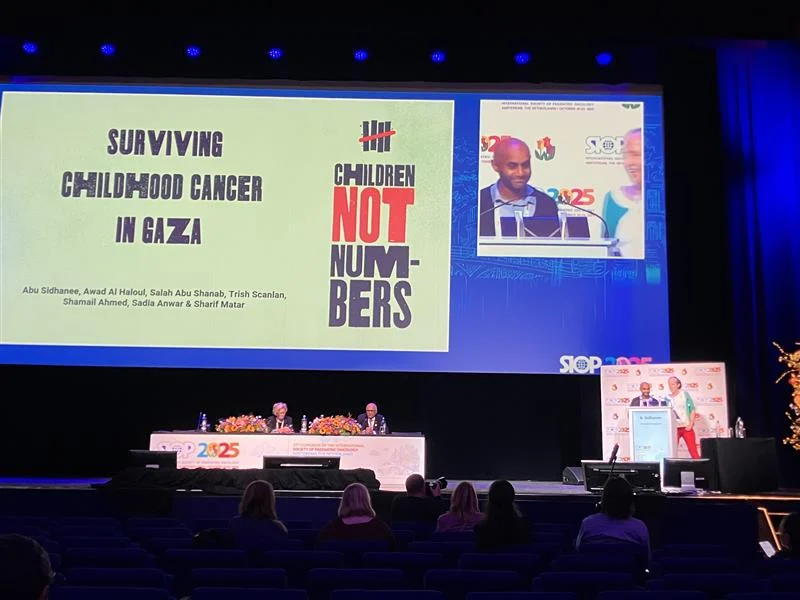
At the annual International Society of Paediatric Oncology (SIOP) Congress in Amsterdam, Maite Gorostegui (a paediatric oncologist from Barcelona, Spain) and I were fortunate to attend the SIOP Award Session, which included a presentation, “Surviving childhood cancer in Gaza: the experience of the NGO Children Not Numbers”. This was presented by a good friend, Abu Sidhanee (paediatric oncology physiotherapist) and Trish Scanlan (paediatric oncologist).
They described the current situation in Gaza for children with cancer and their families, as well as the clinicians and allied health workers that are looking after them, on behalf of the organisation Children Not Numbers, a Belgian and UK registered non-governmental organisation, was set up to support and improve the lives of Gaza’s children through a holistic model of care that includes medical treatment, rehabilitation, education, and psychosocial support.
Many of the devastating points that we heard were:
- There are people in Gaza who have been displaced 9 times
- The situation in Gaza has created a new medical acronym: WCNSF – Wounded Child, No Surviving Family
- The one children’s hospital has repeatedly been hit by bombs. It was partially functioning, but is now completely out of service
- Many families are starving
- Evacuating children with cancer is extremely difficult, and there are many cases of children and their immediate family not being allowed to leave.
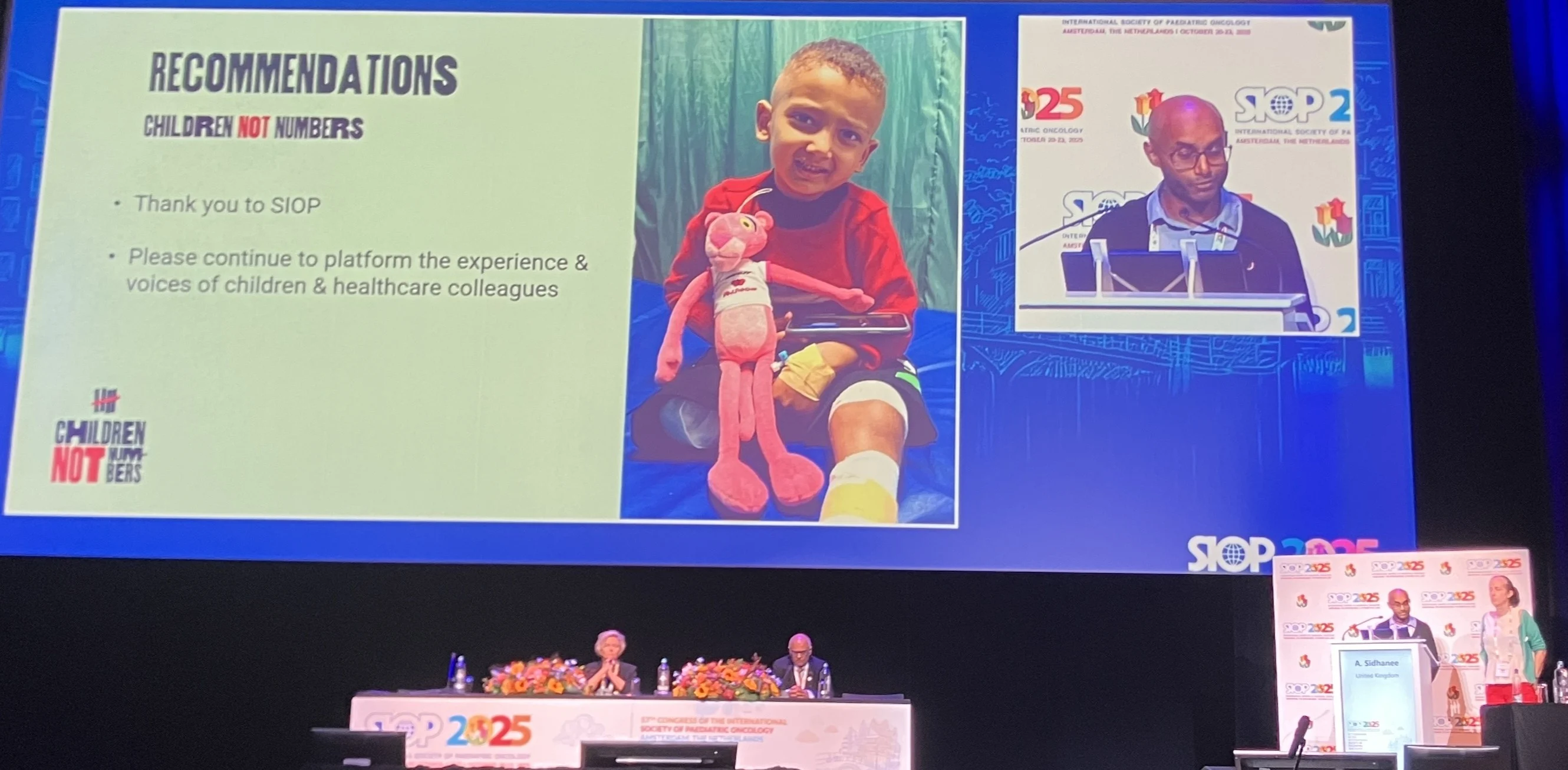
I spoke to Abu after the congress and asked him why he and Trish decided to submit this abstract. He told me “We noticed that very little was being spoken about children with cancer in Gaza and the medical and health care staff treating them, so their stories and voices appeared to be going unheard. As advocates for children with cancer, we felt it was a moral and professional responsibility to share their experiences and tell the stories of our colleagues caring for them. We put in an abstract because it was vitally important to bring this topic to the attention of the global paediatric oncology community.”
The Tracks of My Tears
Many of us in the audience were moved; several were in tears, including Maite and I. As a parent, it was hard to take in the enormity of the situation. At the end, there was a long-standing ovation. In the seven SIOP Annual Congresses I have attended, I have never seen such a response.
Why was it so powerful?
- The presentation was delivered by experts in childhood cancer who are also well-connected with those in place on the ground.
- It focused on specific challenges and current actions by clinicians and staff to mitigate the desperate situation for the children and families.
A paediatric oncologist’s view
Maite Gorostegui: We have been discussing the importance of having a space in our paediatric oncology community to regularly meet and talk about children with cancer in war zones, and how we as clinicians, and as citizens, can support them in a meaningful way. Spain and some other countries have taken childhood cancer evacuees from conflict zones. I have always thought it is a privilege to take care of them, but at the same time I see we have the capacity to help more.
Patient advocate and parent’s view
Neil Ranasinghe: I have been a patient advocate for many years. I have been advocating for children with cancer and their families in resource-limited settings to improve services e.g., better documentation, access to clinical trials, and more research into infections. But the situation in Gaza is so desperate. None of that applies when hospitals are repeatedly being shelled, many children are starving, and health care workers are routinely being killed.
Dire situation
Children with cancer and their families, along with the clinicians and health workers looking after them, are amongst the many victims of this conflict.
We share this information with you so you can appreciate the struggle of the children, families, and health professionals delivering care the best they can, and trying their hardest to strive for survival despite the danger and risks.
Read more about the great work that Children Not Numbers is doing here.
Look out for a forthcoming interview with Children Not Numbers clinicians currently working in Gaza.
Written by Neil Ranasinghe, Patient Advocate and Lead Technical Author.
You can find more posts featuring Neil Ranasinghe on OncoDaily.