Fabio Ynoe de Moraes, Associate Professor at Queen’s University, shared on LinkedIn:
“The Pope’s lung cancer diagnosis raises a question that extends far beyond the Vatican: Who gets a chance to be cured?
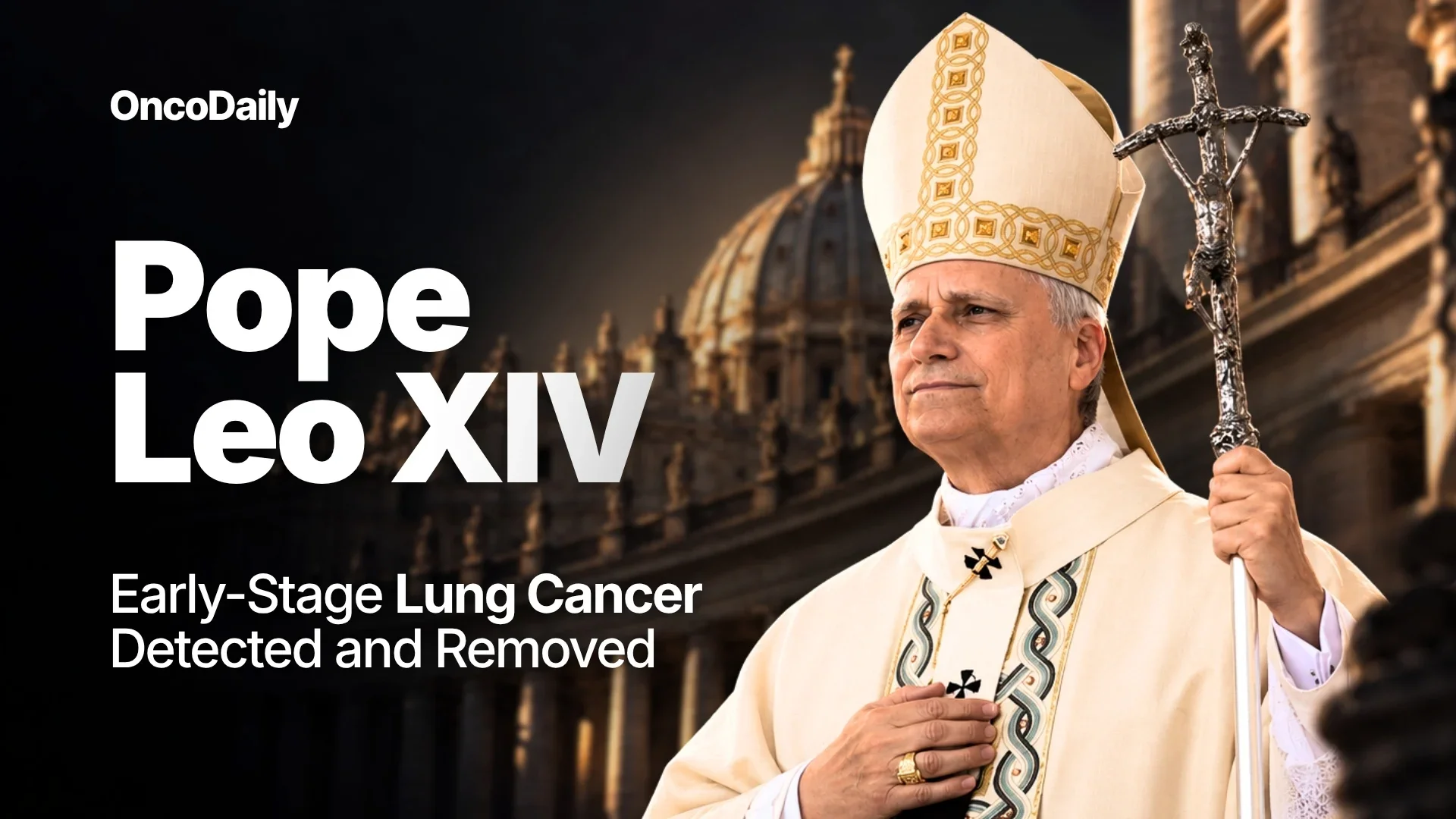
Pope Leo XIV has undergone successful surgery for lung adenocarcinoma, with removal of the right lower lung lobe.
Fortunately, the lesion was reportedly detected early. Although final pathological staging remains pending, early detection and access to potentially curative treatment are encouraging.
His diagnosis has also reignited an important discussion in thoracic oncology: Surgery or stereotactic body radiotherapy (SBRT/SABR)?
Here are five things worth understanding.
- Early-stage lung cancer can be cured.For patients with localized non-small-cell lung cancer, surgery remains the established standard for medically operable disease. SBRT offers another potentially curative option, particularly for patients who are medically inoperable or at increased surgical risk.
- SBRT is not simply a treatment for patients who cannot undergo surgery.It delivers highly precise, ablative doses of radiation, usually over 1-5 treatments. Selected patients who are surgical candidates may also consider SBRT after multidisciplinary discussion.
- The evidence is evolving.Randomized comparisons have been challenging, with several trials closing early because of poor accrual.The ongoing phase III VALOR trial (NCT02984761), led by Drew Moghanaki and colleagues, is evaluating surgery versus SBRT in operable stage I NSCLC. Its findings should help clarify comparative survival and other clinically important outcomes.
- The best treatment is not necessarily the same for every patient.Tumor size and location, pulmonary reserve, comorbidities, life expectancy, treatment risks, and patient preferences should guide decisions.The objective is not to defend surgery or radiotherapy. It is to deliver the best possible outcome for each patient.
- But the greatest challenge may be global access.While specialists debate which curative treatment is superior, millions of people worldwide live in health systems where timely diagnosis, thoracic surgery, modern radiotherapy, or multidisciplinary cancer care may be unavailable.
For many patients, the question is not surgery versus SBRT.
It is whether either treatment is accessible before the cancer becomes incurable.
The Pope’s diagnosis offers an opportunity to raise awareness about early detection, equitable access to cancer treatment, and the importance of investing in comprehensive cancer systems.
As clinicians and researchers, our responsibility extends beyond identifying the best treatment.
‘We must ensure that where someone lives does not determine whether they have an opportunity for cure.’
Wishing Pope Leo XIV a full and speedy recovery.”
You can also read: Pope Leo XIV Lung Cancer Diagnosis: Surgery, Prognosis and Survival Rates