





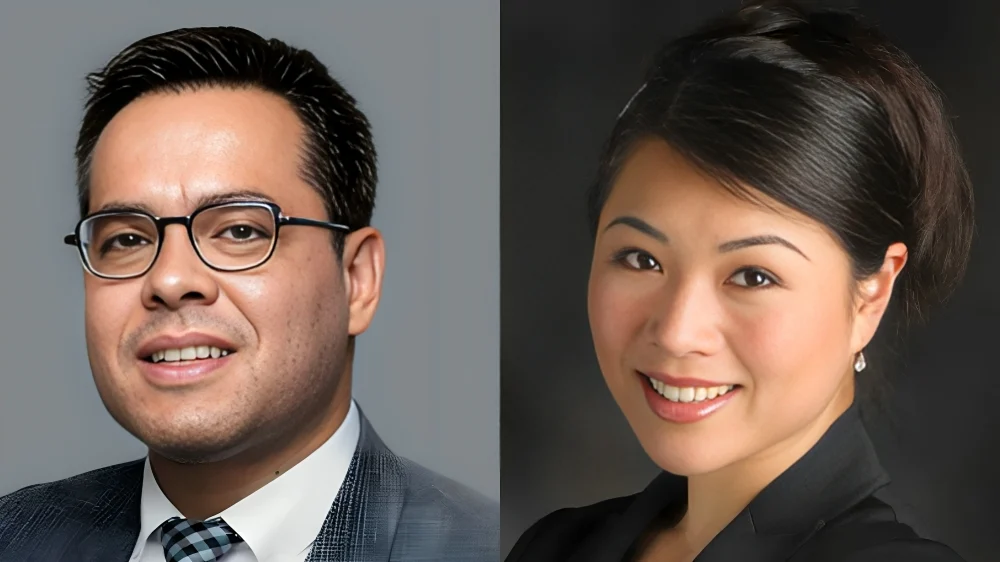
Fabio Ynoe de Moraes, Associate Professor at Queen’s University, Deputy Editor of JCO Global Oncology, shared a post by Caroline Chung, Vice President and Chief Data and Analytics Officer at MD Anderson Cancer Center, on LinkedIn, adding:
“Honored to have contributed to this National Academies workshop, convened by the National Cancer Policy Forum.
One challenge named in the report deserves far more attention than it gets: the accuracy of AI output when evidence and practice guidelines are changing rapidly.
This is oncology’s signature problem. In most of medicine, a model degrades because the data drifts. In cancer care, a model can degrade because we were right; a trial reads out, a guideline moves, and a system trained on last year’s standard of care is now confidently recommending yesterday’s medicine. The model didn’t fail. The field advanced.
Every regulatory framework we have assumes a static product evaluated once. Oncology needs the opposite: continuous validation, transparent monitoring, and the institutional willingness to retire a tool that is still performing exactly as designed.
That is the innovation frontier, and it is a policy problem before it is a technical one. The US has the trial infrastructure, the guideline bodies and the regulatory capacity to solve it first and whoever solves it defines the standard everyone else adopts.
Curious what colleagues think: if a model is accurate and the guideline changes, who is responsible for catching it; the developer, the institution, or the clinician at the console?”
Quoting Caroline Chung’s post:
“The impactful question isn’t ‘what can AI do?’
It’s ‘what should AI do, for whom, and at what cost?’
That’s where policy, culture, and evidence meet.
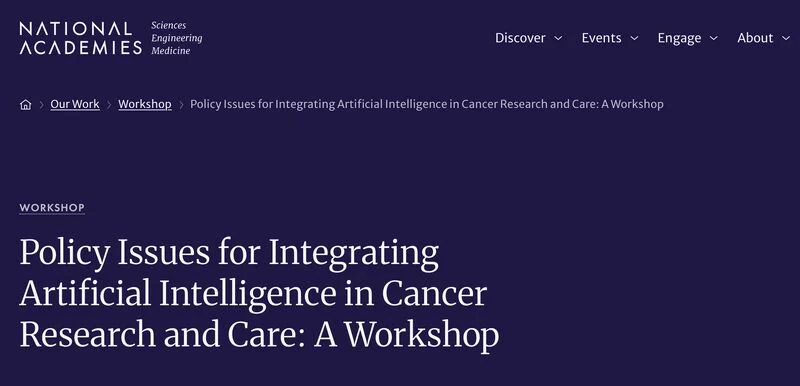
I was honored to have contributed to the National Academies’ workshop on Policy Issues for Artificial Intelligence in Cancer Research and Care. The report crystallizes what so many of us have felt: this transformation isn’t a technology problem to solve alone in a lab or a boardroom. It’s a systems challenge.
Responsible AI integration requires alignment across the full ecosystem – clinicians, researchers, data scientists, industry, regulators, and patients at the table. We need interoperable data architecture, governance frameworks that protect privacy while enabling learning, workforce capacity for the future, and honest conversations about bias, generalizability, and real-world validation, as well as an ability to question our current assumptions to ensure we iteratively grow, develop and improve.
Our mission to end cancer depends on getting this right, together. Not moving fast enough to breaking things, but moving intentionally to gain efficiency and to discover new opportunities to make a difference where it matters.”
Other articles featuring Fabio Ynoe de Moraes and Caroline Chung on OncoDaily.