European Society of Gynaecological Oncology (ESGO) shared a post on LinkedIn:
“Despite scientific progress, women affected by gynaecological cancers continue to face major disparities in access to prevention, early diagnosis, specialist treatment, innovation, and survivorship care depending on where they live. These gaps undermine equity, outcomes, and the sustainability of healthcare systems across Europe.
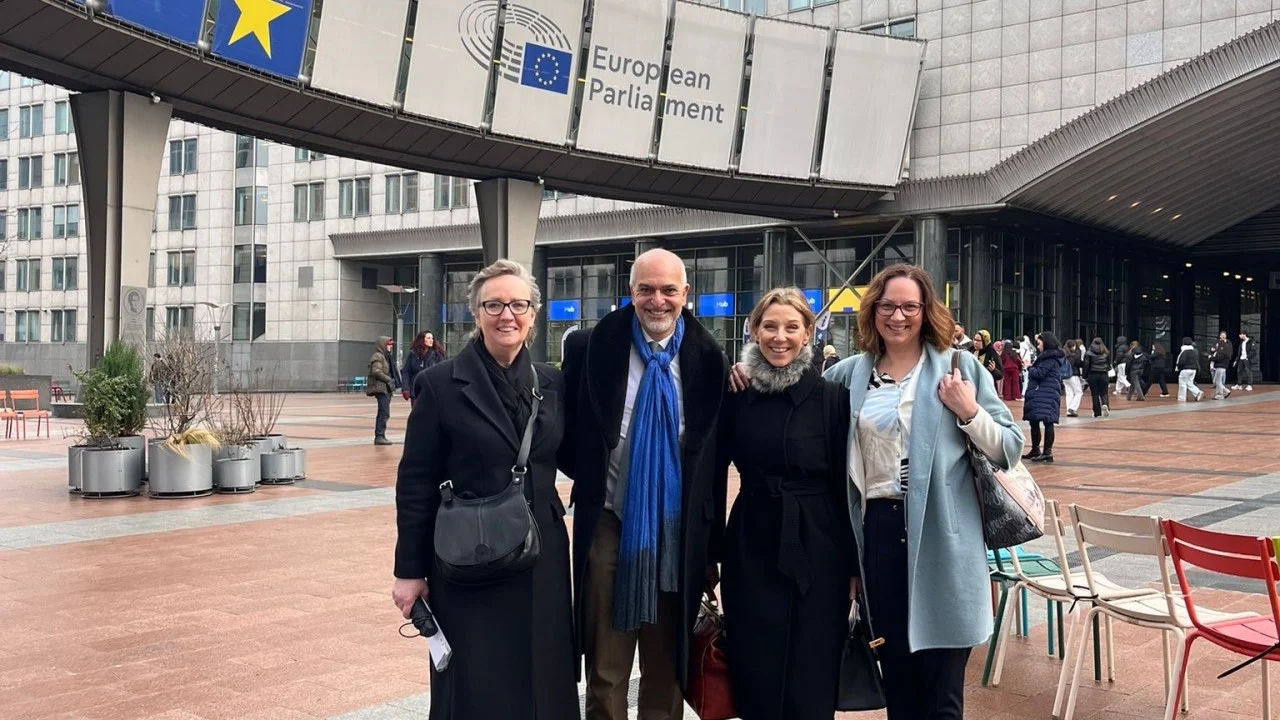
Today’s high-level policy session at the European Parliament brought together policymakers, European Commission representatives, patient advocates, and leading health stakeholders to discuss an EU-wide ecosystem of centres of excellence to address these unmet needs. Read the article below for full information and to access links to our position paper and a replay of the event.
ESGO hosts High-Level Policy Event at the European Parliament, calling for EU action to close gaps in women’s health
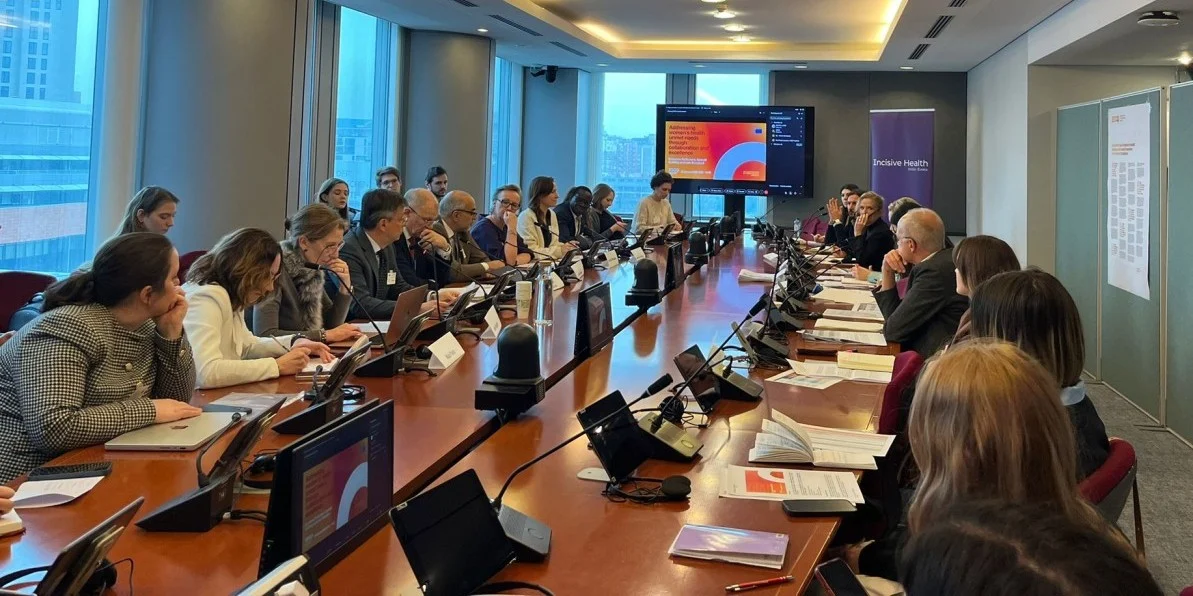
The European Society of Gynaecological Oncology (ESGO) today hosted a High-Level Policy Event at the European Parliament focused on addressing persistent unmet needs and inequalities in women’s health and gynaecological cancer care across Europe.
The event, entitled ‘Addressing women’s health unmet needs through collaboration and excellence’, was hosted by Members of the European Parliament Vytenis Povilas Andriukaitis, Romana Jerković, and Tilly Metz, and brought together policymakers, European Commission representatives, patient advocates, and leading health stakeholders.
Taking place at a pivotal moment for EU policymaking – with the forthcoming Gender Equality Strategy 2026-2030, ongoing reflections on Europe’s health priorities, and discussions on the future Multiannual Financial Framework (MFF) – the event aimed to contribute concrete, evidence-based proposals to strengthen women’s health policy at the EU level.
Despite scientific progress, women affected by gynaecological cancers continue to face major disparities in access to prevention, early diagnosis, specialist treatment, innovation, and survivorship care depending on where they live. These gaps undermine equity, outcomes, and the sustainability of healthcare systems across Europe.
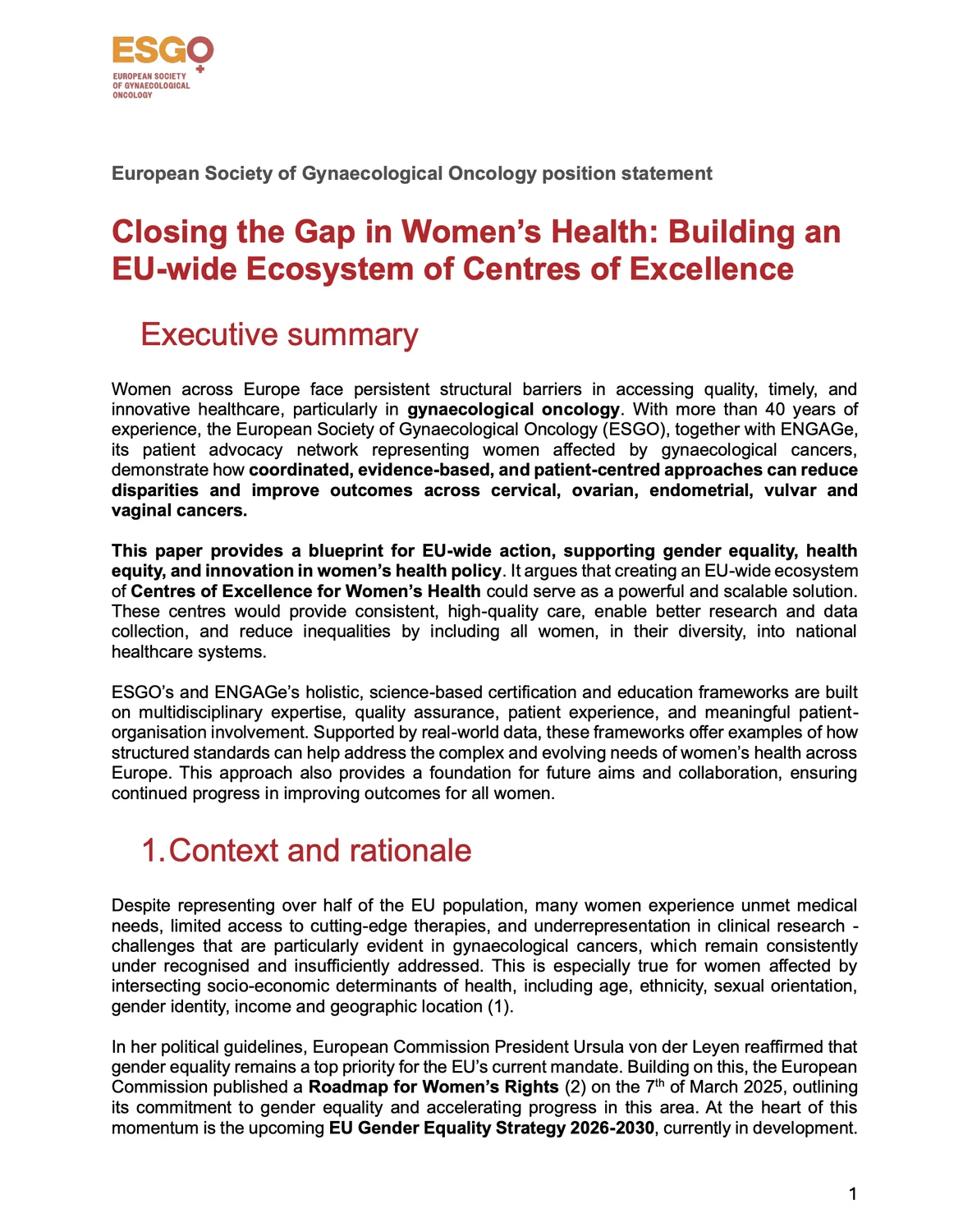
At the centre of the discussion is ESGO’s newly published position paper, ‘Closing the Gap in Women’s Health: Building an EU-wide Ecosystem of Centres of Excellence‘, which sets out a clear call to action for EU institutions, Member States, and stakeholders. The paper calls for:
- the establishment of an integrated EU-wide ecosystem of Centres of Excellence for Women’s Health, building on existing EU initiatives and infrastructures;
- sustainable financing and governance models for women’s health services;
- the embedding of equity and gender sensitivity as core principles of cancer and women’s health policy;
- the strengthening and formal recognition of the gynaecological oncology workforce; and
- the development of robust data, research, and learning systems centred on women’s needs.
The event featured contributions from the European Commission, including DG JUST, and from patient advocates, notably the European Network of Gynaecological Cancer Advocacy Groups (ENGAGe), represented by Anne De Middelaer. ESGO’s leadership presented the proposed model for Centres of Excellence, with interventions from Anna Fagotti, ESGO President, Jalid Sehouli, ESGO President-elect, and concluding remarks by Maja Pakiz, ESGO Vice President.
The discussion was also enriched by contributions from a broad and aligned coalition of European and international stakeholders active across women’s health, cancer, research, and policy.
These included European and international medical and scientific organisations, such as the International Federation of Gynecology and Obstetrics (FIGO), the European Board and College of Obstetrics and Gynecology (EBCOG) and the European Society of Human Reproduction and Embryology (ESHRE); European cancer and patient organisations, including the European Cancer Organisation (ECO), Cancer Patients Europe (CPE) and the Association of European Cancer Leagues (ECL); clinical and research centres and innovation networks, notably Erasmus Medical Center and the Netherlands Women’s Health Research and Innovation Center; as well as policy and research institutes, including the European Policy Centre (EPC).
Through this High-Level Policy Event, ESGO aims to mobilise political and institutional support around these recommendations and to encourage coordinated, concrete action at both the EU and national level.
The event was livestreamed on ESGO’s YouTube channel and can be rewatched online.”
More posts featuring ESGO.