





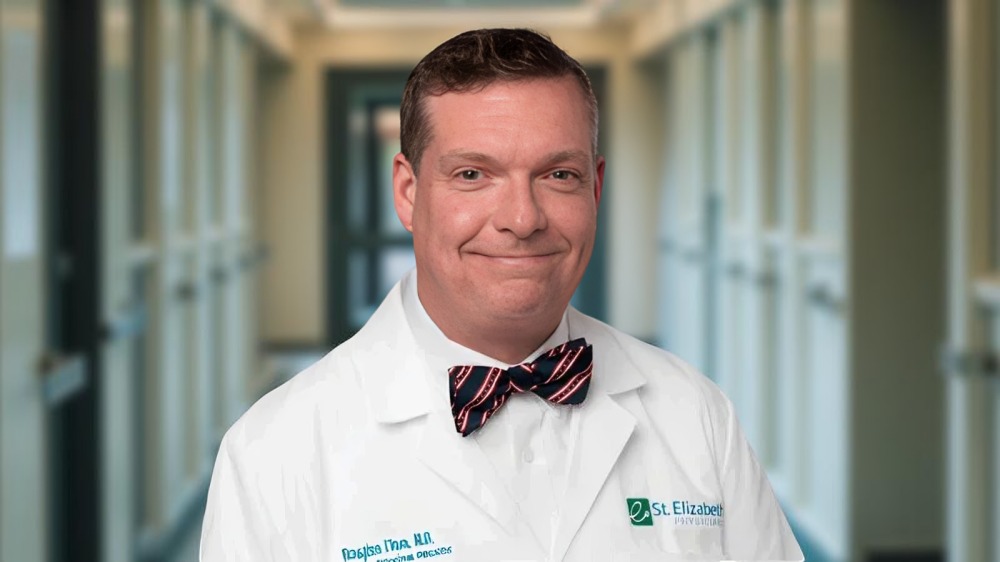
Douglas Flora, Executive Medical Director of Yung Family Cancer Center at St. Elizabeth Healthcare, President-Elect of the Association of Cancer Care Centers, and Editor in Chief of AI in Precision Oncology, shared a post on LinkedIn:
“We send people home with chemotherapy and a phone number. In 2026.
Your patient is alone on day five. Her nausea is getting worse. Her fever is starting. She will not call until Friday. That gap – between what is happening to the patient and what we know about it – is the next frontier in cancer care, and almost nobody is treating it like the emergency it is.
Dr. Maryam Lustberg is one of my professional heroes, a fellow Buckeye (once a Buckeye, always a Buckeye!), now leading the breast cancer program at Yale, and a leading advocate for better supportive care for most of my career. In her new interview with the indefatigable Misha Kaur, she says what most of us have been dancing around for years:
‘The initial reaction tends to be centered on the right drug for the right patient at the right time. But true precision medicine includes all the other things – how we monitor side effects, how we react to them.’ The therapies have become astonishingly individualized. The care delivery around them has not.
Her target is the interval between visits. Electronic patient-reported outcomes – symptom surveys patients fill out on a phone or tablet, known in oncology as ePROs – have a decade of evidence that they save lives when used well. Ethan Basch’s 2017 JAMA trial, which I wrote about a few days ago, showed that ePRO monitoring during cancer treatment improves overall survival. That kind of result usually fills plenary halls at ASCO. Almost a decade later, most cancer centers still do not use them routinely.
Dr. Lustberg’s critique of how we use them when we do is sharper still. The surveys have become too static. They get delivered at fixed intervals that miss the real timing of toxicity. Data gets collected and filed rather than acted on. Everyone has a phone these days. Apps aren’t new. How hard is it to figure out a way check on the patient between cycles with a text? Not hard–these tools already exist, and they work.
Can’t we do better? Catching a complication on day five rather than day ten preserves the dose, avoids an ER trip and a dreaded hospital admission, and keeps the patient on the regimen that might imporve or extend their life.
The tools are here. The published evidence is eight years old. The barriers are the ones Dr. Lustberg names at the end of her interview: ‘Sometimes we build things in technology land, but some of the key stakeholders have not been involved.’ Amen, Maryam.
Thank you, Misha, for moving this discussion forward, and Maryam Lustberg, for reminding us that the revolution in oncology is only half finished. Your leadership, and your vision of what COULD BE, inspires me.”
Other articles featuring Douglas Flora on OncoDaily.