


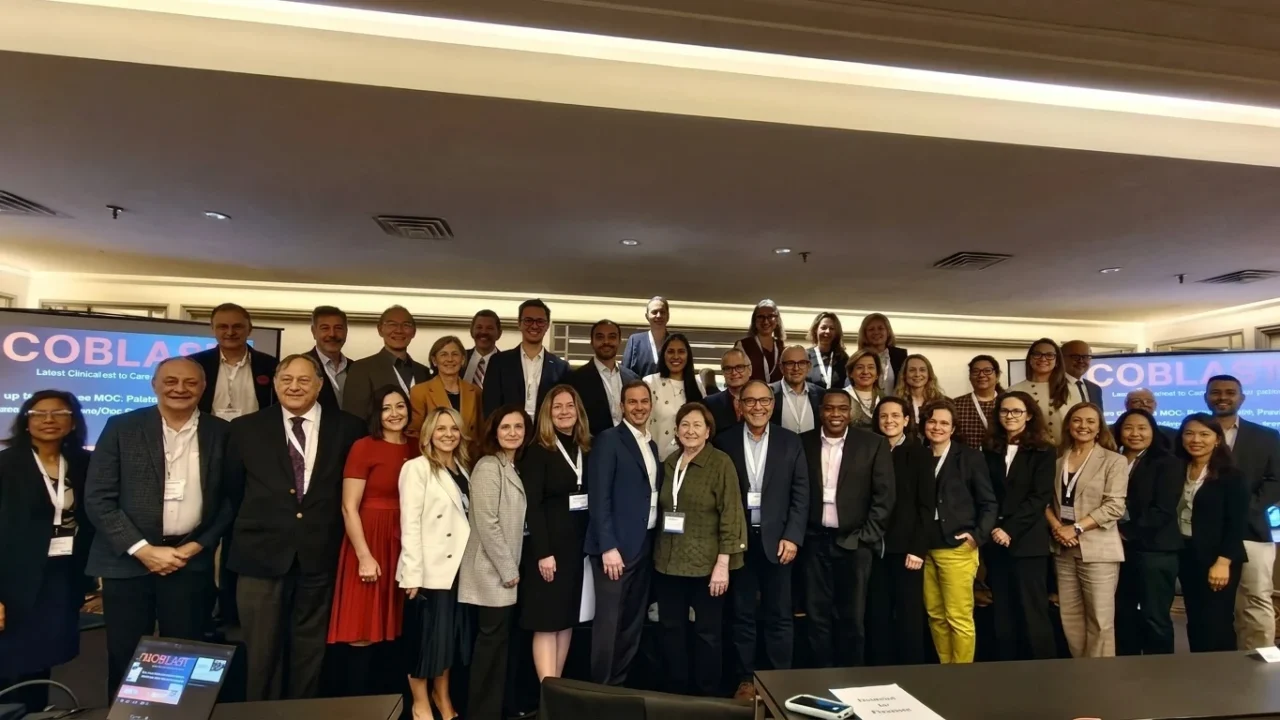
Don S. Dizon, Jane F. Desforges Chair in Hematology and Oncology at Tufts University, shared on LinkedIn:
“The First International Gynecologic Oncology Consensus Conference in Boston just completed on November 6, 2026.
Over 50 invited faculty, all key opinion leaders in our field, immersed in unfiltered conversations where equipoise exists and the guidelines provide less then clear direction.
I learned so much and I had fun. I realized with all the travel we do, this is what we need: a place to discuss all the developments in our field and trying to place it all in context for the best way forward on behalf of all seeking our help.
Thrilled to be a part of what will be known as the annual Boston Conference moving forward, with opportunities for the worldwide community to get involved too. Consensus isn’t supposed to be easy but what fascinating conversations to try to get there.
Thank you Binaytara and Binay Shah for providing critical support, our sponsors for believing in this idea, Drs. Katina Robison (Tufts Medicine), Anuja Jhingran and Linda Duska for serving as chairs, and the steering committee members: Dmitriy Zamarin, Susana Campos, Ritu Salani, Stephanie Lheureux, Fujiwara Keiichi, Deborah Armstrong, Johns Hopkins Medicine.
Finally, to the consensus faculty who took a chance on yet another meeting – thanks for making this one a success. Onwards!
More About
The International Gynecologic Oncology Consensus Conference: Marrying Evidence to Practice is an expert-level scientific conference held on November 6-7, 2026, at the Hyatt Regency Boston in Boston, Massachusetts, organized by the Binaytara Foundation.
The conference is specifically designed to address areas of clinical equipoise, which are scenarios in gynecologic oncology where randomized trial evidence remains equivocal, conflicting, or incomplete, by translating trial data into actionable consensus recommendations for individualized clinical practice.
The scientific program focused on key management dilemmas across gynecologic malignancies:
- In endometrial cancer, the panel addressed precision adjuvant therapies, establishing molecular subtyping strategies for p53-abnormal tumors and evaluating de-escalation versus intensification of adjuvant chemotherapy, radiation, and immunotherapy.
- In ovarian cancer, discussions centered on optimizing maintenance PARP inhibitor regimens, evaluating indication criteria for PARP inhibitor re-challenge following platinum-sensitive relapse, and navigating novel therapeutic strategies in platinum-resistant disease, particularly antibody-drug conjugates (ADCs) such as folate receptor alpha (FOLR1)-directed agents like mirvetuximab soravtansine.
- In cervical cancer and advanced disease settings, sessions highlighted systemic treatment optimization, precise patient selection for immune checkpoint inhibitors based on PD-L1 status, and integrating emerging targets into standard care pathways.
The interactive structure combined clinical debate among leading international subspecialists with live audience and panel voting to generate definitive, evidence-informed consensus statements for immediate clinical implementation.”
Other articles about Binaytara on OncoDaily.