






David Wazer, Professor and Chairman of Radiation Oncology at Brown University Health, shared a post on LinkedIn:
“Post-operative radiotherapy for node positive breast cancer: The courage to question ‘less is more’.
In an era increasingly captivated by therapeutic de-escalation, Robert Mutter and Karla Ballman (citation below) provide a masterclass in why less treatment should never mean less scientific rigor.
Rather than accepting the widely celebrated NSABP B-51 and SUPREMO trials as definitive evidence supporting omission of postmastectomy radiotherapy, the authors offer a thoughtful and statistically sophisticated reappraisal. Their central message is both timely and essential: failure to demonstrate superiority is not equivalent to proving noninferiority. That distinction is far more than academic – it is the foundation of evidence-based de-intensification.
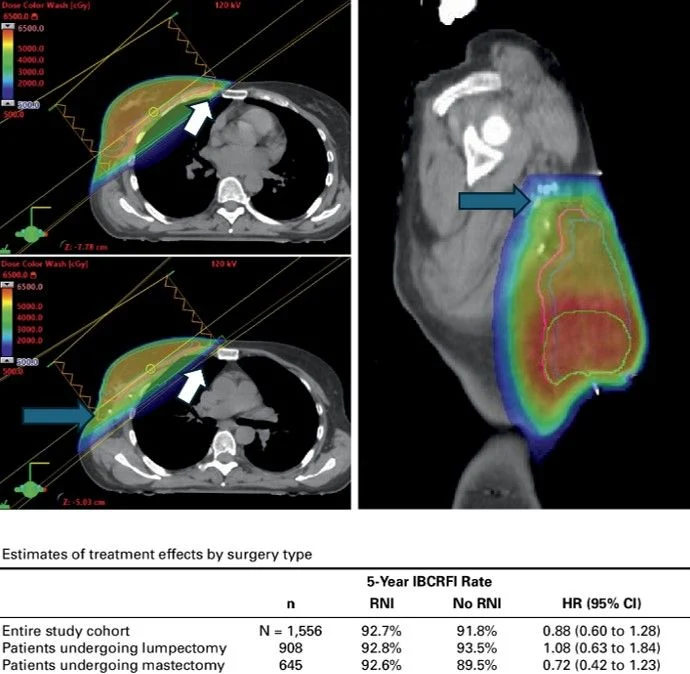
The article expertly dissects trial design, endpoint selection, statistical power, and subgroup interpretation, revealing how broad enthusiasm for reducing treatment may outpace the strength of the available data. Particularly compelling is the discussion of how contemporary systemic therapy, incidental nodal irradiation, heterogeneous patient populations, and unexpectedly low event rates complicate interpretation of these landmark studies.
Most importantly, the authors avoid dogma. They neither defend radiotherapy indiscriminately nor reject de-escalation outright. Instead, they advocate for individualized decision-making, appropriately designed noninferiority trials, longer follow-up, and incorporation of predictive biomarkers to identify the patients who truly can forgo treatment safely.
This is an exemplary commentary that reminds us that progress in oncology is measured not by treating fewer patients, but by treating the right patients. As precision medicine advances, precision trial design must advance with it. Mutter and Ballman have provided an indispensable roadmap for that journey.”
Other articles about Radiation Oncology on OncoDaily.