Christian Ntizimira, Executive Director of ACREOL, shared on LinkedIn:
“Why We Should Stop Saying ‘End-of-Life Care’ and Start Saying ‘Life Until the End.’
A Daughter’s Final Wish
Let me tell you about Josiane. Her story is where this conversation begins.
Josiane was living with metastatic osteosarcoma, an aggressive bone cancer that had spread beyond its original site. After months of treatment, her condition was deteriorating. We knew that medicine could no longer cure her disease.
But Josiane still had one wish.
She wanted to see her mother.
Her mother had not visited her in the hospital for months. To healthcare professionals, her absence might easily have appeared to be abandonment, denial, or a failure to accept her daughter’s condition.
It would have been easy to judge her. But we did not know her story.
Josiane’s mother was a survivor of the 1994 Genocide against the Tutsi in Rwanda. She had lost three children and her husband. Later, she remarried, had three more children, and endured domestic violence before her second husband died of liver cirrhosis.
She had survived unimaginable losses. And now she was facing the possibility of burying another child.
What appeared to be abandonment was something entirely different.
It was suffering.
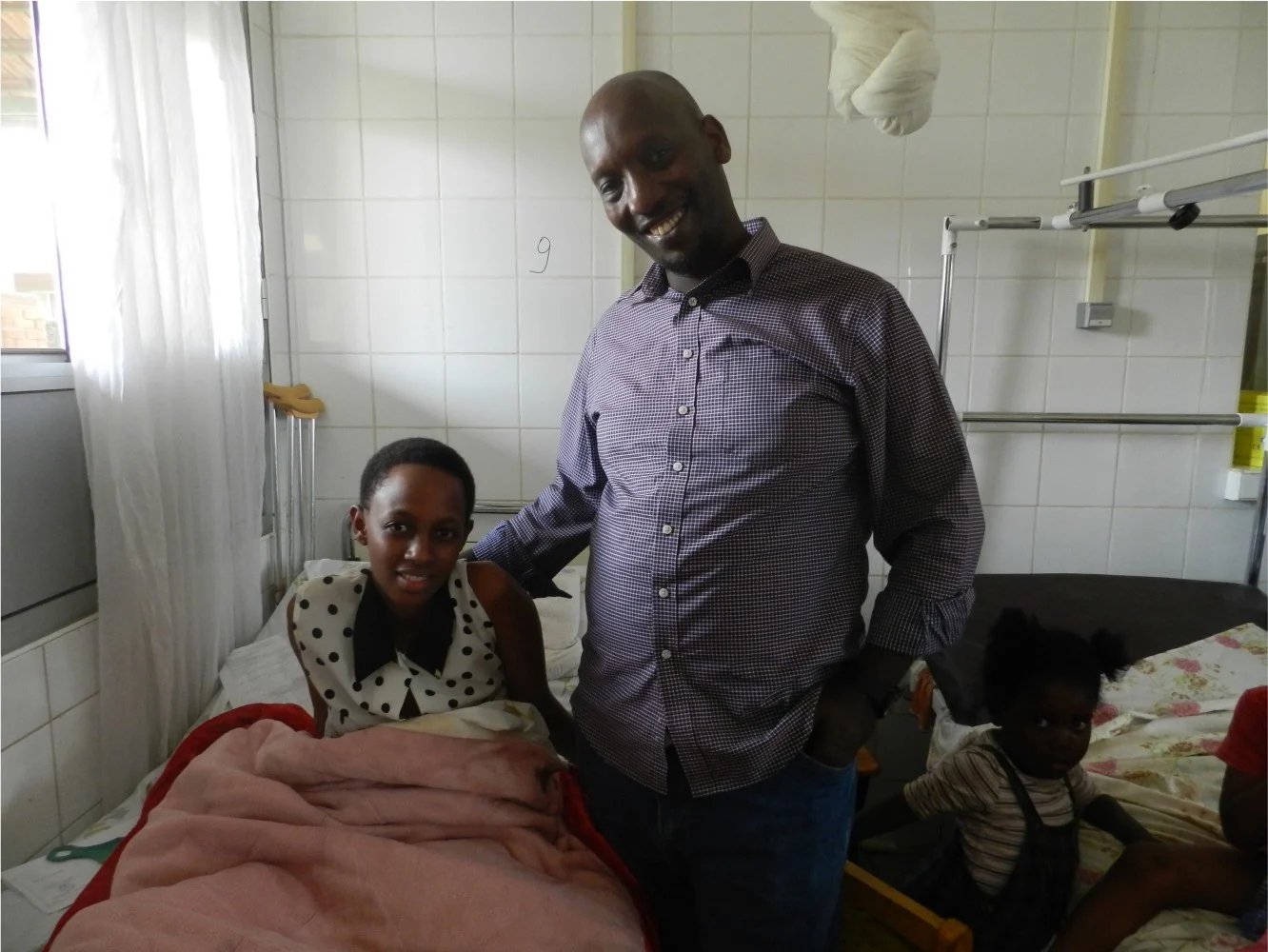
The hospital team decided to visit her. We did not go to lecture her about parental responsibility or persuade her that she was doing something wrong. We went to listen.
Only then did we begin to understand why she could not bring herself to enter her daughter’s hospital room.
Her silence was not a lack of love. It was the expression of a lifetime of grief.
Eventually, she came to the hospital and reunited with her daughter Josiane before she died.
We could not save Josiane’s life. But by listening to her mother’s suffering, we helped make possible something deeply meaningful: a daughter and her mother being together again.
No prescription could have achieved that on its own.
And yet it was care.
Perhaps it was among the most important care we could offer.
The medical establishment has a name for what Josiane received: ‘end-of-life care.’
But the term misses something essential. What unfolded between Josiane and her mother was not simply about dying.
‘It was about living, loving, and preserving dignity until the very end.’
I carried that lesson with me to Montréal.
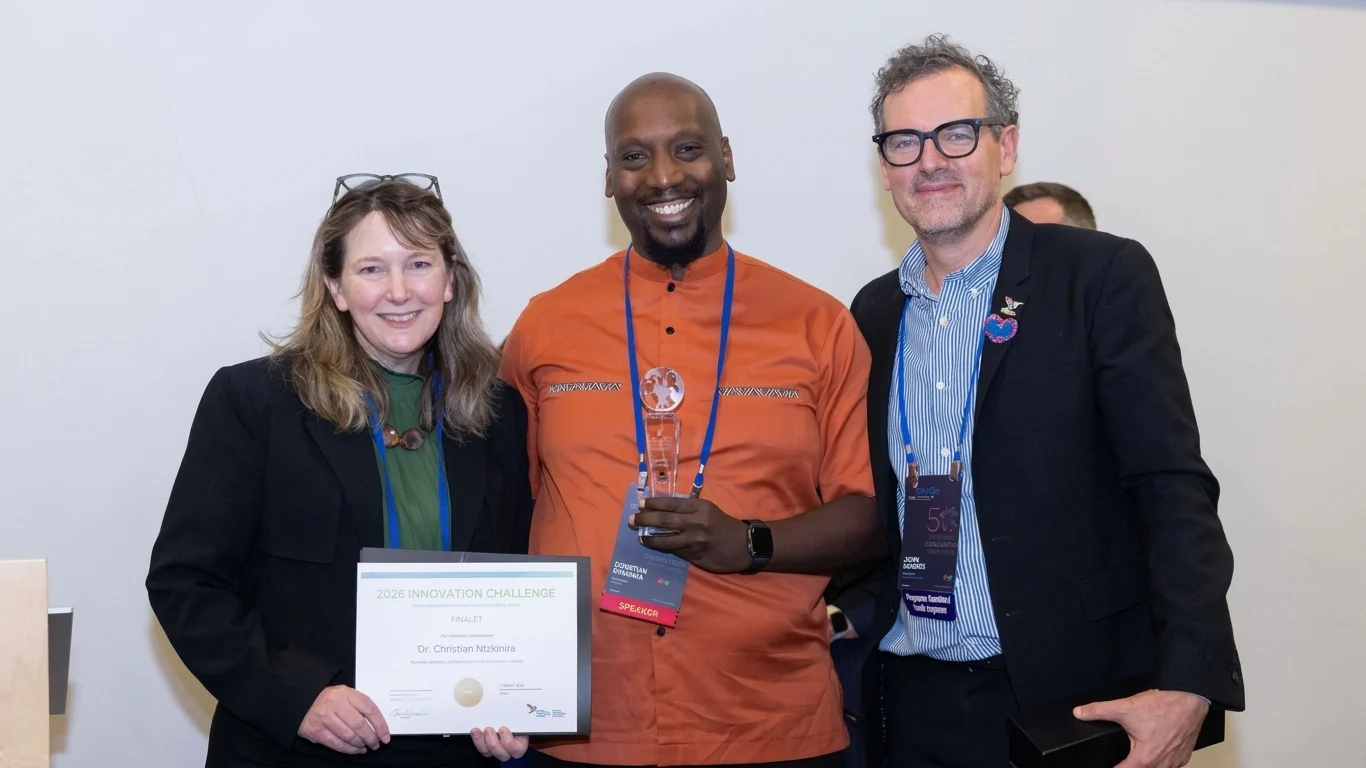
When I received the trophy from Dr. Justin Sanders, Director of Palliative Care at McGill University, after winning the 2026 Canadian Virtual Hospice Innovation Challenge at the McGill International Palliative Care Congress, I found myself reflecting on something far more important than the award itself: the words we use to describe suffering, care, and the final chapters of human life.
Inspired by the television shows Shark Tank and Dragons’ Den, the competition celebrates innovative approaches to palliative care. My winning innovation, the Safari Concept to Communication, emerged not from a sophisticated technology or a new medical treatment, but from something medicine too often overlooks: the wisdom that already exists within families and communities.
Standing there, I was reminded of a lesson I had learned years earlier in Rwanda.
‘Sometimes, innovation begins not by introducing something new, but by listening differently to what has always been there.
And sometimes, changing the words we use can change the care we provide.”
The Expression ‘End-of-Life Care’
It is an established term in medicine, one that describes essential support for people approaching death. Yet I have increasingly wondered what happens when we begin to define a person’s remaining life primarily by its ending.
The word ending is never neutral. It suggests something slipping away, a chapter closing, a life nearing its final page. Yet when we describe a person’s remaining days in these terms, we risk turning life into a countdown, as though its value diminishes simply because less of it remains.
What do patients and families hear when we tell them it is time for end-of-life care? Do they hear an invitation to live as fully as possible? Or do they hear that medicine has reached the end of what it can offer?
The distinction matters.
‘Because even when a person is dying, that person is still living.’
And that life deserves our attention until its very last moment.
The Patient Is Not the Only One Suffering
Josiane’s story exposed a blind spot in the way we practice medicine.
We had been trained to identify the patient’s suffering, assess symptoms, and develop a treatment plan. But how well had we been trained to understand the suffering surrounding the patient?
‘Cancer does not arrive in an empty body, disconnected from the world. It enters a family, a history, a culture, and a community.’
When one person becomes seriously ill, the consequences extend far beyond a diagnosis.
- Relationships change.
- Financial responsibilities shift.
- Old conflicts may resurface.
- Caregivers become exhausted.
- Families struggle with questions that have no simple medical answers.
Yet our healthcare systems often continue to behave as though suffering belongs exclusively to the individual lying in the hospital bed.
We discharge patients to families whose capacity to care we may never have assessed. We expect relatives to administer medications, organize appointments, provide emotional support, and manage the financial consequences of illness.
But who cares for those caregivers?
Who listens to the exhausted spouse, the frightened child, or the parent whose silence conceals an unbearable history?
Josiane’s mother taught me that suffering does not always announce itself through tears. Sometimes it appears as anger, disagreement, resistance, or absence.
If we do not understand the story behind a person’s behavior, we risk mistaking suffering for something else entirely.
That is not simply a communication problem. It can become a failure of care.
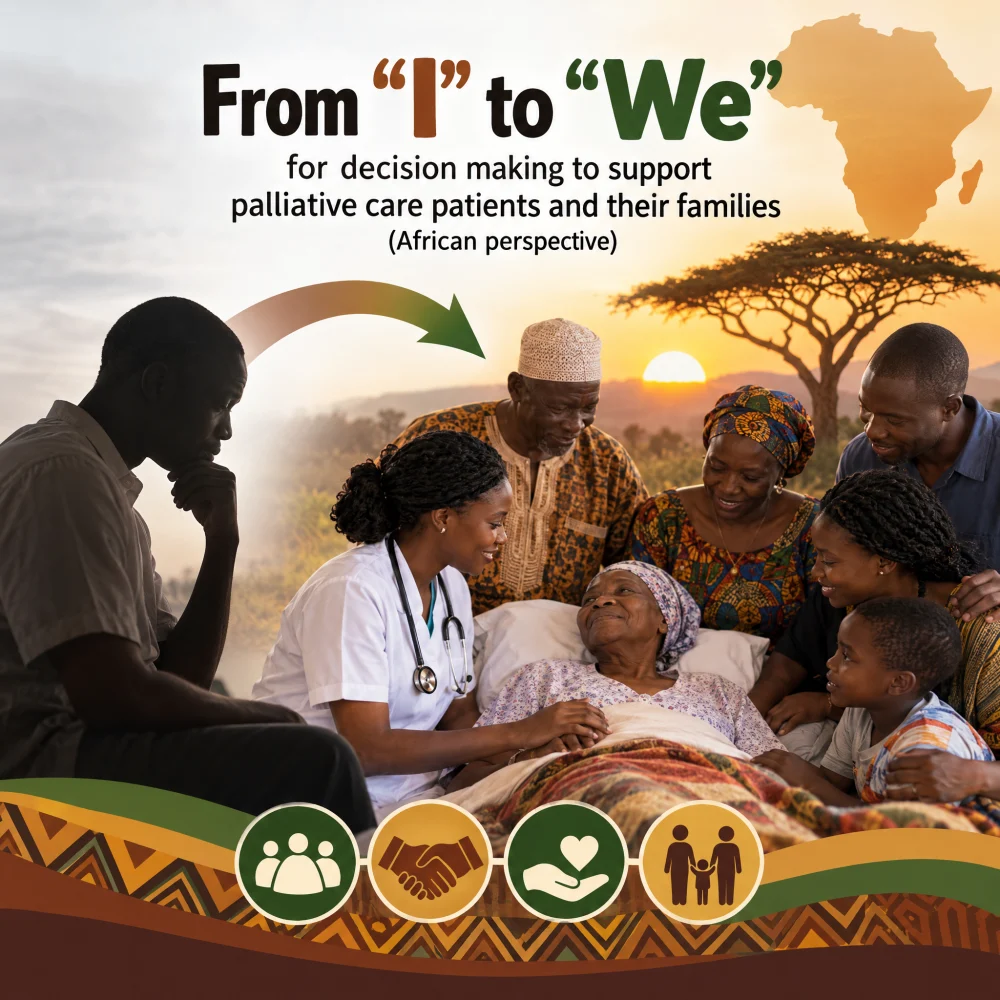
From “I” to “We” (AI-generated)
From “I” to “We”: What Ubuntu Can Teach Medicine
In Rwanda, we have a saying:
‘When you are well, you belong to yourself. But when you are sick, you belong to your family.’
This understanding reflects Ubuntu, an African philosophy often expressed as ‘I am because we are.’
Ubuntu reminds us that our humanity is deeply connected to that of others. We do not experience illness, suffering, or healing in isolation.
This does not mean that families should make decisions for patients or that individual autonomy should be disregarded. It means recognizing that personal dignity and individual choices exist within relationships that can bring support, meaning, and, sometimes, conflict.
In much of modern healthcare, we emphasize individual decision-making, informed consent, and patient autonomy. These principles are fundamental. But the way people understand and exercise them can differ across cultures.
For some patients, involving parents, spouses, elders, or extended family members is not a rejection of autonomy. It is an expression of identity, belonging, and responsibility.
When we ignore those relationships, we may misunderstand the very people we are trying to help.
This understanding inspired my development of the Safari Concept to Communication.
The approach uses familiar animal metaphors to help healthcare professionals recognize different family behaviors, understand hidden suffering, and support difficult conversations.
Rather than assuming that anger means opposition, silence means agreement, or absence means indifference, we begin by asking what these behaviors may be telling us.
- Who speaks for the family?
- Who remains silent?
- Whose voice carries influence?
- Who is struggling but cannot find the words to explain why?
The approach does not offer a formula for categorizing people. It offers a way to begin conversations that might otherwise never happen.
At its heart is a simple idea: before we ask families to understand our medical language, we must make an effort to understand theirs.
This is why the recognition in Montréal mattered to me.
An approach developed through listening to families in Rwanda was being recognized on an international stage. It reminded me that innovation does not always have to travel from wealthy health systems to less-resourced ones.
Sometimes, local wisdom can offer lessons to the world.

The Safari Concept uses animal metaphors to describe families’ suffering (AI-generated)
Why Our Language Matters
The same principle applies to the terminology we use in palliative care.
For decades, the expression end-of-life care has helped healthcare professionals describe an essential period of care for people approaching death.
But words do more than describe reality. They influence how we experience it.
When we frame a person’s remaining life as an ending, we risk sending a dangerous message: the time they have left deserves less care, less attention, and less investment – and that they, too, should see it that way.
When care is framed primarily around the end of life, the conversation can become dominated by what is disappearing: the possibility of cure, physical independence, time, and, ultimately, life itself.
These losses are real. They must never be minimized.
But they are not the whole story.
Josiane was dying. Yet she was still a daughter who longed for her mother. She still needed love, connection, and reassurance. There were relationships to restore and moments to preserve.
Her greatest wish was not about dying. It was about living.
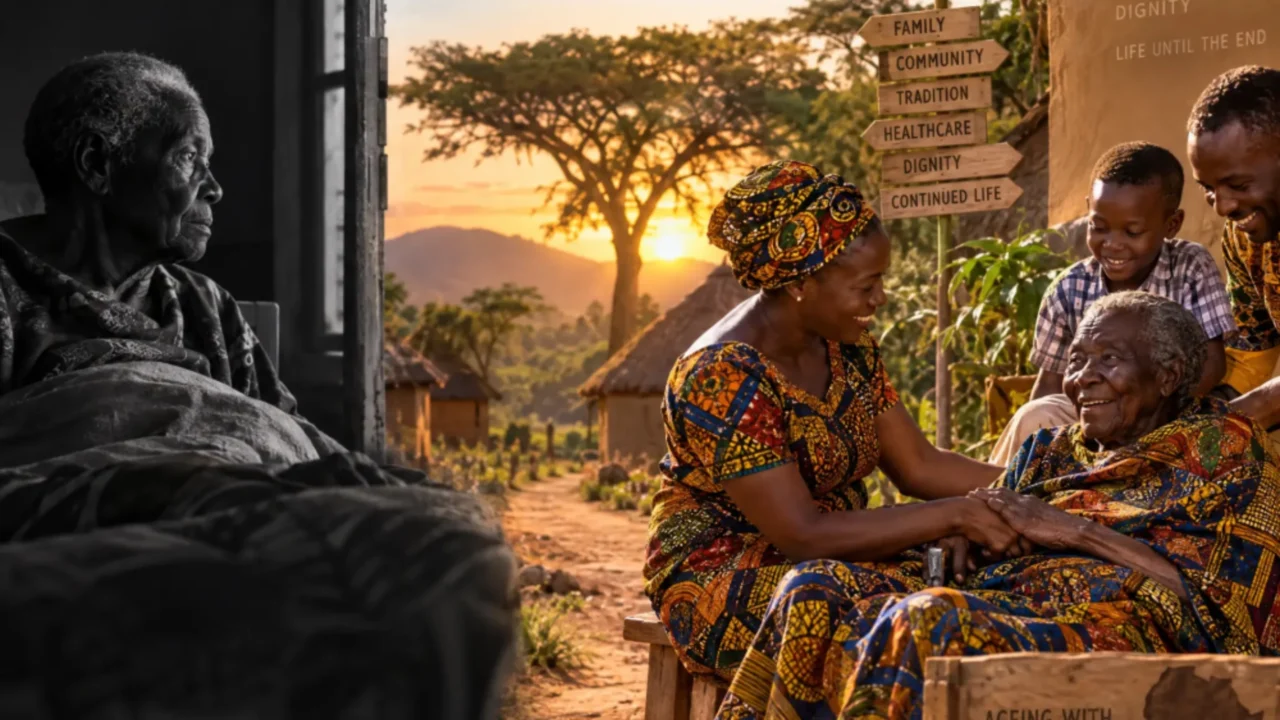
That is why I believe we should begin speaking more often about ‘Life Until the End.’
This is not a call to abandon palliative care or to deny the reality of death. Nor is it an argument that every person approaching death must remain optimistic or pursue some extraordinary final achievement.
It is a call to recognize that dying does not erase personhood.
A person may have only weeks, days, or hours remaining, but those moments still belong to a living human being. There may be a conversation to finish, a relationship to repair, a cultural ritual to honor, a fear to address, or simply a hand to hold.
‘Sometimes, the most meaningful act of care is not to add another treatment, but to understand what matters most to the person receiving it.’
We should measure not only how effectively we relieve suffering, but also how well we protect what makes life meaningful in the midst of that suffering.
The question should not be limited to how someone wants to die. It should also be: How does this person want to live with the time that remains?
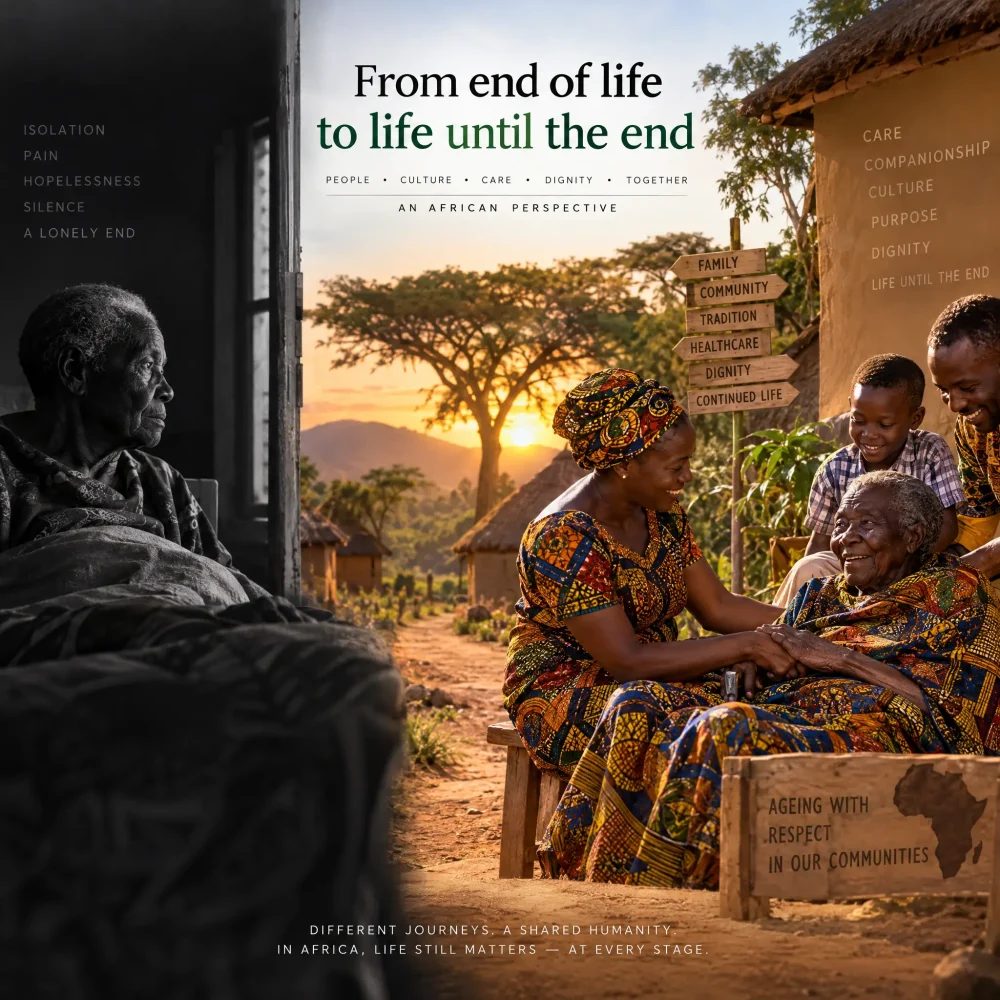
From “End of Life Care” to “Life until the end” (AI-generated)
The Danger of Copying Care Without Understanding Culture
This shift also requires us to reconsider how healthcare knowledge travels around the world.
Modern medicine has produced extraordinary scientific advances, clinical guidelines, and evidence-based interventions. These achievements deserve to be shared.
But knowledge should never travel without context.
A communication model developed in one country may not automatically fit the family structures, social expectations, or cultural traditions of another.
We may encourage a patient to make an independent decision without understanding why consulting family members matters deeply to that individual. We may recommend home-based care without asking whether the household has the resources to provide it. We may interpret a family’s behavior through our own cultural assumptions rather than theirs.
And when families struggle to follow our recommendations, we sometimes conclude that they are resistant or uncooperative.
Perhaps the problem is not always that they have failed to understand our care.
Perhaps we have failed to understand their lives.
This is why I believe global healthcare should embrace a different principle: Adopt, then adapt.
We should adopt the best available scientific evidence and adapt its delivery to the realities of the people we serve.
That requires more than translation. It requires humility.
Patients and families are experts in their own lived experiences. Healthcare professionals bring clinical knowledge. Meaningful care emerges when these forms of expertise meet.
The Safari Concept of Communication was born from a simple but profound conviction.
We did not begin by asking how Rwandan families could fit into a communication framework developed somewhere else. We began by listening to how they experienced and expressed suffering.
Then we built an approach around what we learned.
The innovation was not in replacing scientific medicine with cultural traditions. It was in bringing the two into conversation.
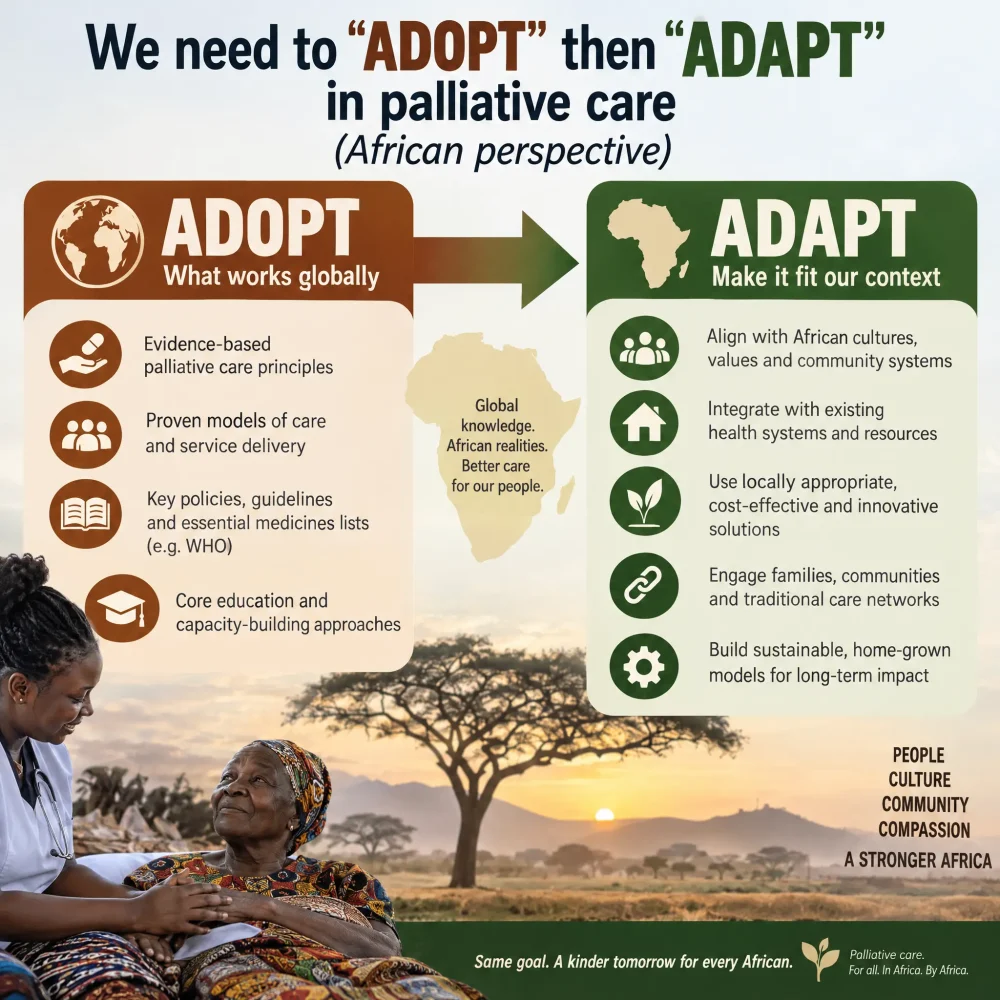
“Adopt” then “Adapt.” (AI-generated)
It’s Time to Redefine Progress
As medicine advances, we are increasingly able to extend life, control symptoms, and offer treatment to patients who once had few options.
These are achievements worth celebrating.
But medical progress should not be measured only by the number of years we add to life.
It should also be measured by our ability to preserve dignity, relationships, meaning, and belonging within those years.
Palliative care has always had the potential to do this. It is not merely care for the dying, it is an approach to improving quality of life for people facing serious illness and for their families.
Yet the language we use, and the way care is sometimes introduced, can make patients feel that accepting palliative support means giving up on life.
We must challenge that perception.
We need healthcare systems:
- Where conversations about meaning and dignity do not begin only when treatment options have been exhausted.
- Where caregivers are recognized as people with needs of their own.
- Where cultural wisdom is treated as a resource rather than an obstacle.
- And where patients are supported not only to survive illness, when survival is possible, but also to live meaningfully when cure is not.
I think again of Josiane. Her cancer could not be cured. But her story did not end with that medical conclusion.
There was still something profoundly human left for us to do.
Her mother came. They were reunited. And a daughter experienced the presence of someone she loved before she died.
When I held that trophy in Montréal, I thought about how a story from Rwanda had helped inspire an approach to communication that could resonate far beyond our borders.
But I also thought about the many patients whose needs remain invisible because we have not learned to ask the right questions, or because we have become too confident that our existing language tells the whole story.
The greatest innovation in healthcare may sometimes begin with a deceptively simple act: listening to a person before defining their suffering.
We cannot always prevent death. We cannot always cure disease.
But we can refuse to let a diagnosis, a prognosis, or a medical label become the entirety of someone’s identity.
A person approaching death is not a person whose life has already ended. They are a person with a life until the end.
And that is the life we must continue to care for.
‘What if the words we choose shape how patients and families experience serious illness?’ “
You can also read: Continue to be human: Christian Ntizimira