





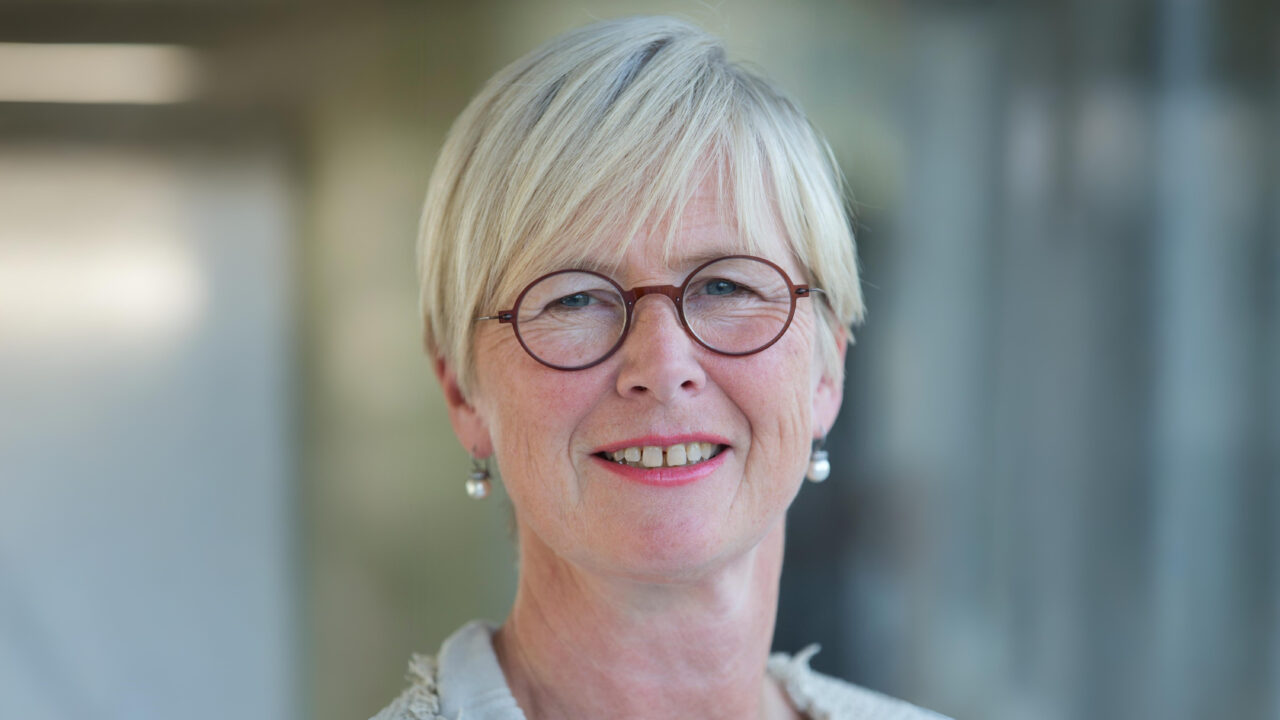
Bente Mikkelsen, Director Global Engagement Strategies at St. Jude Children’s Research Hospital, shared a post on LinkedIn:
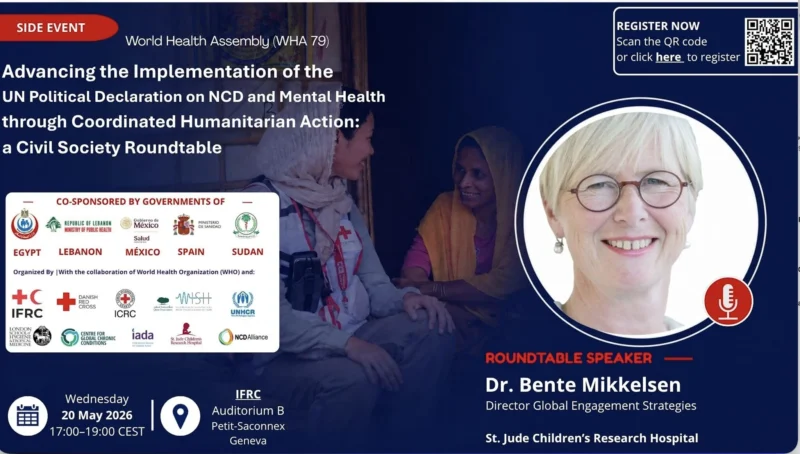
“Looking forward to contribute in this very important side-event focussing on NCDs and cancer as well as childhood cancer in humanitarian settings.
There is a political window now to influence the Political Declaration on Preparedness and response during UNGA High level meeting this September 2026. it is a need every day to do the right thing in ongoing humanitarian crises!
The last decade has seen growing global awareness of the essential importance of addressing the needs of people living with noncommunicable diseases (PLWNCDs) in humanitarian crises and emergency settings.
This awareness has been reflected by changes in the global normative landscape and by increasing recognition that continuity of care for noncommunicable diseases (NCDs) is an essential component of emergency preparedness, response and recovery.
The inclusion of emergency-specific provisions within the political declarations of the 3rd and 4th UN High-Level Meeting on NCDs (October 2018; December 2025), signalled a step-change in political attention and institutional commitment to this agenda.
While political and normative commitment has expanded significantly, progress against the related recommendations has been inconsistent.
The central challenge is not a shortage of commitment, it is structural. In many humanitarian settings, NCD services remain under-prioritized or excluded entirely from emergency response operations, reflecting persistent constraints in awareness, financing, workforce capacity, supply chain systems, technical guidance and coordination mechanisms.
UN agencies and partners can change this agenda. Civil society and partners can move the needle.
Thank you to International Federation of Red Cross and Red Crescent Societies – IFRC for organising with all valued partners.”
Other articles about Childhood Cancer on OncoDaily.