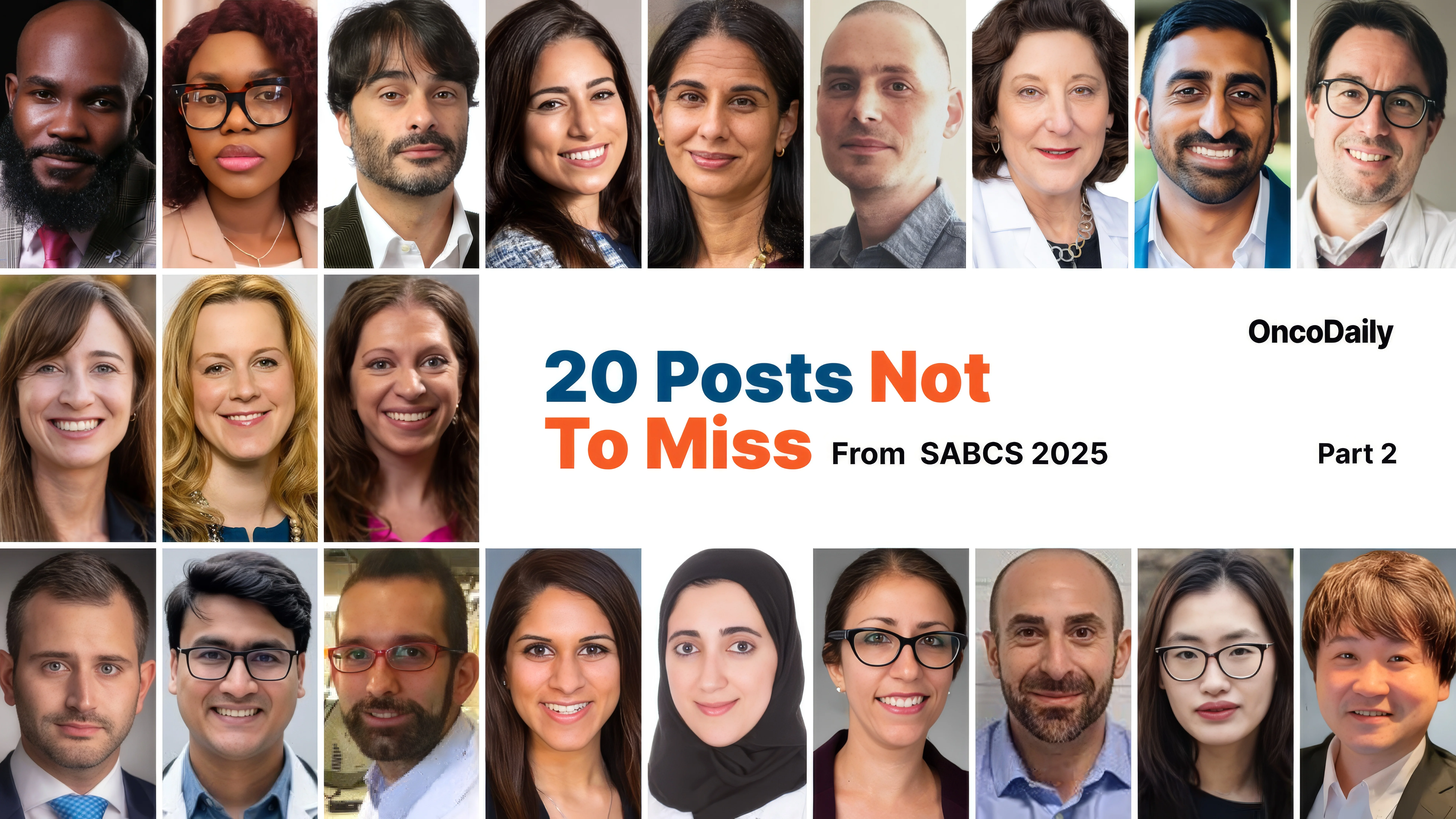
Armando Orlandi, Medical Director at the Agostino Gemelli University Hospital Foundation IRCCS, shared Key Session Highlights from SABCS 2025 on LinkedIn:
“SABCS 2025 Rapid Fire Session 1: Comprehensive Highlights
Here’s the breakdown (1/3).
MARRES Study: Minimally Invasive Surgery Earns Its Place
This Korean multicenter study enrolled 1,875 women undergoing mastectomy with immediate reconstruction across 18 institutions. The results firmly establish minimally invasive surgery (MIS) as a safe alternative to conventional mastectomy (CM):
Key Findings:
- Severe complications (Clavien-Dindo ≥3): 11.2% MIS vs 19.3% CM (p<0.0001)
- No complications (Grade 0): 71.2% vs 61.7% (p<0.0001)
- Early complications (<30 days): 25.7% vs 33.5% (p=0.0003)
- Late complications: No significant difference
In the prespecified 1:1 matched analysis, the absolute difference of -8.5% in severe complications comfortably satisfied the 5% non-inferiority margin.
Clinical Implication: MIS is not just non-inferior—it demonstrates superior early postoperative outcomes. Expect accelerated adoption of robotic breast surgery.
ALTERNATE Trial: Surgical Outcomes After Neoadjuvant Endocrine Therapy
How should we approach surgery after NET? This Alliance trial (933 patients with stage II/III ER+/HER2- BC) provides crucial guidance.
Breast Surgery Outcomes:
- 69.9% achieved breast-conserving surgery (BCS)
- Among patients deemed ineligible pre-NET: 43.8% ultimately had BCS
- 80.2% required only one surgery for margin clearance
- Post-NET imaging showed 52.9% with T1 or invisible tumors
Axillary Management:
- Pathologic node positivity: 50.8% (higher than clinical 39.1%)
- For pN+ patients having BCS: 62.9% had SLNB alone vs 37.6% for mastectomy
- Among SLNB-only pN+ patients: 55.9% had only 1 positive node
Clinical Implication: The low pCR rate with NET means we shouldn’t expect nodal sterilization—but limited nodal burden may support ALND omission in select cases.
MRI-Guided Internal Mammary Node Boost: Risk-Adapted Radiation
A critical question in the neoadjuvant era: should we boost the IMN region when imaging shows complete response?
This Chinese retrospective study (1,326 patients) provides elegant data supporting personalized radiation:
Key Findings:
- IMN clinical complete response (icCR) rate: 63.5%
- IMN boost in icCR patients: No DFS benefit (HR 1.06, p=0.899)
- IMN boost in non-icCR patients: 70% risk reduction (HR 0.30, p=0.029)
- Significant interaction between icCR and boost benefit (p=0.045)
Clinical Implication: Post-NAT imaging response can guide boost decisions. Patients achieving IMN icCR may safely forgo additional boost, while those with residual disease derive substantial benefit. Prospective validation warranted.”
“SABCS 2025 Rapid Fire Session 1: Comprehensive Highlights
Here’s the breakdown (2/3).
I-SPY2: Early Symptoms as Response Predictors
Can patient-reported outcomes predict who will respond to neoadjuvant therapy? This I-SPY2 analysis (288 patients receiving IO/ADC ± paclitaxel) suggests yes.
Symptoms at Weeks 1-3 Associated with pCR:
- Muscle pain: OR 3.15 (27% vs 10% in responders vs non-responders)
- Joint pain: OR 3.23 (22% vs 8%)
- Headache: OR 2.59 (27% vs 12.5%)
- Mouth/throat sores: OR 3.56 (16% vs 5%)
Additional Findings:
- Higher-grade palpitations associated with pCR
- Lower numbness/tingling associated with pCR (p=0.002)
- Arm/leg swelling correlated with tumor volume reduction
Clinical Implication: Early adverse symptoms may signal effective immune activation. Rather than reflexively dose-reducing, these findings support monitoring and potentially continuing therapy in symptomatic patients who may be responding. A paradigm shift in toxicity interpretation.
Smart Pill Bottles:
- Technology That Actually Works
- Non-adherence to adjuvant endocrine therapy remains a silent crisis. This phase II RCT (285 patients) tested two technological interventions:
12-Month
Adherence Rates:
- Standard of care: 53.1%
- SOC + ePROs every 3 weeks: 45.7%
- SOC + Smart pill bottle: 69.5%
Statistical Analysis:
- Smart pill bottle vs SOC: OR 1.97 (95% CI 1.10-3.51, p=0.022)
- ePROs vs SOC: OR 0.69 (not significant, p=0.187)
- No differences by year of ET, age, baseline agent, or race
Clinical Implication: Not all digital health interventions are equal. Smart pill bottles nearly doubled adherence, while electronic surveys paradoxically showed worse (though non-significant) adherence. The behavioral reinforcement of
real-time monitoring appears more effective than periodic symptom surveys.
End-of-Life Preferences: The Patient-Family Divide
What do Japanese breast cancer patients want at end of life—and do their families
agree? This dyadic study (218 patient-family pairs) reveals a fundamental disconnect.
Patient Priorities:
- Independence in ADL: 85.7%
- Not being a burden: 76.4%
Family Priorities (vs Patients):
- Longevity: OR 2.15 (p<0.001)
- Treatment until satisfaction: OR 4.50 (p<0.001)
Structural Analysis:
- Patients oriented toward: “Self-reliance and not being a burden”
- Families oriented toward: “Survival, even with dependency”
- Spouse (not child) selection as surrogate linked to prognostic awareness preference
Clinical Implication: Effective Advance Care Planning must address underlying worldviews, not just treatment preferences. The structural gap between autonomy-focused patients and survival-focused families likely underlies many clinical conflicts.”
“SABCS 2025 Rapid Fire Session 1: Comprehensive Highlights
Here’s the breakdown (3/3).
Cruciferous Vegetables: Prevention Data at Scale
Can dietary choices reduce breast cancer risk? The combined NHS/NHSII analysis(169,523 women, 4.5 million person-years, 11,181 cases) provides robust evidence.
Cruciferous Vegetable Intake (>1 serving/day vs <1/week):
- Overall breast cancer: HR 0.91 (95% CI 0.84-0.98, p-trend <0.01)
- ER-negative tumors: HR 0.83 (95% CI 0.67-1.02, p-trend=0.01)
Glucosinolate Intake (highest vs lowest quintile):
- Overall breast cancer: HR 0.92 (95% CI 0.87-0.98, p-trend <0.01)
- ER-negative tumors: HR 0.87 (95% CI 0.74-1.02, p-trend=0.03)
Effect Modification: Stronger association for ER-negative tumors in women with BMI <25
Clinical Implication: Cruciferous vegetables (broccoli, cauliflower, cabbage, Brussels sprouts, kale) represent a modifiable factor with meaningful risk reduction- particularly for aggressive ER-negative tumors. Glucosinolate-derivedisothiocyanates likely mediate this effect.
The Bottom LineЖ Rapid Fire 1 demonstrated the breadth of breast cancer research- from the operating room to the kitchen table. The through-line? Personalization at every step: surgical approach, radiation boost, toxicity interpretation, adherence support, end-of-life care, and prevention strategies.”
“SABCS 2025 – Rapid Fire Session 2: Key Highlights
The second Rapid Fire Session at SABCS 2025 focused heavily on triple-negative breast cancer (TNBC), with practice-changing data on adjuvant carboplatin and important insights into residual disease biology, fertility preservation, and axillary management.
Residual Disease Biology in TNBC
A pooled analysis of nine GBG/AGO-B trials (n=640) demonstrated that combined assessment of Ki67 and tumor-infiltrating lymphocytes (TILs) in residual disease after neoadjuvant chemotherapy provides superior prognostic stratification. Patients with Ki67 ≤15% and TILs ≥50% achieved 5-year OS of 92.1%, compared to just 48% for those with Ki67 >15% and TILs ≤10%. This biological characterization remained prognostic even in patients with limited residual disease (ypT1N0).
Neoadjuvant Carboplatin
A pooled analysis of BrighTNess, CALGB 40603, and GeparSixto (n=1,084) confirmed that neoadjuvant carboplatin significantly improves pCR rate (OR 1.89) and event-free survival (HR 0.71), though not overall survival. Notably, patients with germline BRCA mutations derived particular EFS benefit (HR 0.50). While immune signatures were prognostic, none predicted differential benefit from carboplatin.
Adjuvant Carboplatin: Two Positive Phase III Trials
Two Chinese phase III trials presented compelling evidence for adjuvant carboplatin in early TNBC. RJBC 1501 (n=786) demonstrated significant improvements in DFS (HR 0.66), DDFS (HR 0.61), and OS (HR 0.39) with the addition of carboplatin to EC-T. The CITRINE trial (n=808), focusing on high-risk patients (node-positive or Ki67 ≥50%), showed consistent benefits across all endpoints, including a remarkable OS improvement (HR 0.41, 3-year OS 98% vs 94%). Both trials reported manageable increases in hematologic toxicity without new safety signals.
Fertility and Immune Checkpoint Inhibitors
A prospective substudy from GeparDouze examined fertility outcomes in 133 women aged ≤45 years receiving NACT with or without atezolizumab. At 24 months post-treatment, persistent chemotherapy-induced ovarian failure was numerically higher in the immunotherapy arm (17.5% vs 2.5%, p=0.06). These findings highlight the importance of comprehensive fertility counseling for young patients receiving checkpoint inhibitors.
Axillary Management in Node-Positive Disease
The TAXIS trial provided detailed nodal disease burden data from 1,418 clinically node-positive patients. Among those undergoing completion axillary dissection after tailored axillary surgery, 60.4% had additional positive nodes, and nearly half had (y)pN2/3 disease. The number of positive nodes on initial surgery was the strongest predictor of residual nodal disease. Importantly, interim analysis raised no safety concerns, with definitive results awaited.”
“SABCS 2025 Rapid Fire Session 3: AI, Biomarkers & Precision Oncology
Session 3 showcased AI, molecular profiling, and liquid biopsy converging to refine risk stratification in breast cancer.
Lobular Carcinoma: The 15-Year Wake-Up Call
TAILORx (n=8,422): ILC shows similar outcomes to ductal cancer at 5 years, but worse outcomes at 5-15 years (4.9% OS difference). AI-derived TME scoring added prognostic value beyond Oncotype DX (HR 1.14, p=0.005).
Consider 10-year ET for node-negative ILC—even with low Oncotype RS.
TNBC Subtyping: Heterogeneity Demands Personalization
GeparDouze (n=494): pCR varied dramatically—Immunomodulatory 74.6% vs LAR 21.1%. Atezolizumab showed higher benefit in BL2 and LAR subtypes. IL6R emerged as potential CPI predictive marker (interaction p=0.017).
Gene expression subtyping may guide immunotherapy selection.
Multimodal AI Challenges Genomic Testing
NSABP B-20 (n=1,763): AI integrating histopathology + clinical data showed High vs Low risk HR 3.97. In patients ≥50, high-risk group derived 52% DM reduction with chemotherapy.
MMAI offers lower-cost alternative to genomic testing for older patients. Tissue-Free ctDNA Comes of Age
c-TRAK-TN (n=159): Tissue-free methylation-based ctDNA detected 89.5% of relapses before clinical recurrence. Detected earlier than ddPCR in 44.8% vs 6.9%, with 7.9 vs 5.7 months lead time.
Simpler workflow with earlier detection.
Residual TNBC: Highest-Risk Identified
EA1131: Basal-like + low TILs (<30%) = worst iDFS (p=0.005). This subgroup may need novel approaches beyond standard adjuvant therapies.
Deep Learning for Extended ET
Clarity BCR validated in TAILORx (n=6,516): High vs Low risk HR 1.88 for late DR, C-index 0.59 (vs 0.54 Oncotype). In B-42, identified 49% benefiting from extended ET.
H&E-based AI may guide extended ET decisions independently of genomics.”
“SABCS 2025 Rapid Fire Session 6: ADCs, Radiation & Patient Outcomes
Session 6 delivered critical safety and QoL data from DESTINY trials, emerging ADCs, and radiation cardiac outcomes.
DESTINY-Breast05: T-DXd New Adjuvant Standard
Interim analysis (n=1,635): T-DXd superior to T-DM1 in post-NAT HER2+ BC. ILD 9.6% (mostly G1-2), G5 only 0.2%. Concurrent RT did NOT increase ILD. >70% completed all 14 cycles.
T-DXd replacing T-DM1 as standard of care.
DESTINY-Breast11: Anthracycline-Free Option
Safety (n=915): T-DXd-THP vs ddAC-THP showed lower cardiac toxicity (LVD 1.3% vs 6.1%), less neutropenia G3+ (13.8% vs 34.6%), and similar low ILD rates.
Superior pCR with better safety profile.
DP303c Outperforms T-DM1
Chinese phase III (n=448): PFS 8.8 vs 5.8 months (HR 0.56, p<0.0001), ORR 62.8% vs 42.8%. Ocular toxicity manageable, only 0.9% discontinued.
New ADC option expanding HER2+ landscape.
RadComp: Protons Spare Heart
Protons delivered lower cardiac dose (0.9 vs 2.83 Gy, p<0.001), but 6-month QoL similar between arms. No DVH metric predicted cardiac symptoms.
Cardiac dose differences don’t translate to short-term symptoms.
ASCENT-03: SG Improves QoL in 1L TNBC
PD-L1-negative TNBC (n=558): SG showed +6.89 points physical functioning (exceeds MID), faster improvement in fatigue/insomnia. Diarrhea worse but global QoL unaffected.
Efficacy + QoL benefits support SG as new SOC.
DESTINY-Breast11 & 09 PROs
DB-11: More patients maintained physical function with T-DXd regimens (43-76% vs 24-62%). DB-09: Pain control identical between T-DXd+P and THP, different toxicity profiles but comparable tolerability.
Patients experience better tolerability with T-DXd-based regimens.”
“SABCS 2025 General Session 1: Practice-Changing Highlights
The opening General Session delivered data that will reshape treatment algorithms across HER2-positive and HR-positive breast cancer.
HER2CLIMB-05: Tucatinib Elevates 1L Maintenance
Can we improve HP maintenance after first-line induction? YES.
In 654 patients, adding tucatinib to trastuzumab-pertuzumab maintenance reduced progression risk by 36% (HR 0.64, p<0.0001). Benefit observed regardless of brain metastases or HR status. Early OS trend encouraging (HR 0.54). Manageable toxicity with diarrhea 73% but only 6% G3+.
New standard of care emerging for HER2+ MBC maintenance.
ALTTO 10-Year: AI Wins in HR+/HER2+ Early BC
The endocrine therapy debate settled. Aromatase inhibitors outperformed tamoxifen: 10-year DFS 80.1% vs 76.5% (aHR 0.65), with fewer local and distant recurrences.
The standout: premenopausal patients on AI±OFS achieved 90% 10-year DFS (aHR 0.44 vs tamoxifen alone).
Strong rationale for prospective trials in this population.
TILs Predict Response in HER2+ BC
Two major analyses reinforced TILs’ clinical utility:
CompassHER2 (n=1,328): Every 10% sTILs increase → 26-31% higher pCR odds with THP. HER2 IHC 3+ vs 2+ showed OR 7.34 for pCR.
APHINITY (n=4,306): Manual, digital, and AI TIL scoring all prognostic. High-TIL patients derived 64% event reduction with pertuzumab. AI identified 10% more pertuzumab-responsive patients than manual assessment.
TILs ready for clinical trial design integration.
PHERGain ctDNA: Guiding Chemo-Free Approaches
Tumor-uninformed ctDNA (Guardant Reveal) in HER2+ early BC: No patient with detectable pre-surgery ctDNA achieved pCR—none. ctDNA clearance after 2 cycles strongly predicted pCR (p=0.003). Baseline ctDNA positivity associated with inferior 3-year iDFS (92.5% vs 100%).
Liquid biopsy may identify patients suitable for chemotherapy omission.
ASCENT-07: Mixed Results in HR+/HER2- MBC
SG as first chemotherapy post-ET: primary PFS endpoint not met (HR 0.85, p=0.130). However, investigator PFS (HR 0.78) and early OS trend (HR 0.72, p=0.029) suggest potential benefit.
Story not over – stay tuned.
lidERA: First Oral SERD Wins in Adjuvant Setting
The headline: giredestrant delivered 30% reduction in invasive disease events vs standard ET in 4,170 patients with Stage I-III ER+/HER2- early BC (HR 0.70, p=0.0014). 3-year IDFS 92.4% vs 89.6%. DRFI also improved (HR 0.69).
Bonus: Lower discontinuation rates (5.3% vs 8.2%) suggest better tolerability.
First Phase III win for an oral SERD in early BC—potential new adjuvant standard.
The Bottom Line
General Session 1 delivered across the board: enhanced HER2+ maintenance, optimized endocrine therapy selection, validated biomarkers, and a new adjuvant standard. The integration of TILs, ctDNA, and novel SERDs into clinical practice is accelerating.”
“SABCS 2025 General Session 2: Surgical & Radiation De-escalation
Session 2 focused on doing less when safely possible—axillary surgery, SLNB omission, and radiation optimization.
AXSANA: Less Axillary Surgery is Safe
In cN+ → ycN0 patients post-NACT (n=6,474), TAD/SLNB achieved 3-year axillary recurrence-free survival of 98.8%—non-inferior to ALND (99.2%). Global validation across 26 countries.
INSEMA Rando2: Nuanced Results
SLNB alone vs cALND for 1-3 positive nodes: 5-year iDFS 86.6% vs 93.8% (HR 1.69). Non-inferiority not demonstrated, but p=0.058 and clear morbidity benefit. RT analysis: ~50% received therapeutic axillary dose unintentionally.
Neo-CheckRay & P-RAD
Single-cell RNA-seq showed SBRT + immune blockade doubled pCR in luminal B BC. P-RAD: 24Gy preop RT significantly increased T-cell infiltration (p=0.027).
MRI & DCIS Updates
Alliance A011104: Preop MRI showed no improvement in local-regional control. LORETTA: Tamoxifen alone for low-risk DCIS didn’t meet endpoint. BIG 3-07: Boost reduced 10-year local recurrence (HR 0.49).
BOOG 2013-08
SLNB omission in cT1-2N0 + BCT achieved non-inferior 5-year regional recurrence: 1.2% vs 0.5%.
The Bottom Line
De-escalation is oncologically safe in selected patients. Less surgery, smarter radiation—without compromising outcomes.”
“SABCS 2025 Rapid Fire Session 7: Endocrine and Targeted Therapy
Session 7 focused on optimizing sequencing strategies and targeted combinations in HR+/HER2- advanced breast cancer.
ELEVATE: Elacestrant Combinations
Ela + Abemaciclib: mPFS 14.3 months, DCR 91.2%. Ela + Everolimus: mPFS 8.3 months. Benefit consistent regardless of ESR1m status. All-oral combinations delaying chemo/ADC.
EPIK-B5: Alpelisib Post-CDK4/6i
PIK3CA-mutated BC (n=188): Alpelisib + Fulvestrant vs placebo: PFS 7.4 vs 2.8 months (HR 0.52, p<0.0001). OS update: 29.5 vs 23.8 months (HR 0.64, p=0.021).
SERENA-6 Final: Switch Early, Win Big
Camizestrant at ESR1m emergence: PFS 16.6 vs 9.2 months (HR 0.46). ESR1m allele frequency: -100% with CAMI vs +66.7% with AI at 8 weeks.
VIKTORIA-1: PIK3CA Wild-Type Has Options
Gedatolisib triplet: PFS 9.3 vs 2.0 months (HR 0.24, p<0.0001). Hyperglycemia G3 only 2.3%. First targeted option for PIK3CA-WT patients.
AMBRE: CDK4/6i Beats Chemo in Visceral Crisis
High visceral burden (n=180): Abemaciclib + ET vs chemo: PFS 13.9 vs 7.0 months (HR 0.67, p=0.035). Visceral crisis doesn’t mandate chemotherapy.
PALLAS 7-Year: Post-Recurrence Matters
No OS difference (HR 0.99). But patients relapsing after adjuvant palbociclib received less metastatic CDK4/6i (41% vs 66%). After adjustment for post-DR treatment, OS difference disappeared—retreatment may still benefit.
The Bottom Line
Sequencing is evolving: early switching at ESR1m emergence, PIK3CA-WT now targetable, and CDK4/6i effective even in high visceral burden. The era of personalized endocrine-based therapy continues to expand.”
“SABCS 2025 Rapid Fire Session 4: Biomarkers, Imaging & Resistance Mechanisms
Session 4 delivered insights on CNS protection, ctDNA-based MRD, resistance mechanisms, and novel targetable alterations.
PATINA: Palbociclib Protects the Brain
HER2+/HR+ MBC maintenance: CNS progression at 36 months 13.0% vs 19.2% (p=0.038). Absolute 6.2% reduction sustained over 3 years. CDK4/6i may delay CNS involvement.
DETECT V: Chemo-Free + Ribociclib Wins
HER2+/HR+ MBC: Chemo-free vs chemo showed similar outcomes. But adding ribociclib: PFS 29.7 vs 15.6 months(HR 0.48). Chemo-free + ribo beat standard chemo (p=0.008).
GeparDouze ctDNA: MRD is Definitive
TNBC post-surgery: MRD+ patients (n=9) → 78% distant recurrence. MRD- patients (n=138) → 95% recurrence-free. HR 30.3 (p<1E-16). ctDNA clearance from 96% to 9% on NAT.
Resistance to Triplet Therapy
CAPItello-292: TSC1/RICTOR alterations and RAS pathway activation emerge post-capivasertib. CRISPR confirms TSC1, TSC2, STK11 loss limits triplet efficacy. mTORC1/AMPK = next targets.
PIK3R1: Forgotten but Targetable
3.2% of breast cancers harbor PIK3R1 alterations. Sensitive to alpelisib, capivasertib, and next-gen PI3Ki. These patients were excluded from trials—they should be included.
FEATURE: FDG-PET Validated for Bone MBC
Bone-dominant MBC (n=116): mPERCIST responders PFS 19.4 vs 3.0 months (HR 0.16). FDG-PET should be standard for bone-only disease assessment.
HER2+ De Novo Genomics
PIK3CA mutations = worse OS (HR 2.29). JAK-STAT alterations enriched in local-only progression. Post-treatment shift from Signature 3 to APOBEC indicates acquired resistance.
The Bottom Line
Biomarkers are reshaping breast cancer management—from CNS protection with CDK4/6i, to definitive MRD prognostication, to identifying new targetable alterations like PIK3R1. Precision oncology continues to expand.
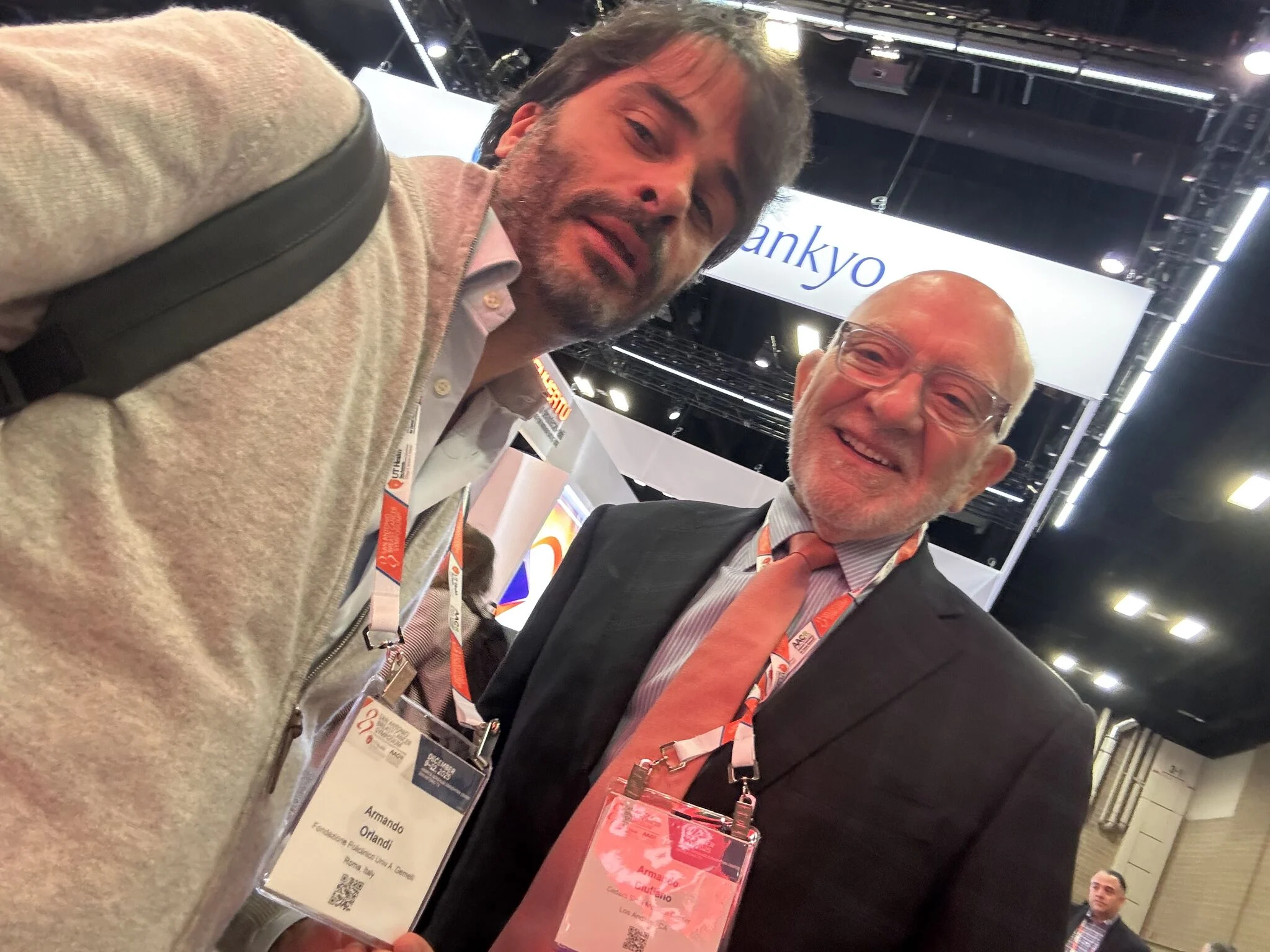
In the picture: Share the name with THE LEGEND Prof. Giuliano.”
You Can Also Read:
15 Posts Not to Miss from SABCS 2025, Part 1
20 Posts Not to Miss from SABCS 2025, Part 2