The San Antonio Breast Cancer Symposium (SABCS) 2025 is taking place from December 9–12, 2025, in San Antonio, Texas, serving as one of the world’s premier forums for breast cancer research and clinical innovation. Bringing together oncologists, surgeons, radiologists, scientists, patient advocates, and industry leaders, SABCS 2025 is showcasing cutting-edge advances across the spectrum of breast oncology from translational science and precision therapeutics to diagnostics, survivorship, and global care standards. The meeting is featuring high-impact scientific presentations, educational sessions, late-breaking data, and extensive industry participation. Core content is also being made available online and on-demand, ensuring broad accessibility for the global breast cancer community.
20 Posts Not to Miss from SABCS 2025
In this article, we selected 20 key posts you shouldn’t miss, capturing the most impactful insights, research updates, and expert perspectives shared throughout SABCS 2025.
“Day 2 SABCS25 update
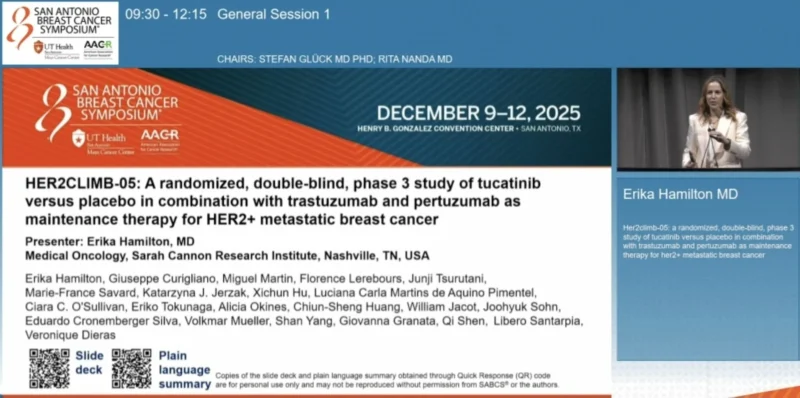
HER2CLIMB-05
1st-line treatment remains taxane + trastuzumab (T) + pertuzumab (P), followed by T+P maintenance.
HER2CLIMB-05 highlights what we see daily in clinic: progression during maintenance is still common.
HER2CLIMB-05 asked whether adding tucatinib earlier could shift long-term disease control.
Trial Design
* 654 women enrolled after 4–8 cycles of induction therapy without progression.
* Median age 54. Ethnicity reported as: 45% White, 35.2% Asian, 2.9% Black, 19.3% Hispanic/Latino(a)/Spanish origin.
* Baseline: 12.4% with history/presence of brain metastases; 52.6% HR+.
* Randomised 1:1 to tucatinib vs placebo with T+P (IV or SC).
* Endocrine therapy allowed for HR+ disease.
Key Results
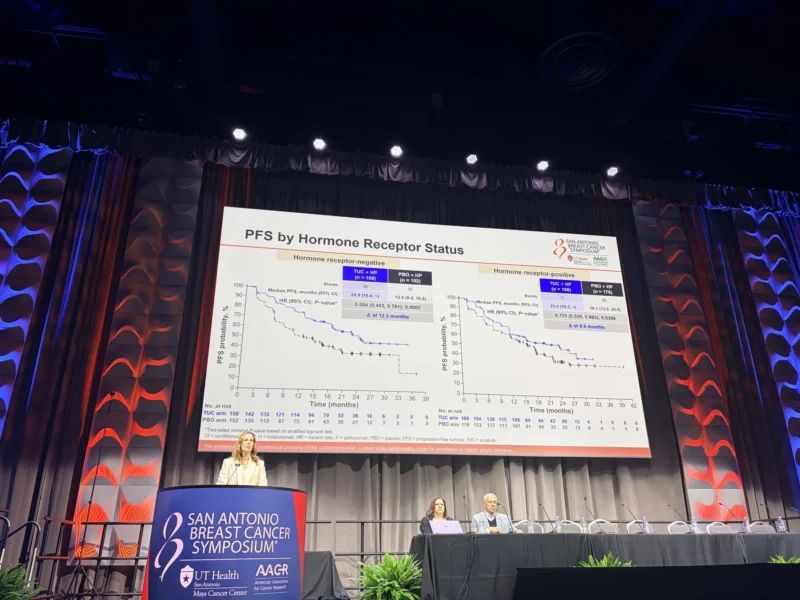
* Significant PFS improvement: 24.9 vs 16.3 months, HR 0.641 (95% CI 0.514–0.799; p<0.0001). Absolute benefit of 8.6 months.
* HR – : 24.9 vs 12.6 months
*HR + : 25 vs 18.1 months
* Benefit was consistent across all prespecified subgroups, including patients with baseline brain metastases.
* OS remains immature (51 deaths): HR 0.539 (95% CI 0.303–0.957; p=0.032).
Toxicity
* Most common events with tucatinib:
* Diarrhea 72.7% (grade ≥3: 6.1%)
* Nausea 33.1%
* ALT rise 28.2% (grade ≥3: 13.5%)
* AST rise 25.8% (grade ≥3: 7.1%)
* 13.5% discontinued tucatinib due to adverse events.
Clinical implication
* HER2CLIMB-05 sits in an evolving landscape where first-line intensification is gaining traction.
* PATINA added CDK4/6 inhibition after induction for HR+/HER2+ disease and improved PFS but only for the hormone-receptor + subgroup.
* DESTINY-Breast 09 suggests that T-DXd in the first line may further reshape treatment algorithms, but toxicity and long-term tolerability remain key considerations.
* HER2CLIMB-05 is different: it evaluates an oral, targeted agent with known activity in brain metastases, applied to all HER2+ patients, irrespective of hormone status.
* If adopted, this could:
– strengthen first-line disease control for a broader group of women,
– provide a maintenance option with proven CNS activity,
– give patients more confidence during the vulnerable transition from chemotherapy to maintenance.
I note the low 2.9% Black participation which reminds us that efficacy alone doesn’t guarantee equity. We must ensure diverse trial involvement and fair access to treatment so all women benefit, not just those represented in studies.”
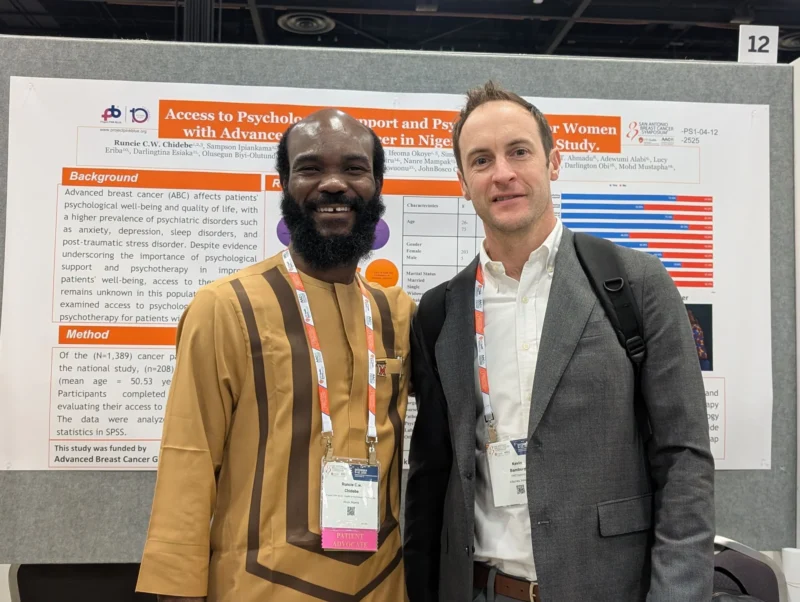
“Today, I presented our poster on “Access to Psychological Support and Psychotherapy for Women with Advanced Breast Cancer in Nigeria. A National Study” at the San Antonio Breast Cancer Symposium in San Antonio, Texas.
In Nigeria, we do a lot to treat the disease, however, we sometimes miss treating the patients and their mental health and wellbeing. This study examined access to psychological support and psychotherapy for patients with ABC in Nigeria. Of the 1,389 cancer patients recruited in the national study, 208 patients were with advanced breast cancer (ABC). While 203 females and five males.
The findings showed only 13.5% received counseling from a qualified clinical psychologist on the day of diagnosis. Cancer diagnosis had a significant psychological impact on 83.7% of participants, yet only 44.2% received psychological support during treatment, leaving 55.8% without access.
We argue that establishing psycho-oncology clinics and recruiting clinical psychologists to provide psychotherapy for patients could help bridge this gap and enhance mental well-being in Nigerian oncology centres.
Thanks to Kevin Bambury – ONCOassist my friend who can around and asked me critical questions.
Special thanks to my Co-authors from all the six regions of Nigeria. Maria Chidi C Onyedibe Emeritus Professor Ifeoma Okoye MBBS, FWACS, FMCR Dr. Aruah Simeon Chinedu OBINNA C. ASOGWA Dr Oiza Tessy Ahmadu MBBS, FWACS, FCNP(SA) MMED(NUC MED) EJIKE UGWU ADEWUMI ALABI , Lucy Eriba, Darlingtina Esiaka, PhD, CPG, CPH Sampson Chinonso Ipiankama Olusegun Biyi-Olutunde Maurice Nandul Nimark (MBBS, MSc, FWACS) NANRE MAMPAK Ismail Hadi Zubair Darlingtina Obi, Keyna Omenukor Hassan Dogo & JohnBosco Chukwuorji
Thanks to ABC Global Alliance , Miami University , Scripps Gerontology Center and Project PINK BLUE for the support.
Special thanks to From Testing to Targeted Treatments (FT3) for funding me to this symposium.”
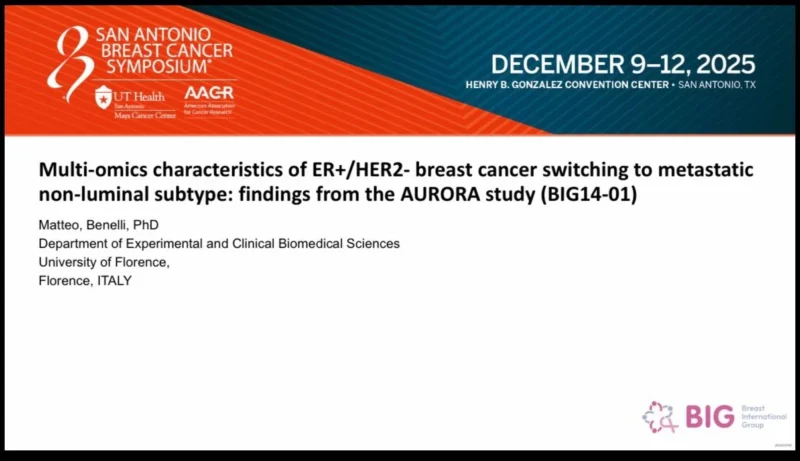
“Honored to have presented key findings from the hashtag#AURORA program from BIG against breast cancer today at SABCS25 in San Antonio.
Our work reports on cases where ER+/HER2- primary tumors with LumA/B intrinsic subtype shift to a HER2-enriched intrinsic subtype in metastases. This phenotypic switch is associated with more aggressive disease and reduced responsiveness to adjuvant endocrine therapy.
We also identified genomic and transcriptomic features already detectable in primary tumors that are associated with this switch, including distinct patterns compared to tumors that acquire ESR1 mutations in metastases following adjuvant endocrine treatment.
My sincere thanks to BIG and the entire AURORA team, especially the core DAC, for outstanding work in analyzing and interpreting these data. Very grateful to collaborate with all of you .”
“Day 1 of SABCS2025 is shining bright!
Incredible sessions to kick things off and even better conversations throughout the day.
Grateful for the chance to:
Discuss real-world practice patterns and use of adjuvant CDK4/6 inhibitors in the community
Join a panel on the future role of MRD testing in breast cancer
Reconnect with old friends and meet new collaborators
And my favorite part — spending time with my mentees and seeing how much they’ve grown!
This is why meetings like SABCS matter — science, strategy, community, and mentorship all in one place. Onward to more great data and dialogue ahead.”
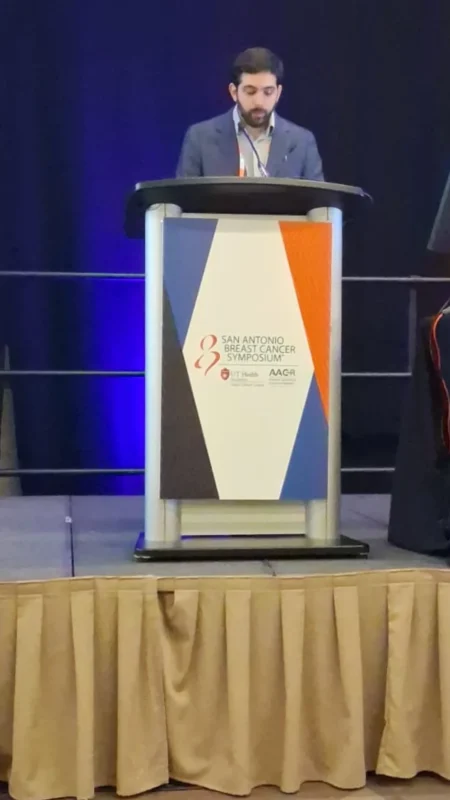
“I am very proud of Felice Pepe, a brilliant post-doc from our lab, who was selected to present data from his project in a Spotlight Session at San Antonio Breast Cancer Symposium. He discussed about hashtag#chromatin remodelling in resistance to CDK4/6 inhibitors in ER+ BreastCancer. Results from this study remember us that targeted NGS panels, as well as Whole Exome studies, do not fully capture the heterogeneous mechanisms of drug resistance.
Based on these data, we will further clarify whether inhibition of hashtag#AP-1 complex might be a novel therapeutic target in this context.
Thanks to AIRC – Foundation for Cancer Research NGO for funding this project and thanks to all collaborators for their work.”
“At SABCS25, IHC and/or intrinsic subtype switching was the main topic at the PD2 Poster Spotlight 2 session on the molecular evolution between early and late stage tumors.
The main message: it is crucial to re-assess IHC status (and intrinsic subtype if feasible) on residual disease after neoadjuvant therapy, and on a metastatic sample.
Nida Pasha presented results of a methylation-based liquid biopsy assay that allows the determination of ER status in a non-invasive fashion.
Matteo Benelli presented data from the BIG against breast cancer AURORA program demonstrating that intrinsic subtype switching in ER+/HER2- metastatic breast cancer mediates endocrine resistance and is predictive of patient outcomes.
Personal comment: determination of subtype on relapse is missing in recent phase 3 studies investigating novel endocrine-based treatment strategies. To be considered for future studies.”
“Beautiful presentation of Her2Climb05 by Dr. Erika Hamilton (who also happens to be my mentor ) shows a statistically significant improvement in mPFS by 8.6 mo with the addition of tucatinib to HP maintenance in HER2+ MBC.”
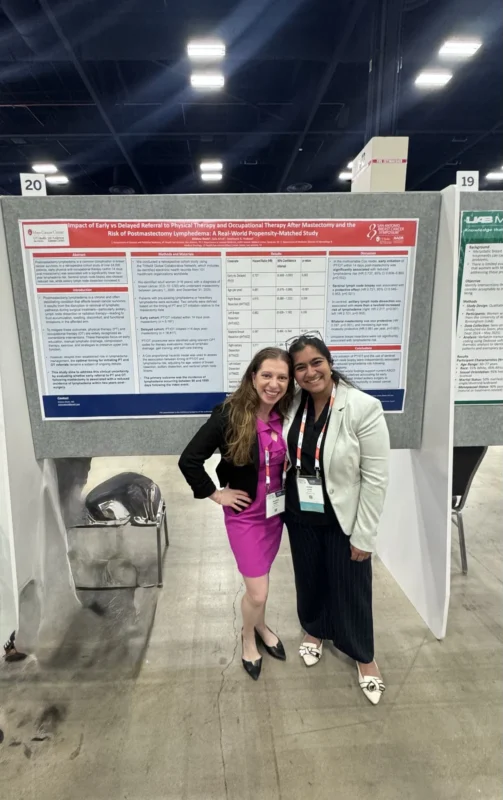
“Beyond proud of Krishnah Doshi on her poster presentation on real world data on the impact of PT/OT referrals on lymphedema at SABCS San Antonio ! Also my first poster presentation as a senior author! ”
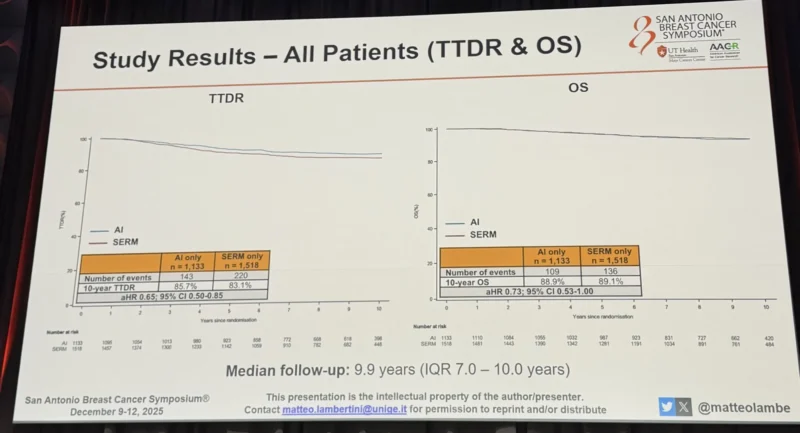
“10-year ALTO data at SABCS25: In HR+/HER2+ early breast cancer, AIs outperform SERMs for DFS and TTDR, with no OS difference. Benefit seen in both pre- (+\- OFS) and postmenopausal patients.”
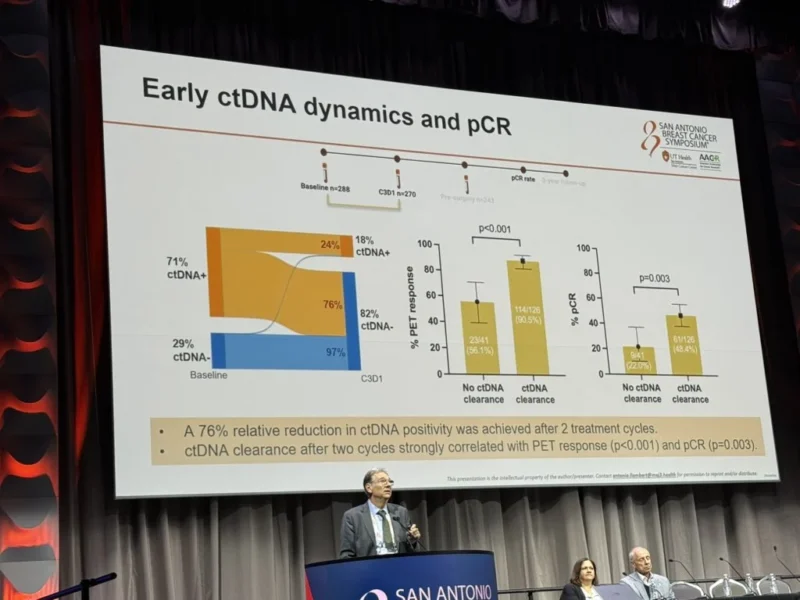
“Interesting sub-analysis from PherGAIN: early clearance of ctDNA at C3D1 predicted higher pCR and better outcomes for HER2+ eBC. Baseline ctDNA status also predictive of outcomes. Not ready for prime time, but extremely promising and warranting of further validation.”
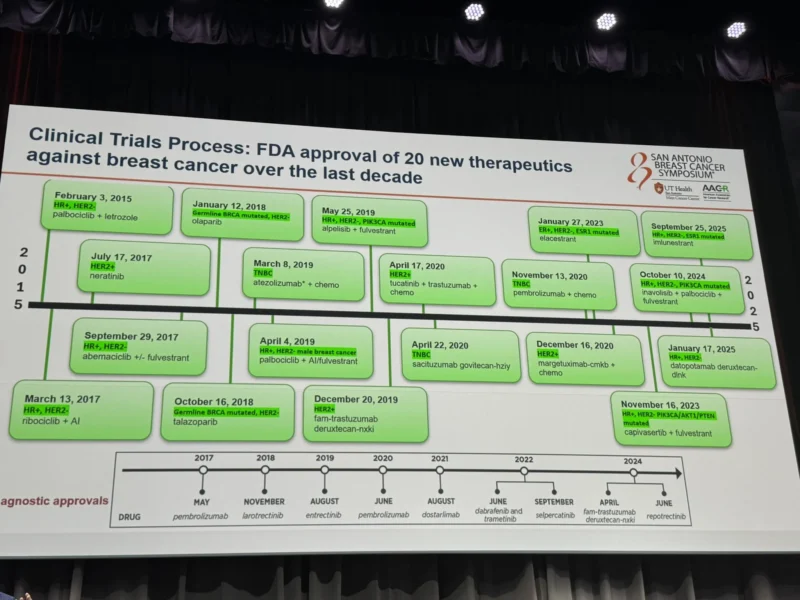
“WOW! Just fantastic to see this slide showing visually what we all know. Pace of improvement in breast cancer is fast ! to all researchers, participants on trials, and our FDA Oncology colleagues who do an unbelievable amount of work for these approvals!”
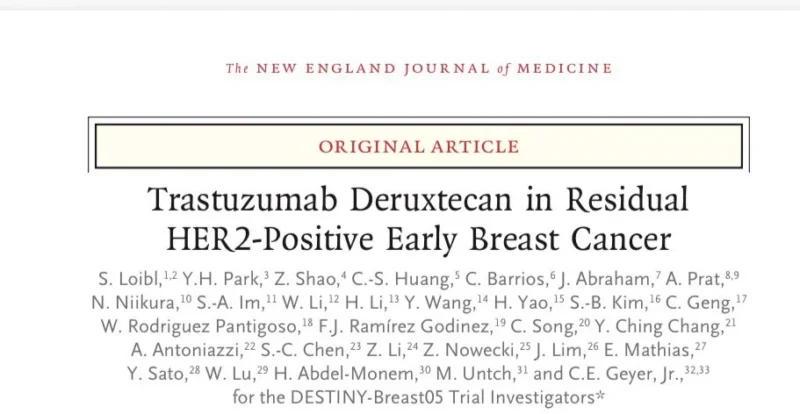
“The biggest escalation in HER2 early breast cancer since KATHERINE T-DXd just set a new benchmark in high risk residual disease at SABCS25. DESTINY-Breast05 T-DXd vs T-DM1 after neoadjuvant therapy and residual invasive disease. Results T-DXd halved recurrence risk vs T-DM1 HR 0.47 (95% CI 0.34-0.66, P<0.001) 3 year iDFS 92.4% vs 83.7% Distant recurrence 5.1% vs 9.9% HR 0.49 Brain mets 2.1% vs 3.2% HR 0.64 ILD remains key toxicity 9.6% with T-DXd (two grade 5 events) Requires strict monitoring. Takeaway For high risk HER2 early breast cancer, T-DXd becomes the new post neoadjuvant standard unless contraindicated. Full paper in comments.”
“See additional data. OS way too early. Benefit regardless of control ET comparator. Safe with less AEs leading to discontinuation 5.3 vs 8.3%. Arthralgias similar in both arms but less dc in G arm due to this. 1.6 v 3.7%. Bradycardia mostly grade 1. ”
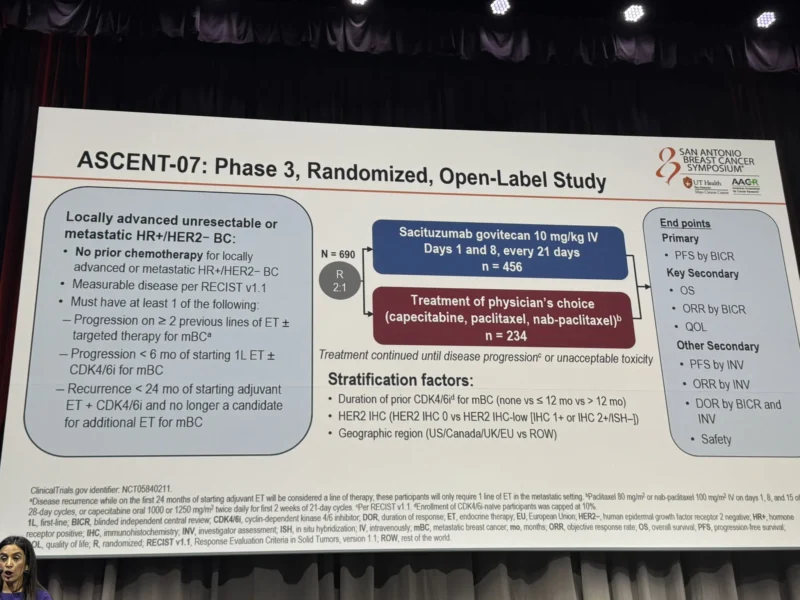
“ASCENT07 by Komal Jhaveri PFS 8.3 months regardless of arm Majority got taxane in control arm, ~ 40% received cape Despite this, OS appeared to favor SG but immature SG didn’t appear to be better tolerated.”
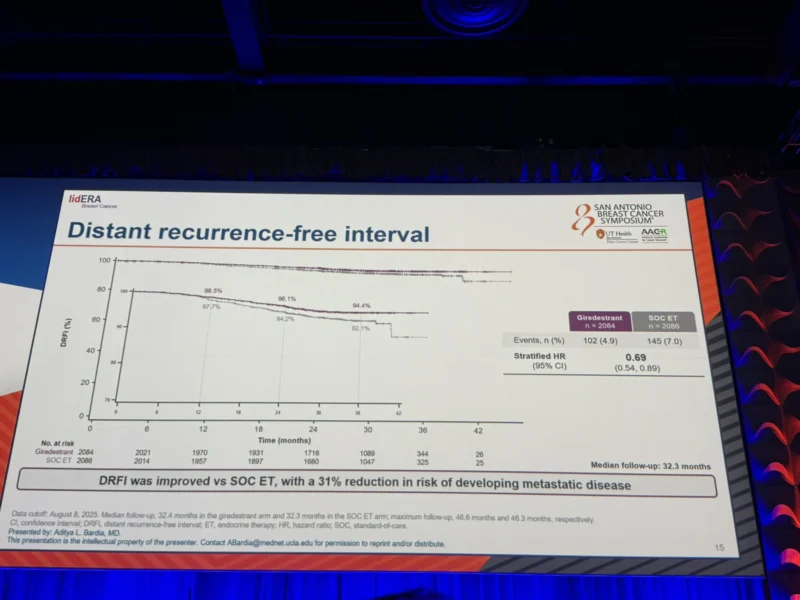
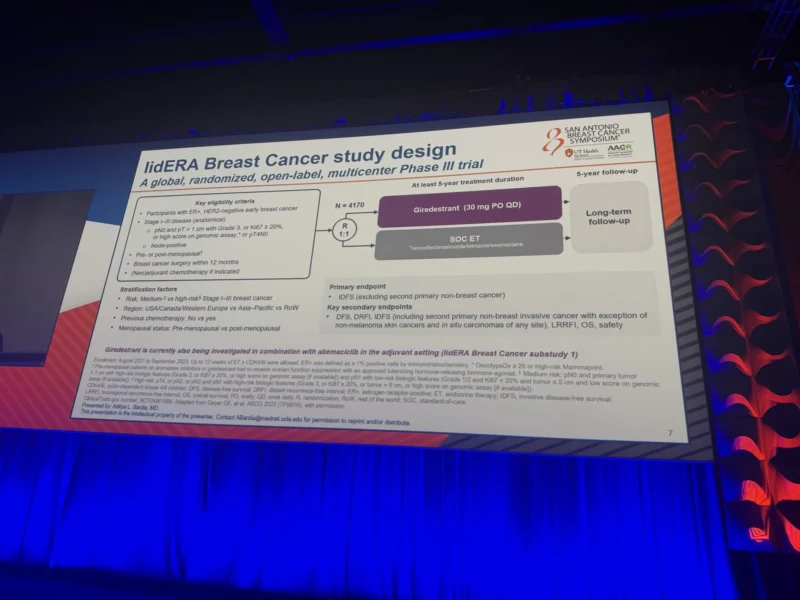
“Excellent presentation by Aditya Bardia of the phase III lidERA study which showed that Giredestrant, a novel SERD, reduced the risk of recurrence or death by 30% compared with SOC endocrine therapy in early-stage HR+ breast cancer Although OS was immature, a trend towards benefit of giredestrant was seen Side effect profile fairly similar to other endocrine therapies Will be practice-changing for many patients with early HR+ breast cancer.”
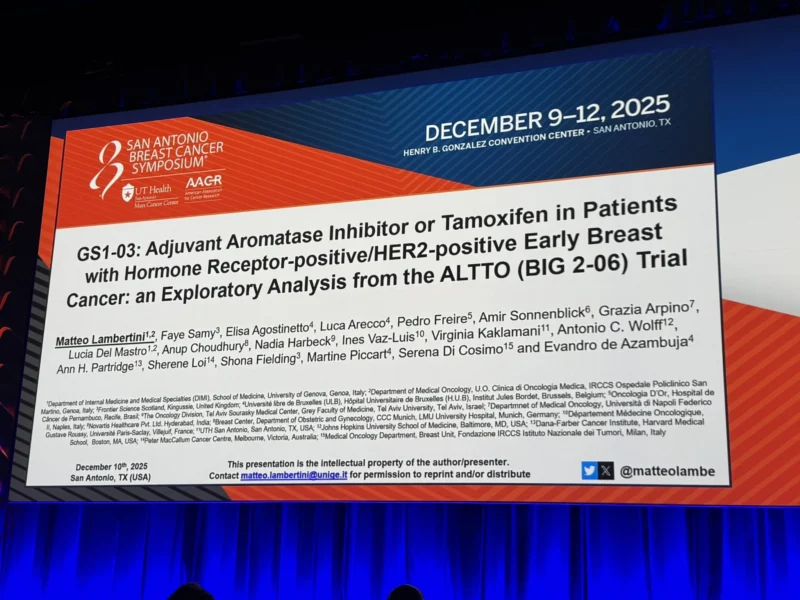
“Exploratory analysis from the ALTTO trial: In HR+/HER2+ early breast cancer SABCS25 Matteo Lambertini,
AI as adjuvant endocrine therapy showed significantly better DFS and TTDR vs SERM, with nearly 10 years of follow-up. No OS difference observed. Benefit seen in both pre- and postmenopausal patients.”
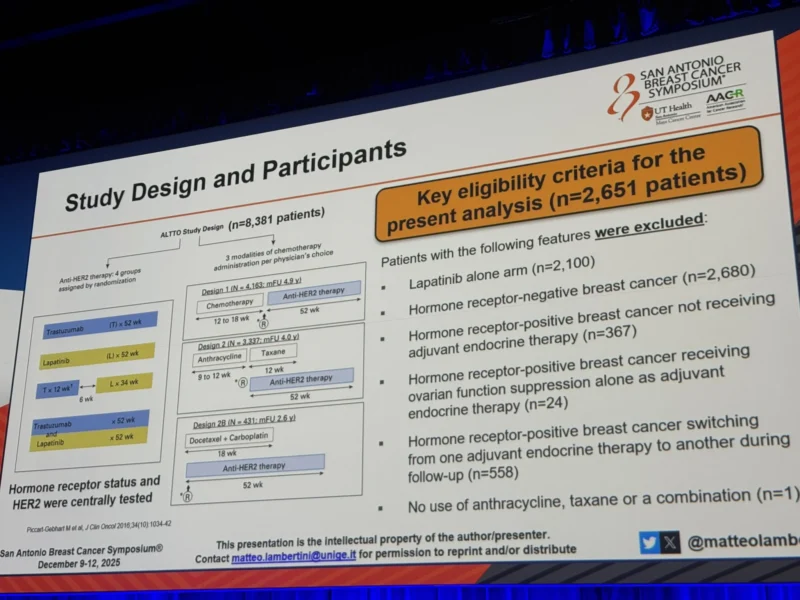
“ALTTO Endocrine Analysis (GS1-02) The PROFESSORE Matteo Lambertini Part 1 The great debate SETTLED: AI vs Tamoxifen in HR+/HER2+ early BC ALTTO 10-year data is crystal clear: Aromatase inhibitors WIN. • DFS: aHR 0.65 • Fewer local AND distant recurrences But HERE’S the kicker Premenopausal + AI±OFS = 90% 10y DFS! That’s a 56% risk reduction vs tamoxifen alone. Time for prospective trials!”
“Endocrine treatment analysis in ALTTO trial presented by Matteo Lambertini. Use of AI vs SERMs: DFS Time to distant relapse Similar OS In premenopausal AI+OFS (vs SERM +/- OFS) Is associated with better DFS Practice-informing results.”
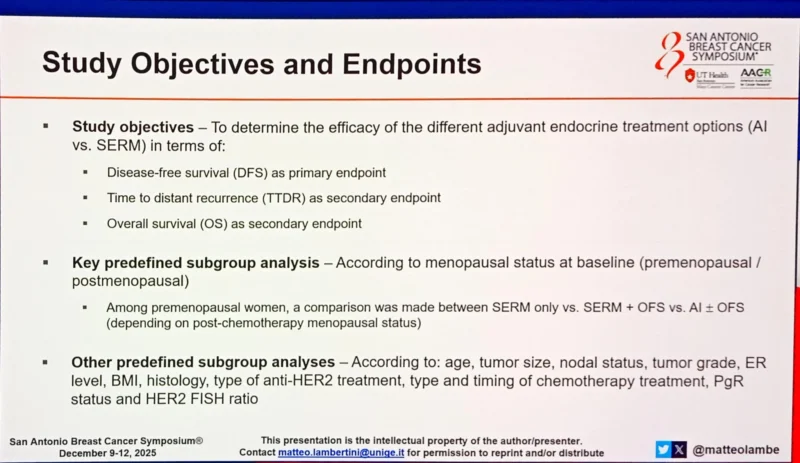
“Excellent data from Matteo Lambertini showing DFS benefit with AI > SERM in pre- and post-menopausal women with HR+/HER2+ EBC in an exploratory 10-year follow-up analysis of ALLTO. Note that pts using a switch strategy were excluded. Informative for future trial design! ”
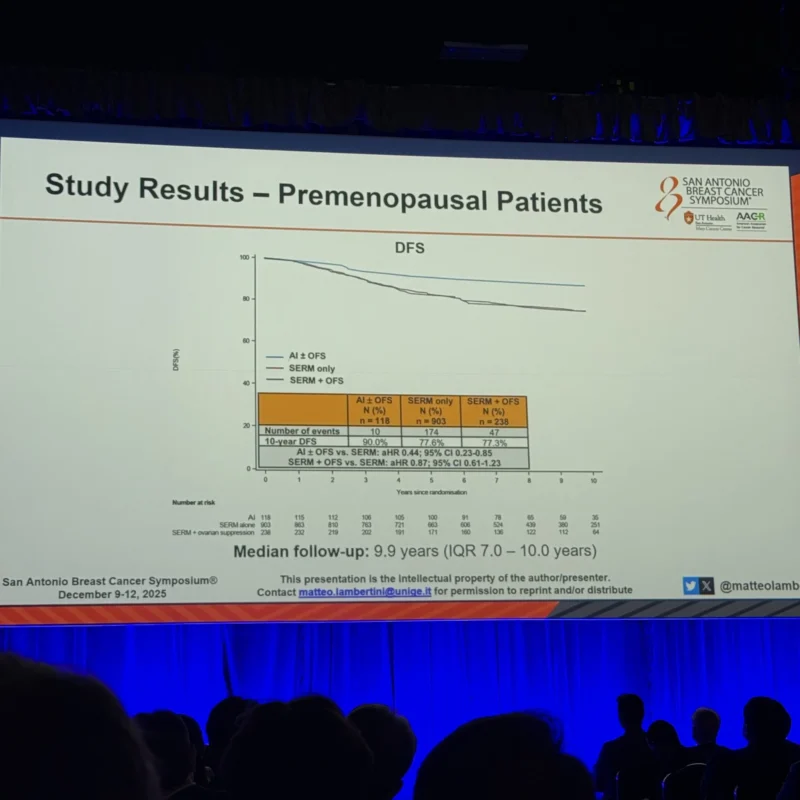
“ALTTO trial: AI vs SERM data in early-stage HER2+ BC 10 yr DFS: 80.1% (AI) vs 76.5% (SERD), HR 0.65 10 yr TTDR: HR 0.65 10 yr OS: 0.73 (95% CI 0.53-1.00) Postmenopausal: HR 0.65 Premenopausal: HR 0.45.”
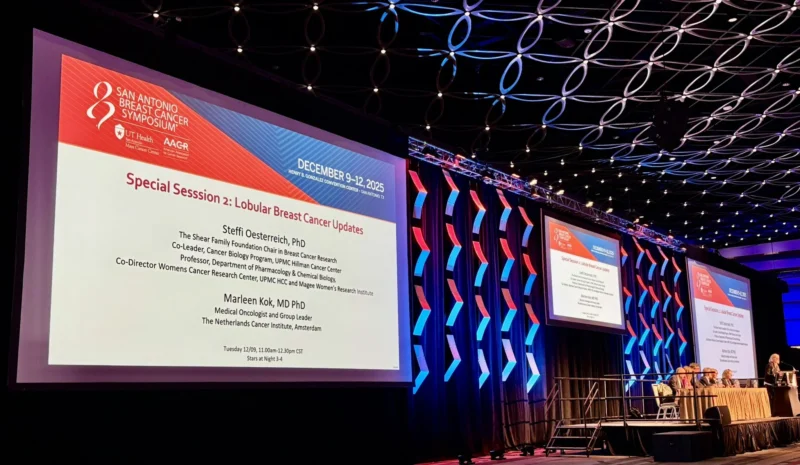
“Great start SABCS25 Special session on important topic – Lobular Breast Cancer update with super speakers”
“lidERA: Giredestrant moves the needle in early HR+ disease: 3-yr IDFS up by 2.8% (HR 0.70) vs standard ET. First positive data for an oral SERD in the adjuvant setting!!!”
“Phergain ctDNA using Guardant Reveal At baseline, 71% detectable No assoc of baseline ctDNA and pCR but assoc w/ worse 3 yr iDFS (HR 4.1, p=0.046) Clearance at C3D1 assoc with pCR ctDNA positivity prior to surgery (17%) has worse iDFS (HR 5.1).”
15 Posts Not to Miss from SABCS 2025, Part 1
Written by Nare Hovhannisyan, MD