





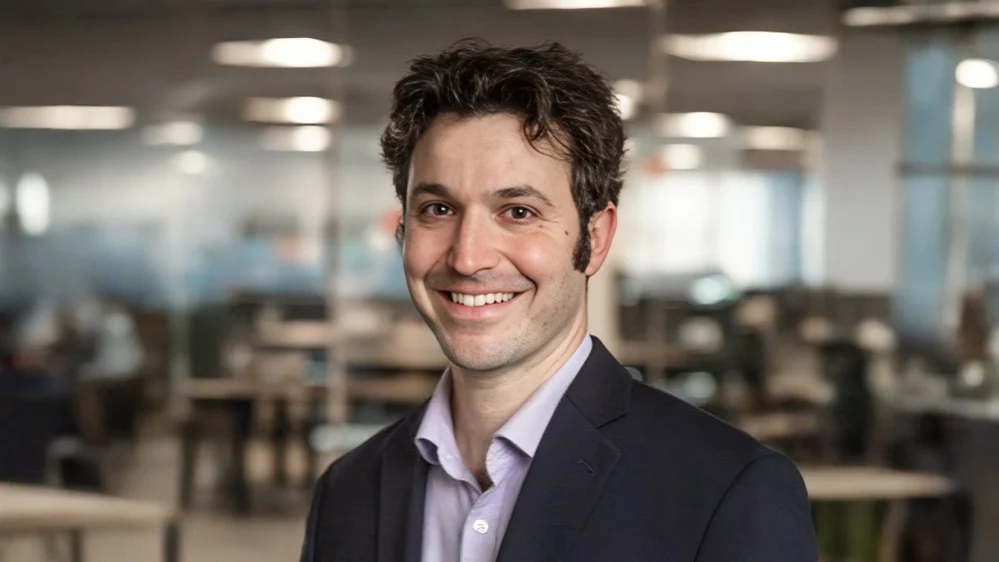
Andrew Beck, Co-founder and CEO at PathAI, shared a post on LinkedIn:
“Last week, we signed an agreement to be acquired by Roche, pending closing conditions, and I’ve been moved by the excitement from teammates, investors, and partners. This truly is a momentous development in this field, and the culmination of a series of advances of which we’re still near the beginning.
About twenty years ago, Murray Resnick and Edmond Sabo introduced me to applying neural nets to pathology images. It was towards the end of the second (and what now appears to have been the final) AI winter. Although these approaches could be wrangled to produce interesting research results from time-to-time, the technology was highly manual (requiring time-consuming steps for tissue and cell segmentation, feature extraction of a small set of expert curated features, and the training of brittle, simple neural networks with limited performance and poor generalizability). Our work produced a cool result, but the engineering and automation challenges meant it would not make it in the real world beyond an interesting publication.
Neural networks had actually been tried in cytology (the branch of pathology focused on the analysis of cells in fluid) before. PAPNET was screening cervical cytology commercially in the mid-1990s. Even earlier, Stan Lapidus (an early advisor to the company and on our board since its formation) had built computer image analysis for cervical cytology at Cytyc, though he learned that improvements needed to be made in the processing of cervical cytology specimens prior to effective application of automated image analysis, and he made key inventions leading to the development of the ThinPrep, which has revolutionized the field of cytopathology.
By the early 2000s, there was not a great deal of new development in the application of AI to tissue-based pathology (histopathology). It was clear the long-term future potential was there, just many things had to change in the world first.
I continued to work in the field. During my anatomic pathology residency and my PhD in Biomedical Informatics at Stanford, I had the opportunity to work with Matt van de Rijn, Rob West, and Daphne Koller, and we developed one of the first modern approaches to large scale feature extraction and machine learning applied to breast cancer pathology images, a system we called C-Path. This approach was useful for discovery and research but was still far from ready for true translation to a scalable clinical platform or product.
By the mid-2010s, neural nets had returned in force and now they were deep and actually worked. At BIDMC and Harvard Medical School, Ben Glass and I convinced Dayong Wang to join us from Michigan State, where he was working with Anil Jain on deep learning applied to facial recognition. A few months later, Aditya Khosla joined us to collaborate on applying deep learning to research applications in pathology. He had been part of the Stanford team behind the ImageNet Large Scale Computer Vision Challenge and had done his PhD work on using deep learning to predict human behavior from images.
Led by Dayong‘s inventiveness, work ethic, and refusal to lose, we won the 2016 Camelyon Grand Challenge (described here and here). Several other academic groups were close behind – all using deep learning-based approaches, which massively out-performed more traditional image analysis approaches.
Seeing what was possible for the first time, with a clear vision of what the future of pathology would look like, we eventually all left our roles in academia and went full-time to work on PathAI. From day one at PathAI, we believed deep learning-powered pathology would have tremendous impact for advancing both drug development and clinical diagnostics, and our earliest partnerships reflected that: including BMS, Genentech, and Novartis on the drug development side, and Philips on the diagnostics side.
And since those early days, we have continued to scale our work in drug development and diagnostics. And our team continues to advance the field in the development of novel deep learning-based approaches for pathology – some recent examples include our recent publication of v4 of PLUTO– our pathology foundation model. We’ve now completed over 150 publications and presentationsin the past 7 years, including both technical advances and work in collaboration with our diagnostics and drug development partners.
2025 was a big year for PathAI in earning regulatory achievements in both drug development (AIM-MASH AI Assist as the first AI tool qualified by both the EMA and the FDA for use in MASH clinical trials) as well as diagnostics (AISightDx earned FDA 510(k) clearance for primary digital diagnosis with the industry’s first pre-determined change control plan for an IMS).
One of the most meaningful moments for me has been watching AISight usage scale from zero to hundreds of thousands of slides per month. Each image is from a piece of tissue taken from a patient and the importance of accurate and timely interpretation and diagnosis can not be overstated.
None of this happens without our incredible team.
Summarizing ten years of teamwork in one short paragraph is impossible, and I won’t be able to list everyone. But a few who have had tremendous impact: I’m grateful for Aditya Khosla, our co-founder and CTO, and the entire Khosla family, who supported us from day one. For Ryan McLoughlin, who left Google to join Aditya and me as our first software engineer, even before we had an office working out of my basement.
For Ben Glass, who started as the lab manager at our lab at Harvard Medical School, became one of our earliest hires, and now leads our product, translational science, and AI teams. (He’s also written the most Slack messages in company history.) For Dayong Wang, our first leader of machine learning. For Elizabeth Storti, CPA, our Chief People Officer. For Tiffany Freitas, our first Chief Business Officer who drove forward all of our first major partnerships and Series B and C financings.
For Michael C. Montalto, PhD, our first major Biopharma customer during his time at BMS and then our first CSO who really set our scientific strategy for partnering with Biopharma. For Harsha Vardhan Pokkalla, who joined PathAI right from the beginning after completing his studies at Carnegie Mellon and now leads Machine Learning. And for Aditya Dhoot, who also joined PathAI right out of school and grew to become our head of engineering. For M. Jackson Wilkinson and Don O’Neill who were both foundational early leaders of product engineering.
For Nick Brown, our Chief Growth Officer, who has been so critical to many of our most important partnerships, including Quest and Roche, and has led the commercial growth of our Digital Diagnostics business. For Ilan Wapinski, who built our first translational science team, and for Christina Jayson, Ph.D. who leads our work in Inflammation and Immunology, and Saumya Pant, who built our first Biopharma Laboratory. Esther Abels, our first VP of Regulatory, and Leticia Soto who set up our QMS as our first head of Quality.
For Katy Wack, who set-up our clinical sciences function and was a driving force behind many of our regulated devices, including AIM-MASH. For Sudha Rao MD FCAP FASCP, Murray Resnick, and Jennifer Kerner MD, pathologists who made the plunge to join us and build our Pathology team from the ground up. For Chris Kirby our GC, Brandon Eldredge our CFO, and Stephanie Mordaunt our Senior Director of Finance and Controller who have played a central role in all of our recent transactions and financings, including the Roche transaction.
For Pete Romanowich, who built our first PMO function and has expanded to SVP Operations, impacting teams across the company, to Eric Walk MD, FCAP our first and only CMO who is an amazing ambassador for PathAI. And to Thomas Colarusso, Jennifer Quigley, Matt Grow, and Paul Beresford, PhDwho have all played important commercial roles at PathAI. And there are far too many others to name here.
I’m grateful to our board, past and present, who have shaped our thinking at every inflection point: Stan Lapidus, Jeffrey Leiden, M.D., Ph.D., Rob Perez, Ronald Paulus , Gail Marcus , Bridget Duffy, MD, and Michel Vounatsos.
And I’m grateful to our first outside investors, who saw the long arc when it was still very early: Cain McClary, MD at KDT Ventures, Francisco Gimenez at 8VC, Zal Bilimoria at Refactor, David Fialkow and Olivia Lew at General Catalyst, Sarah Hodges and Jamie Goldstein at Pillar, and Michelle Detwiler at Biospring. And to Daniel Sundheim and Jeremy Goldstein at D1 Capital, David Rubin at Merck Global Health Innovation Fund, Marcia Eisenberg at LabCorp, David Hodgson at General Atlantic, and the many others who contributed through the years.
And to my wife Thea, my parents, and my family: thank you for your unwavering support from the very beginning.
Roche is the perfect home for this next chapter.
PathAI first partnered with Roche in 2021 around algorithm integration, and significantly expanded our work together in 2024 around companion diagnostics. Roche is a 130-year-old company, founded in Basel, Switzerland in 1896 by Fritz Hoffmann-La Roche, whose descendants still play an important role today, which is all to say, Roche is committed to scale and impact and is focused on the long term.
In 2025 alone, Roche delivered more than 30 billion diagnostic tests across 150+ countries. At the same time, they developed medicines that reached tens of millions of patients. Roche is uniquely positioned at the interface of therapeutics and diagnostics and well situated to accelerate the impact of AI-powered pathology on both.
Their motto, “Doing now what patients need next,” resonates tremendously with how we’ve always thought about the work we pursue at PathAI: science, innovation, and products with the potential to truly improve outcomes for patients and the healthcare system.
The world has changed tremendously since my first introduction to neural nets for pathology 20 years ago. AI is now perhaps the major driver of overall economic growth. AI is rapidly expanding its capabilities to impact virtually all aspects of work in one way or another. Demis Hassabis has been putting 50/50 odds on artificial general intelligence by 2030. And even today (before AGI), the “capability overhang” between frontier model capability and clinically usable products is widening.
Given this distance between what is now possible and what products currently exist, we’re still in the early innings; however, for the first time in my career, we’re quickly approaching a time of rapid change: the barriers to adoption (technical capabilities, pace of product development, data and compute infrastructure, regulatory processes, decreasing costs, and overall increasing pace of digitization) are all falling in tandem and the rate of adoption is increasing.
Ten years from now, “AI-powered digital pathology” will sound quaint. All pathology will be digital, and all of it will leverage AI.
I’m thrilled for the chance to make that real with Roche.”
Other articles about PathAI on OncoDaily.