This week’s oncology biotech newsflow reflected the breadth of momentum across the sector — from late-stage strategic dealmaking and financing activity to platform expansion, scientific positioning, leadership appointments, and translational progress in targeted and cell-based therapies. Below is a roundup of 10 featured updates.
Nicholas A. Saccomano Ph.D. – President and CEO, OnKure Therapeutics
In reposting OnKure Therapeutics original announcement, Dr, Saccomano wrote:
This transformational financing enables us to advance the development strategy for our next‑generation PI3Kα pan‑mutant selective inhibitor candidates, which represent a defining phase of our mutation‑selective strategy. We appreciate the significant commitment by the participating specialist biotech investors who believe in the potential of our PI3Kα pan-mutant portfolio. We believe the clinical experience generated from the PIKture‑01 trial provided important validation of our approach to selectively targeting PI3Kα while avoiding class‑limiting toxicities predictably seen by insufficiently selective inhibitors. These insights directly informed the design of our pan‑mutant programs, defining the high bar attributes of our molecules. With the additional capital raised through this private placement, we are focused on leveraging our chemistry platform and clinical insights into PI3Kα signaling into differentiated, next-generation candidates for breast cancer and vascular anomalies, with the goal of delivering medicines that offer meaningful improvements in efficacy and tolerability for patients.
We press on!
In the original company post, OnKure Therapeutics wrote:
OnKure Therapeutics Announces Oversubscribed $150 Million Private Placement to Advance Next-Generation PI3Kα Pan-Mutant Selective Inhibitor Candidates in Breast Cancer and Vascular Anomalies
Read about it here
Spencer Knight – Business Development Director – Biotechnology, Hartmann Young
BREAKING NEWS:
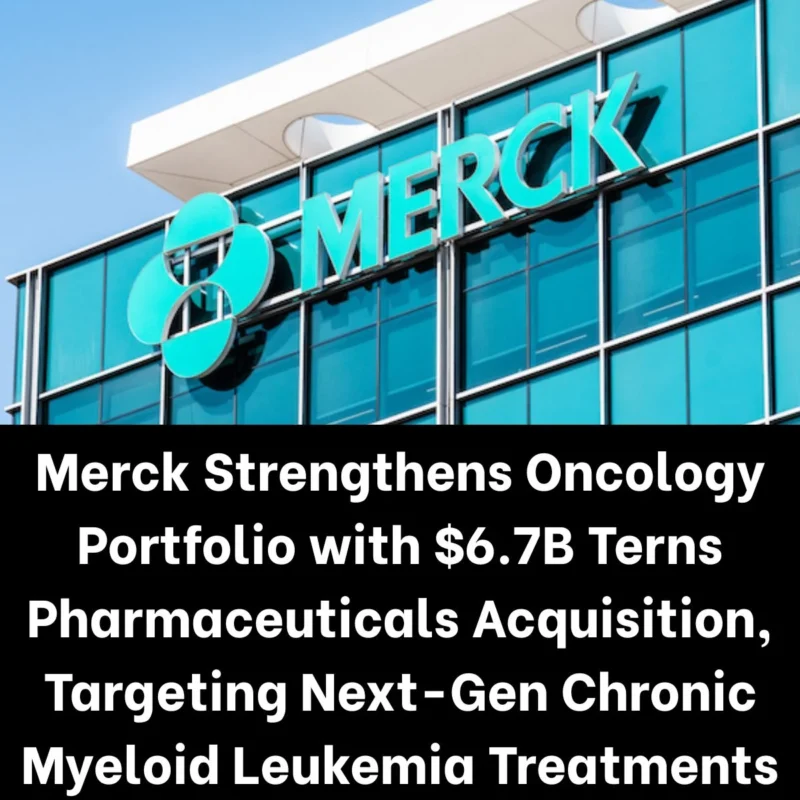
Merck has announced a $6.7 billion deal to acquire clinical-stage biotech Terns Pharmaceuticals, strengthening its oncology and hematology pipeline with promising CML candidate TERN-701.
Key highlights:
TERN-701 is a novel oral allosteric BCR-ABL1 inhibitor for chronic myeloid leukemia (CML).
It is currently in Phase 1/2 trials with encouraging early efficacy and safety data.
It targets patients with treatment resistance or intolerance to existing TKIs.
It was granted FDA Orphan Drug Designation in 2024.
It expands Merck’s oncology pipeline ahead of Keytruda’s patent expiry.
While still early stage, TERN-701 could become a differentiated option in a well-established but evolving CML market.Congratulations to the teams at Merck and Terns Pharmaceuticals on this strategic step forward in advancing cancer innovation.
Spencer Knight/LinkedIn
LentiStem Oncology Biotech
José Aynat, PharmD, MBA appointed by the Board of Directors as Co-CEO of LentiStem Oncology Biotech to drive development, capital strategy, and institutional expansion.
LentiStem is entering a new phase of execution and company building, advancing a focused oncology pipeline and strengthening leadership to support the next stage of development and external engagement.
The company is developing next-generation gene and cell therapies, with programs in leukemia and lymphoma and a strategic expansion into solid tumors through next-generation CAR-Ts.
Based at GENYO. Pfizer-University of Granada-Junta de Andalucia Center for Genomics and Oncological Research, LentiStem builds on a strong scientific foundation within one of Europe’s most established oncology research environments.Together with the scientific team, José will drive the development of a CAR-T platform technology extending from hematological malignancies into solid tumors.

LentiStem Oncology Biotech/LinkedIn
Matthew Baker – CEO, Laigo Bio
In reposting Laigo Bio’s original announcement, Baker wrote:
A strong outcome delivered by the entire Laigo Bio team reflecting both the quality of the science and the commitment behind it.
We are grateful to Kurma Partners for their continued conviction in our platform, and delighted to welcome Biovance Capital to the syndicate. This financing enables us to advance our programmes with clear focus towards clinical development.
In the original company post, Laigo Bio wrote:
Laigo Bio completes second close of seed round, bringing the total financing to €17M
We’re pleased to welcome new co-lead investor, Biovance Capital, to our investor syndicate, which joins existing co-lead Kurma Partners in the oversubscribed second round
The continued confidence of our investors underscores the potential of our SureTACs™ precision membrane protein degradation platform, and its ability to identify first-in-class dual targeted therapies to redefine the treatment of cancer and autoimmune diseases.
This additional funding will support the advancement of our pipeline as we accelerate our oncology programs towards the clinic and enhance our discovery efforts in autoimmunity and immunology.
Thank you to our investors and partners for their ongoing support. You can find out more here.
Dov Gertz – CEO & Co-Founder, Converge Bio
We are excited to announce the expansion of our collaboration with Purple Biotech (NASDAQ/TASE: PPBT) to accelerate the development of their next-generation tri-specific antibody platform using Converge Bio’s generative AI system.
As Purple Biotech CEO Gil Efron said : “We are excited to expand our relationship with Converge Bio, whose AI platform has already contributed valuable insights to our CAPTN-3 platform.This collaboration is a natural extension of Purple Biotech’s strategy to lead innovation in multi-specific antibody therapies. By integrating Converge Bio’s generative AI with our deep expertise in tumor immunology and conditional activation, we aim to develop next-generation therapeutics that can address some of oncology’s most challenging targets with improved speed and precision.”
Read the full announcement here
Stephen Pitt, Ph.D. – Vice President, Global Head of External Innovation / Search & Evaluation, CSL
I believe that to solve the toughest challenges in oncology, we will need to establish a new community to foster innovation around intratumoral therapies and procedures. Between the incredible up-and-coming technologies, drugs and devices, coupled with strong expertise and talent across the field, together we can reach our goal of delivering the next evolution in the standard of care for cancer.
In my latest LinkedIn article, I share some insights into the Intratumoral Therapy space, how Interventional Oncology at Johnson & Johnson is committed to building this community, and where you can connect with us in the coming months.
Giorgio Calderari – Principal Cofounder. Biodelphis Therapeutics
A new company is emerging in the biotech landscape with a clear ambition on long‑term value in the intersection of science, innovation and execution.
Proud to be Co‑Founder and Chairman of Biodelphis Therapeutics, a Swiss biotech and EPFL spin‑off advancing first‑in‑class Antibody–Peptide Inhibitor Conjugates (APIC) through our patented APICore platform, a novel therapeutic modality designed to overcome historical limitations of protease inhibitors, combining monoclonal antibody targeting with highly selective peptide inhibitors to enable precise, cell‑specific protease modulation with the potential for a meaningfully improved therapeutic index.
A differentiated platform, a first‑in‑class preclinical pipeline, and a capital‑efficient path toward first‑in‑human studies
More to come soon.
Shreeram Aradhye – President, Development and Chief Medical Officer, Novartis
Today, we announced that Novartis has entered into an agreement with Synnovation Therapeutics to acquire a pan‑mutant‑selective PI3Kα inhibitor program, including a Phase I/II asset for HR+/HER2‑ breast cancer and potentially other solid tumor indications.
HR+/HER2‑ breast cancer remains an area of significant unmet need, with many tumors driven by PI3K pathway alterations. While mutated PI3Kα is a well‑established driver in this disease, achieving effective pathway inhibition with a tolerable therapeutic profile has been a longstanding challenge.
SNV4818 applies a mutant‑selective approach designed to more precisely target tumor biology while sparing wild‑type (normal) PI3Kα, with the goal of improving tolerability and enabling combination strategies that may better serve patients over time.
We look forward to advancing this program as part of our broader efforts to address enduring challenges in cancer biology and help improve outcomes for people living with breast cancer.
Ricardo (Rick) R. Suárez – US President and Head of US BioPharmaceuticals Business Unit, AstraZeneca
Today AstraZeneca announced positive high-level results from our Phase III OBERON and TITANIA trials in patients with chronic obstructive pulmonary disease (COPD).
COPD is the 3rd leading cause of death globally, and approximately 50% of patients living with COPD on inhaled standard of care still experience exacerbations, amplifying the risk of cardiovascular events like heart attack, stroke or even death. This promising data demonstrates a significant scientific advancement in COPD and the evolving role of biologic therapies in addressing remaining unmet needs in this patient population.
I am so proud of our R&D, clinical study and global teams for their relentless commitment to deliver pioneering science with the goal of allowing patients to live their lives to the fullest.
Learn more here
Radcliffe Department of Medicine, University of Oxford
Oxford University spinout Dark Blue Therapeutics has been acquired by global biotechnology company Amgen in a deal worth up to US$840 million, marking a major milestone for Oxford-led hashtag#cancer research and innovation.
The deal reflects years of collaborative, multidisciplinary work across the University and its partners to translate fundamental research into promising new medicines.
The acquisition is expected to help accelerate the development of a new type of targeted treatment for hashtag#leukaemia, with the potential to improve outcomes for patients. It is also hoped that this treatment could be expanded to other cancers.
Thomas Milne from the MRC Weatherall Institute of Molecular Medicine is among those upon whose discoveries the company was built. He explains:
‘The company is developing a novel approach to treating leukaemia by targeting proteins that drive cancer growth in aggressive blood cancers, including acute myeloid leukaemia (AML). Our research showed that this approach can inhibit the growth of leukaemia cells while largely sparing healthy cells, raising the prospect of a more effective and better-tolerated treatment.’
Taken together, this week’s featured updates reflect the breadth of momentum shaping oncology biotech, from financing rounds and strategic acquisitions to leadership appointments, platform expansion, and continued progress in targeted and next-generation therapeutic development. Across these posts, the common thread is clear: companies and industry leaders are continuing to push oncology innovation forward through capital formation, scientific advancement, and execution-focused growth.
Read more biotech insights on OncoDaily Biotech.