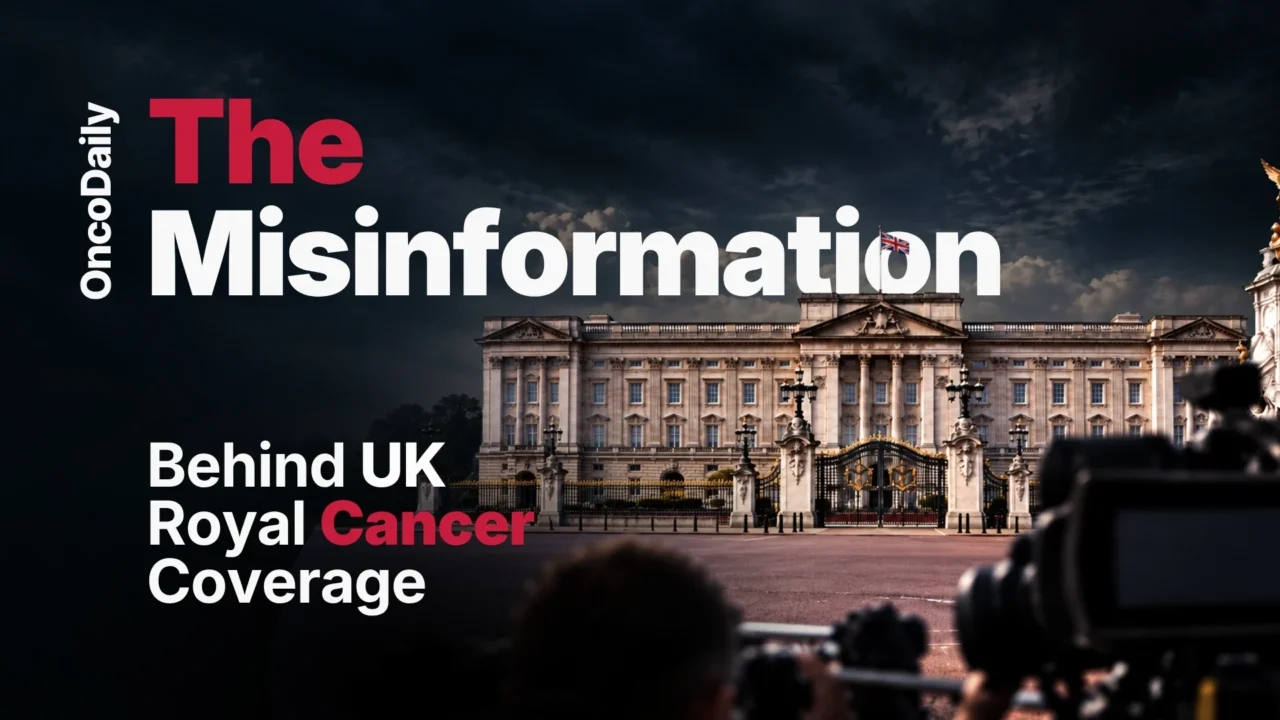
The cancer diagnoses of King Charles III and Catherine, Princess of Wales, generated extraordinary media attention across the United Kingdom. But alongside heightened awareness came another problem: inaccurate information about cancer, treatment, prognosis, and even alternative therapies.
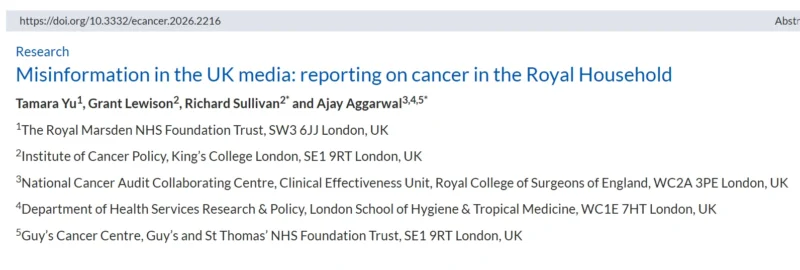
A new study published in ecancermedicalscience found that approximately 1 in 4 UK newspaper stories analyzed in the study contained false or factually inaccurate claims about cancer or cancer care. The analysis was conducted by researchers affiliated with The Royal Marsden NHS Foundation Trust, King’s College London, the Royal College of Surgeons of England, the London School of Hygiene & Tropical Medicine, and Guy’s and St Thomas’ NHS Foundation Trust. The findings add important evidence to the discussion around UK royal cancer coverage and raise a broader question beyond the Royal Family: when millions of people turn to the media for cancer information, how accurate is what they are being told?
What Did the Study Examine?
Researchers analyzed UK newspaper coverage following the announcements of King Charles III’s cancer diagnosis on February 5, 2024, and Princess Catherine’s diagnosis on March 22, 2024. The team searched 19 major UK newspapers and news websites and identified 72 stories containing claims specifically related to cancer or cancer care within the 40 days following the two announcements. Researchers examined the subjects discussed, the backgrounds of journalists, the credibility of quoted sources, and the accuracy of cancer-related claims. Two oncologists assessed those claims using a five-point scale ranging from entirely correct to clearly incorrect.
One in Four Analyzed Stories Contained Inaccurate Cancer Information
Of the 72 stories analyzed, 19, or 26%, were considered factually incorrect and contained false cancer-related claims. Six stories were judged entirely incorrect in the cancer information they presented, while another 13 contained at least some factual inaccuracies. The misinformation was not evenly distributed across topics.
Among the 19 inaccurate stories:
- 47% involved standard cancer treatments
- 21% involved cancer epidemiology
- 16% involved complementary and alternative medicine
Most of the inaccurate stories appeared in tabloid newspapers. Of the 19 stories containing inaccurate information, 16 were published in tabloids. Source credibility was another concern. In 10 of the 19 inaccurate stories, the journalist did not have a background in health journalism, while two did not name the journalist at all. The wider sample also included cancer claims attributed to individuals with no medical background or with qualifications that were not clearly stated.
What Did the Media Get Wrong in UK Royal Cancer Stories?
Some of the examples identified by researchers illustrate how easily complex oncology concepts can become oversimplified when translated into headlines.
“Chemotherapy is often curative on its own”
Chemotherapy can be curative in specific cancers and clinical settings, but its purpose varies substantially according to cancer type, stage, biology, and treatment strategy. Curative intent depends on cancer type, stage, and biology; many regimens are palliative or are given together with surgery or radiotherapy. Presenting chemotherapy broadly as “curative” risks creating unrealistic expectations about what treatment can achieve, an issue the researchers highlight as a broader concern in cancer reporting.
“Chemotherapy is only used for potentially curable cancers”
Chemotherapy and other systemic therapies are also widely used in advanced and metastatic cancers where cure may not be possible. In these settings, treatment may slow disease progression, prolong survival, control symptoms, or improve quality of life. Cancer treatment therefore cannot simply be divided into “curative treatment” and “no treatment.”
“Non-small cell lung cancer is usually treated with surgery”
Treatment for non-small cell lung cancer depends heavily on stage, tumor characteristics, and whether the disease can be surgically removed. Surgery is important for many early-stage cases, but a substantial proportion of patients require systemic therapy, radiotherapy, or multimodal treatment. There is no single treatment approach that applies to all patients. The claim that NSCLC is generally treated surgically was one of the specific examples of misinformation identified in the study.
“Cancer treatment means losing your hair and eyebrows”
Hair loss is strongly associated with cancer treatment in popular culture, but it is not universal. The likelihood and degree of alopecia depend on the particular treatment, drug, dose, and regimen. Many cancer therapies do not cause complete hair loss. Treating hair loss as an inevitable consequence of cancer therapy can create unnecessary anxiety and reinforce an outdated picture of modern oncology care.
“Homeopathy can treat cancer”
Researchers also identified reporting suggesting that homeopathy could be effective against cancer. There is no evidence that homeopathy can treat or cure cancer. Complementary approaches may sometimes be used alongside conventional care for symptom management or wellbeing, but they should not be presented as substitutes for evidence-based cancer treatment. The study also identified an article suggesting that a solar eclipse could represent a hopeful sign for Princess Catherine’s recovery—an example of information with no clinical relevance being incorporated into cancer coverage.
“Blood tests can quickly detect cancer risk”
Another example suggested that patients should bypass general practitioners because blood tests could more reliably assess cancer risk. There is currently no universal blood test capable of diagnosing all cancers. Blood tests and tumor markers can be valuable in specific clinical circumstances, but they have important limitations. Nonspecific tumor-marker testing can increase false positives, unnecessary investigations, waiting times, and pressure on healthcare resources. The study specifically warned that indiscriminate testing could generate additional demand rather than offering a simple alternative to established diagnostic pathways.
Why Royal Cancer Stories Matter
Cancer diagnoses involving prominent public figures attract enormous attention. That attention can have positive effects. Public disclosures may encourage people to learn about cancer symptoms, undergo appropriate screening, or speak to healthcare professionals. But they can also create an environment in which speculation spreads rapidly. When limited clinical information is available, journalists may attempt to explain possible treatments, prognosis, or causes without knowing the exact diagnosis, stage, molecular characteristics, or treatment plan. In oncology, those details matter.
Two people with the same broad cancer type may receive very different treatments and have very different prognoses depending on stage, tumor biology, biomarkers, overall health, and other factors. The study authors emphasize that media reporting can influence beliefs, health behavior, treatment expectations, and even patient decision-making.
The findings reflect a wider challenge in health communication. Cancer stories compete for attention in an environment where dramatic headlines, personal narratives, and simple conclusions can be easier to communicate than the uncertainty and complexity inherent in medicine. Previous research cited by the authors suggests that media coverage can overemphasize the potential effectiveness of cancer drugs while giving less attention to treatment failure or toxicity. That matters because patients may already have unrealistic expectations about the curative potential of treatment. The new study also highlights the importance of who provides medical information. When a story quotes an identifiable oncologist, established medical organization, or recognized cancer institution, readers have a way to assess the credibility of the source.
Descriptions such as “leading doctors” or “medical experts” without naming those individuals make that assessment considerably harder. Greater transparency around sources is therefore not simply an editorial preference. It is an important part of responsible health communication.
Social Media May Present an Even Greater Challenge
The researchers focused on newspapers, but they argue that further investigation into cancer misinformation on social media is urgently needed. The challenge may be particularly important on digital platforms, where inaccurate or sensational health information can reach large audiences quickly. The authors cite research showing that social media posts containing health misinformation can achieve higher engagement than factual posts. Cancer may be particularly vulnerable to this dynamic because patients and families often search for information during periods of uncertainty.
Claims involving “miracle cures,” alternative therapies, hidden treatments, or dramatic new breakthroughs can therefore attract considerable attention. For medical media, healthcare organizations, and clinicians, publishing accurate information alone may no longer be enough. Accurate information also needs to be clear, accessible, timely, understandable, and easy to verify.
What Should Better Cancer Reporting Look Like?
Good cancer journalism does not require every reporter to become an oncologist. It does require strong sourcing, context, and careful language. When reporting cancer stories, journalists and editors should:
- Name and credential every expert or organization quoted.
- Rely on established medical organizations and peer-reviewed research wherever possible.
- Distinguish clearly between curative-intent and palliative-intent treatment.
- Avoid discussing prognosis without adequate clinical information, including cancer type, stage, and relevant biomarkers.
- Explain that treatment decisions vary according to cancer type, stage, molecular characteristics, and individual patient factors.
- Clearly distinguish supportive or complementary care from disease-modifying treatment.
- Identify unsupported alternative treatment claims as lacking evidence.
- Explain the limitations of diagnostic tests rather than presenting them as universal solutions.
- Correct inaccurate information transparently when errors are identified.
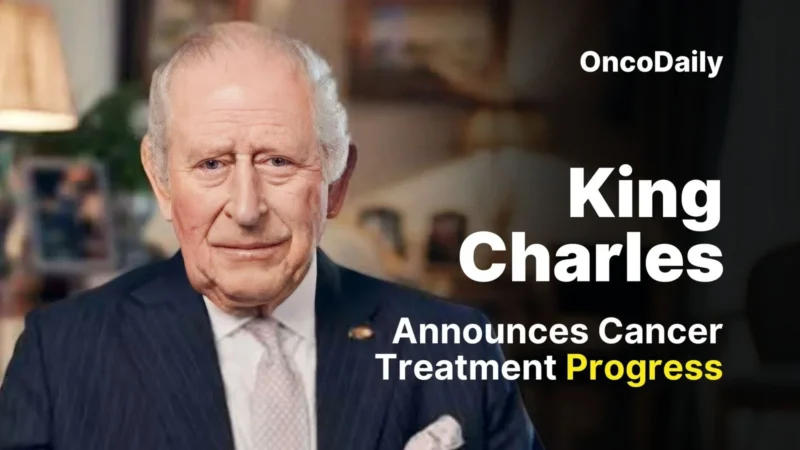
You Can Also Read King Charles Shares Cancer Treatment Progress on Stand Up To Cancer Broadcast by OncoDaily
Closer collaboration between journalists and healthcare professionals could also help ensure that complex oncology information is communicated accurately without becoming inaccessible to the general public. The study authors specifically call for stricter verification standards, greater transparency regarding source credibility, improved education for journalists and editors, and stronger collaboration between the press and healthcare community.
Important Limitations
The study has important limitations. Researchers examined only 72 eligible stories published during a 40-day period following two highly unusual public cancer announcements. The relatively small sample prevented meaningful statistical analysis. The findings therefore should not be interpreted as showing that one quarter of all UK cancer journalism is inaccurate. Instead, the authors describe the analysis as providing a reasonable indication of national reporting trends while acknowledging that further research is needed.
Misinformation vs Disinformation: What’s the Difference?
The terms misinformation and disinformation are often used interchangeably, but they do not mean the same thing. Health misinformation refers to information that is inaccurate or misleading based on established scientific knowledge or the best available evidence at the time. It may be shared unintentionally, for example when a complex cancer treatment is oversimplified, an outdated claim is repeated, or a journalist relies on an unreliable source.
Disinformation, by contrast, involves false or misleading information that is deliberately created or shared to advance a political, ideological, commercial, or other agenda. The key difference is intent: misinformation can spread without someone meaning to deceive, while disinformation is knowingly misleading.
In cancer communication, both can be harmful. An inaccurate claim about chemotherapy, prognosis, screening, or alternative medicine may influence how patients and families understand their options, regardless of whether the error was deliberate. This is why responsible cancer reporting depends not only on avoiding false information, but also on checking sources, verifying medical claims, and clearly separating established evidence from speculation or opinion.
How Cancer Misinformation Can Affect Patients and Families
Cancer misinformation can have consequences far beyond a misleading headline. For patients and families facing a new diagnosis, inaccurate claims about treatment, prognosis, screening, or alternative therapies may create unnecessary fear, unrealistic expectations, or mistrust in medical care.
It can also influence decisions at a time when people are especially vulnerable and searching urgently for answers. The study authors warn that misinformation may affect how patients understand and manage their cancer, making access to clear, evidence-based information essential.
The Bigger Message
The Royal cancer diagnoses brought cancer into millions of conversations. That visibility can improve awareness, encourage appropriate screening, and help normalize conversations around diagnosis and treatment. But greater attention also creates greater responsibility. When reporting on cancer, an inaccurate statement about chemotherapy, prognosis, diagnostic testing, or alternative medicine is more than a simple factual error. For someone making decisions about their health, it can influence expectations, behavior, and trust in medical care. The study’s message is therefore broader than the headlines surrounding King Charles III or Princess Catherine. Cancer information matters. The source matters. And when health information reaches millions of people, accuracy matters even more.
You Can Also Read Kate Middleton Says Cancer “Changes How You Think and Feel” as She Completes National Three Peaks Challenge by OncoDaily
Written by Aharon Tsaturyan, MD, Editor at OncoDaily Intelligence Unit
FAQ
What did the study find about UK media coverage of Royal cancer diagnoses?
The study found that 26% of the 72 UK newspaper stories analyzed contained false or inaccurate claims about cancer or cancer care. The most common misinformation concerned standard cancer treatments.
How much cancer misinformation was found in UK Royal Family news coverage?
Researchers identified inaccurate cancer information in 19 of 72 analyzed stories, or approximately one in four. Six were judged entirely incorrect, while 13 contained some factual inaccuracies.
What were the most common types of cancer misinformation?
Among stories containing misinformation, 47% involved standard cancer treatments, 21% involved cancer epidemiology, and 16% involved complementary or alternative medicine.
Was cancer misinformation more common in UK tabloids?
Yes. Of the 19 inaccurate stories identified in the study, 16 appeared in tabloid newspapers. The researchers also found that many inaccurate stories were written by journalists without a health-journalism background.
What cancer treatment myths appeared in the media?
Examples included claims that chemotherapy is only used for potentially curable cancers, that chemotherapy is often curative on its own, and that non-small cell lung cancer is usually treated with surgery. The study also identified inaccurate claims about hair loss during cancer treatment.
Is chemotherapy always curative?
No. Chemotherapy can be curative in some cancers and clinical settings, but it may also be used alongside surgery or radiotherapy or to control advanced disease, improve symptoms, and prolong survival.
Can blood tests detect all cancers?
No. There is currently no universal blood test that can diagnose every type of cancer. The study warned that nonspecific tumor-marker testing may lead to unnecessary investigations, longer waits, and additional pressure on healthcare services.
Can homeopathy treat cancer?
There is no reliable evidence that homeopathy can treat or cure cancer. The study identified claims about homeopathy as one example of cancer misinformation appearing in Royal Family coverage.
Why does misinformation about celebrity and Royal cancer diagnoses matter?
High-profile cancer diagnoses attract widespread public attention, and media coverage can influence people's beliefs about screening, treatment, prognosis, and healthcare. Inaccurate information may therefore affect expectations and health decisions.
How can readers identify trustworthy cancer information?
Look for information from named medical experts, recognized cancer organizations, healthcare institutions, and peer-reviewed research. The study authors also recommend greater transparency about sources and stronger collaboration between journalists and healthcare professionals.