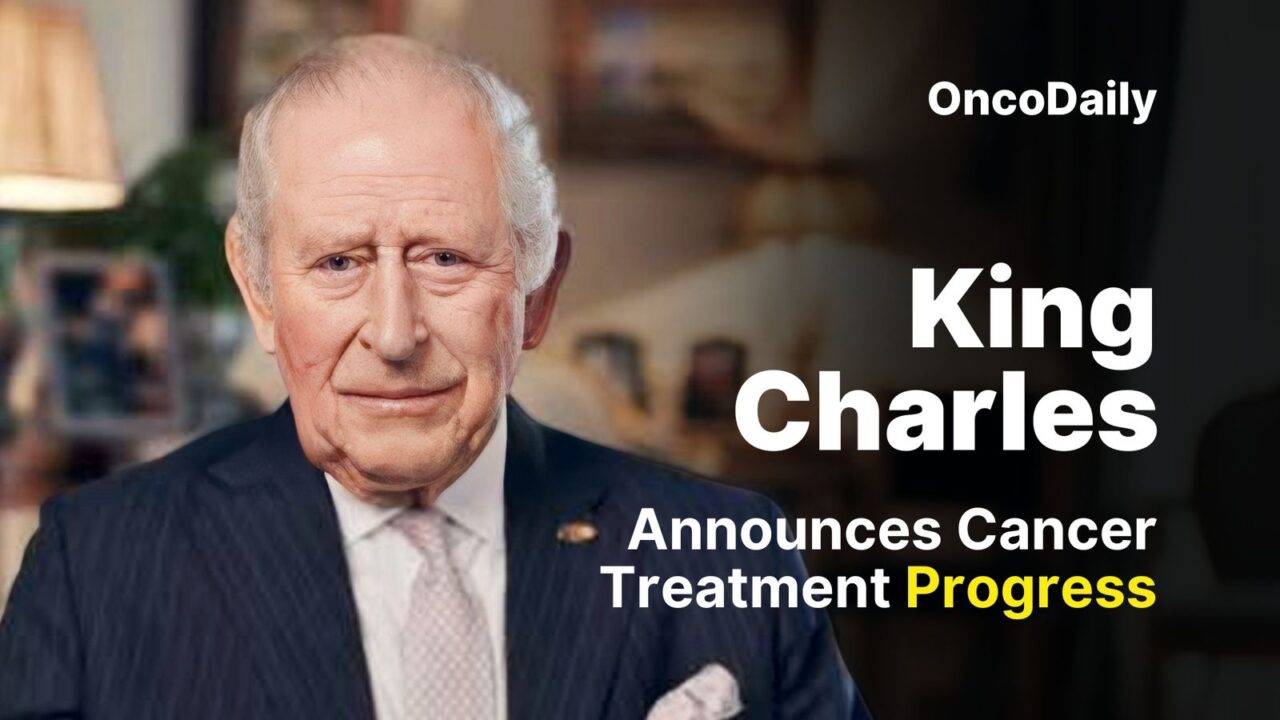
“Thanks to early diagnosis, effective intervention, and following the advice of my doctors, my treatment can now be reduced in the New Year,”
King Charles delivered one of the most personal messages of his reign during Channel 4’s Stand Up To Cancer broadcast on December 12, 2025 offering reassuring news about his health while issuing a heartfelt plea for the public to take cancer screening seriously. The message, recorded at Clarence House in late November, marked a rare moment of openness from a monarch whose family traditionally maintains strict privacy around medical matters.
Photo: Depositphotos
The King revealed that his doctors are now able to reduce his cancer treatment schedule in the New Year, a development he described as “a blessing” and a sign of what modern cancer care can achieve. Buckingham Palace later clarified that he is moving into a “precautionary phase,” continuing regular monitoring while remaining active in his public duties. His update aired during a national fundraising broadcast that has raised more than £113 million for cancer research since 2012 giving added weight to his words on early diagnosis and awareness.
A Turning Point in His Personal Reflection
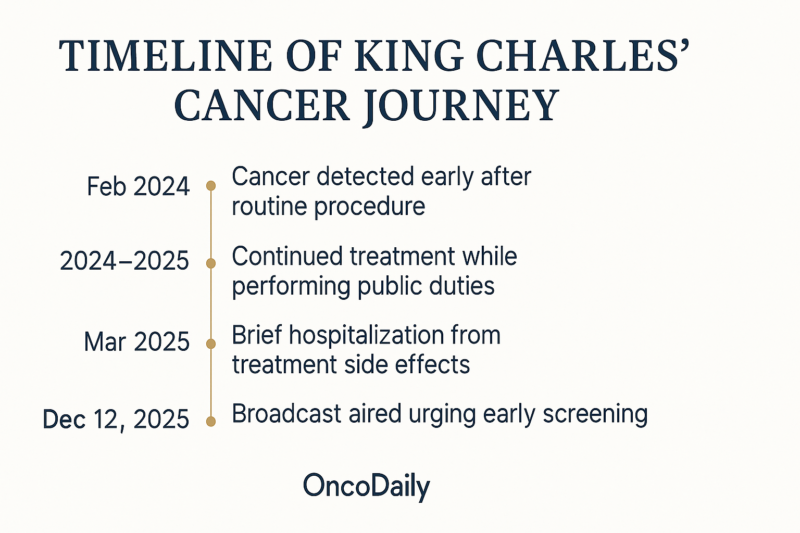
In the middle of his address, King Charles shared the most candid insight yet into his experience with cancer. He acknowledged that the past two years had been “a time of uncertainty, treatment, and enormous gratitude,” noting that his cancer was discovered only because of a routine prostate-related procedure in February 2024.
He did not shy away from the challenges of therapy. Without specifying the cancer type consistent with the Palace’s privacy stance he spoke of days that required rest, adjustment, and careful balance with royal responsibilities.
“Like so many others undergoing treatment, I have had to adapt, to listen to my doctors, and to take things one step at a time. But I remain committed to leading a full and active life,”
His voice warmed noticeably as he spoke of the clinicians and researchers who have cared for him. He described witnessing “the compassion, skill, and devotion” of NHS teams firsthand, calling their work a powerful reminder of how far cancer medicine has progressed. He offered a message of support to anyone living with cancer:
“To anyone facing this illness, please know you are not alone. You are held in the thoughts of so many, including my own.”
But his strongest appeal was directed to the public. Nearly nine million adults in the UK are currently overdue for cancer screening, and the King urged viewers to act without delay. “Early diagnosis quite simply saves lives,” he said. “If you are worried, unsure, or putting off a check-up, I urge you from my own experience, please get checked out.”
The Journey Behind the Message
King Charles’ cancer journey began with the unexpected discovery of the disease in February 2024 after treatment for an enlarged prostate. Throughout 2024 and 2025, he continued many public duties between treatment cycles, maintaining visibility while balancing his health needs. In March 2025, he was briefly hospitalized for side effects related to therapy a reminder of the physical demands cancer treatment can impose even on the most supported of patients.
By November 2025, nearly two years into his diagnosis, he recorded the Stand Up To Cancer appeal that would become his most direct public reflection on health and early detection. The decision to share his experience so openly marks an evolution in how the monarchy communicates about illness, reflecting a broader shift toward transparency and public-health advocacy.
Why His Message Matters
The King’s address arrives at a moment when public figures across the UK and beyond have begun speaking more openly about cancer, including Princess Catherine’s remission update earlier in the year. These stories help dismantle stigma and highlight the critical importance of early intervention. Medical evidence consistently shows that cancers such as prostate, breast, and colorectal can achieve five-year survival rates above 90 percent when found early—compared with under 30 percent when detected late.
His message also contrasts with cancers like glioblastoma, the disease that claimed novelist Sophie Kinsella earlier in December. Glioblastoma often presents with nonspecific symptoms headaches, memory changes, fatigue—making early detection far more difficult. Together, these narratives underscore a broader truth in oncology: while not all cancers can be prevented or caught at early stages, the ones that can offer patients significantly better outcomes.
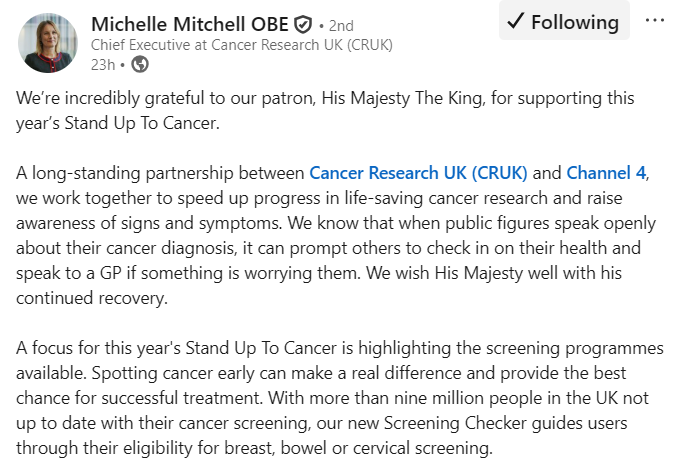
Cancer Research UK Chief Executive Michelle Mitchell OBE emphasized the impact of the King’s message, noting that when public figures speak openly about their diagnosis, it often encourages others to check their own health. She highlighted this year’s Stand Up To Cancer focus on national screening programmes, reminding the public that early detection offers the best chance for successful treatment. With more than nine million people in the UK overdue for screening, CRUK’s new Screening Checker aims to help individuals understand their eligibility and take timely action.
A Call for the New Year
As the UK enters 2026, King Charles’ message stands as both a personal update and a national call to action. He encouraged the public to visit screeningchecker.co.uk to ensure they are up to date on recommended tests based on age and risk factors. His appeal measured, sincere, and rooted in lived experience reminds viewers that early detection remains one of the most powerful tools in modern cancer care.
In choosing to speak so openly, the King has transformed his own experience into a public-health message: take symptoms seriously, prioritize screenings, and seek care early. It is a message shaped by science, empathy, and hope—and one that may ultimately save lives.
You Can Also Read King Albert II’s Brave Battle: A Decade of Fighting Skin Cancer by OncoDaily
Written by Aharon Tsaturyan, MD, Editor at OncoDaily Intelligence Unit